
Smelly Carpet: Find the Cause and Remove the Odour

Last modified on: 15/08/2026

Smelly carpet usually means that moisture, a spill, pet contamination, smoke or cleaning residue remains in the fibres or below them. The right response depends on the source, the carpet material and how far the contamination has travelled, so identify those points before adding water, powder or fragrance.
Find the source before adding a deodoriser
- Locate the strongest-smelling area and note whether the odour appeared after a spill, pet accident, leak or recent cleaning.
- Press a dry white towel on the area and check the carpet edge where accessible. Damp backing or underlay changes the job from deodorising to moisture control.
- Blot fresh contamination, remove solids and use only a treatment approved for the fibre and backing. Do not scrub or soak the pile.
- Dry the full carpet layer with airflow. A dry surface can still cover wet underlay, so check again before replacing furniture.
- Arrange an assessment when the smell returns, covers a wide area, follows sewage or floodwater, or comes with visible growth, loose backing or dye transfer.
Key takeaways
- Odour location and timing often reveal more than the smell alone.
- Spills and urine may reach the backing or underlay even when the pile feels dry.
- Powder and fragrance can reduce what you notice without removing the source.
- Overwetting, slow drying and detergent residue can create a new odour after cleaning.
- Recurring damp, widespread contamination and damaged layers need assessment before another cleaning attempt.
Table of Contents
Smelly carpet: trace the odour to its source
Start with four observations: when the smell began, where it is strongest, whether the area is damp and what happened there beforehand. A sour patch beneath a dining table points towards food or drink. An ammonia-like smell near a pet’s usual route suggests urine. Mustiness beside an external wall or after extraction cleaning raises a moisture question. A stale smell spread evenly through the room may come from smoke, cooking vapour, dust or soft furnishings as well as the carpet.
| What you notice | Likely source or layer | First action | Stop or escalate when |
|---|---|---|---|
| Local sour or food smell | Fresh or dried spill in pile, backing or underlay | Remove solids, blot and identify the spilled material | The patch is old, sticky, widespread or keeps returning |
| Sharp pet smell | Urine in fibres, backing, underlay or floor edge | Blot a fresh accident and use a fibre-compatible pet treatment | Several incidents overlap or contamination reaches below the carpet |
| Musty smell | Slow drying, leak, condensation, wet underlay or affected wall | Find the moisture source and increase airflow | Damp returns, growth is visible or the underlay remains wet |
| Stale smoke or cooking smell | Airborne residue across carpet and other porous surfaces | Ventilate and clean the wider source area | Odour persists after room-wide source control |
| Soapy or sour smell after cleaning | Overwetting, slow drying or product residue | Stop adding product and dry the carpet thoroughly | The backing is wet, the pile changes or the smell worsens |
| New chemical smell | New carpet, backing, adhesive or applied product | Ventilate and check product or installation guidance | Anyone feels unwell or the odour remains unexpectedly strong |
Use timing and location together
Smell the air at normal standing height, then compare it with the carpet near the suspected area. Do not place your face against an unknown damp or contaminated patch. Mark the perimeter with removable tape so you can see whether the affected area grows after drying. Check nearby skirting boards, furniture feet, radiators, plant pots and door thresholds because water can travel before it becomes visible.
A smell concentrated at one edge may come from a wall, pipe or subfloor. An odour that appears only when the heating starts can be released from warmed fibres, dust or residue. A smell that returns during humid weather suggests moisture remains available somewhere in the room. These clues prevent repeated surface treatments on a source outside the pile.
Check whether moisture reached the underlay
Press a clean, dry white towel firmly onto the area. Colour transfer, moisture or residue gives you a stop signal. Where a loose edge can be lifted without damaging the fitting, inspect the backing and underlay. Do not pull a fixed carpet from gripper rods or cut it open. A dry pile over damp underlay can keep producing odour and can spread moisture into adjacent materials.
Trace and repair a leak before cleaning the carpet again. For persistent damp or suspected growth, use current damp and mould guidance and arrange the appropriate property or flooring assessment. Surface deodorising cannot compensate for wet building fabric.
Match the action to the affected carpet layer
Pile-only contamination
A recent, small spill that was blotted promptly may remain in the pile. The area stays local, the backing feels dry and the smell fades as moisture is removed. Use the care-label route for that substance and keep each application controlled. Check again after full drying because liquid can migrate lower than the visible mark.
Backing contamination
Odour that returns as a patch dries, a ring that reappears or a rough change at the pile base can point to residue in the backing. More liquid can soften adhesive, spread dye or carry the source into the underlay. Controlled extraction may be possible for a compatible construction. A cleaner needs to know what products are already present before choosing that route.
Wet or contaminated underlay
Underlay holds more liquid than the pile and dries more slowly. Repeated pet accidents, a large drink spill, an overflowing appliance or excessive cleaning solution can create a wider affected area below the surface. Lifting, drying or replacing underlay may require a flooring professional. Cleaning the visible fibres alone leaves the lower source in place.
Subfloor or room source
An odour strongest along a wall, doorway or pipe route may start outside the carpet. Timber and sheet flooring can absorb moisture; concrete can remain damp under an impermeable layer; skirting boards and plaster can carry a musty smell. Smoke and cooking residue also settle across curtains, upholstery and walls. Repair, drying and room-wide source control come before deciding whether the carpet can be cleaned.
The replacement threshold is reached when the carpet construction has separated, the underlay cannot be cleaned or dried in place, contamination is unsafe to handle, or the source has changed the material permanently. Replacement is a material decision, not a failure of deodoriser. Photograph the affected layers and keep records of the leak, spill and products used for the flooring contractor or insurer where relevant during the assessment.
What to do in the first 30 minutes
Fresh food and drink spills
Lift solids with a spoon or blunt scraper, working from the edge towards the centre. Blot liquid with white towels and change the towel as it picks up moisture. Check the care label before applying a carpet product. A protein-rich milk spill needs its own route because residue can sour below the surface. Avoid hot water until you know what the spill contains.
Use small amounts of the approved solution and extract or blot it as directed. Pouring cleaner into the patch can push contamination deeper and widen the wet area. Record the original boundary and check it again once dry. A ring, sticky feel or renewed smell shows that residue remains or has wicked back from below.
A fresh pet accident
Keep people and pets away from the patch, then absorb as much liquid as possible with firm blotting. Use a product labelled for the carpet fibre and the type of contamination. Follow its dwell, removal and drying directions. Do not combine a pet treatment with bleach, disinfectant, vinegar or another cleaner. Overlapping products can damage colour, leave residue or create harmful fumes.
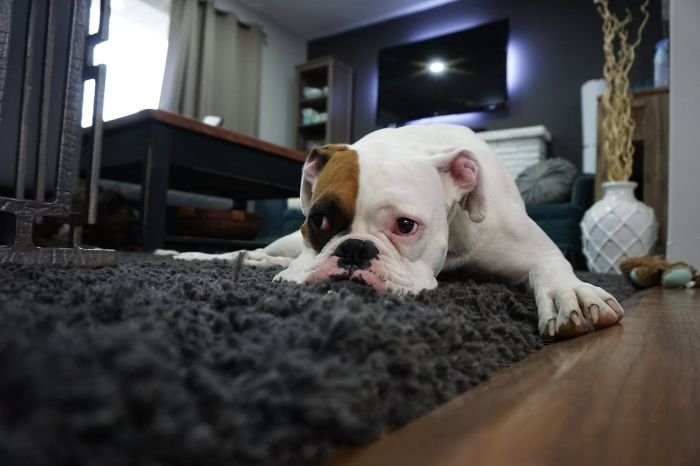
One recent surface accident is different from repeated contamination in the same place. Urine can pass through seams and backing, then spread through underlay. A surface treatment may improve the smell for a day and release it again as humidity rises. Multiple incidents, a wide affected area or contamination near a wall call for an assessment of the layers below.
Damp or post-cleaning odour
Stop adding liquid. Open windows when weather and security allow, keep internal doors positioned for airflow and use ventilation or dehumidification suitable for the room. Do not place furniture back on a damp carpet. Check underneath protected furniture feet because trapped moisture can mark the carpet or slow drying.
A smell after cleaning does not automatically mean the carpet needs another wash. Excess solution, slow extraction, a full vacuum filter, high indoor humidity or a wet underlay can all delay drying. Repeating the same wet process can deepen the problem. Let the carpet dry fully, inspect the machine and assess the backing before choosing the next step.
Ask About Carpet Odour
Enter your postcode to view our rates and availability in your area.

Treat the cause without damaging the carpet
Carpet construction controls what can be cleaned and how much moisture it can tolerate. Wool, plant fibres, solution-dyed synthetics, rugs with unstable dyes and fitted carpets with bonded backing do not share one treatment. Read the label, check the manufacturer’s care advice and test a small hidden area for colour transfer, texture change and residue.
Food, drink and old organic residue
Identify the substance before choosing a cleaner. Sugars, fats, dairy residue and coloured drinks leave different combinations of soil. Treating an unknown patch with a strong multipurpose product can set colour, spread grease or leave a sticky film that attracts new dirt. Use the dedicated route for stubborn carpet stains when visible marking remains after the odour source is controlled.
Odour removal and stain removal are related tasks, not the same result. A patch can look clean and still smell because residue sits lower in the construction. It can also lose its smell and retain a permanent colour change. Stop repeated treatment when dye lifts, the pile becomes rough, the backing softens or the affected circle grows.
Smoke and cooking residue
Open windows and remove the active source first. Washable hard surfaces, curtains, upholstery and ventilation grilles may hold the same airborne residue. Cleaning only the carpet can leave the room smelling unchanged. Vacuum the carpet slowly with suitable filtration, following the machine instructions, then decide whether the fibre can be professionally cleaned.
Strong fragrance can combine with smoke or cooking odour and make the room harder to assess. Use ventilation and source removal before scent. If the contamination followed a fire, heavy smoke event or unknown chemical release, use a specialist restoration route because ordinary carpet cleaning may not address the wider residue.
Detergent residue and repeated cleaning
A crunchy, sticky or rapidly resoiling patch suggests product remains in the pile. Follow the product and machine directions for removal. Do not add a second cleaner to cancel the first. Products can react, alter pH, affect dyes or create a film. A clear-water rinse is not automatically suitable for every construction, and excess rinsing can wet the backing.
Check the tank, hose, brush roll and filters before blaming the carpet. A dirty machine can release its own smell and return soil to the room. Follow the separate vacuum care steps for blocked airflow or odour from the appliance.
You may also enjoy:

New carpet and adhesive odour
Ventilate the room and follow the carpet, underlay and adhesive supplier’s installation advice. Do not apply a deodoriser to a new floor covering unless the manufacturer permits it. Keep packaging and product information available if the odour lasts longer than expected. Leave the room and seek appropriate advice if anyone develops breathing difficulty, marked eye or throat irritation, dizziness or nausea.
Can bicarbonate of soda remove carpet smells?
Bicarbonate of soda can absorb some odour from a dry, compatible surface. It cannot remove wet underlay, urine below the backing, a leak, mould, spoiled residue or smoke held across the room. Treat it as an optional dry deodorising step only after the source has been removed and the carpet is fully dry.
Check the carpet and vacuum instructions before using any powder. Fine particles can remain at the base of a dense pile, show on dark fibres or place extra load on some filters and machines. Apply no powder to a wet patch. Never mix it into a paste with vinegar or another cleaner on the carpet. If the label does not permit powder treatment, leave it out.
Vacuum only after the stated contact period and when the area is dry. Make several slow passes from different directions, then empty or clean the machine as directed. If the smell returns, stop deodorising and reassess the layer beneath the pile.

When the odour needs professional carpet cleaning
Professional cleaning is a practical next step when the source is known, the moisture problem has been corrected and the carpet fibre can be treated. It is also useful for a wide traffic area, several old spill marks, smoke residue or a carpet that needs controlled extraction after unsuitable product use. Share what was spilled, every product already applied, the age of the mark and any drying problem before work begins.
Samyx Cleaning can assess compatible fibres and carry out carpet cleaning with the method suited to the material and condition. Cleaning works on the accessible carpet construction. Leak repair, sewage cleanup, mould remediation, structural drying, damaged backing and underlay replacement sit outside routine carpet cleaning. Odour may remain when contamination has reached a layer that cannot be cleaned in place.
- Book an assessment when the smell returns after full drying or several DIY attempts.
- Have the moisture source corrected before any wet cleaning is repeated.
- Expect a replacement decision when underlay or backing is heavily contaminated or damaged.
- Use a specialist route for sewage, floodwater, fire residue, widespread growth or unknown chemicals.
Book Carpet Cleaning
Enter your postcode to view our rates and availability in your area.
Keep the smell from returning
- Blot spills promptly and note what was spilled, especially when another person may clean the area later.
- Vacuum at a pace that lifts dry soil and maintain the machine before airflow drops.
- Use washable mats at entrances and under pet feeding areas, then clean them before residue reaches the carpet.
- Ventilate after cleaning and keep furniture off the carpet until every layer is dry.
- Check recurring damp near windows, pipes, plant pots and external walls instead of covering the smell with fragrance.
- Keep the carpet care information and a record of treatments so the next cleaner knows what is already in the fibres.
Frequently asked questions
-
How do you get rid of smell in carpet?
Locate the source, remove solids, blot fresh liquid and use only a treatment approved for the carpet fibre. Dry the carpet and any affected layer fully. Arrange an assessment when the smell returns, the underlay is wet, contamination is widespread or the source is unknown.
-
Why does my carpet smell awful?
Common sources include food and drink, pet urine, damp underlay, slow drying, smoke, cooking residue and excess cleaning product. Timing, location and moisture checks help distinguish a surface problem from contamination below the backing or elsewhere in the room.
-
Does sprinkling baking soda on carpet deodorise it?
Bicarbonate of soda may absorb some odour from a dry, compatible surface. It will not remove a leak, wet underlay, urine below the backing, mould or spoiled residue. Check both the carpet and vacuum instructions before using powder and leave it out when either manufacturer does not permit it.
-
Why does my carpet smell bad after cleaning?
The carpet may be drying slowly, the backing or underlay may still be wet, excess detergent may remain, or the cleaning machine may need attention. Stop adding liquid, improve airflow, inspect the carpet layers and arrange an assessment if the odour grows or returns after full drying.
Important: Follow the carpet or rug care label, cleaning-product label and manufacturer directions over general advice. Test a compatible treatment in a hidden area, use ventilation and protective equipment where the label calls for them, and keep children and pets away until the carpet is fully dry. Never mix cleaning products. Stop for colour transfer, pile change, backing damage, persistent damp, visible growth, sewage, unknown contamination or symptoms after product exposure; seek the appropriate manufacturer, flooring, property, medical or specialist advice.
Author: Svetlana Georgieva (Clara)
Hi, I’m Svetlana Georgieva, but you can call me Clara. As the co-founder and heart behind Samyx Cleaning, I’m devoted to sharing the art of a clean space. Let’s journey into a cleaner, more joyful life together with tips from London's cleaning experts.

Discover more of our cleaning secrets: