
How to Get Milk Out of Carpet and Remove the Smell

Last modified on: 13/09/2026
Publish: 19th Jan 2024
Views:
Category: DIY
Tags:
Carpet cleaning, Eco-friendly cleaning, Milk stains, Natural cleaning

How to get milk out of carpet depends on how far the liquid has travelled: blot a fresh spill immediately, use minimal moisture, treat the milk residue with a fibre-compatible product and dry the carpet thoroughly. If the smell returns after drying, milk may remain in the backing or underlay, where repeated surface treatment can make the problem wetter without reaching its source.
Key Takeaways
- Blot first and never scrub milk deeper into the pile.
- Use cool water and as little moisture as the task allows.
- Check the fibre and care instructions before applying a cleaner.
- Remove product residue and dry the carpet thoroughly.
- Treat a returning smell as evidence of a deeper spill.
Table of Contents
Ever faced the drama of spilling milk on your carpet? It’s not just a visual turn-off but a real smelly situation. When milk gets cozy with carpet fibers, it’s not just a stain we’re talking about – it’s a full-blown odour party. And trust me, spilled milk is tricky with its proteins and fats, making cleaning a bit of a challenge.
Why are milk spills so hard to clean?
Milk spills are like the uninvited guests that ruin your carpet’s party. They’re sticky, they smell, and they love to hang out in your carpet like they own the place.
The reason milk stains are so especially egregious is due to their complex composition. Lactose, which is a type of sugar, combined with proteins and fats makes cleaning milk off your carpet an absolute nightmare. It’s a triple whammy you need to adress right away!
Decide Whether the Spill Is Fresh, Dry or Deeper Than the Pile
| What you find | First response | Main risk |
|---|---|---|
| Fresh liquid | Blot repeatedly with clean white towels | Spreading it by rubbing or adding too much water |
| Dried mark | Loosen only with a fibre-compatible spot treatment | Colour or texture change from an unsuitable product |
| Sour smell after drying | Treat the remaining organic residue and dry again | Masking an odour that is coming from below the pile |
| Large or deep spill | Assess backing, underlay and safe extraction | Repeated surface wetting without reaching the milk |
Before treating an old mark, vacuum dry loose soil around it and identify the carpet fibre if possible. Photograph care labels or installation information before they disappear during a tenancy change. If the carpet is wool, silk, viscose, hand-dyed, antique or otherwise valuable, stop experimenting and ask an appropriate specialist for advice.
Get milk out of your carpet as quickly as you can
If you spill your afternoon tea on the carpet, you need to act quickly. Especially if you take it with milk, like most people. It’s not just tea stains on the carpet you’ll need to worry about, but milk stains and smell, as well.
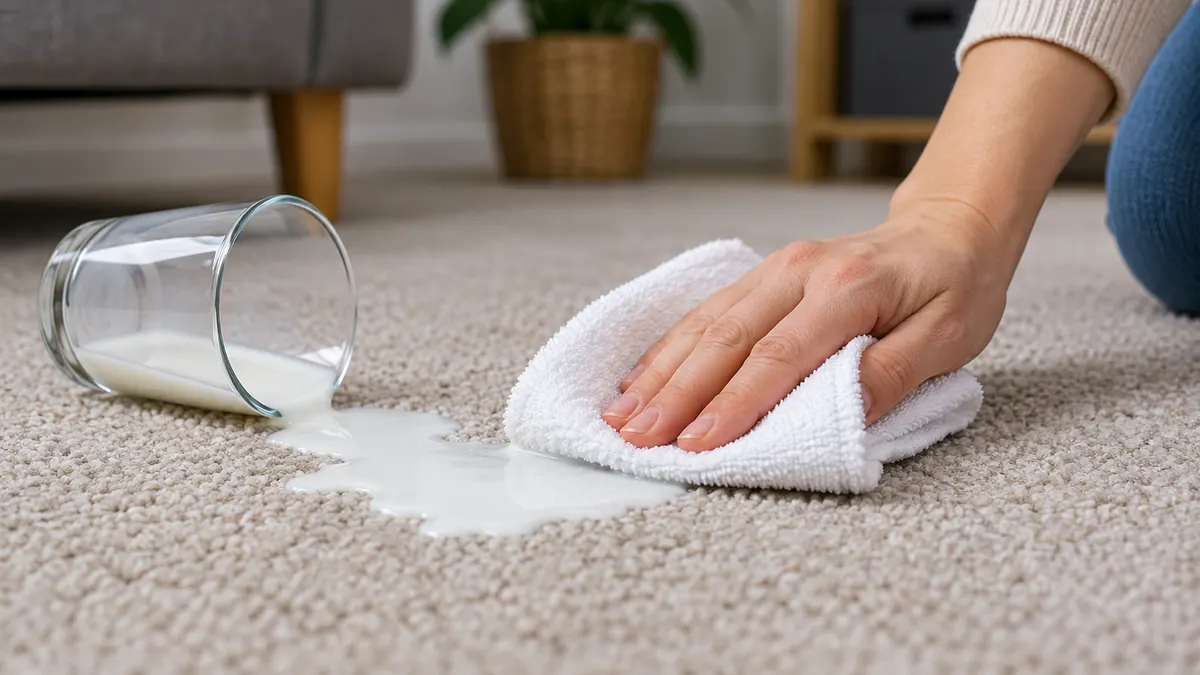
Time to get to work! Here’s a step-by-step plan for preliminary action:
- Step 1: Blot the spill. Quick action is crucial. Use a dry cloth, and remember, blot, don’t rub! Rubbing will only help the stain set in faster.
- Step 2: Rinse with cold water. Cold water helps. Hot water? Not so much. Unless your goal is to ruin your carpet, of course.
- Step 3: Mild detergent (Optional). A mild detergent can be your ally for bigger spills. But test it first on a small, inconspicuous area, first. If it doesn’t ruin the carpet, apply it on the stain.
- Step 4: Prevent odours. Baking soda is your friend here. Sprinkle, let it dry, then vacuum.
- Step 5: Dry the area thoroughly. Press down with a dry cloth and let the air do its magic.
- Step 6: Monitor for odour and stain. Keep an eye on the carpet. If it seems like the odour is lingering or the stain is still there, use one of the methods below.
Now, onto some more detailed methods of removing milk from your carpet.
Choose the Safest Method for the Carpet
Begin with the lowest-risk method that matches the fibre and the spill. A small fresh mark may need only careful blotting and a carpet-approved detergent, while an old odour may benefit from a compatible enzyme product. Wool and other delicate fibres need specialist guidance: general washing-up liquid and some enzyme or oxidising products can leave residue, cause colour change or damage the fibre. The WoolSafe guidance for fine fibres is a useful starting point when the construction is known.
Need a cleaning service?
Enter your postcode to view our rates and availability in your area.

Clean spilled milk off your carpet with dish soap and water
For those fresh milk spills, dish soap and water are like a dynamic duo. Here’s how you do it:
- Prepare the solution: Mix a bit of dish soap with lukewarm water. The soap will mix better if the water is slightly warm. However, avoid hot water.
- Apply the solution: As we’ve discussed before, blot the stain with this mix. Go easy and don’t scrub it. I know the temptation of putting in some elbow grease to remove the stain all too well. Resist it.
- Rinse and dry: Rinse with cold water and blot dry. This method may be a bit tedious, but it will work with most milk spills. Especially fresh ones.

Control Moisture, Cleaner Residue and Drying
More solution does not mean more cleaning. Apply a small amount to a cloth or the affected pile rather than flooding the area. Work from the outside towards the centre and change to a clean part of the towel as milk transfers. If the product requires rinsing, use the minimum amount needed and blot it back out. Residual detergent can attract soil and create a larger visible patch after the original stain has gone.
Press dry towels into the treated area, then increase airflow with open windows or a fan where safe. Avoid direct heat, which can affect fibres, backing and adhesives. Do not judge the result while the pile is still damp: wet carpet often looks darker. Recheck the colour, texture and smell only after the area is fully dry.
Removing milk odours with baking soda
Milk has a very distinct smell which can overtake your entire home. To avoid this, use baking soda. It’s not just for baking, you know.
Note: Use baking soda, not baking powder. I feel a distinction must be made.
- Blot the spill: You already know the drill.
- Apply baking soda: Cover the stain generously. I do hope you have a powerful vacuum cleaner at your disposal, though.
- Let it sit and vacuum: Give it time to sit for a bit (perhaps another cup of tea?), then vacuum it up.
Baking soda is excellent at absorbing odours, among other things.
Editorial safety context: The original field methods below are retained. Hydrogen peroxide is an oxidiser and can bleach or alter carpet fibres and dyes. Loose powders can be difficult to remove from deep pile. Use either route only when the carpet and product instructions permit it, patch-test first, keep products separate and stop if colour transfers or the texture changes.
Remove milk stains with hydrogen peroxide
Hydrogen peroxide can be a bit of a hero for stubborn stains. More precisely, it’s like a brooding antihero with a grey moral compass, so it requries a bit of, shall we say, guidance.
Hydrogen peroxide has enough bleaching properties to make actual bleach blush (now that’s a sentence I never thought I’d write). So only use this method if your carpet is light in colour.
- Do a patch test: As always, do a patch test first.
- Prepare and apply the solution: If doesn’t seem like it will ruin your carpet, mix with water, spray lightly, and blot.
- Rinse and dry: Follow up with cold water and let it dry.
Lifting the stain with cornstarch or talcum powder
Cornstarch or talcum powder can be surprisingly effective absorbents here. Or maybe not that surprising.
- Blot the spill: Remove as much liquid as possible first.
- Apply the powder: Generously cover the stain.
- Vacuum: After letting it sit, vacuum it all up.
I’m starting to sound like a broken record. I get that. The truth is, most of these methods are interchangeable and can work equally well (or badly). I’m just giving you more tools to choose from.
Cleaning milk stains with an enzyme cleaner
If you’re dealing with a stubborn milk stain (and smell), enzyme cleaners are your secret weapon. They’re like the special forces of cleaners, targeting the very things that cause the odour:
- Choose the right enzyme cleaner: Make sure it’s suitable for your carpet and tackles protein-based stains.
- Apply and let sit: Follow the instructions, let the enzymes do their thing.
- Blot, rinse, dry: After the treatment, rinse off and dry the area.
Why the Milk Smell Can Return
A carpet can look clean while damp milk remains below the visible pile. A larger spill may reach the backing, underlay, gripper edge or subfloor. As that area warms or becomes humid, the smell can return. Do not keep pouring deodoriser onto the top. Note the spill size, check whether moisture spread beyond the original mark and arrange professional assessment when the carpet cannot be lifted or dried safely.
Professional treatment is also the safer route when the spill is extensive, the carpet is valuable, dyes transfer during a patch test, the backing has remained damp, or a child, pet or vulnerable person is repeatedly exposed to the affected area. Explain exactly what was spilled and every product already used. That history helps the technician avoid incompatible chemistry and choose whether surface spot treatment, controlled extraction or access below the carpet is required.
You may also enjoy:
Frequently Asked Questions
-
What is the best way to get milk out of carpet?
Blot up as much milk as possible with a clean white cloth, use a small amount of cool water, blot again, then use a carpet-compatible spot cleaner if residue remains. Remove cleaner residue as directed and dry the area thoroughly.
-
How do you get milk smell out of carpet?
Remove the milk residue first. Baking soda may absorb some remaining odour once the area is dry, but a smell that returns can indicate residue deeper in the pile, backing or underlay.
-
Does milk permanently stain carpet?
It can leave a mark or persistent odour if residue dries or soaks deeper into the carpet. Fast blotting and a fibre-compatible treatment improve the chance of removal.
-
Can I use an enzyme cleaner on spilled milk?
A carpet-safe enzyme product can help with organic residue, but check the fibre and product label first. Wool carpets need products tested and approved for wool.
-
Should I use hydrogen peroxide on a milk stain?
Not as a default method. Hydrogen peroxide can alter carpet colour. Use it only when the carpet or product instructions specifically permit it for that fibre and dye system, and patch-test first.
Conclusion
There you have it – a complete guide to cleaning milk spills off your carpet. Remember, each method has its place, so choose wisely based on your spill.
Quick action and the right technique are your best friends here. And hey, if it all seems too much, you can always call in the pros. As always, if you need us, we’re never more than a phone call away.

Author: Atanas Dzhingarov
Hi, I’m Atanas - brand consultant and writer. I’m helping Samyx Cleaning create the best cleaning company blog on the Internet. Join us on our journey and learn how to live a cleaner, healthier, happier life in the process.
Discover more of our cleaning secrets: