
Carpet Cleaning Mistakes End of Tenancy Tenants Should Avoid

Last modified on: 28/07/2026

Carpet cleaning mistakes end of tenancy negotiations before they even begin, because the carpet is one of the first surfaces an inventory clerk walks across and one of the last a tenant thinks about. A spill that would have lifted in minutes the week it happened can be a set stain by moving day, and a carpet cleaned in a rush the night before the check-out can still be damp when the clerk arrives.
Most carpet disputes at move-out come down to a handful of avoidable errors: treating stains too late, using the wrong product, soaking the carpet and skipping the drying time. Those same errors decide most carpet deductions in England, where a landlord cannot charge a compulsory cleaning fee but can claim for documented damage.
The carpet mistakes a check-out will find
- Read the tenancy agreement and the check-in inventory before touching the carpet. They set the standard you are measured against.
- Treat stains early with a patch-tested, fibre-safe product. Blot the mark; never scrub it or soak the carpet.
- Let every treated area dry completely, then photograph the result against the check-in report.
- Book professional extraction when stains are set, the carpet is wool or delicate, or the time before the check-out is short.
Key takeaways
- The check-out compares the carpet with the check-in inventory, allowing for fair wear and tear. Dirt and stains are not wear and tear.
- Late stain treatment, the wrong product, over-wetting and scrubbing cause most carpet problems at move-out.
- A carpet that is still damp at the inspection can look and smell worse than one that was never treated.
- In England a landlord cannot force you to pay for professional cleaning; documented damage beyond fair wear and tear is a separate, evidenced claim.
- Dated photos of a clean, dry carpet, measured against the check-in report, are the strongest evidence in a deposit dispute.
Table of Contents
What the check-out actually records on carpets
An inventory clerk does not judge a carpet by whether it looks tidy from the doorway. The check-out report compares each room against the check-in inventory, line by line, and the carpet is graded on condition, not effort. Flattened pile in the traffic lanes and some fading near a window count as fair wear and tear, the gradual decline of normal use. Stains, ground-in dirt, pet soiling, burns and smells count as damage, and damage is what deposit deductions are built on.
Most tenancy agreements in England require the property to be returned as clean as it was at the start, allowing for that fair wear and tear. Carpets attract attention because they hold evidence: a red wine ring near the sofa, a grey lane from the bed to the door, a musty patch where a spill was soaked and never dried. A checklist-driven end of tenancy cleaning treats the carpet as one of the items the clerk can verify in seconds, which is why a rushed or botched attempt often reads worse than an honest, untouched one.
Timing matters as much as method. A carpet cleaned two hours before the clerk arrives will still be damp, and a damp carpet looks darker, smells of wet underlay and collects footprints during the inspection itself. Plan carpet work for at least a day or two before the check-out, so every treated area can dry fully and you can photograph the result in daylight, with the check-in report beside it for comparison.
Running Out of Time Before the Check-Out?
Enter your postcode to view our rates and availability in your area.

The carpet cleaning mistakes end of tenancy check-outs punish most
Each of these errors is easy to make and expensive at the wrong moment. Several of them create the very damage the tenant was trying to remove.
1. Leaving stains until moving week
A fresh spill sits mostly in the pile. Given weeks, it oxidises, bonds with the fibre and wicks down into the backing, where it keeps feeding the visible mark from below. That is why a stain treated the day it happens usually lifts; the same stain treated on moving day lightens a shade and stays. Deal with marks when they occur, and treat older ones first in your move-out plan, because stubborn carpet stains often need several careful rounds where one aggressive round does more harm.
2. Using the wrong product for the fibre
Wool and wool-mix carpets tolerate far less chemistry than synthetic ones. An alkaline cleaner, a bleach-based spray or a stain remover meant for another surface can strip colour, set a yellow cast or leave the pile feeling harsh, and the change is permanent. Read the product label, check what the carpet is made of, and patch-test on a hidden patch behind a door or inside a wardrobe alcove. If the test area changes colour or texture, stop there.
3. Over-wetting the carpet
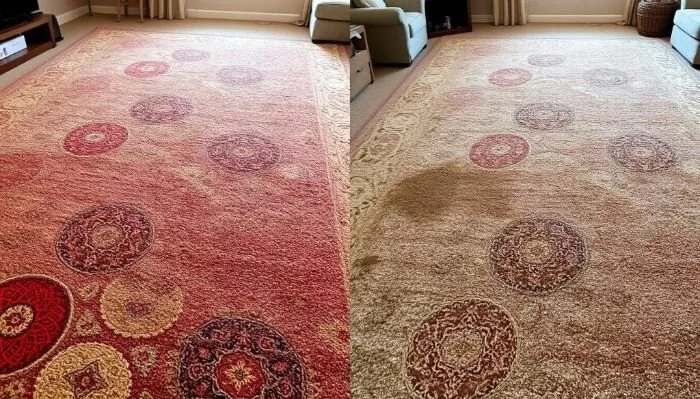
More water feels like more cleaning, and it is the opposite. A soaked carpet pushes soil down into the underlay, which then wicks it back up as the surface dries, leaving brown watermarks around the very patch you treated. Underlay that stays wet for a day or more develops a musty smell that no surface spray will cover, and persistent damp invites mould. Use the least moisture that does the job, extract or blot out what you put in, and give the carpet real drying time with airflow.
4. Scrubbing instead of blotting
Scrubbing feels productive. In practice it untwists the pile, frays the fibres and drives the stain wider and deeper, so the treated patch ends up looking worn even where the colour has lifted. A clerk running a hand across the carpet will feel that roughened patch. Work from the outside of the mark towards the centre with a clean white cloth, press and lift, and change to a fresh section of cloth as it picks up colour.
5. Skipping the rinse
Detergent left in the pile dries sticky, and sticky fibres grab every particle of dust that crosses them. Within days the cleaned patch resoils and shows as a dull grey shadow, which the tenant often assumes was a permanent stain all along. After any product has done its work, lift the residue with a clean, barely damp cloth, then blot dry. The goal is a carpet with nothing left in it, not a carpet that smells of cleaner.
6. Assuming a quick vacuum is enough
A fast pass with the vacuum lifts loose dust and crumbs, and nothing else. Grit sitting at the base of the pile keeps abrading the fibres with every footstep, which is how traffic lanes wear grey, and stains, odours and allergens stay exactly where they were. Vacuuming is the first step of the job, done slowly and in overlapping passes, not the whole job. Carpets that go months without cleaning hold far more than the surface suggests, and a check-out inspection is designed to notice.
| Mistake | What the clerk sees | The safe DIY fix | Stop and book a professional when |
|---|---|---|---|
| Stains left for months | A set, oxidised mark that has wicked into the backing | Treat early, blot in repeated light rounds | The stain has set or returned after two careful rounds |
| Wrong product on the fibre | Colour loss, yellowing, a harsh or stiff patch | Patch-test a fibre-safe product on a hidden area | Any colour or texture change at the test stage |
| Over-wetting | Brown watermarks, musty smell, damp underlay | Minimal moisture, extract or blot out, airflow drying | The underlay is wet or the smell persists after drying |
| Scrubbing | Frayed, roughened pile around the stain | Blot from the edge towards the centre | The pile has already distorted |
| Skipped rinse | A grey, quickly resoiled shadow | Lift residue with a barely damp cloth, blot dry | Residue keeps wicking back after rinsing |
| Vacuum-only clean | Grey traffic lanes and lingering odour | Slow overlapping passes, then spot treatment | Lanes and odour remain after proper vacuuming |
Can a landlord make you pay for professional carpet cleaning?
In England, no. Since the Tenant Fees Act 2019 came into force, landlords and letting agents cannot charge tenants fees outside a short list of permitted payments, and a compulsory professional cleaning charge is not on that list. A clause in the agreement demanding that you pay for a professional clean at the end does not create an enforceable fee, and you cannot be billed simply because such a clause exists.
That protection is about fees, not about condition. You still have to return the property as clean as it was at check-in, allowing for fair wear and tear. If the carpets come back stained, soiled or smelling beyond that allowance, the landlord can propose a deduction from the deposit for the reasonable, evidenced cost of putting it right. Reasonable also means no betterment: you cannot be asked to fund a brand-new carpet to replace one that was already years old, which is also why the idea that landlords must replace carpets every seven years is a myth. There is no fixed replacement rule, only the wear-and-tear judgement on the evidence.
If you dispute a proposed deduction, every deposit protected in a government-approved scheme has access to a free adjudication process, and the deposit protection scheme decides on evidence, not assertions. Check-in and check-out reports, dated photographs and invoices carry the argument. A tenant who can show dated photos of a clean, dry carpet against the check-in report rarely needs to argue at all.
A safe pre-check-out carpet routine
Start two or three days before the inspection, so nothing is still drying when the clerk walks in.
- Vacuum slowly in overlapping passes, twice over the traffic lanes and along the skirting edges, then empty the machine before you start treating anything.
- Walk the carpet with the check-in report and mark every stain, worn lane and odour on a list, so nothing is discovered by the clerk first.
- Patch-test your chosen product on a hidden area and let it dry fully before trusting it on a visible patch.
- Blot each stain from the outside towards the centre with a white cloth, using the least moisture that keeps colour transferring into the cloth.
- Lift product residue with a clean, barely damp cloth and blot the area dry straight after.
- Open windows, keep airflow moving across the carpet until every treated patch is bone dry, then photograph each area in daylight next to the check-in description.

Keep children and pets out of the treated rooms until the carpet is dry, and do not move furniture back onto damp patches, because trapped moisture prints rust or wood stain into the pile. If a stain survives two careful rounds, or the carpet is wool, valuable or wall-to-wall through the whole flat, further DIY usually adds risk faster than it removes marks.
You may also enjoy:

When professional carpet cleaning is the safer route
There is a clear point where doing it yourself stops being cheaper. Set stains that have wicked into the backing, wool or delicate fibres, carpets through the whole property, a stain that has already survived your best attempt, or a check-out only days away all push the balance towards extraction equipment that a hire machine cannot match. A failed DIY attempt also leaves evidence of its own: roughened pile, watermarks and residue the clerk will read as damage.
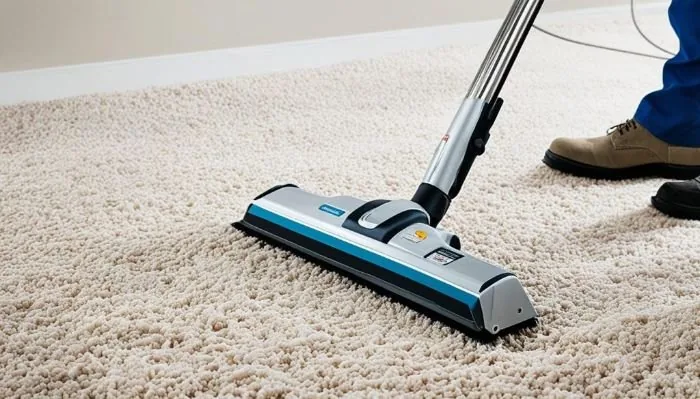
Professional hot-water extraction flushes the pile with controlled solution and recovers the moisture in the same pass, lifting soil out of the carpet and cutting drying from days to hours. Samyx’s professional carpet cleaning is priced per room: a bedroom is £36, a living or dining room £40, a staircase £37, a hallway £25 and a landing £12, so a typical one-bed flat’s carpets cost roughly what a single deposit deduction would remove. Booked alongside a move-out clean as part of a whole-property end of tenancy routine, carpet cleaning starts as an add-on from £27 depending on property size, and the end of tenancy clean itself carries a 72-hour re-clean tied to the check-out report: if the clerk flags an area, the team returns within 72 hours to re-clean it.
Whichever route you take, keep the paperwork. A receipt for professional cleaning, plus your own dated photographs, closes most carpet questions before the deposit discussion begins.
Need Carpets Ready for the Check-Out?
Enter your postcode to view our rates and availability in your area.
Frequently asked questions
-
Can my landlord charge me for carpet cleaning?
Not as a compulsory fee. In England the Tenant Fees Act 2019 bars mandatory cleaning charges. If the carpet is left worse than at check-in beyond fair wear and tear, the landlord can propose an evidenced, reasonable deduction from the deposit.
-
Am I obliged to have the carpets professionally cleaned at the end of my tenancy?
No. A clause requiring you to pay for professional cleaning is not an enforceable fee in England. Your obligation is to return the property as clean as it was at check-in, allowing for fair wear and tear, by whatever safe route achieves that.
-
Is it illegal to charge for end of tenancy cleaning?
Charging a tenant a compulsory cleaning fee is not permitted in England under the Tenant Fees Act 2019. Deducting a reasonable, evidenced cost from the deposit for documented damage or soiling beyond fair wear and tear is a separate, lawful mechanism.
-
Do landlords have to replace carpets every 7 years?
There is no fixed replacement rule. Carpets are judged on fair wear and tear at the check-out, and a tenant cannot be charged the full cost of a new carpet to replace an already worn one. Deductions reflect the remaining life and the actual damage evidenced.
-
What are the most common carpet cleaning mistakes before a check-out?
Treating stains too late, using a product the fibre cannot tolerate, over-wetting the carpet, scrubbing at stains, leaving detergent residue unrinsed, and assuming a quick vacuum is enough. Each one either leaves the original mark or creates new visible damage.
Important: Follow the carpet manufacturer’s care instructions and the product label before any general advice. Patch-test any cleaner on a hidden area, never mix cleaning products, use the least moisture that works, ventilate and let the carpet dry fully before the inspection. Stop if colour, texture or pile changes. Wool, delicate or valuable carpets and any existing damage belong with a professional, and deposit outcomes depend on your tenancy agreement, the check-in evidence and the deposit scheme’s process, not on any cleaning method alone.
Author: Svetlana Georgieva (Clara)
Hi, I’m Svetlana Georgieva, but you can call me Clara. As the co-founder and heart behind Samyx Cleaning, I’m devoted to sharing the art of a clean space. Let’s journey into a cleaner, more joyful life together with tips from London's cleaning experts.

Discover more of our cleaning secrets: