
Carpet Stain Removal: Identify the Stain and Treat It Safely

Last modified on: 17/08/2026
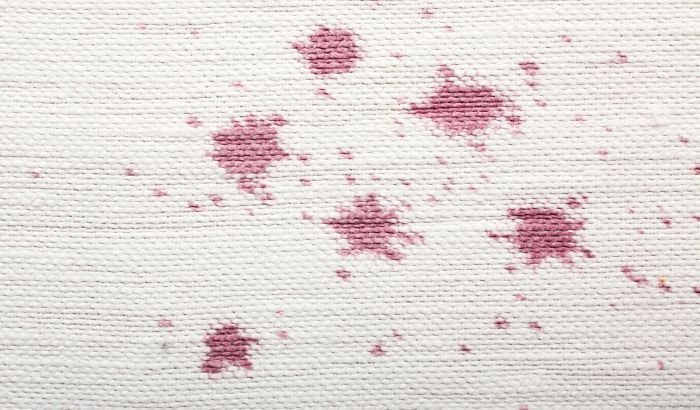
Carpet stain removal works best when you identify the spill, carpet fibre and condition before choosing a product. A fresh drink spill, oily residue, pet accident and patch of colour loss may look similar, yet each needs a different response.
The safest starting point is simple: remove excess material, blot liquid, control moisture and stop before an uncertain treatment creates a larger mark. This guide gives you that decision process without pretending that vinegar, bicarbonate of soda or one strong solvent can fix every carpet.
Key takeaways
- Blotting limits spread; scrubbing can distort pile and drive contamination into the backing.
- Stain type, fibre, dye, age and earlier treatments matter more than the strength of a cleaner.
- A product is suitable only when its label permits the carpet type and the hidden-area test stays stable after drying.
- Rinsing and moisture extraction are part of spot treatment because detergent residue attracts soil and can leave a ring.
- Bleaching, wear, dye transfer and damaged backing are not ordinary removable stains.
Table of Contents
Carpet stain removal starts with the right diagnosis
Before reaching for a cleaner, record what happened. Note the substance, time of the spill, products already used and whether the mark feels sticky, greasy, stiff or simply lighter than the surrounding carpet. Smell and moisture can also reveal contamination below the visible pile.
| What you see | Likely route | First action | Stop or escalate when |
|---|---|---|---|
| Fresh coloured drink | Water-based colour or tannin | Blot, then use a compatible labelled spot treatment | Dye transfers or the colour spreads |
| Sticky food, milk or pet accident | Mixed organic residue | Remove solids, blot and identify the exact source | Odour or moisture reaches the backing or underlay |
| Dark greasy patch | Oil, cosmetics or tracked residue | Lift excess without spreading it | A solvent is not approved for the carpet |
| Brown ring after cleaning | Residue, wicking or slow drying | Stop adding products and check below the pile | The backing is wet or the ring keeps returning |
| Pale, rough or worn patch | Dye loss, fibre damage or wear | Do not keep treating it as soil | The colour or texture has permanently changed |
A label that says wool, viscose, sisal or another natural fibre changes the risk. Strong alkalinity, oxidisers, heat and excess water may affect colour, texture or backing. If the fibre is unknown, treat that uncertainty as a reason to use less chemistry, not more.
Ask About a Carpet Stain
Enter your postcode to view our rates and availability in your area.

Act quickly without spreading the spill
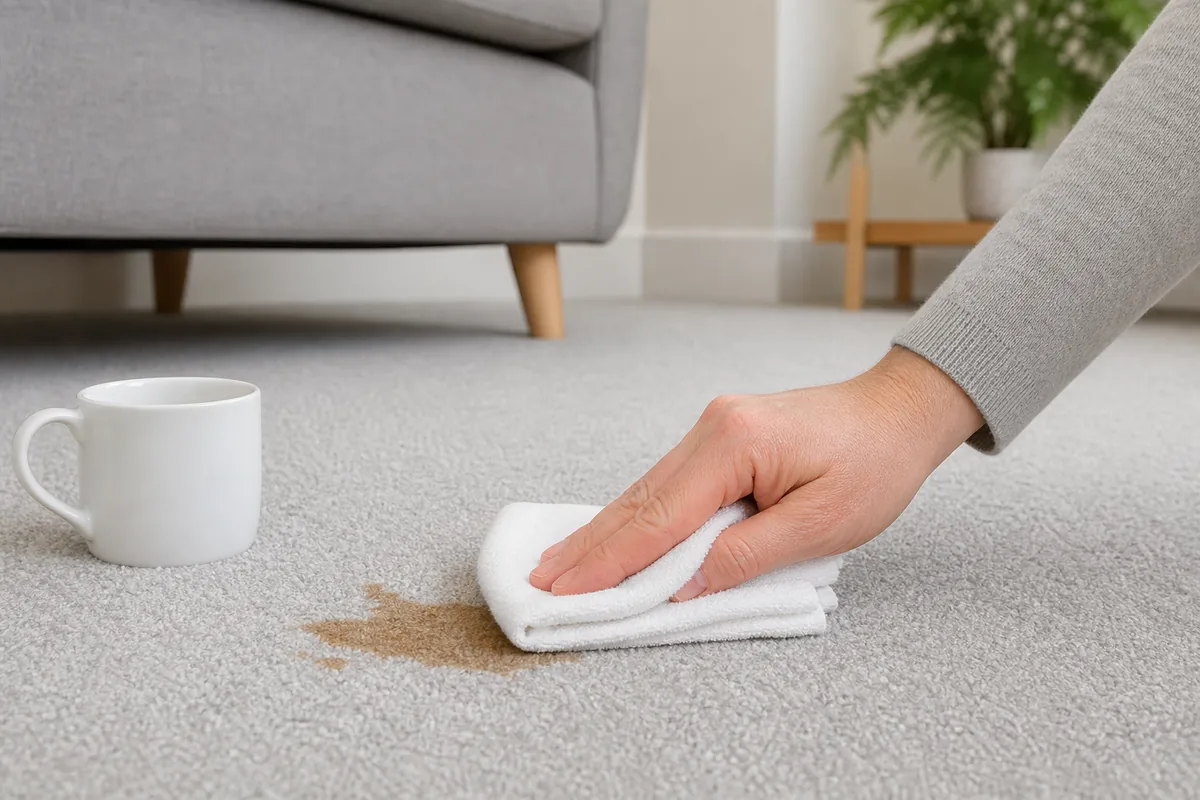
For a fresh spill, move furniture and keep people away from the area. Scoop up thick material with a spoon or blunt scraper, working from the outside towards the centre. Use a clean white towel to press and lift. Change to a dry section as it absorbs liquid.
Do not scrub. Friction can untwist pile, create fuzzing and spread pigment beyond the original edge. It can also make the treated patch look different even after the contamination has gone. A coloured cloth creates another risk because its dye may transfer to a pale carpet.
Work with small amounts of moisture. Pouring water or cleaner directly onto the carpet can carry the spill into the backing, underlay and floor. Once contamination reaches those layers, the surface may look improved while odour or discolouration returns as the area dries.
Test the fibre, dye and complete cleaning process
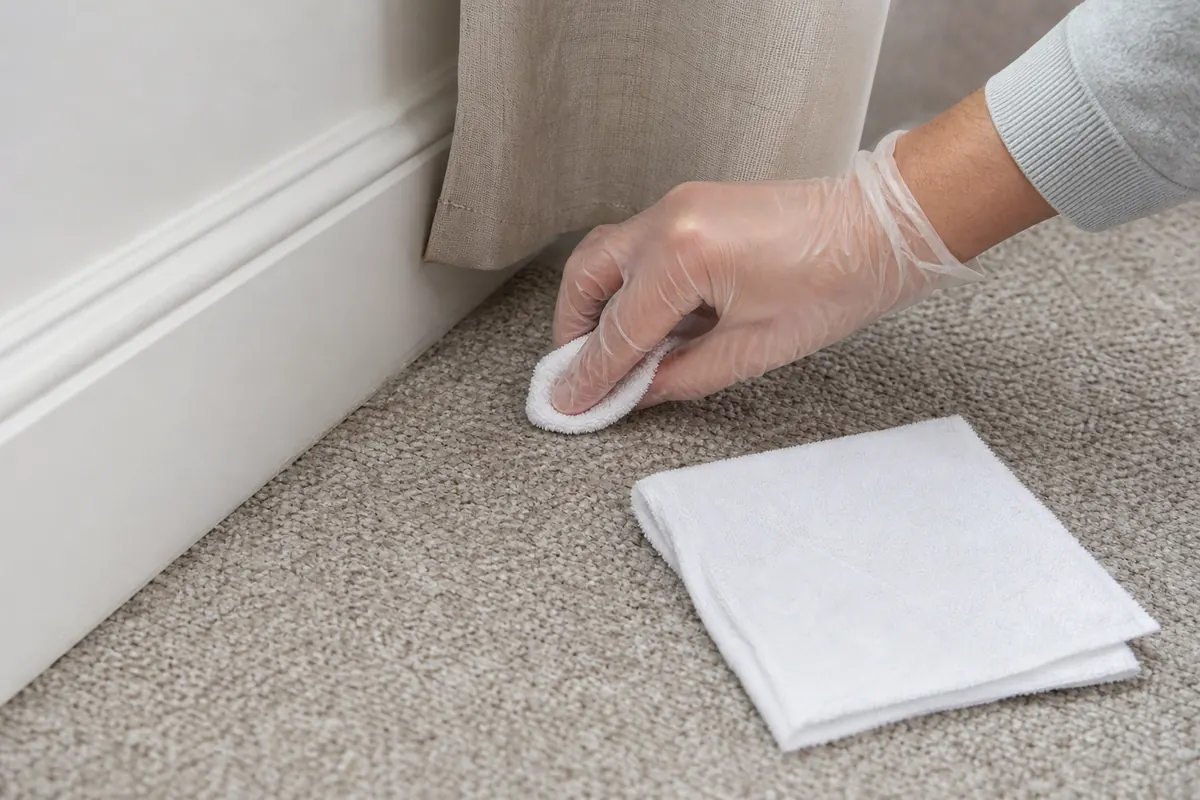
A patch test is more than placing one drop of product behind a sofa. Check the care information and read the product label first. The label should permit use on carpets and, where relevant, on wool or other delicate fibres.
- Choose a hidden section made from the same carpet, such as an edge behind furniture.
- Apply the same small amount, contact time and blotting method planned for the stain.
- Rinse or extract the test area exactly as the label directs.
- Press with a clean white cloth and check for transferred colour.
- Let the patch dry fully, then compare colour, texture, stiffness and sheen in daylight.
Stop if dye appears on the cloth, the pile becomes harsh, a light patch develops or an adhesive-backed carpet starts to loosen. Do not assume that a second product will reverse the first reaction. Mixing cleaners can create an exposure risk and makes the stain harder to diagnose; follow basic product safety rules throughout.
Choose the method by stain family
There is no honest answer to the question “What is the strongest carpet stain remover?” without knowing the stain and carpet. A suitable treatment removes or suspends the contamination without changing the fibre or dye. A powerful but incompatible product is damage, not a better result.
Tea, coffee, wine and other coloured drinks
Blot a fresh drink immediately and avoid heat, rubbing and random colour-removing products. Use a carpet spot treatment approved for the fibre, following its dilution and contact time. Apply it to a cloth where the label allows, rather than flooding the mark. Work from the edge towards the centre and finish with the specified rinse or extraction step.
Tea and coffee contain colour compounds but may also include milk or sugar, so the visible brown mark and sticky residue need to be considered together. The dedicated method for tea and coffee carries the detailed route.
You may also enjoy:
Food, milk and other organic spills
Remove solids before adding moisture. A mixed food spill can contain pigment, fat, sugar and protein, so one treatment may not address every component. Cool or label-specified water is generally safer than heat for an unidentified organic spill because heat can set some residues and encourage odour if the area is left damp.
Milk is a good example: the surface mark is only part of the problem, and residue below the pile may sour. Use the separate milk spill guide for that source. If liquid has reached the underlay, repeated surface treatments are unlikely to solve the whole issue.
Pet accidents and persistent odour
Blot a fresh accident and keep pets away until the area is treated, rinsed where required and fully dry. Use only a labelled carpet product that is compatible with the fibre and the specific contamination. Do not describe all urine as a simple protein stain or rely on fragrance to prove that it has gone.
Persistent smell can mean contamination remains in the backing, underlay or floor. The broader carpet odour guide helps trace the source and decide whether cleaning, drying or replacement is the realistic route.
Oil, grease and cosmetics
Lift thick or loose material without pushing it sideways. Do not transfer a clothing-stain recipe to carpet: carpet has a pile, backing, dye system and adhesive conditions that garments do not. Use a labelled carpet spotter suitable for oily contamination and apply the minimum amount required.
Avoid WD-40 and unapproved household solvents. They may leave oily residue, affect the backing, spread the mark or introduce flammable vapour. If a solvent-type product is approved, ventilation, application, extraction and disposal instructions all matter. Stop when the label does not clearly cover the carpet and stain.
Ink, paint, adhesive and unknown stains
Identify whether paint is water-based or solvent-based and whether it is still wet. Record the ink, adhesive or craft product if its packaging is available. These marks can need highly specific chemistry, while the wrong solvent can dissolve backing materials or move dye. Do not experiment across a wide visible area.
For an old unknown stain, photograph it and note everything already tried. Begin with dry soil removal and a hidden-area test, not a sequence of stronger products. A professional has a better chance of choosing a compatible spotter when the original contamination has not been masked by several residues.
Why common home remedies can make the mark worse
Vinegar and bicarbonate of soda are often presented as a universal pair. When combined, they react and consume much of each other’s useful chemistry. The mixture can also leave residue in the pile. Vinegar may affect some dyes or fibres, while powder can be difficult to remove from a dense carpet and may not be suitable for every vacuum.
Hydrogen peroxide and bleach can remove colour from the carpet as well as from the stain. Lemon juice is acidic and not a neutral alternative. Washing-up liquid can leave sticky residue when it is too concentrated or not rinsed. Steam, hot water or a hairdryer can set some stains, distort fibres or drive moisture further down.
A remedy being described as natural does not make it compatible. Use a product only when you know what it is, the label permits the surface and your complete test remains stable after drying. Never mix commercial cleaners or add household ingredients to them.
Rinse residue, extract moisture and prevent a returning ring
Once a compatible treatment has lifted the contamination, follow its finishing instructions. Some products require a controlled water rinse; others are designed to be blotted or extracted in a particular way. Adding extra detergent “for strength” can leave a sticky patch that soils faster than the surrounding carpet.
Use dry white towels to remove as much moisture as practical, then allow airflow without overheating the carpet. Keep people and furniture off the area until it is dry. Do not place foil, plastic or a closed container over damp pile because trapped moisture slows drying.
A brown or grey ring that appears later may be residue, soil movement from the backing or wicking as moisture rises during drying. Repeatedly wetting the visible edge can enlarge it. Stop, check the backing and underlay where possible, and arrange controlled extraction when the affected layer cannot be reached safely from the surface.
Know when the mark is not a removable stain
Cleaning removes foreign material; it cannot replace missing dye or rebuild worn fibre. A pale patch after bleach, peroxide, acne treatment, sunlight or a strong cleaner may be colour loss. A dark traffic lane can be a mix of soil and physical wear. Fuzzing, flattened pile, burns and pulled loops are material changes.
Some old stains have chemically altered the dye or bonded with the fibre. Others were treated with products that fixed the colour or left residue. Professional treatment may improve them, but no responsible cleaner can promise complete removal before inspection and testing.
When professional carpet cleaning is the safer choice
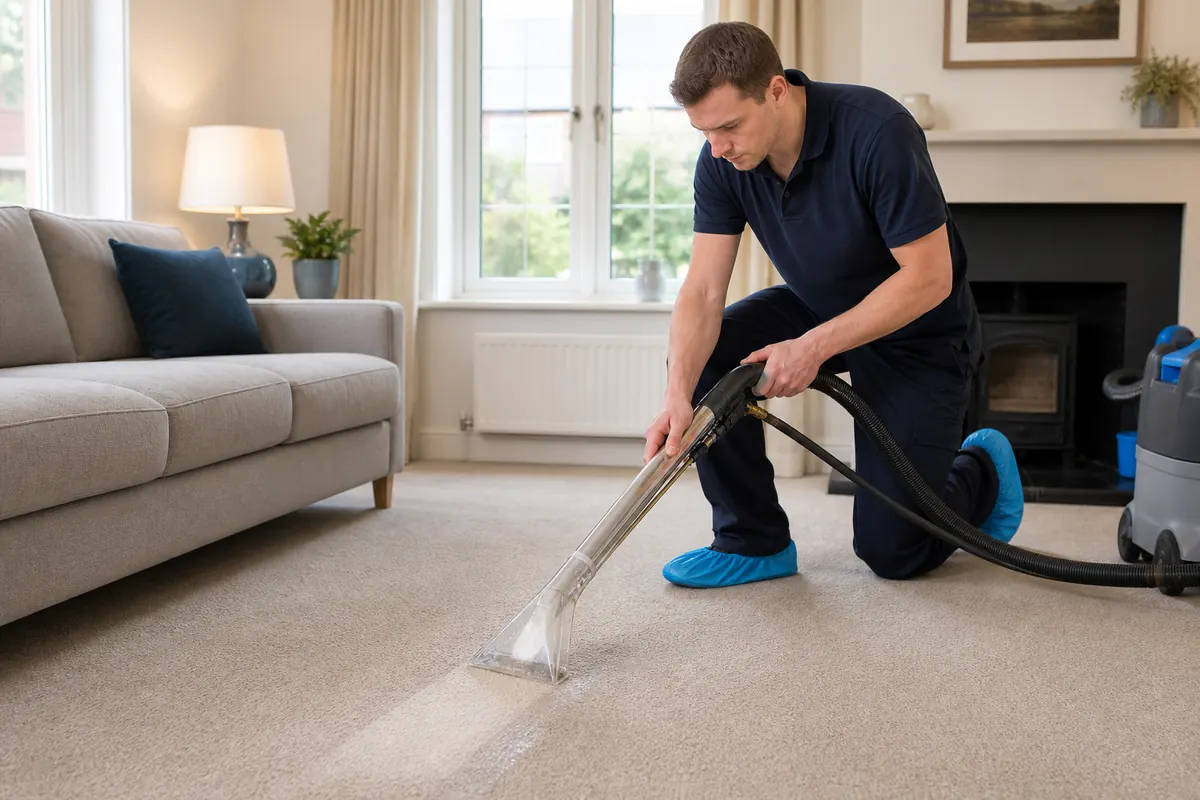
Arrange an assessment when the carpet is wool, handmade, valuable or of unknown construction; when the stain is large, old or chemically altered; or when liquid has reached the backing or underlay. The same applies when colour transfers during testing, an odour returns, mould or sewage is suspected, or previous products are unknown.
A trained technician can inspect the fibre, choose a stain-specific product and control rinsing and extraction. Spot treatment and whole-carpet cleaning are different decisions: removing local residue may be followed by wider cleaning only when the overall condition needs it. Our explanation of hot water extraction clarifies why the process should not be reduced to the word “steam”.
Samyx provides carpet cleaning in London and can assess stain treatment alongside fibre cleaning. Inspection still matters: permanent dye loss, damaged backing, contaminated underlay or a source leak may need repair or replacement beyond a cleaning service.
Book Carpet Cleaning
Enter your postcode to view our rates and availability in your area.
Prevent small spills becoming stubborn stains
- Keep clean white cloths and a blunt scraper where they can be reached quickly.
- Save the carpet care information and note the fibre, backing and warranty conditions.
- Vacuum loose grit regularly so it does not abrade the pile or hide a fresh mark.
- Use mats at entrances and deal with tracked oil or mud before it spreads through the room.
- Keep labelled spot products closed, stored safely and separate from improvised mixtures.
- Record professional treatments so future cleaners know what chemistry has already been used.
Frequently asked questions
-
Can old carpet stains always be removed?
No. Some old marks are removable contamination, while others are dye loss, wear, fibre damage or staining that has chemically altered the carpet. Previous products may also have fixed the mark or changed its colour. Identification and testing are needed before anyone can give a realistic outcome.
-
Does vinegar and bicarbonate of soda remove carpet stains?
They are not a universal carpet treatment. Mixed together, they react and can leave residue, while vinegar may be unsuitable for some fibres or dyes. Use the carpet manufacturer’s guidance and a labelled compatible product, then test the complete method in a hidden area.
-
Should you scrub a tough carpet stain?
No. Scrubbing can spread contamination, untwist the pile and create a visibly rough patch. Lift solids, blot liquid with a clean white cloth and use a compatible stain-specific treatment with controlled moisture.
-
Can professional carpet cleaning remove every stain?
Professional inspection and stain-specific treatment can improve many marks, but complete removal cannot be promised. Bleaching, permanent dye change, burns, wear, damaged backing and contamination below the underlay may require repair or replacement rather than more cleaning.
Safety note: Follow the carpet manufacturer’s care guidance and every product label. Stop if colour transfers, fibres change, fumes cause discomfort or contamination may involve sewage, mould, hazardous chemicals or unknown solvents. Keep children and pets away until the treated area is fully dry.
Author: Svetlana Georgieva (Clara)
Hi, I’m Svetlana Georgieva, but you can call me Clara. As the co-founder and heart behind Samyx Cleaning, I’m devoted to sharing the art of a clean space. Let’s journey into a cleaner, more joyful life together with tips from London's cleaning experts.

Discover more of our cleaning secrets: