
Cleaning Chores for Children: Age-Appropriate and Safe

Last modified on: 30/08/2026
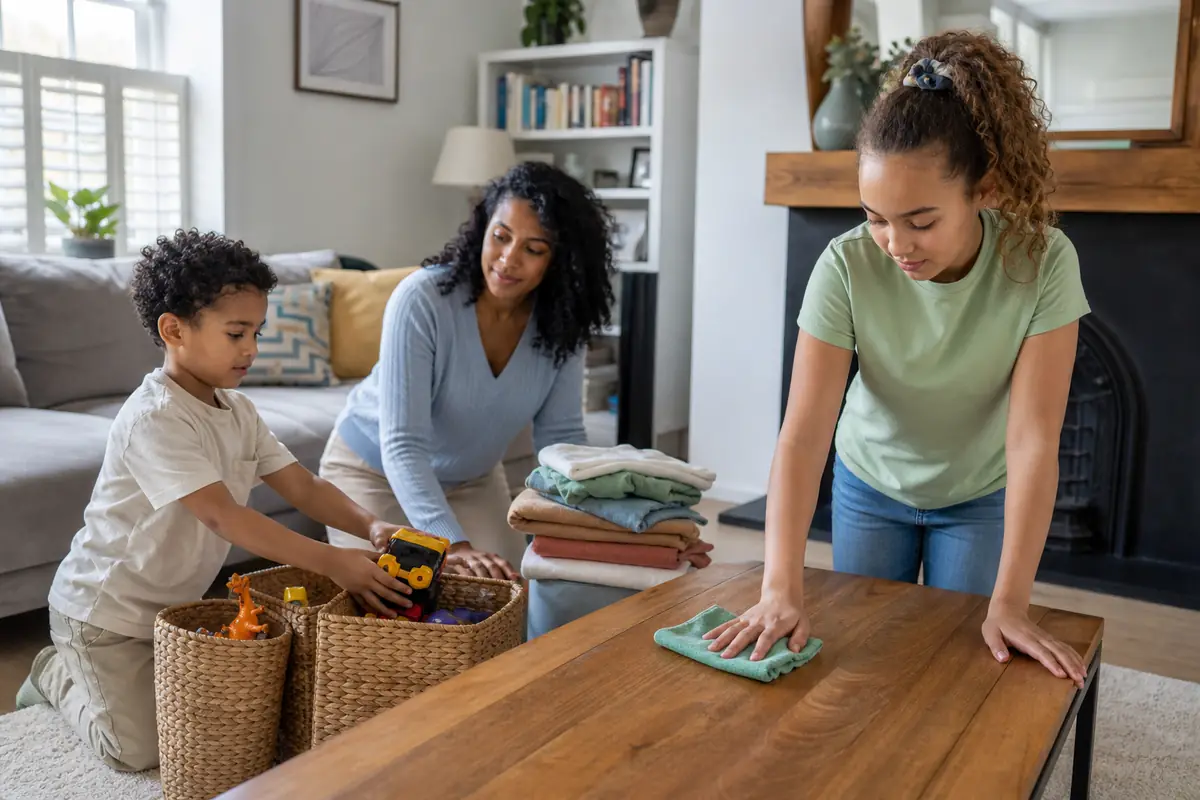
Cleaning chores for children work best when the adult chooses the task by ability, explains the finish line and keeps products and hazards out of the child’s part of the job. A three-minute tidy can teach a repeatable household habit without turning a child into a miniature cleaner. Begin with dry, visible tasks such as putting toys away, sorting laundry or wiping an empty table with a plain cloth. Demonstrate one method, stay close and check the result together. Bathrooms, chemical products, biological mess, heat, blades, heights and heavy equipment remain adult work.
Use four checks before assigning a cleaning chore
- Choose a dry, low-risk task the child can physically control and understand.
- Remove products, hot items, sharp objects, heavy equipment and biological mess from the work area.
- Show one clear method and one visible finish line, then supervise the first attempts.
- Stop or simplify the task when the child cannot control the tool, follow the sequence or recognise a hazard.
Key takeaways
- Assign chores by demonstrated ability and the hazards in the room, using age only as a starting guide.
- Begin with tidying, sorting, folding and other dry tasks that have a visible finish line.
- Teach the method in small steps, supervise practice and check the result with the child.
- Keep cleaning products, aerosols, biological mess, heat, blades, heights and heavy equipment adult-only.
- Use a short rota with named tasks, realistic frequency and a reset point when family life interrupts the plan.
Table of Contents
Cleaning chores for children: choose by task, not birthday
Age bands help adults find a starting point, yet children of the same age can have very different reach, coordination, reading ability and judgement. The room also changes the risk. Putting soft toys in a basket is different from carrying a full bin through a narrow hallway. Wiping an empty dining table with a dry cloth is different from handling a spray bottle near food.
Use the child’s current skills and your own home setup as the decision test. The locked guidance on age-appropriate chores gives adults a starting range of household tasks. No age list replaces an adult’s assessment of a particular child, tool and room.
Task zone
Suitable starting task
Supervision check
Adult-only boundary
Bedroom and toys
Put toys, books and clothes in named places
Check small parts, unstable storage and trip hazards
Moving furniture, broken items and high shelves
Laundry
Match socks, fold towels and carry a light basket
Check basket weight and explain where each item goes
Detergent, stain products, irons and hot dryers
Living area
Straighten cushions and wipe a dry, empty table
Remove fragile objects and use a plain dry cloth
Electrical equipment, fireplaces and product sprays
Kitchen
Clear an unbreakable place setting or wipe dry crumbs
Keep the child away from cooking and sharp utensils
Hot surfaces, knives, raw-meat areas and chemicals
Bathroom
Hang a towel or place dry laundry in a basket
Keep the floor dry and stay present
Toilet cleaning, mould, limescale and all products
Floors and bins
Use a small hand brush on a dry, clear patch
Check posture, tool control and what has spilled
Glass, liquids, pest waste, heavy bags and stairs
A task moves into the adult column as soon as the material or setting changes. A dry paper scrap is a simple pick-up task. An unknown spill beside it is not. This rule gives the child a reliable boundary without asking them to identify chemicals, contamination or surface damage.
Start with chores that have a visible finish line
Children are more likely to understand a task when they can see where it starts and ends. “Put every building block in this basket” is clearer than “clean your room”. The first instruction names the objects, destination and finish line. The second hides several decisions about laundry, rubbish, surfaces, bedding and storage.
Starter tasks
- Place toys, books or craft materials in one labelled container.
- Put dirty clothes in the laundry basket.
- Match socks or fold small towels on a clear surface.
- Carry an empty cup or unbreakable plate to a designated place.
- Wipe dry crumbs from an empty table with a plain cloth.
Developing tasks
A child who can follow two or three steps may be ready to make part of a bed, fold simple laundry, dust a clear low shelf with a dry microfibre cloth or sweep a dry patch of floor. Check the tool size and weight first. A child should be able to stop, set the tool down and ask for help without blocking a walkway or losing control of it.
Dry dusting still needs a boundary. Clear the shelf first, give the child one cloth and name the area that is in scope. Screens, lamps, sockets, ornaments and trailing cables stay out. Put the used cloth in the agreed laundry place when the task ends. A colour or label can identify the cloth, so it is not carried from a bedroom shelf to a food surface or bathroom.
More independent tasks
Older children may manage their bedroom reset, change pillowcases, sort a laundry load by the family’s rules or vacuum one clear room after an adult demonstration. Independence remains task-specific. Being able to tidy a bedroom does not make bathroom products, a steam mop or an overflowing kitchen bin suitable. The adult still checks the equipment, area and result.

Teach the method before handing over the task
A clear demonstration removes hidden choices. Complete the task once at normal speed, then repeat it slowly and name the important actions. Show where the tool lives, where finished items go and what should trigger a stop. The child can copy one step, then two, before completing the short sequence with you nearby.
- Prepare the area. Remove breakables, products, cords, food and anything the child should not handle.
- Name the task. Use a specific instruction such as “fold these four towels and place them on this shelf”.
- Demonstrate the method. Show the order, safe body position and tool storage.
- Let the child practise. Stay close enough to intervene before a spill, trip or damaged item.
- Check together. Point to the agreed finish line and correct one thing at a time.
The American Academy of Child and Adolescent Psychiatry describes chores as routine household tasks. A routine becomes easier to repeat when the standard stays stable. Avoid changing “put books on the shelf” into a full room clean halfway through the job. Add a new step during the next demonstration.
Build a rota children can actually follow
A family rota should reduce daily negotiation. Give each child one personal reset and one shared household task. Name the day or trigger, the expected duration and the finish line. A short task after breakfast or before screen time is easier to remember than an unspecified weekly promise.
Keep the first version small. A useful seven-day rota might contain a daily toy or desk reset, two laundry-sorting sessions and one supervised floor task. The family’s daily checklist can carry the adult jobs separately, so a child is not assigned a chemical or hygiene task simply because it appears on the household plan.
Use time boxes for starting, not for rushing. Racing across a room can turn a safe task into a collision or broken object. Five calm minutes with one clear target is more useful than points for speed. Praise the specific behaviour you want repeated: putting the brush away, stopping at an unknown spill or asking before moving a heavy basket.
A simple weekly rota
The rota below is a planning example, not a fixed programme. Choose fewer tasks for a child who is learning the method, and keep every job within the adult’s capability and hazard check.
Trigger
Child’s task
Adult check
After play
Return one type of toy to its labelled basket
Remove broken toys and small hazardous parts
Before school
Put nightwear away and straighten the duvet
Keep high storage and heavy bedding out of scope
After dinner
Carry an unbreakable place setting to the agreed spot
Clear knives, glass, heat and food-contamination areas
Laundry day
Match socks or fold dry towels
Handle detergent, machines and hot items
Weekend reset
Sweep a dry, clear patch or vacuum one prepared room
Inspect the floor, equipment, cord and stairs first
Write the rota around triggers the family already has. “After play” or “before the bedtime story” gives the task a natural cue. If the cue is missed, name the next reset point. Avoid carrying unfinished jobs into every conversation, because the task soon becomes harder to understand than the original chore.

Plan Regular Domestic Cleaning
Enter your postcode to view our rates and availability in your area.

Keep these cleaning jobs adult-only
Product handling is an adult responsibility. Keep bottles, pods, powders, concentrates and aerosols in locked storage that children cannot reach. Do not decant products into drink bottles or ask a child to measure, spray, mix or rinse them. A familiar brand or pleasant scent does not remove the label hazards.
Chemicals and contaminated mess
Adults handle disinfectants, bleach, ammonia, acids, oven and drain products, stain removers and unknown residues. Blood, vomit, faeces, mould, pest waste, raw-meat contamination and overflowing bins also stay outside the child’s rota. These jobs require hazard recognition, suitable adult PPE, careful disposal and product-label decisions.
Heat, blades, heights and electricity
Irons, steam cleaners, hot ovens, hobs, kettles, knives, broken glass, ladders and external windows are adult-only. Keep children away from wet floors, stairs and trailing electrical leads. Vacuuming can become suitable only after the adult checks the machine, cord or charging setup, room layout and the child’s ability to control and stop it.
Valuable, delicate or damaged items
Do not use a child’s chore as a test on stone, polished wood, screens, antiques, musical instruments or sentimental items. A loose plug, cracked handle, frayed cable or unstable shelf ends the task. The adult should isolate the item and check the manufacturer guidance or arrange repair before anyone continues.
You may also enjoy:

Make the standard visible and fair
Children cannot meet a standard they have never seen. Photographing the expected toy shelf, drawing the order of three steps or using a small picture label can make the finish line easier to recognise. Keep the standard proportionate: books upright and floor clear may be enough for a school-night bedroom reset.
Rotate shared tasks only after each child has learned them. Constant rotation creates repeated teaching and uneven expectations. Personal tasks can stay stable for several weeks, with one shared task changing at a predictable point. Missed chores need a reset route, such as returning to the task after dinner, without turning the rota into a long punishment.
Match the environment as carefully as the task. A child who can fold towels may still struggle with a basket stored above shoulder height. Sensory discomfort, fatigue, illness or a change in routine can also alter what is manageable that day. Reduce the steps or provide help when the agreed task no longer fits.
Correct the method without taking over
Check the result against the finish line you gave at the start. If books are on the shelf and the walkway is clear, acknowledge those parts first. Demonstrate one missed action, such as placing large books upright, and let the child repeat it. Recleaning the whole area silently removes the feedback they need and can make the standard feel unpredictable.
A repeated difficulty is information about the task. The basket may be too heavy, storage may be unclear, the sequence may have too many steps or the tool may not fit the child’s hands. Change the setup before treating the problem as unwillingness. Labels, a lower shelf, a smaller load or a two-step instruction often make the same chore easier to complete and safer to supervise.
When regular cleaning can support the family routine
Children’s chores work best as small contributions, not as the household’s main hygiene system. Busy weeks still leave kitchens, bathrooms, floors, dust control and shared rooms needing adult attention. When the adult workload is crowding out family time, regular domestic cleaning can take care of the wider routine while children keep their safe personal tasks.
Samyx Cleaning provides regular home cleaning across London. The useful division is clear: the cleaner handles the agreed household cleaning, and the family decides which tidying or dry tasks remain part of the children’s routine. Put toys, private papers and delicate belongings where you want them before the visit, and explain any rooms or items that should not be touched.
Book Regular Domestic Cleaning
Enter your postcode to view our rates and availability in your area.
Frequently asked questions
-
What house chores can a 7-year-old do?
A seven-year-old may be ready to put away toys and books, fold simple laundry, wipe a dry table and help make a bed. An adult should match the task to the child’s coordination, reading, judgement and home setup, then demonstrate and supervise it.
-
When can a child start vacuuming?
Start only when the child can safely control the vacuum, understand the cord or charging setup and stop when asked. An adult should demonstrate it, stay nearby and keep stairs, liquids, hot areas and damaged equipment out of the task.
Important: This is general household guidance, not medical or developmental advice. A parent or carer must choose and supervise each task. Product labels and manufacturer care instructions take priority over general guidance. Cleaning chemicals and aerosols stay adult-only and must never be mixed. Adults should patch-test products on finish-sensitive materials, use the stated ventilation and protective equipment, and rinse or dry surfaces as directed. Biological mess, sharps, heat, heights, electricity, heavy items and damaged equipment remain adult work. Stop when a child cannot control the tool, becomes distressed or cannot recognise the agreed boundary. Seek suitable professional advice for allergy, health, sensory or developmental concerns.
Author: Svetlana Georgieva (Clara)
Hi, I’m Svetlana Georgieva, but you can call me Clara. As the co-founder and heart behind Samyx Cleaning, I’m devoted to sharing the art of a clean space. Let’s journey into a cleaner, more joyful life together with tips from London's cleaning experts.

Discover more of our cleaning secrets: