
How to Store Cleaning Supplies Safely at Home

Last modified on: 22/07/2026

How to store cleaning supplies safely starts with four controls: keep every product labelled, closed, separated from food and medicines, and inaccessible to children or pets. The safest place is usually a locked, dry cupboard where bottles can stand upright in a tray and the conditions match each product label.
Quick answer: use one locked, dry storage point
Keep household cleaners in their original labelled bottles, closed and upright in a shallow tray inside one locked, dry cupboard away from food, medicine and heat. If there is no suitable cupboard, use a purpose-made lockable box on a stable shelf.
- Under the sink: use it only when the door locks securely and the plumbing and shelf stay dry.
- Airing cupboard: use it only when every product label permits the temperature and the bottles are separate from towels and bedding.
- Garage or shed: use it only when the labels permit the temperature range and the cabinet is away from sun, flames and ignition sources.
Key takeaways
- The product label decides the acceptable temperature, ventilation and separation conditions; generic room advice never overrides it.
- Child-resistant packaging is not child-proof. Use a locked cupboard or lockable container where children, pets or vulnerable adults could gain access.
- Never decant a cleaner into a drinks bottle, unmarked jar or another product’s container, and never combine leftovers to save space.
- Store closed chemicals separately from food, medicine and damp cleaning tools, with bottles upright in a washable tray.
- Check the storage area monthly and isolate leaking, damaged or unlabelled containers before anyone handles them.
Table of Contents
How to store cleaning supplies safely: a five-minute cupboard check
Start with the containers, then judge the cupboard. Take every bottle out one at a time and look for a loose cap, a sticky base, a cracked trigger, fading instructions or a label that has become unreadable. Do not smell a product to identify it and do not test an unknown liquid. Set damaged or unidentifiable containers apart where nobody can touch them, then follow the manufacturer or local disposal guidance.
Return sound bottles upright, with the tallest and heaviest at the back or on the lowest stable shelf. A shallow plastic tray makes small leaks visible and stops different residues spreading across timber, laminate or metal. Avoid cramming products together. You should be able to lift one bottle without knocking over three others.
- Check access. Can a child, pet or visitor open the door or reach the shelf? Fit a reliable lock or move the products.
- Check every container. Keep the original bottle, cap and readable label together.
- Check the surroundings. Remove food, medicine, towels, toothbrushes and pet supplies from the chemical storage area.
- Check temperature and moisture. Look for direct sun, a boiler or hot pipe, condensation, plumbing leaks and damp shelving.
- Check the next use. Keep the label facing forward and do not store a product where you will need to reach over food or clean laundry to retrieve it.
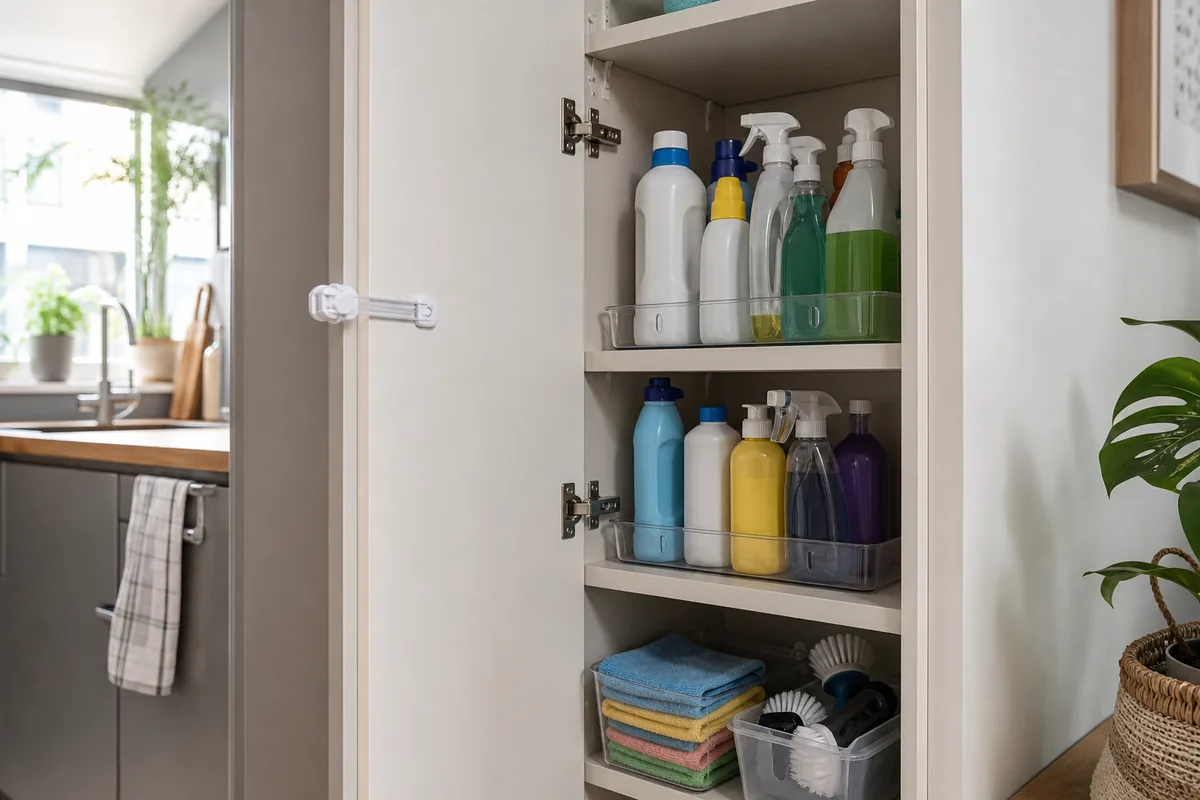
Repeat the check monthly and after buying a new product. A cupboard that worked for two sprays may stop being safe after adding laundry capsules, a drain cleaner and a large refill bottle. The system has to match what is actually stored there today.
Want help for your regular cleaning routine?
Enter your postcode to view our rates and availability in your area.

Choose the storage location by conditions, not convenience
No room is automatically safe. A good location stays within the temperature range on the label, remains dry, can be secured and keeps bottles separate from food, medicine and personal-care items. It also needs a firm shelf that can hold the weight without bowing.
Under the kitchen sink
An under-sink cupboard is common, yet it sits at child height and may contain damp pipework. Use it only when the door has an effective lock, the plumbing is sound and products stand in a tray away from the pipes. Keep food, dishwasher tablets and pet bowls elsewhere. If the cupboard becomes humid or the lock is easy to defeat, choose another place.
Airing cupboards
Airing cupboards can become warm around a hot-water cylinder and pipework. Check each label before using one. Products that must be kept away from heat do not belong beside the cylinder, and a leaking bottle should never sit over towels or bedding. A separate locked cabinet in a cooler part of the home is a safer choice when the temperature varies or feels noticeably warm.
Bathrooms and utility areas
Bathrooms often have moisture, limited storage and frequent child access. A high locked cabinet can work for products whose labels allow those conditions. Do not place bottles on the floor, bath edge, toilet cistern or open shelf. Utility cupboards can be suitable when they are dry, secure and separate from clean laundry, medicines and animal supplies.
Garages, balconies and sheds
Outdoor storage can expose products to summer heat, winter cold and large temperature swings. It may also place aerosols or flammable products near tools, chargers, heaters or fuel. Use a garage or shed only when the individual label permits the conditions and the cabinet stays locked, dry and away from ignition sources. A balcony is rarely a controlled storage space because of sun, rain and public or child access.
Safe storage decision map
Match the risk to the control, then confirm the choice against the product label.
Children or pets can reach it
Move it to a locked cupboard, keep the original cap and package, and never rely on child-resistant packaging alone.
Strong or reactive product
Keep it upright in a separate tray and follow every label warning about separation. Never mix products or combine leftovers.
Aerosol or flammable warning
Use the label temperature range and keep it away from direct sun, flames, hot pipes, heaters and ignition sources.
Kitchen or food-contact product
Store it in a dry, latched or locked cupboard that is physically separate from food, medicine and animal feed.
Wet cloths, brushes or tools
Rinse as appropriate, let them dry, and keep them apart from closed chemical containers so moisture does not hide a leak.
No dedicated cupboard
Use a lockable box or cabinet on a stable shelf. The lockbox stays in the home; a cleaning caddy should not remain accessible between jobs.
Keep original containers, labels and instructions together
Decanting creates several risks at once. The new container may react with the product, leak, be mistaken for a drink, or lose the dilution and first-aid instructions. Combining two partly used bottles can also mix different formulas even when the front labels look similar. Keep every cleaner in the container supplied by its manufacturer.
The label tells you what the product is, where it can be used, how it should be stored and which precautions apply. The HSE’s cleaning-product label guidance explains that hazardous products carry pictograms, signal words, hazard statements and precautionary statements. Keep those details readable. If a label peels at the edge, protect the original bottle from moisture without covering the information.
Marketing language does not replace safety information. A bottle described as natural, green or plant-based may still need secure storage and surface precautions. Use the exact ingredient functions and warnings when comparing cleaning-product ingredients and labels, then store the product for its real formulation and packaging.
You may also enjoy:

Separate products from people, food and each other
Physical separation is more dependable than a handwritten category on a shelf. Keep cleaning products in their own locked storage area, away from food, drink, medicines, cosmetics, pet food and children’s items. Laundry capsules deserve the same control as any other concentrated product: the bright, soft packs can attract young children, and child-resistant packaging is not child-proof.
RoSPA’s household poisoning-prevention advice supports high or locked storage, original packaging and immediate return after use. That last action matters. A secure cupboard cannot protect anyone when the bottle is left beside the sink after cleaning.
Do not invent your own compatibility chart from a product’s smell, colour or marketing category. Follow the separation directions on each label and contact the manufacturer when the instruction is unclear. Never mix cleaning products, pour leftovers into another bottle or combine them to save shelf space. Keeping containers apart in trays also limits contact if one begins to leak.
Store cloths, brushes and gloves separately once they are clean and dry. Damp tools can conceal a slow leak, damage labels and keep the cupboard humid. A tool caddy is useful during the job; return the chemicals to locked storage afterwards. Homes with young children also benefit from the product-selection and residue controls used for child-safe cleaning products.
What to do with leaks, damage or a missing label
Treat a sticky bottle base, bulging container, damaged cap or strong unexpected smell as a warning. Keep children and pets away, ventilate the area if it can be done safely, and check the label before touching the product. Wear only the protective equipment named on the label. Do not wipe an unknown spill with another chemical.
For a small leak from a known product, follow its spill and disposal directions and protect the surrounding surface. Some concentrated products can mark wood, metal, stone or painted finishes even when the visible spill seems minor. If the container is unsafe to lift, the product is unlabelled, or the reaction is continuing, isolate the area and contact the manufacturer or the appropriate local hazardous-waste service.
Leaks sit among the common household cleaning hazards that are easier to control before a job starts. Clear floors, dry hands, sound tools and secured products reduce the chance that a storage problem becomes a fall, splash or accidental exposure.
Suspected exposure needs a health response, not a cleaning experiment. The NHS poisoning guidance says to call 999 or go to A&E when you think someone has swallowed, touched or breathed in something harmful and is seriously unwell; NHS 111 can advise when you are unsure whether the situation is harmful. Do not try to make someone vomit. Keep the product container or label available for the medical team when it is safe to do so.
Pet exposure needs veterinary advice. Move the animal away from the area, prevent grooming of contaminated fur if you can do so without spreading the product, and contact a vet with the label details. Generic online remedies can make an exposure harder to assess.
Build a safe system in a small London home
A small flat may not have a utility room or spare cupboard. You still need one controlled home for the chemicals. A lockable wall cabinet, a secured high cupboard or a purpose-made lockbox on a stable shelf can work when the label conditions are met. Keep the key or combination inaccessible and make sure the box cannot fall when the door is opened.
Separate the storage system into three simple zones: closed chemicals, dry tools and refills awaiting use. Use trays inside the chemical zone, not decorative baskets that absorb leaks. Place frequently used products where an adult can lift them without reaching behind heavier bottles. Reserve the highest or hardest-to-reach position for the lightest containers, not a large refill that could fall.
Buy for the space you have. Large refills can lower packaging use, yet they are a poor fit when the only safe cabinet cannot hold them upright. Choose a smaller original pack or a concentrated format only when you can measure, store and use it exactly as directed. Do not transfer a refill into an old bottle unless the manufacturer supplies and instructs that specific reusable system.
A portable caddy is for moving selected products during cleaning, not permanent open storage. Load only what the job needs, keep the caddy under adult control, then return every bottle to the locked cabinet. Store the empty, dry caddy with the tools. This approach reduces clutter without leaving a collection of sprays accessible in each room.
How Samyx Cleaning helps keep the routine manageable
Product storage becomes easier when it has a fixed place in the routine. Close and return each bottle as soon as the task is finished. Let tools dry, wipe the tray with a method suitable for any known residue, and check the cupboard before adding a new product. A two-minute reset after cleaning prevents the open caddy or damp cloth from becoming the normal arrangement.
Samyx Cleaning can support a consistent regular domestic cleaning routine in London and customers can raise clear product preferences within the agreed service. The household remains responsible for safe product storage, access restrictions and following manufacturer instructions. Our cleaning service is not a chemical-storage, disposal or emergency-advice service.
Need Regular Domestic Cleaning in London?
Enter your postcode to view our rates and availability in your area.
A monthly storage reset
Set a recurring reminder for the cupboard, especially after a large shop, a move or a change in who lives at the property. Check locks, caps, trays, labels, shelf strength, pipework and product dates where the manufacturer supplies them. Remove empty packaging through the stated disposal route and keep unknown leftovers out of use.
Finish by asking one question: could an unexpected visitor safely understand and leave this cupboard alone? Clear labels, one locked location and visible separation make the answer easier. The aim is controlled access and reliable information, not a display that merely looks organised.
Conclusion: safe storage that stays workable
A safe system is easy to repeat: original labels, closed upright containers, controlled access, suitable conditions and a quick monthly check. Give every cleaner one secure home, return it after use and act on damage before the next job. Those habits protect people, pets and the surfaces around the cupboard without turning a small London home into a chemical storeroom.
Frequently asked questions
-
Can you store cleaning products in an airing cupboard?
Only when every product label allows the temperature and the cupboard stays dry, locked and separate from towels or bedding. Products that must be kept away from heat need a cooler location.
-
Is it safe to keep cleaning products under the sink?
It can be safe when the cupboard has an effective lock, the plumbing does not leak and bottles stand upright in a tray. Move them if children can open the door or the space becomes damp.
-
How can you store cleaning supplies without a cupboard?
Use a purpose-made lockable box or cabinet on a stable shelf, within the temperature and ventilation limits on each label. Keep chemicals separate from dry tools, food, medicine and pet supplies.
-
What should you do if a cleaning product leaks?
Keep people and pets away, check the label and follow its spill and disposal directions. Do not use another chemical on the spill. Seek manufacturer or specialist advice when the container is damaged, unknown or unsafe to handle.
-
Should cleaning products be kept in their original containers?
Yes. The original container is designed for the product and keeps its identity, warnings, storage directions and first-aid information together. Never decant cleaners into drink bottles or unmarked jars.
Safety note: Storage requirements vary by product. Keep cleaners in their original labelled containers and follow the manufacturer’s directions for temperature, ventilation, separation and disposal. Never mix or decant products to save space. Restrict access to leaking, damaged or unlabelled containers and seek appropriate manufacturer, medical, veterinary or emergency advice for suspected exposure. This is practical household guidance, not product-specific chemical or medical advice.
Author: Svetlana Georgieva (Clara)
Hi, I’m Svetlana Georgieva, but you can call me Clara. As the co-founder and heart behind Samyx Cleaning, I’m devoted to sharing the art of a clean space. Let’s journey into a cleaner, more joyful life together with tips from London's cleaning experts.

Discover more of our cleaning secrets: