
How to Remove Stains from Porcelain Tiles Without Damaging the Finish or Grout

Last modified on: 27/08/2026
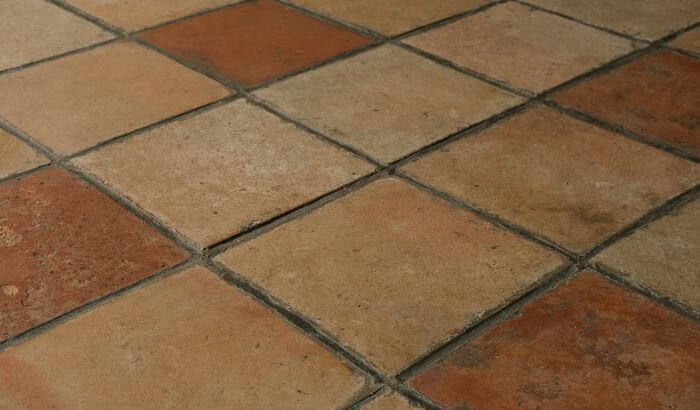
How to remove stains from porcelain tiles starts with identifying the finish, the grout and the source of the mark before choosing a cleaner.
A glazed bathroom tile, polished indoor floor and textured porcelain patio may share the same material name and still require different tools or chemistry. Begin with dry soil removal and a labelled, compatible low-strength method. Escalate only when the first result shows that the mark is a stain, not residue, damage or installation material.
Check the surface before treating the stain
- Confirm that the surface is porcelain or glazed ceramic and identify whether it is glazed, polished or textured.
- Separate the tile body from grout, silicone, metal trim and any nearby natural stone.
- Vacuum or sweep away loose grit, then clean the whole marked area with the mild compatible routine method.
- Patch-test a product labelled for the exact finish and stain, following its dilution, contact time and rinsing directions.
- Stop if colour transfers, the sheen changes, grout softens or the mark appears to be etching, scratching or installation residue.
Key Takeaways
- Identify the finish and stain source before selecting any chemical or tool.
- Treat grout, silicone, metal trim and natural stone as separate materials.
- Start with loose-soil removal and the mildest labelled compatible method.
- Rinse where the product label requires it and dry the surface before judging the result.
- Escalate to a specialist when the mark is damage, unknown residue or a recurring source problem.
Table of Contents
Identify the tile, finish and grout first
Porcelain is dense and its exposed finish still controls the cleaning decision. A glazed surface has a separate top layer. Polished porcelain has a smooth reflective face that can show abrasion, residue and changes in sheen. Textured porcelain holds soil in its recesses and may need more agitation with a suitable soft brush. Grout absorbs liquid more readily than the tile and can react differently to a product used beside it.
| Surface in the tiled area | What to check | Conservative first route | Stop or route out when |
|---|---|---|---|
| Glazed porcelain | Chips, worn glaze, metal trim and stained grout | Remove grit, then use the tile maker’s routine method with a soft cloth or non-scratch pad | The glaze is cracked, chipped or changes sheen |
| Polished porcelain | Existing haze, scratches, sealer instructions and light reflection | Use a pH-neutral product approved for polished porcelain and minimal agitation | The surface dulls, develops drag marks or transfers colour |
| Textured or unglazed porcelain | Soil trapped in texture, slip-resistant coating and outdoor exposure | Vacuum or sweep, then agitate a compatible solution with a soft nylon brush | The coating lifts, texture changes or water enters failed joints |
| Glazed ceramic | Condition of glaze and exposed porous edges | Treat the intact glaze with a labelled ceramic-compatible method | The body is exposed through chips, cracks or worn glaze |
| Cement grout | Colour, loose sections, sealer and cracking | Use a separate grout-compatible method with controlled moisture | Grout powders, softens, cracks or remains deeply discoloured |
| Unknown tile or nearby stone | Invoices, spare tiles, manufacturer details and mixed-material borders | Pause and identify the material before applying stain chemistry | Marble, limestone, cement tile or another acid-sensitive material may be present |
Appearance alone is unreliable. Stone-effect porcelain can resemble limestone, and ceramic can imitate polished porcelain. Check documents, spare pieces or the manufacturer’s care sheet. If the material remains uncertain, use only the routine method already approved for that installed floor or ask the supplier.
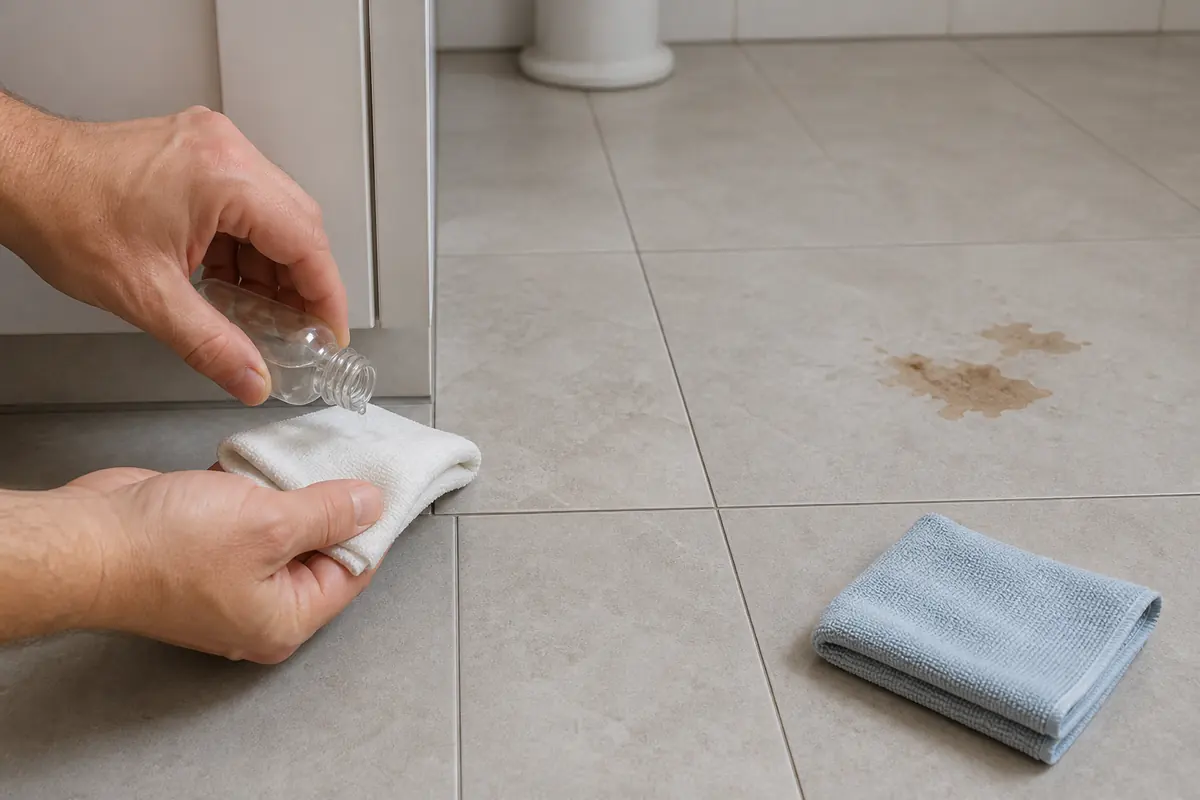
Record five facts before you clean
- Location: note whether the tile is on a shower wall, indoor floor, splashback, entrance or outdoor paving. Water, traffic and drainage change the risk.
- Finish: look for glaze, polish, texture, slip-resistant coating, sealer guidance and any area with a different sheen.
- Source: identify the spill, metal object, plant pot, hard-water zone, building work or cleaning product that appeared before the mark.
- Timing: fresh spills usually need containment first; an old stain needs source and material checks before stronger treatment.
- Previous attempts: record every cleaner and tool already used. Rinse as directed and do not layer an unknown new product over residue from the last one.
These facts prevent a common diagnostic error: treating finish damage as dirt. A pale rough patch may be abrasion or chemical change. A glossy dark patch may be product residue. A mark that crosses tile and grout differently often needs two controlled methods.
How to remove stains from porcelain tiles step by step
1. Secure the area and record the mark
Keep people and pets away from the working area. Photograph the dry mark in normal light before cleaning so you can compare colour, outline and sheen later. Note whether the stain appeared after a spill, metal object, building work, plant pot, bathroom leak or outdoor weather event.
2. Remove dry debris
Vacuum with a suitable hard-floor head or sweep gently. Pay attention to textured recesses and grout edges. Sand, grit and dried mud can scratch a polished face when rubbed into it, so no wet scrubbing should begin until loose particles have gone.
3. Clean the surrounding area first
Use the normal manufacturer-approved routine method across the full marked tile, not only the darkest spot. General soil, mop residue and soap film can change the apparent colour of a stain. A routine clean may solve the problem or reveal its true boundary without stronger chemistry.
4. Patch-test the selected treatment
Choose a product whose label names the tile finish and the stain category. Test it at an inconspicuous edge, including the grout only when the label permits grout contact. Use the stated dilution and personal protective equipment. Check the test only after rinsing and drying as directed, because a wet tile can hide a dull patch.
5. Treat a controlled section
Work on a small section with a clean white cloth, non-scratch pad or soft nylon brush approved for the finish. Keep the product inside the tested boundary. Do not extend its contact time, add another chemical or increase abrasion because the mark is slow to move.
6. Rinse, dry and reassess
Remove residue according to the label, using fresh water where rinsing is required. Dry the surface and compare it with the original photograph. A lighter stain without a finish change may justify another labelled cycle. No change suggests that the source may be different from the assumed stain. A dull, rough, pale or differently reflective patch points towards surface damage and needs a stop.
Book a One-Off Tile Clean
Enter your postcode to view our rates and availability in your area.

Choose the first response by stain type
The safest first response depends on what caused the mark. A single dark patch could be grease, rust, damp grout, tracked soil or a change in the tile finish. Use the source and behaviour of the mark, not colour alone.
| Visible problem | Likely source | First controlled response | Do not assume |
|---|---|---|---|
| Dried mud or tracked soil | Footwear, pets, outdoor runoff | Let loose mud dry where suitable, vacuum it, then use the routine compatible clean | A dark residue needs acid or bleach |
| Greasy film or local oil mark | Cooking, food, cosmetics, outdoor equipment | Use a porcelain-compatible degreasing product at the labelled dilution, then rinse if directed | More concentrated product works faster |
| Tea, coffee, wine or food colour | Fresh or dried household spill | Blot fresh liquid, routine clean, then use a finish-compatible stain product if colour remains | A homemade oxidising paste suits every finish and grout |
| White scale or cloudy bathroom film | Hard-water minerals, soap residue or product build-up | Confirm that no stone or vulnerable grout is exposed, then use a labelled compatible descaler | Every white deposit is limescale |
| Orange-brown local mark | Metal furniture, shaving can, planter, iron-rich runoff | Remove the metal source and use a rust remover labelled for the exact tile and grout conditions | Chlorine bleach or a kitchen acid is the correct rust treatment |
| Green, brown or black outdoor film | Leaf tannins, algae, soil or retained moisture | Clear debris and use an outdoor porcelain product approved for the finish and drainage setting | Indoor bleach advice transfers to a patio |
| Haze after installation | Grout residue, adhesive, sealer, wax or protective coating | Identify the installed system and ask the tile or product supplier for the correct removal route | Repeated household cleaning will remove installation residue |
Grease and coloured household spills
Blot fresh liquid with a clean absorbent cloth and avoid widening the edge. Grease needs a surfactant or degreasing product approved for the finish. Coloured food and drink may need a different labelled stain treatment after routine soil has been removed. Use separate clean cloths so pigment and grease do not move into adjacent grout.
Limescale and bathroom film
Hard-water deposits often feel rough and appear around repeated splash or evaporation zones. Soap and product residue can sit over the mineral layer. Confirm the tile and every border first, since a descaler suitable for porcelain may damage nearby natural stone or affect cement grout. Correct limescale treatment depends on distinguishing mineral deposits from etched or dull surfaces.
Rust and metal-transfer marks
Move the metal source and check whether it is still corroding. A rust remover must explicitly cover the porcelain finish and the surrounding grout. Keep contact controlled, rinse as instructed and dry any metal nearby. Corroding objects need their own metal rust removal method; object treatment should not be used as a recipe for the tile.
Outdoor leaf, algae and soil marks
Remove leaves, soil and loose growth before wet work. Choose an outdoor porcelain cleaner that suits the finish, jointing material, drainage and nearby planting. Control runoff and keep the area closed until it is rinsed and dry. Pressure washing is suitable only when the tile and installation instructions permit it; damaged joints, loose edges and unknown substrates need another route.

Keep tile and grout treatment separate
Cement grout is more absorbent than porcelain and can hold pigment, grease and product residue below its surface. An intact tile may tolerate a product that changes grout colour or weakens an already damaged joint. Protect grout when the label excludes it and use a separate compatible grout method when cleaning the lines.
Silicone is another material. Black marks within failed silicone, loose grout, powdering joints or water movement behind the tiles cannot be corrected through surface scrubbing. Persistent dampness needs its source identified before cosmetic cleaning continues.
You may also enjoy:

Ceramic tile stain removal needs a glaze check
Glazed ceramic and glazed porcelain often share routine care, which is why search results and product labels may discuss them together. The ceramic body beneath the glaze is more absorbent. A chip, crack or unglazed edge changes the treatment because liquid can reach the body. Avoid soaking damaged areas and seek repair advice when the glaze no longer protects the tile.
Unglazed ceramic, encaustic tile and cement tile are outside this method. They can be porous, coloured through the body or protected by a specific sealer. Identify them before applying a porcelain stain product.
Change the plan for indoor and outdoor porcelain
Indoor floors need controlled moisture, clean tools and a dry walking route. Bathroom walls add grout, silicone, metal fittings and possible stone borders. Outdoor paving adds jointing compounds, weather, organic growth, drainage, frost damage and runoff. A product described as suitable for porcelain is not automatically suitable for every one of those settings.
Work in small sections indoors so the floor can be rinsed and dried without trapping anyone. Outdoors, check the forecast, drainage path and surrounding materials. Do not let cleaning solution dry on the surface or flow into planting, ponds or public drains contrary to its label. Keep children and pets away until the area is ready for use.
Troubleshoot haze, dullness and returning marks
- A floor that looks clear when wet and hazy when dry may hold detergent residue. Use clean tools and the labelled rinse method before adding more product.
- A patch with a different sheen under side light may be abrasion, etching, coating loss or sealer change. Cleaning cannot restore removed finish.
- A rust mark that returns needs the corroding metal or iron-rich water source corrected.
- A dark grout line that returns after drying may indicate continuing moisture, failed sealant or contamination below the surface.
- A new-floor haze may be grout, adhesive, wax, protective coating or sealer residue. Record the installation products before treatment.
Switching products repeatedly can make diagnosis harder. Keep containers labelled, use one method at a time and follow the safe handling rules for cleaning chemicals.
Prevent the same stain from returning
Prevention starts with the source, not a stronger maintenance product. Put protective feet under suitable metal furniture, keep wet metal containers off bathroom ledges, use trays beneath indoor plant pots and deal with outdoor leaf litter before tannins remain against the paving. Repair dripping fittings and investigate water that repeatedly enters a grout line.
Use clean tools and measure products according to their labels. Too much detergent can leave a film that collects soil and changes the way light reflects from polished porcelain. Refresh rinse water when it becomes cloudy, keep a separate cloth for grout edges and dry polished floors with a clean compatible pad or cloth where the care guidance recommends it.
Outdoor porcelain needs regular removal of leaves, soil and standing debris. Keep joints and drainage paths visible so a returning dark patch is noticed early. Do not apply an unverified sealer or coating as a universal prevention step. Some porcelain finishes and installations need a specified treatment, and others do not; the tile and installation documents control that decision.
Store the approved routine product in its original labelled container and keep the matching care instructions with household records. When a different cleaner is introduced, check compatibility again. A previous successful result on another floor does not prove suitability for this finish, grout colour, sealer or installation.
When a tiled area needs a broader one-off clean
Stop DIY treatment when the tile is valuable or unknown, the finish changes during a test, grout is loose, the mark follows building work, staining covers several rooms, or the source points to water ingress, failed joints or damaged material. A tile or restoration specialist is the right route for polishing, etching repair, regrouting, sealing specifications and structural or installation faults.
Samyx Cleaning can include agreed accessible bathroom and kitchen tiles and grout within a wider one-off cleaning visit in London. The booked scope depends on the installed materials, their condition, safe access and the wider household priorities. The service does not imply specialist stone restoration, regrouting, sealing, repair, exterior pressure washing, mould remediation or certain removal of every stain.
Frequently asked questions
-
Does white vinegar clean porcelain tiles?
Vinegar may remove some mineral residue. It should not be a default treatment. Check the tile maker’s care instructions and every nearby material first. Acid can affect cement grout, metal trim, sealers and natural stone borders. Use a labelled compatible product and a hidden-area test without assuming that all porcelain installations tolerate vinegar.
-
What should you not use on porcelain tiles?
Avoid metal scourers, abrasive powders on polished or glazed finishes, unlabelled strong acids or alkalis, mixed cleaning products and any tool excluded by the tile or installation instructions. Do not use pressure washing, steam or specialist chemicals merely because the tile itself is dense; grout, joints, coatings and the substrate also matter.
-
Will rust remover damage my tiles?
It can if the product is incompatible with the finish, grout or nearby materials. Choose a rust remover whose label names the installed porcelain or ceramic surface, patch-test it, protect excluded grout or trim and follow the stated contact and rinsing directions. Stop if the tile dulls, changes colour or develops a different texture.
Important: Follow the tile, grout, installation and cleaning-product manufacturer’s instructions over general guidance. Patch-test where compatibility varies, use the stated gloves or other personal protective equipment, ventilate indoor areas, and rinse and dry as directed. Never mix cleaning products, especially bleach with ammonia or acids. Protect nearby natural stone, metal, silicone, coatings and plants. Stop if colour transfers, the sheen dulls, etching appears, texture changes, a coating lifts or grout loosens. Seek manufacturer, installer or specialist advice for valuable, unknown, damaged or recently installed surfaces.
Plan a One-Off Deep Clean
Enter your postcode to view our rates and availability in your area.
Author: Svetlana Georgieva (Clara)
Hi, I’m Svetlana Georgieva, but you can call me Clara. As the co-founder and heart behind Samyx Cleaning, I’m devoted to sharing the art of a clean space. Let’s journey into a cleaner, more joyful life together with tips from London's cleaning experts.

Discover more of our cleaning secrets: