
Cleaning Stains Made by Children: Tips and Tricks

Last modified on: 15/09/2026

Cleaning stains made by children is safer and more effective when you identify both the mess and the material before reaching for a cleaner. Fingerprints, crayon, food, ink and grease need different first moves, even when they appear in the same room.
Key Takeaways
- Separate mess from material: yoghurt on a washable cover is not the same job as yoghurt on a fixed sofa.
- Work from the edge: blot towards the centre to limit spread.
- Avoid heat first: dryers, hot water and steam can set some protein, dye and ink stains.
- Control products: keep bottles, buckets and damp cloths out of children’s reach.
- Stop on change: colour transfer, swelling, dulling or coating lift means the method is not compatible.
Table of Contents
Choose the method by stain and surface
Mess
First move
Main risk
Muddy footprint
Let thick mud dry, then lift and vacuum
Grinding grit into carpet or paint
Milk, yoghurt or egg
Lift solids and blot with cool water
Heat setting protein and odour
Washable crayon
Check the wall finish and test mild detergent
Polishing or removing matte paint
Permanent marker or ink
Blot and identify dye and material
Solvent spreading colour or damaging finish
Grease
Lift excess and use an approved detergent
Over-wetting fabric or leaving a ring
Take a photograph before treatment if the item is rented, valuable or covered by a warranty. For clothing, read both the garment label and product label. For carpet and upholstery, locate the manufacturer’s cleaning code where available and avoid soaking the filling.
Build a small first-response kit
- White absorbent cloths or plain kitchen roll, so transferred colour is easy to see.
- A blunt spoon or scraper for lifting solids without pushing them across the surface.
- A bowl of cool water for fresh washable spills, used sparingly on fixed upholstery and carpet.
- The care information for painted walls, furniture covers, carpet and clothing.
- One suitable labelled cleaner for the identified task, kept secured when the job is finished.
Keep the kit simple. A fast response depends more on lifting solids and blotting correctly than on owning several chemicals. Pouring products into an unlabelled bottle or leaving a bucket where a child can reach it creates a new problem while solving the stain.
Why the material changes the method
Washable clothing can often be treated from the reverse and rinsed, while a sofa cushion may hold liquid in foam that cannot be removed. Matte wall paint can become shiny from rubbing. Unsealed wood may swell, and leather or suede can change colour long after the visible mark appears lighter. The same child’s spill therefore needs a different amount of moisture, pressure and drying time on each surface.
Patch-testing means completing the intended method on a hidden area and letting it dry before judging the result. A wet test that looks fine can still leave a pale ring, lifted finish or changed texture. Stop at the first sign of colour transfer or surface change.
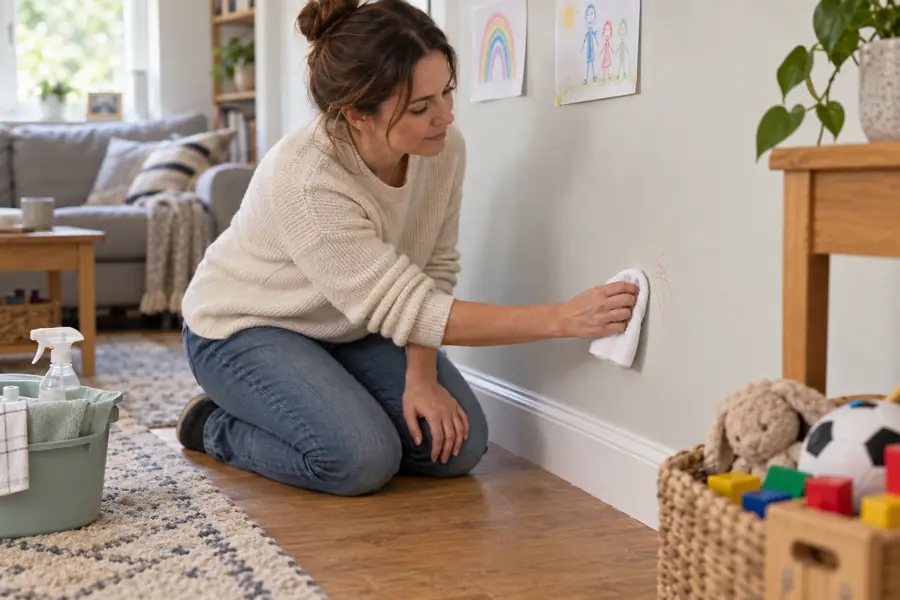
Children are a blessing, but often a messy one. It can feel like a Herculean effort to keep surfaces clean and free of stains once the little ones get to work. From fingerprints to crayon marks, here are some tips and tricks for cleaning common stains made by children.
Fingerprints on walls and doors
Those pesky fingerprints love to stick around. There’s probably not a door handle or a light switch in your home that doesn’t like it came out of a crime scene investigation.
Fear not – there’s an easy fix. Just grab a damp cloth with some mild soap, or if you’re feeling adventurous, mix up some baking soda and water. Voila, good as new.
Crayon Marks on walls and furniture
Fingerprints are a common stain children make, but they’re relatively easy to tackle. Crayon marks, on the other hand, can be difficult to clean, especially from walls and furniture.
To remove your child’s latest masterpiece from the wall, mix up some white vinegar and water, and gently rub away the stain. If it’s really stubborn, you can try a commercial all-purpose cleaner. Be gentle. Otherwise, you might end up ruining your wall (further).
Stains on carpets and rugs
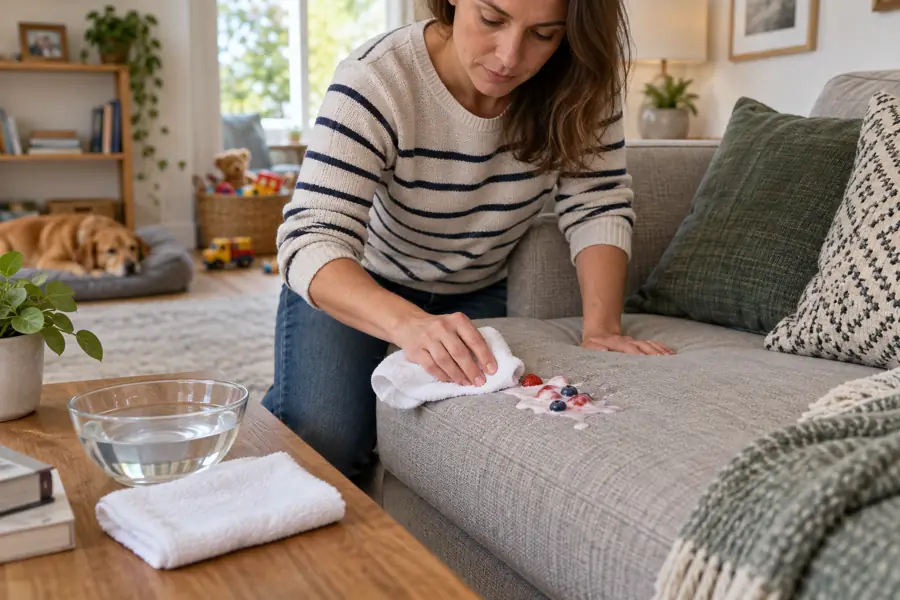
Now, when it comes to carpets and rugs, things can get a bit tricky. First, blot up as much of the spill as you can with a clean cloth. Then, use a stain remover that’s specific to the type of stain you’re dealing with. But be careful, test it out in a small area first.
Use repeated light blots rather than one soaked cloth. Work from the outside of the spill towards the centre and change to a clean part of the cloth as colour transfers. If liquid has reached carpet backing or upholstery filling, surface treatment alone may not prevent a ring or odour; stop adding moisture and use the appropriate professional route.
Food stains on clothing
And what about those pesky food stains? For fresh stains, rinse the area under cold water and treat it with a stain remover. But if it’s set in, try using a mixture of white vinegar and baking soda to loosen it up before washing. This is one of the few scenarios where mixing baking soda and vinegar might do the trick.
Current method note: vinegar and bicarbonate react with each other and are not a universal treatment for a set food stain. Check the garment label, identify whether the stain contains protein, fat or strong colour, and use one compatible laundry treatment as directed. Do not tumble-dry the item until the stain has gone.
Ink Stains on Clothing
Ink stains cause almost everyone to let out a silent scream. Unfortunately, this is another common type of stain children make. How can you clean them up?
Rubbing alcohol works like a charm for ballpoint ink. And for a permanent marker, you can try white vinegar or rubbing alcohol but don’t hold your breath. They call them permanent markers for a reason. If all else fails, you can try a stain remover designed for ink stains.
Current method note: alcohol can remove dye and damage acetate, modacrylic, delicate finishes and some printed fabrics. Keep it away from heat and flame, use it only where the care and product labels allow, and test for colour transfer before treating the visible mark.
Grease and Oil Stains on Clothing
Grease stains can be a real pain but they’re not impossible to remove. For fresh grease stains, use a mixture of cornstarch and baking soda to soak it up before washing.
As for set-in stains, use a stain remover specifically designed for grease and oil. If you prefer natural products, you can try using baking soda again.
Treat biological mess separately
Blood, vomit, urine and faeces are not ordinary food or craft stains. Keep children and pets away, use suitable disposable protection, avoid splashing and follow current health and material guidance for cleaning and waste. Do not combine products in an attempt to disinfect faster. If the contamination is extensive, involves sharps or affects a person with additional health risk, obtain appropriate professional advice.
When to stop home stain removal
Stop if a fabric’s colour transfers to the cloth, paint becomes shiny or sticky, wood swells, leather changes shade, carpet backing stays wet or the stain involves blood, vomit, faeces, an unknown chemical or a valuable item. Isolate the area and use suitable professional or health guidance rather than combining stronger remedies.
Book One-Off Cleaning
Enter your postcode to view our rates and availability in your area.

Important: Keep children and pets away until the surface is rinsed as required and completely dry. Follow labels and care instructions, ventilate the room and never mix cleaning products.
Conclusion
Cleaning up after children is no easy feat. But with a bit of patience and some of our tips and tricks, you’ll be able to clean up their messes in no time. Just make sure to test everything out in a small area first, and follow the instructions if you’re using commercial cleaners.
And, as always, don’t hesitate to call in the cavalry if you find yourself overwhelmed. We can offer you both one-off cleaning for when you need a hand or regular cleaning for more consistent support.

Author: Atanas Dzhingarov
Hi, I’m Atanas - brand consultant and writer. I’m helping Samyx Cleaning create the best cleaning company blog on the Internet. Join us on our journey and learn how to live a cleaner, healthier, happier life in the process.
Discover more of our cleaning secrets: