
How to Clean a Small Flat: Quick, Routine and Deep-Clean Plans

Last modified on: 15/08/2026

How to clean a small flat efficiently starts with choosing a realistic finish line, not trying to empty and perfect every cupboard at once.
In a studio or compact flat, the same surface may serve as a desk, dining table and sorting area. Clutter can block the cleaning route. Damp work begun too early can also turn loose dust into residue. This guide gives you three practical plans, a five-zone order and a reusable small apartment cleaning checklist, so you can match the work to the time, soil and energy available.
Key takeaways
- A 15-20 minute reset improves the visible room; it is not a substitute for routine or deep cleaning.
- One tray or clear surface prevents displaced belongings from becoming several new piles.
- Dry work comes before damp work, high surfaces before low ones, and floors finish towards the exit.
- Cleaning removes soil; decluttering decides what stays. Keeping those jobs separate protects the schedule.
- Set frequency from use, spills, pets, ventilation and visible soil; a rigid universal timetable cannot reflect every home.
Table of Contents
How to clean a small flat in the right order
First decide which result you need today. The time ranges below are flexible planning estimates, not fixed completion promises. A studio occupied by one person, a shared flat after a busy week and a home with pets can require very different effort even when their floor areas are similar.
| Route | Planning window | Priorities | Finished when |
|---|---|---|---|
| Visible reset | 15-20 minutes | Rubbish, dishes, laundry, main surfaces and obvious floor debris | The route is clear and the room is usable; detailed soil can remain for the routine clean |
| Routine clean | 45-90 minutes | Kitchen, bathroom, dust, touchpoints and floors | Current soil is removed from the regularly used areas |
| Deep clean | 2-4+ hours | Routine work plus selected edges, fittings, appliance fronts, reachable gaps and neglected zones | The named deep-clean targets are complete; it need not become a whole-home restoration |
Reduce the scope if the flat is heavily cluttered, ventilation is poor, a surface needs specialist treatment or you cannot move an item safely. Extend the plan when grease, limescale, pet hair or a recent illness adds work. A timer can hold the boundary. It must never make you rush product contact times, stand on unstable furniture or mix unfinished wet tasks.
Plan Regular Domestic Cleaning
Enter your postcode to view our rates and availability in your area.

Prepare one tray and a clear route
Put a washable tray, basket or sturdy box near the first zone. It is a temporary home for objects that belong elsewhere, not a permanent miscellaneous container. Add a rubbish bag and a laundry basket. Keep cleaning products separate from food, medicines, toiletries and pet items.
Start at the furthest point and identify an exit route. Keep doorways, steps, heaters and the path to the front door clear. If the floor is crowded, move only enough to create one safe working strip. Do not stack fragile objects or heavy boxes where they can fall during vacuuming.
Use a five-zone sequence
- Whole-flat collection: gather rubbish, dishes and laundry; return obvious items or place them in the transfer tray.
- Kitchen: deal with food residue, washing-up, worktops, sink, hob exterior and cupboard touchpoints.
- Bathroom: clean from less soiled surfaces towards the toilet, keeping its cloths and tools separate.
- Living and sleeping zone: dust high to low, reset furniture and clean reachable touchpoints.
- Floors and exit: vacuum or sweep the full route, then mop compatible hard floors from the far end towards the door.
This order limits repeated walking over finished floors and helps keep bathroom soil away from food-preparation areas. If a spill, broken item or other immediate hazard is present, deal with that first and change the order accordingly.
Before choosing products, look at the surfaces and the kind of soil present. Check appliance and flooring instructions, test an inconspicuous area where compatibility is uncertain and gather enough clean cloths to avoid carrying residue between zones. Open windows or use mechanical ventilation when directions require it, without creating an unsafe unsecured opening. Keep children and pets away from wet floors, tools, buckets and treated surfaces until the stated process is complete.
The 15-20 minute visible reset
Use this route when the flat needs to feel usable before work, bedtime or a visitor. Set the finish line before the timer starts: a clear walkway, usable seating, an empty sink and obvious debris removed. Do not open storage boxes or begin deciding the fate of old belongings.
- Minutes 0-4: collect rubbish and recycling without stopping to clean containers that need separate attention.
- Minutes 4-8: take dishes to the sink and laundry to its basket. Start neither a complicated wash nor a cupboard reorganisation.
- Minutes 8-13: clear the main worktop, table and seat. Use the transfer tray for items from another zone.
- Minutes 13-17: wipe one compatible, visibly soiled surface with a clean cloth and labelled product.
- Minutes 17-20: vacuum or sweep the main route and return the tray contents only where the destination is obvious.
The popular “20-minute rule” is simply a way to protect a short session from expanding. It does not prove that the flat is hygienically clean in twenty minutes. Stop at the agreed finish line and schedule the remaining soil for the routine route.
When speed matters across several rooms, the same boundaries used in a speed-cleaning routine are useful: carry what you need, finish one pass and avoid returning to the same surface without a reason.
The 45-90 minute routine clean
A routine clean removes current household soil from the areas used most often. Begin with the whole-flat collection pass, then complete each zone before moving on. Allow labelled products their stated dwell or contact time during another compatible task; do not let them dry where the label requires removal or rinsing.
Kitchen zone
Put food away, clear washing-up and remove loose crumbs. Clean the least soiled food-preparation surfaces before the sink and greasy hob exterior. Match the method to the worktop, cabinet and appliance finish, and keep excess water away from seams, controls and electrical openings. Use a clean face of the cloth on touchpoints so food residue does not travel around the room.
Bathroom zone
Ventilate as the room and product instructions allow. Remove loose hair before wetting surfaces, then clean the mirror, basin, bath or shower and taps according to their materials. Leave the toilet until last and use separate tools for it. Dry the floor where standing water could make the narrow route slippery.
Living and sleeping zone
Dust reachable shelves, lamps and furniture from high to low. Support delicate objects and avoid rushing a duster around them. Wipe compatible frequently handled surfaces, reset cushions and bed linen as needed, then vacuum upholstery only with a suitable clean attachment. A dedicated living-room checklist can extend this zone without changing the whole-flat order.
Finish with the floors. Pick up cords, coins, sharp fragments and damp debris before vacuuming. Use the correct setting and attachment for rugs, hard flooring and edges. Mop only floors that tolerate the chosen moisture and product, keeping the route to the exit open until dry.
The 2-4+ hour deep-clean plan
A deep clean should name neglected targets, not promise that every hidden space will be restored in one session. Complete the routine route, then choose two or three additions that fit the flat and the available time. Examples include reachable skirting, the top of cupboards, accessible gaps beside furniture, an appliance exterior, bathroom grout or a washable bin.
| Target | Safe preparation | Stop or escalate when |
|---|---|---|
| Behind light movable furniture | Empty drawers if needed, protect the floor and use help for awkward items | The item is fixed, unstable or too heavy to move safely |
| Kitchen grease | Identify the finish and follow a compatible product label | Coating softens, colour transfers or grease is inside an electrical unit |
| Bathroom scale or grout soil | Check whether stone, metal coating, sealant and grout tolerate the method | The surface etches, sealant fails or mould returns from a damp source |
| Edges and vents | Switch off and follow appliance or fixture instructions before opening removable parts | Access needs dismantling, electrical work or work at an unsafe height |
Do not combine products to make the session feel stronger. Complete one labelled method, remove or rinse it as directed and let the surface dry before deciding whether another compatible approach is needed. Never mix bleach with acids or ammonia. Fragrance is not evidence that soil, damp or a contamination source has been removed.
For a rented flat at the end of a tenancy, the required inventory standard, empty-property access and appliance scope can be different from an occupied-home deep clean. Treat moving-out work as its own branch; do not add it casually to a weekly session.
Keep cleaning separate from decluttering
Cleaning and decluttering support each other, although they involve different decisions. Cleaning removes dust, spills and residue from the home. Decluttering asks whether an item is kept, moved, donated, recycled or discarded. Mixing both without a boundary can leave every surface covered when the allotted cleaning time ends.
| Situation | Cleaning-session action | Later decision |
|---|---|---|
| Item has an obvious home | Return it during the collection pass | None |
| Item belongs in another zone | Place it in the transfer tray | Return it when that zone is reached |
| Useful item with no assigned place | Put it in one bounded decision box | Assign storage in a separate decluttering session |
| Unwanted or uncertain | Do not create floor piles | Use a deliberate keep, donate, sell, recycle or disposal check |
| Wet, leaking, sharp or unsafe | Isolate and make the area safe | Follow the relevant disposal or repair guidance |
Give the decision box a size and a decision date. When it is full, pause new additions and avoid starting a second anonymous pile. The detailed shared cleaning rota is useful when several people use the flat and responsibility, not technique, is the recurring obstacle.

Small apartment cleaning checklist
Save this checklist on a phone or print it if paper is easier to use as you move between zones. Adjust the frequency to the household. A pet, cooking style, shared bathroom, outdoor footwear or open windows near traffic may change which task becomes visible first.
Daily or trigger-based reset
- Remove rubbish, food waste and packaging that obstructs the route.
- Wash, load or neatly contain dishes according to the household routine.
- Put laundry in one ventilated basket and hang damp towels to dry.
- Wipe fresh spills using a method compatible with the surface.
- Clear the main walkway, seating place and working surface.
Weekly or according to use
- Clean kitchen worktops, sink, hob exterior and cupboard touchpoints.
- Clean the basin, bath or shower, taps, toilet and bathroom floor.
- Dust reachable horizontal surfaces from high to low.
- Vacuum rugs, exposed floor, edges and the sleeping area as needed.
- Mop compatible hard floors and allow the route to dry.
- Empty the transfer tray and process the bounded decision box.
Periodic deep-clean branch
- Choose specific neglected targets from visible condition; do not attempt all of them automatically.
- Clean reachable skirting, door frames, lamp shades and cupboard tops.
- Inspect accessible gaps for trapped dust, damp, pests or lost items.
- Clean appliance exteriors and removable parts only as their instructions permit.
- Wash bins and other compatible containers, then dry them fully.
- Check filters and vents that the manufacturer designates for routine user maintenance.
Moving-out branch
Confirm the inventory, tenancy agreement and agreed scope before planning. An empty flat may expose areas hidden during normal occupation. Moving boxes can also remove safe access. Separate cleaning from repairs and damage decisions, photograph relevant condition where appropriate and do not promise that cleaning can correct wear, permanent staining or failed materials.
You may also enjoy:

Choose compact tools without creating a storage problem
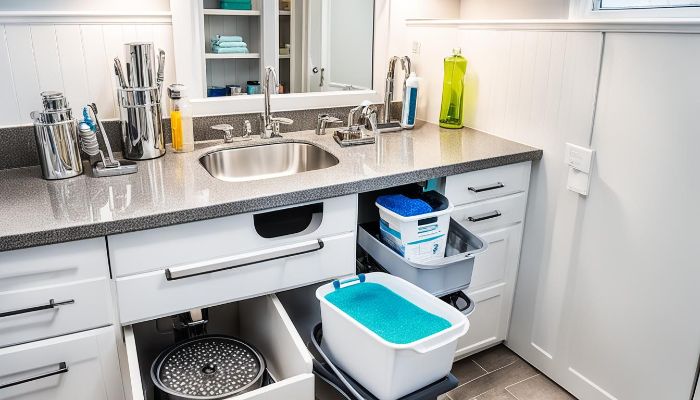
A small flat rarely needs a different product for every surface. Start with the actual materials and manufacturer instructions, then choose the smallest set that safely covers them. Useful basics can include several washable microfibre cloths, a non-scratch sponge where suitable, a small brush, a vacuum with the correct attachments, a mop appropriate to the floor and labelled products for the tasks present.
Colour coding or another clear separation method helps keep toilet tools away from the kitchen and general surfaces. Wash reusable cloths according to their care instructions and let them dry before closed storage. Replace damaged tools that shed material, trap odour or no longer clean effectively.
Store products upright in their original containers with labels readable, away from food and out of reach of children or pets. Do not decant them into drink bottles or combine leftovers. A caddy can reduce repeat trips. Keep its weight low enough for safe carrying through a narrow room.
When regular cleaning support makes sense
A compact home is not automatically quick to clean. Limited access, several room functions and nowhere to stage belongings can slow the work. Recurring help may be useful when routine soil repeatedly overtakes the time available, mobility limits some tasks or the household wants a dependable baseline between its own resets.
Samyx Cleaning provides regular domestic cleaning across London. Agree priorities, access, surface restrictions and any rooms or possessions that are out of scope before the visit. Clearing personal decisions and providing safe access helps the booked time focus on cleaning.
Book Regular Domestic Cleaning
Enter your postcode to view our rates and availability in your area.
Frequently asked questions
-
How do you keep a small flat clean?
Use a short daily reset for rubbish, dishes, laundry, spills and the main route, then complete a zone-based routine clean according to use. Keep one transfer tray for misplaced items, remove dry soil before damp work and finish floors towards the exit.
-
What is the 20-minute cleaning rule?
It is a time boundary for a focused visible reset, not a claim that an entire flat can always be cleaned in twenty minutes. Define the finish line first, work through rubbish, dishes, laundry, one surface and the main floor route, then schedule remaining soil separately.
-
How long does it take to clean a small flat?
Condition matters more than floor area. A visible reset may take 15-20 minutes, a routine clean about 45-90 minutes and a defined deep clean 2-4 hours or more. Clutter, pets, grease, limescale, access and the number of occupants can change those planning ranges.
-
What should a small apartment cleaning checklist include?
Include trigger-based resets, kitchen and bathroom cleaning, high-to-low dusting, floors, tool care and a separate periodic deep-clean list. Add a moving-out branch only when needed, and keep decluttering decisions separate so the cleaning session retains a clear finish line.
Important: Follow surface, appliance and cleaning-product instructions over general guidance. Test a hidden area where compatibility is uncertain, ventilate and use protective equipment as directed, and never mix cleaning products. Stop if a finish changes colour, dulls, softens or swells. Seek appropriate help for persistent mould or damp, sewage, active pests, unsafe electrics, damaged fixtures, valuable materials, unsafe heights or objects that cannot be moved safely.
Author: Svetlana Georgieva (Clara)
Hi, I’m Svetlana Georgieva, but you can call me Clara. As the co-founder and heart behind Samyx Cleaning, I’m devoted to sharing the art of a clean space. Let’s journey into a cleaner, more joyful life together with tips from London's cleaning experts.

Discover more of our cleaning secrets: