
Why Wear Rubber Gloves When Cleaning?

Last modified on: 30/07/2026

Why wear rubber gloves when cleaning? They can reduce direct contact with water, detergents, dirty sanitary surfaces and other substances that may irritate or soil your hands. The protection is only useful when the glove fits, stays intact and is compatible with the product and task.
Key takeaways
- Gloves are one control. Product choice, dilution, ventilation and a low-contact method still matter.
- Choose by actual exposure, duration, fit and manufacturer data, not by colour or a broad label such as “rubber”.
- Reusable household gloves suit many wet routine tasks; single-use gloves suit contained short tasks where a clean change is helpful.
- Tears, leaking, swelling, stiffness, tackiness, poor grip or liquid inside are reasons to stop and change the glove.
- Gloves do not replace hand washing, and long wear can trap sweat against the skin.
Table of Contents
Why wear rubber gloves when cleaning?
Household cleaning combines several exposures. Hands may stay wet during washing-up, meet diluted detergent during a long bathroom clean, touch a bin lid or toilet area, or handle a product whose label advises protective gloves. An intact, suitable glove places a temporary barrier between the skin and that exposure.
That barrier is useful for wet work because frequent or prolonged contact with water, soap and detergent can dry or irritate skin. It also keeps visible grime away from small skin cracks and makes it easier to separate a dirty task from the next clean one. The glove does not neutralise the product or destroy microbes.
Not every job needs gloves. Dry dusting with a clean cloth, tidying or vacuuming an ordinary room may involve no relevant hand exposure. Reducing contact at source is often the better first move: use a handled tool, choose a milder compatible product, control splashes and measure concentrates accurately. Gloves then cover the remaining contact that cannot be avoided.
When gloves may be unnecessary
Skip gloves when the task has no meaningful wet, product, sanitary or abrasive exposure and bare hands give better control. Examples can include putting clean items away, using a vacuum, dry dusting an uncluttered shelf or folding laundry. Wash hands after the work if dust or ordinary household soil was handled.
Personal skin condition can change the decision. Someone with cracked or irritated skin may choose a compatible glove for a task another person performs bare-handed. A glove can also be the wrong answer when it hides an active reaction, traps sweat for too long or reduces grip around a tool. Stop and reassess whenever wearing it makes the task less controlled.
Glove use should have a clear start and finish: name the exposure, select the pair, complete the defined task, remove it and clean the hands. Wearing the same gloves continuously around the home creates more opportunities to touch clean objects with a soiled exterior.
The HSE glove guidance makes the central limitation clear: materials differ, and no glove protects against every substance indefinitely. The product label or safety data and the glove manufacturer’s information must control the decision.
Choose cleaning gloves by task and product
Start with the exposure, then choose the glove. A comfortable pair that resists washing-up water may be the wrong choice for a concentrated descaler. A thin single-use glove that gives good finger control may tear during abrasive scrubbing. The table is a household decision aid, not a chemical-resistance certificate.
| Task or exposure | Are gloves useful? | Likely format | Mandatory check | Change or stop when |
|---|---|---|---|---|
| Dry dusting, tidying or vacuuming | Often optional when there is no irritant product or dirty contamination | No glove, or a comfortable reusable pair if skin needs a barrier | Skin condition and task grip | The glove reduces control or becomes soiled |
| Washing-up or prolonged wet work | Usually helpful for reducing long water and detergent contact | Strong reusable household glove with suitable cuff and grip | Product label, fit and waterproof condition | Water enters, grip fails or the material changes |
| Bathroom, toilet or bin cleaning | Helpful for dirty sanitary surfaces and product contact | Dedicated reusable pair or task-appropriate single-use glove | Keep it separate from kitchen and general tasks | The task changes, the glove tears or the outside reaches bare skin |
| Descaler, degreaser or another labelled stronger product | Use the protection stated by the product instructions | Only a material confirmed compatible by the product and glove information | Material, thickness, contact duration and replacement limit | Time limit is reached or the glove swells, softens, hardens or leaks |
| Unknown soil or a contained bodily-fluid clean-up | Direct skin contact should be avoided | Task-specific single-use protection or the method advised for the incident | Current official or professional instructions and disposal route | Immediately after the contained task or sooner if damaged |
| Hot items, broken glass, blades or sharp waste | Ordinary cleaning gloves are not enough | Use task-specific heat, cut or puncture controls | The actual mechanical or heat rating and safer handling method | Do not begin with ordinary household gloves alone |

Read the product labels before selecting a pair. “Wear protective gloves” is a starting instruction, not proof that any glove in the cupboard is suitable. If compatibility information is missing for a stronger or specialist product, contact the product or glove manufacturer for confirmation.
Need Help With Regular Cleaning?
Enter your postcode to view our rates and availability in your area.

Reusable, disposable, latex, nitrile and vinyl: what changes?
“Rubber gloves” is everyday shorthand for several products. Reusable household gloves are often natural rubber latex or a synthetic material. Single-use gloves may be latex, nitrile or vinyl. Material, thickness, construction and the manufacturer’s test data all affect performance, so the name alone cannot confirm protection.
Reusable household gloves
A longer cuff, textured grip and thicker construction make a reusable household pair practical for washing-up and routine bathroom or kitchen work. Dedicate pairs by zone so the toilet glove never becomes the washing-up glove. A reusable pair only earns an environmental advantage when it is used safely for long enough to replace several disposable pairs; durability does not excuse reuse after damage or incompatible chemical contact.
Single-use gloves
Single-use gloves are useful for a short contained task and for changing cleanly between incompatible zones. They are not designed to be washed, dried and returned to the cupboard. Remove and discard them after the intended task, following the product and local waste instructions. A new pair is needed before moving from a toilet or waste task to food-related cleaning.
Latex, nitrile and vinyl
Latex can offer close fit and dexterity. Natural rubber latex can trigger allergy in some people. Someone with a known latex allergy should avoid latex products and follow their medical advice. Nitrile is a common non-latex option and can offer useful durability. Vinyl can suit some brief, low-demand tasks. Neither description means universal resistance to every detergent, solvent, acid or mixture.
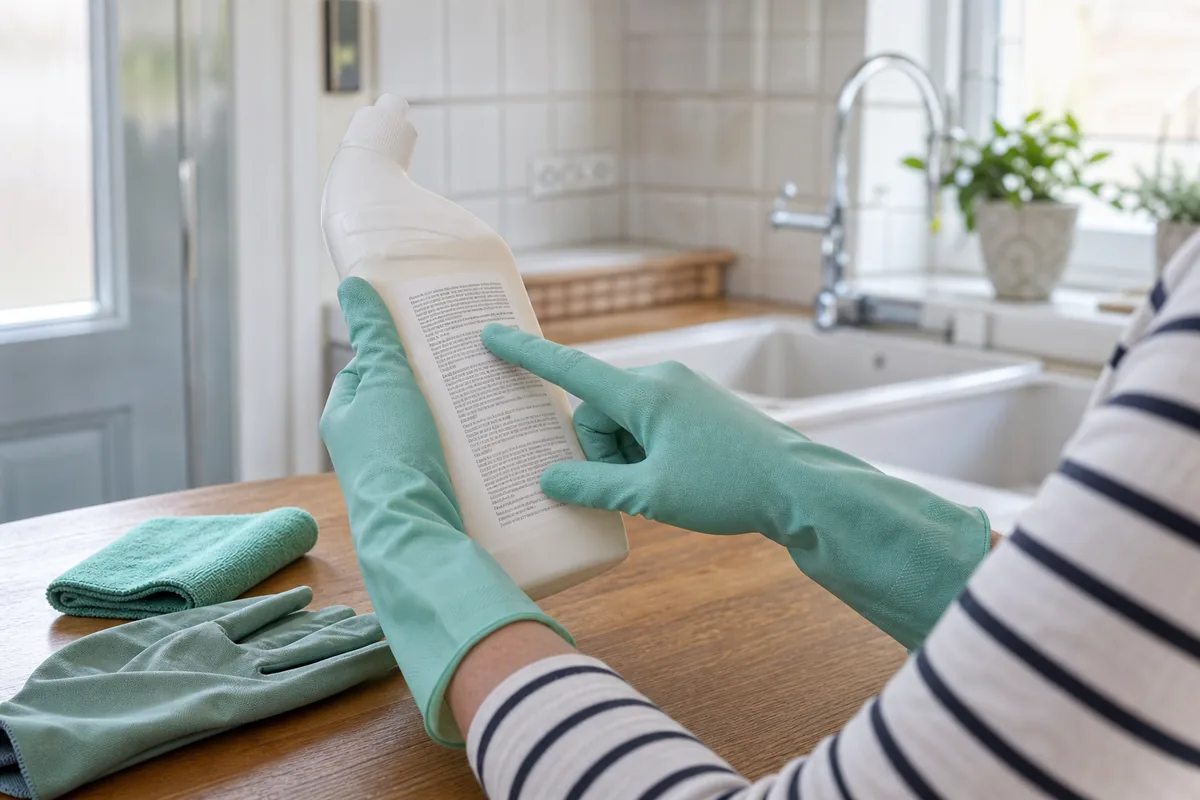
Choose a fit that allows a secure grip without stretching the material tightly across the fingertips. Loose fingers can catch on handles and tools; a glove that is too tight can split sooner and makes careful removal harder. Broader protective gear decisions belong to the whole task, especially where eye splashes, sharp objects or airborne exposure exist.
Reusable versus single-use cleaning gloves
| Decision | Reusable household glove | Single-use glove |
|---|---|---|
| Best fit | Repeated wet work and routine zone-specific cleaning | Short, contained tasks with a fresh change afterwards |
| Before use | Inspect both sides, cuff, grip and inside dryness | Check the box, size, expiry where supplied and visible damage |
| Between tasks | Keep dedicated pairs by zone and clean as instructed | Remove and replace; never carry a dirty pair into a clean task |
| After use | Clean the exterior if permitted, remove carefully, dry fully and store clean | Discard through the route appropriate to the task and local instructions |
| Main failure | Hidden pinholes, degraded material, wet lining or zone mix-up | Tears, poor fit, long wear or attempted washing and reuse |
How to use cleaning gloves without spreading dirt
Gloves protect the wearer only at the covered skin. Their outer surface still collects grease, product residue and soil. Touching a phone, tap, cupboard handle or clean cloth with a dirty glove can move that material along the route.
- Plan the route before putting gloves on. Separate kitchen, general-room, bathroom, toilet and waste tasks.
- Inspect the glove in good light. Check the fingertips, seams, cuff, grip and inside for damage or moisture.
- Wash and dry hands, then put the glove on without jewellery or sharp nails pulling at the material.
- Work from lower-soil surfaces towards dirtier points. Change the cloth face and the glove pair when the zone or contamination changes.
- Keep gloved hands away from the face, phone, door keys and clean product caps.
- Remove the gloves carefully, contain the dirty exterior and wash and dry hands afterwards.
Product mixing, uncontrolled spray and poor ventilation remain cleaning hazards even when gloves are worn. Gloves should support a low-contact method, not create confidence to use more product or handle a stronger concentrate.
How to remove cleaning gloves safely
For a reusable household pair, rinse or wipe the outside before removal only when the glove and product instructions permit it. Keep the gloves on during that step. Pinch the first glove near the cuff without touching bare wrist skin, peel it away from the hand and hold it by the clean inside surface.
Slide bare fingers under the inside cuff of the second glove. Peel it down so the contaminated exterior folds inward. Avoid snapping the cuff or squeezing residue towards the opening. Single-use gloves go to the appropriate waste route. Reusable gloves move to their instructed cleaning and drying step.
Wash and dry hands after removal, even when the gloves appeared intact. If liquid reached the inside, treat the pair as failed: deal with the hand exposure according to the product instructions and do not return that glove to service until its safe status is clear.
Care for reusable gloves and the skin inside them
Follow the glove maker’s care instructions because aggressive washing can weaken a protective material. Where cleaning is allowed, clean the exterior without contaminating the inside, rinse as directed and hang or place the pair so both surfaces dry fully. Store it away from direct heat, sunlight, food and clean cloths. The wider safe storage routine should keep gloves with the correct cleaning zone and product information.
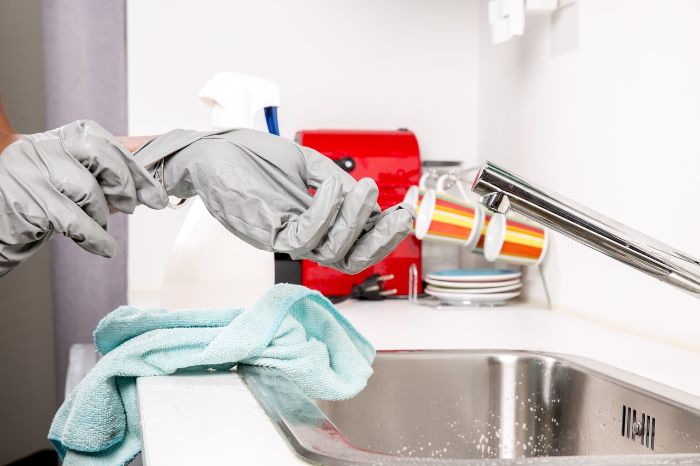
Replace a reusable pair when you find a tear, puncture, failed seam, poor cuff, lost grip or persistent internal dampness. Chemical damage may appear as swelling, softening, hardening, brittleness, stickiness or a change in shape. Discolouration or odour alone does not identify the chemical cause. Either can justify stopping for inspection.
Do not patch a glove used for product contact. Do not rely on filling it with water after each use unless the manufacturer recommends that test; water can contaminate the lining and may not reveal the kind of degradation that affects chemical performance.
You may also enjoy:

Skin comfort, sweating and latex reactions
Long glove wear traps heat and sweat. Damp skin can become sore, and a wet lining makes the next use uncomfortable. For longer tasks, a correctly sized flock-lined reusable glove or a separate washable cotton liner may help when both are compatible with the task. Take a glove break before hands become hot and sticky, then put on a dry pair.
Dryness, cracking, persistent itching or a rash should not be hidden by another pair of gloves. Stop the suspected exposure and seek appropriate advice. Latex reactions can range from local skin symptoms to a serious immediate allergy. A person with known latex allergy needs latex-free alternatives selected for the task, not a product described only as “hypoallergenic”.
Moisturiser can support hand care after washing and drying; it cannot act as a chemical barrier or make an incompatible glove fit the task. Check whether a cream affects the glove material before using both together.
Common cleaning-glove mistakes
- Choosing by colour and assuming every reusable glove has the same resistance.
- Ignoring the cleaning-product instructions because the hands are covered.
- Using one pair for the toilet, kitchen worktops and washing-up.
- Washing a single-use glove and wearing it again.
- Touching the face, phone, clean cloths or product cap with dirty gloves.
- Continuing after a puncture, loss of grip, material change or liquid inside.
- Pulling a dirty glove off by gripping its outer surface with a bare hand.
- Treating gloves as a replacement for hand washing, ventilation or measured product use.
Add glove inspection and zone separation to a daily cleaning routine only where the task calls for them. The goal is a repeatable safe decision, not wearing gloves continuously around the home.
How Samyx Cleaning can help with recurring household cleaning
Professional help becomes practical when routine kitchen, bathroom, floor and high-touch tasks keep falling behind across several rooms. The value is a planned visit and agreed priorities, leaving specialist chemical, sharps, heat or biohazard work outside an ordinary domestic-cleaning promise.
Samyx Cleaning offers weekly and fortnightly regular domestic cleaning across London. Clients can provide preferred products, or the team can bring products and tools. Tell the office about product restrictions, damaged surfaces, allergies or a task outside routine scope before the visit so it can be assessed accurately.
A cleaner still needs the correct product instructions and task controls. Booking a service does not make an unsuitable glove or cleaning product safe. Keep specialist materials in their original labelled containers and identify any household product the cleaner is expected to use.
Book Regular Domestic Cleaning
Enter your postcode to view our rates and availability in your area.
Conclusion: match the glove to the real exposure
Cleaning gloves work best as a deliberate barrier for a defined task. Check the product, select a compatible and comfortable pair, keep dirty and clean zones apart, remove the gloves carefully and inspect reusable pairs before their next use.
A safer routine reduces unnecessary contact, uses the lightest suitable method and stops as soon as the glove or surface no longer behaves as expected. Thicker gloves and more product do not automatically improve the result.
Frequently asked questions
-
Why should I use rubber gloves when cleaning?
Suitable gloves can reduce direct contact with water, detergents, dirty sanitary surfaces and products whose labels require hand protection. They only help when the material matches the exposure, the fit is sound and the glove stays intact.
-
Is it better to wear gloves when cleaning?
It depends on the task. Gloves are useful for prolonged wet work, dirty bathroom or waste tasks and product contact that calls for protection. Dry tidying or dusting may not need them when there is no relevant exposure.
-
Do you wear rubber gloves with cleaning products?
Follow the product label. If gloves are advised, use a material confirmed as compatible by the product and glove information. A generic rubber, nitrile, latex or vinyl description does not prove resistance to every cleaner.
-
What is the most hygienic way to clean a bathroom?
Use dedicated bathroom cloths and gloves, work from lower-soil areas towards the toilet, change materials when the zone changes and avoid touching clean items with dirty gloves. Remove the gloves carefully, then wash and dry your hands.
Important: Cleaning gloves are not universal chemical protection. Follow the cleaning-product label, safety data where supplied, and the glove manufacturer’s compatibility, use and replacement instructions; these take priority over general guidance. Never mix cleaning products. Stop using a glove that tears, leaks, swells, softens, hardens, becomes tacky or allows liquid inside. Remove gloves if your hands become painful, persistently itchy or develop a rash, and seek appropriate medical advice for a suspected allergy or dermatitis. Breathing difficulty, facial or throat swelling or another severe reaction needs urgent medical help. Specialist, corrosive, sharps, heat or biohazard work requires task-specific controls; ordinary household gloves are insufficient.
Author: Svetlana Georgieva (Clara)
Hi, I’m Svetlana Georgieva, but you can call me Clara. As the co-founder and heart behind Samyx Cleaning, I’m devoted to sharing the art of a clean space. Let’s journey into a cleaner, more joyful life together with tips from London's cleaning experts.

Discover more of our cleaning secrets: