
Cleaning Product Ingredients Explained: Read Labels and Choose Safely

Last modified on: 15/08/2026
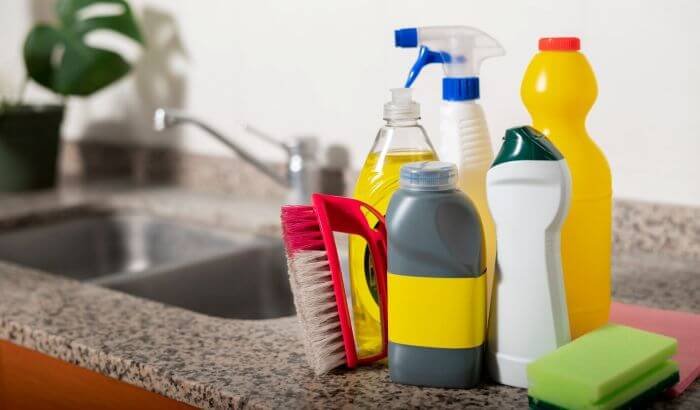
Cleaning product ingredients explained properly means reading four things together: what each ingredient does, how concentrated the formula is, how you could be exposed and what the label tells you to do. An ingredient name on its own cannot tell you whether a product suits a particular stain, surface or household.
Read the function, concentration and precautions together
- Start with the intended task and surface. A useful ingredient in one cleaner may damage another material.
- Find out whether the product is ready to use or concentrated, then follow the stated dose and application method.
- Read the complete hazard label, including statements and precautions. A pictogram is one part of that message.
- Check contact time, rinsing, ventilation, gloves and storage exactly as the pack directs.
- Keep products separate, in their original containers, and stop when the label is missing, damaged or unclear.
Key takeaways
- Ingredient families describe jobs such as wetting, dissolving, binding minerals, changing pH or protecting the formula.
- Product safety depends on the finished formulation, concentration, exposure route and controls, not a single name taken from a list.
- The back label carries the practical decisions: intended use, dose, warnings, surface limits, contact time and storage.
- Front-label terms such as natural, green or powerful do not replace compatibility and hazard information.
- Never mix cleaners or move them into food and drink containers.
Table of Contents
Cleaning product ingredients explained by function
Most household formulas combine several ingredient families because dirt is rarely one simple substance. Grease, mineral scale, pigment, food residue and loose particles respond differently. Water may act as the carrier, a surfactant helps the liquid reach and lift soil, a builder supports performance in hard water, and another ingredient keeps the mixture stable on the shelf.
| Ingredient family | What it does | Where it may help | What changes the decision |
|---|---|---|---|
| Surfactants and soaps | Help water wet a surface and lift or suspend oily and particulate soil | Washing-up liquids, laundry products and general surface cleaners | Surface instructions, foam level, rinse requirements and concentration |
| Builders and water softeners | Support cleaning performance and reduce interference from minerals | Laundry, dishwashing and some hard-surface products | Water hardness, material compatibility and the labelled dose |
| Chelating agents | Bind metal ions that can affect cleaning or leave deposits | Hard-water formulas and products for mineral-related soil | Finish sensitivity, pH and stated contact time |
| Solvents | Dissolve selected oily, adhesive or ink-like soils and can aid spreading or drying | Degreasers, glass cleaners and specialist spot products | Ventilation, flammability, coating compatibility and exposure controls |
| Acids and alkalis | Change pH to act on mineral or greasy soil | Descalers, toilet products, oven cleaners and degreasers | Surface chemistry, strength, contact time, PPE and rinsing |
| Enzymes | Break down selected protein, starch or fat-based residues | Laundry and some stain or odour products | Temperature, fibre compatibility, dose and manufacturer directions |
| Oxidising agents and bleaches | Change coloured compounds or support stain and hygiene claims | Laundry, mould-stain and disinfecting products where labelled | Colourfastness, material limits, concentration and no-mix warnings |
| Antimicrobial actives | Deliver the product’s stated antimicrobial action when used as directed | Disinfectants and sanitising products with a defined claim | Target organism, contact time, pre-cleaning, dilution and approved surface |
| Abrasives | Remove attached soil through mechanical action | Cream cleaners, powders and scouring products | Scratch risk, particle size, applied pressure and finish |
| Preservatives and stabilisers | Protect the formula and help it remain usable during its intended shelf life | Many water-based products | Storage conditions, pack integrity and supplier instructions |
| Fragrance, colour and brighteners | Add scent, colour or an appearance effect | Laundry and fragranced household products | Household preferences, product directions and any named label precautions |
The table describes roles. Individual chemicals still need the context of the finished formula, concentration and intended use. Two products can contain the same ingredient family at different strengths, combined with different supporting ingredients and designed for different surfaces. The finished product and its directions control the decision.
Ingredient family names can also be broad. A label that states anionic surfactants, non-ionic surfactants, perfume or preservative has told you something about function, yet it may not identify every substance in plain household language. Use the supplier’s public ingredient information when a named allergy, workplace requirement or material question makes that extra detail relevant. Do not infer an absent ingredient merely because it is not printed individually on the pack.
You may also enjoy:

How to read cleaning product labels in the UK
Turn the pack around before buying or opening it. Confirm the named task, approved surfaces and whether the cleaner is ready to use or concentrated. Look for a separate instruction leaflet when the pack refers to one. A bathroom label does not automatically authorise use on every bathroom material, and a multi-surface claim can still carry exclusions.
- Read the product name and intended function. Separate cleaning, descaling, degreasing, bleaching and disinfecting claims.
- Identify the surface and soil limits. Check small print for stone, wood, metals, paint, textiles, food-contact areas or delicate finishes.
- Check ready-to-use or concentrate status. Find the dose, water quantity and application tool stated for the task.
- Read application and contact-time directions in order. Note whether pre-cleaning, agitation, rinsing or complete drying is required.
- Read the full hazard information: pictograms, signal word, hazard statements and precautionary statements.
- Check storage, disposal, supplier contact and any website address provided for ingredient information.
The HSE label guidance explains how hazard pictograms work alongside signal words, hazard statements and precautions under GB CLP. A corrosion or exclamation-mark symbol is not a complete instruction by itself. Read the accompanying text to learn what the classified hazard is and which controls the supplier specifies.
Household detergent packs in Great Britain do not necessarily show a food-style, full recipe in descending order. The detergent labelling rules use ingredient categories and concentration bands for specified constituents, with some named groups disclosed at any concentration. The pack should also direct consumers to public ingredient information. Use that supplier source when the front and back labels do not answer a compatibility or ingredient question.
Compare two labels without relying on the front panel
Imagine choosing between a ready-to-use bathroom spray and a concentrated floor cleaner. The front panels may both promise help with grime. The useful comparison begins on the back: one product may be intended for vertical glazed surfaces and applied directly; the other may need measuring into water and may exclude unsealed floors. Their ingredient families can overlap without making the products interchangeable.
Compare the approved surface, soil, dose, application tool, contact time, rinse step, hazard statements and storage conditions line by line. Check how much usable solution the concentrate makes only after confirming that it fits the task. A cheaper cost per diluted litre has little value when the product is excluded from the finish you need to clean. Keep the decision tied to the job instead of the strongest front-label adjective.
Hazard, concentration and exposure answer different questions
A hazard classification describes the type of harm a substance or mixture can cause under defined conditions. Concentration tells you how much is present in the product or working solution. Exposure describes how it could reach a person, such as through skin, eyes, breathing or accidental swallowing. Precautions reduce that exposure during the labelled task.
None of those parts should be read alone. Strong concentrate and its correctly diluted working solution are not interchangeable. Sprays create a different exposure pattern from liquid applied to a cloth. Compatibility with glazed ceramic says nothing about natural stone, unsealed wood, aluminium, paint or a textile finish. Copying a method across formats can change both cleaning performance and risk.
Match the function to the soil and surface
Begin with the residue. Oily cooking film may need surfactant, alkaline or solvent action, subject to the surface label. Mineral deposits may respond to an acid or chelating formula that would be unsuitable for calcite-based stone. Protein, starch and fat stains may be addressed by named enzymes in laundry products when the fabric label and washing conditions allow them.
Mechanical action matters too. An abrasive can remove attached soil without a complex chemical reaction, yet the same particles and pressure can dull a glossy coating. Oxidising products may change coloured stains and dyes. Antimicrobial actives need the stated preparation, dilution and contact time to support the specific claim on the pack. Do not use a disinfectant claim as permission to ignore cleaning, surface compatibility or rinsing directions.
Check what a disinfectant claim actually covers
Cleaning removes soil and can lower the amount of contamination carried with it. A disinfectant makes a defined antimicrobial claim for specified organisms, surfaces and conditions. The label may require the surface to be cleaned first, kept wet for a stated contact time and rinsed afterwards, especially on food-contact areas. A quick spray and immediate wipe may fail the conditions behind the claim.
Check whether the claim applies to bacteria, viruses, fungi or another named group; do not widen it in your own wording. Porous, damaged or visibly dirty materials can fall outside the product’s tested route. More concentrate, a longer dwell or adding another active does not extend the claim. Choose the product only when the labelled use matches the surface and hygiene task.
When the surface is valuable, damaged, unsealed or unknown, stop before testing a stronger product. Find the material manufacturer, installer or specialist-care instructions. Patch-test on a hidden area only when both the product and material guidance permit it, then check for colour, gloss, texture or coating change before treating a larger area.
Dilution and contact time are part of the formula
A concentrate is designed to be measured for a stated task. Using it neat does not automatically clean faster. It can leave residue, make rinsing harder, change surface compatibility and increase exposure. Measure the product and water with the labelled method, keep units consistent and make only the amount needed for that job when the instructions say to prepare a working solution.
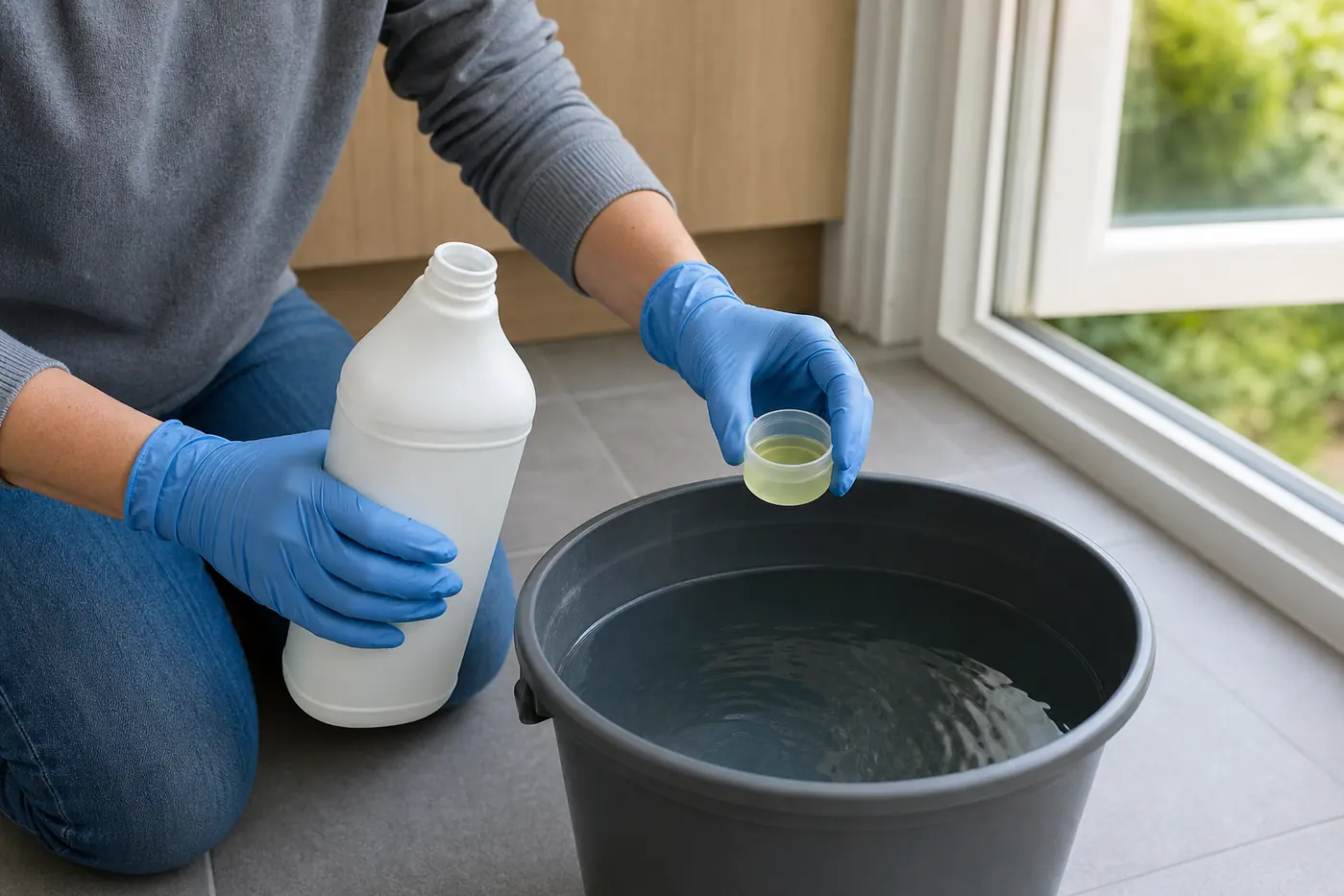
Contact time starts when the treated area has the coverage described on the label. Keep the surface in the condition stated by the manufacturer for that period, without extending it on a finish-sensitive material. Follow the rinse, wipe or air-dry step that comes next. Reapplying because the area dried too early should follow the product directions, not an improvised extra dose.
Gloves and ventilation are task-specific controls. The correct material, thickness and replacement point depend on the product and exposure. Follow the label and workplace instructions where they apply. Choose correct gloves by product and task because a generic household glove may not suit every cleaner.
Why universal ingredient blacklists mislead
A list that labels every acid, alkali, solvent, fragrance or preservative as bad removes the details needed for a useful decision. Ingredient identity matters, and so do concentration, impurities, formulation, route of exposure, frequency, surface, ventilation and the controls on the label. A blacklist can also push a reader towards an unsuitable homemade mixture with no tested directions for the task.
Front-label words need the same care. Natural does not mean compatible with skin, lungs, pets or every surface. Green and eco may refer to one feature such as packaging, sourcing or biodegradability without answering the cleaning or hazard question. Chemical-free is marketing shorthand, not a useful description of a liquid or powder. Look for a clearly defined claim, the evidence or scheme behind it and the practical use instructions.
Household preferences still matter. A fragrance-free choice, a particular format or a shorter product list may suit a household for practical reasons. Treat that preference as a selection filter, then check whether the remaining product is designed for the soil and surface. Avoid turning a preference into a universal safety promise.
Keep formulations separate
Never mix cleaning products, even when both are sold for the same room or job. Bleach with acids or ammonia are high-risk examples, and an unlabelled combination can create fumes, heat, splashing or a less predictable mixture. Do not add fragrance oils, vinegar, bicarbonate, disinfectant or another cleaner to improve scent or strength unless the manufacturer explicitly provides that exact method.
Rinse between separate products only when the product and surface directions call for it, and allow the stated drying or ventilation period. Task setup, PPE and exposure controls still follow the chemical handling rules and the instructions on the pack in your hand.
Store the label with the product
Keep each cleaner upright in its original closed container with the label readable. Do not decant it into a drinks bottle, food jar or an unmarked spray bottle. Store it within the stated temperature and ventilation limits, away from food and inaccessible to children and pets. Separate incompatible products when the label or supplier directs.
Leaking, swollen, corroded or damaged packaging needs the supplier’s disposal route. Do not smell an unknown container to identify it or pour leftovers into a drain without checking the instructions and local rules. Cupboard position, access and container condition belong in the household’s safe storage routine.
Set product preferences before a regular clean
Product choice is easiest when the task, surfaces and household preferences are agreed before work starts. Samyx Cleaning can follow an agreed routine and product preferences during domestic cleaning in London, within the booked time and confirmed priorities. Mention delicate finishes, products that must or must not be used, and any manufacturer care instructions when arranging the visit.
Regular cleaning is not a chemical consultation, hazardous-spill response, decontamination service or medical route. Unknown products, damaged containers, strong unexplained fumes, specialist coatings or contamination outside routine household cleaning need the appropriate supplier, manufacturer or specialist advice before the area is handled.
Ask About Regular Cleaning
Enter your postcode to view our rates and availability in your area.

Keep a short product record
A short record prevents the working instructions from being separated from the bottle. Photograph the front and back labels when print is fading, and save the supplier ingredient page named on the pack. Replace the photograph after a formulation or label change. Do not treat an old note as authority for a new bottle with similar colours or branding, and never rely on memory for a decanted or unlabelled liquid.
- Record the product name, intended task and approved surfaces.
- Note ready-to-use or concentrate status and the labelled dose for your task.
- Copy the contact time, rinsing, drying, ventilation and PPE instructions that affect the routine.
- Keep the supplier contact and public ingredient-information address shown on the pack.
- Record the opening or preparation date only when the manufacturer gives a storage or use period that depends on it.
Frequently asked questions
-
Do cleaning products have to list every ingredient?
Not necessarily as a complete food-style formula. Household detergent rules in Great Britain require specified ingredient categories and concentration bands, with some groups stated at any concentration. The pack should direct consumers to public ingredient information. Read the label and use the supplier contact or website when you need more detail.
-
What do hazard pictograms on cleaning products mean?
A pictogram identifies a classified hazard category. Read it with the signal word, hazard statements and precautionary statements because those explain the nature of the hazard and the controls required. The pictogram alone does not give the dose, surface compatibility or full use method.
-
What cleaning product ingredients should I avoid?
There is no useful universal blacklist for every task and household. Check the finished product, concentration, exposure route, surface, intended use and label precautions. Avoid any product excluded by the surface manufacturer or household requirement, and stop when the label or contents are unknown.
-
Can concentrated cleaner be used without dilution?
Only when the manufacturer provides a specific neat-use instruction for that task. Otherwise follow the stated dilution. Using a concentrate neat can increase residue and exposure and can change surface compatibility without improving the result.
Important: Follow the product label, supplier directions and surface manufacturer’s care instructions over general guidance. Never mix cleaning products, including bleach with acids or ammonia. Use only the stated dilution, contact time, ventilation, gloves, rinsing and drying method. Patch-test on a hidden area only when both sets of instructions permit it. Keep products in their original labelled containers and stop for leakage, damaged packaging, unknown contents, unusual fumes, discolouration, dulling, etching or coating and fibre change. Seek the appropriate supplier, manufacturer, medical or specialist advice for an exposure, damaged product or uncertain material.
Author: Svetlana Georgieva (Clara)
Hi, I’m Svetlana Georgieva, but you can call me Clara. As the co-founder and heart behind Samyx Cleaning, I’m devoted to sharing the art of a clean space. Let’s journey into a cleaner, more joyful life together with tips from London's cleaning experts.

Discover more of our cleaning secrets: