
Safety of Cleaning Products: A Practical UK Guide

Last modified on: 15/08/2026
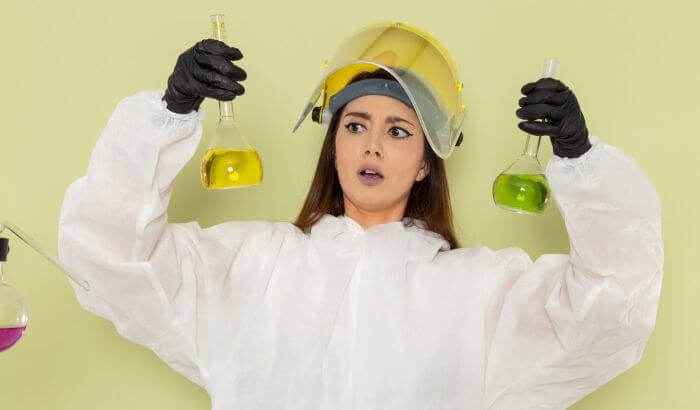
Safety of cleaning products starts with reading the label, matching the product to the task and controlling how it can reach your skin, eyes or lungs. Use only the stated amount, keep products separate, ventilate as directed and stop when the product or surface behaves unexpectedly.
A familiar bottle is not automatically low risk. A washing-up liquid, descaler, oven cleaner and disinfectant do different jobs and carry different instructions. The useful question is not whether all cleaners are safe or unsafe. It is whether this product can be used for this job, by this person, in this room, under the conditions stated on its label.
Check the label, task and exposure route
- Confirm that the label names the surface or task and read the warnings before opening the container.
- Use the stated dilution, application method, contact time, ventilation, protective equipment and rinse.
- Keep every product in its original container and never mix one cleaner with another.
- Keep children, pets, food and unprotected people away until the label’s use and drying steps are complete.
- Stop for unusual fumes, burning, breathing difficulty, marked irritation, a damaged container or an unknown spill.
Key takeaways
- No cleaner is suitable for every person, material, room and task.
- The label decides dilution, contact time, ventilation, protective equipment and rinsing.
- Natural, plant-based and fragrance-free claims do not cancel hazard or allergy information.
- Cleaning products should stay separate, upright and inside their original labelled containers.
- Symptoms, unknown products and uncontrolled spills need an incident response, not a stronger cleaning method.
Table of Contents
Safety of cleaning products starts with the label
Read the back label before moving furniture, putting on gloves or wetting the surface. Check the intended use, surfaces excluded, amount or dilution, method of application, contact time, ventilation, protective equipment, rinse and storage directions. Look for warnings about skin, eye or breathing exposure. If the print is hard to read, photograph it and enlarge the image before starting.
| Signal or condition | What it changes | Controlled next step | Stop or escalate when |
|---|---|---|---|
| Hazard pictogram or strong warning | Exposure controls may be mandatory | Follow the stated PPE, ventilation and application method | The needed control is unavailable or does not fit the room |
| Concentrated product | Measurement and dilution errors carry more risk | Measure only as directed with the stated equipment | The cap, measure or dilution instruction is missing |
| Spray, mist or strong vapour | Breathing and eye exposure can increase | Use only in the labelled way with the stated airflow | Fumes collect or anyone develops symptoms |
| Food-contact or children’s surface | Residue and access need extra control | Follow the labelled rinse and keep the area unavailable | The rinse or safe-return instruction is unclear |
| Unknown surface or finish | Discolouration, etching or coating damage is possible | Check the manufacturer and test a hidden area if permitted | The finish changes, softens, dulls or transfers colour |
| Damaged or unlabelled container | Identity, concentration and closure are uncertain | Keep people away and seek product or council disposal advice | There is a leak, reaction, exposure or unknown spill |
A hazard pictogram does not mean the product can never be used. It tells you that the conditions of use matter. A corrosive descaler may require eye protection and careful handling. A concentrated floor cleaner may be suitable only after measured dilution. A disinfectant may need a clean surface and a stated wet contact time before its claim applies.
Do not copy a dilution from another brand or reuse an old spray bottle. Product strength and formulation vary. A capful is not a reliable measure unless the label defines it. More product can leave residue, increase exposure and make rinsing harder without improving the result.
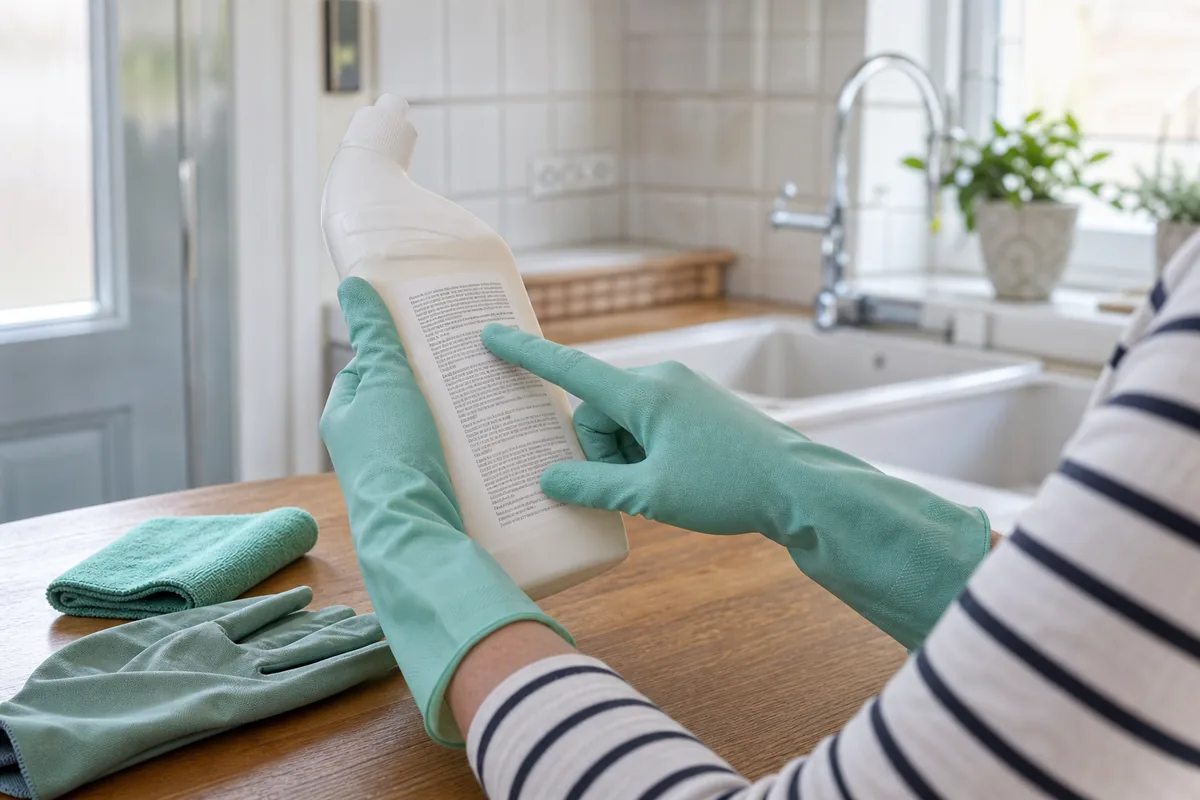
The product name on the front is only a category. The directions and warning panel explain what that particular formulation expects. Our guide to chemical handling covers the working sequence in more detail. The ingredient and label owner below helps with the vocabulary without turning marketing claims into safety conclusions.
You may also enjoy:

Match the control to the task
Begin with the least exposure that still completes the task. Dust may need a damp microfibre cloth rather than a spray. Light soil may need a routine cleaner, not a disinfectant. A small work area can reduce the amount left wet at one time. These are task decisions, not universal substitutions, so the product label and surface manufacturer still set the limits.
Gloves are useful when the label requires them or the task brings repeated wet contact. The correct gloves and their thickness depend on the product, and an intact glove is only one control. Liquid can enter through a torn cuff, transfer from the outside during removal or stay trapped against damp skin. Replace damaged gloves, wash hands after removal and never touch your face with contaminated gloves.
Eye protection matters when splashes are reasonably possible and the label calls for it. Pour concentrates close to the receiving container, keep lids available and avoid working above face height. Ordinary spectacles are not a substitute for protective eyewear specified by the product. Footwear and clothing should also suit the chance of a spill.
Keep the clean and dirty sides of the task separate. Do not put a used cloth beside food, toothbrushes, pet bowls or children’s items. Use a fresh cloth when moving from a toilet area to another room. Wash reusable tools according to the product and material directions, then let them dry before storage.
Ask About Regular Cleaning
Enter your postcode to view our rates and availability in your area.

Ventilation is a control, not a cure
Ventilation reduces the build-up of vapour, mist and fragrance in an enclosed room. Open the window or door when the label requires airflow and it is safe to do so. Use an extractor that vents outdoors where appropriate. Keep the air route moving away from occupied rooms, food preparation and other people.
A fan does not make an incompatible mixture acceptable. It also does not permit a product to be sprayed against its directions. Small bathrooms, windowless utility rooms and cupboards can collect vapour quickly. Plan the exit before applying the product and leave the area for the stated time when the label instructs you to do that.
People can react differently to fragrance, aerosol or vapour. Someone with a breathing condition, known sensitivity or medical advice about cleaning exposure should not be treated as a routine test case. Choose the route with their advice and the product information. Stop if coughing, wheezing, dizziness, eye watering or burning begins. Move away from the source and follow the label’s incident directions.
Plan room ventilation around the label and the layout. Airflow supports controlled use. It does not remove the need for measured product, correct PPE, surface compatibility and a no-mixing rule.
Never mix household cleaning products
Use one product at a time unless the manufacturer explicitly supplies and instructs a combined system. Bleach must not be mixed with acids, ammonia or another cleaner. Dangerous gases can be released. Toilet cleaner, limescale remover, vinegar, oven products and disinfectants should never be combined on the assumption that more chemistry means more cleaning.
Mixing can happen by accident. A toilet bowl may already contain descaler when bleach is added. A bucket may hold residue from the last product. Two sprays can meet on a worktop. Empty and rinse equipment as directed, check the surface history and keep only the current product in the work zone.
Do not try to neutralise an accidental mixture with a third substance. Stop applying products, leave the immediate area without crossing visible liquid and prevent others from entering. If fumes or symptoms are present, use the product’s incident directions and seek urgent advice. A strong smell is not a signal to lean closer and identify it.
Store products so the next use is controlled
Close the original cap, wipe the outside if the label permits and store the container upright. Keep the label readable and the product away from food, medicine and drink. A high shelf is not enough when a child can climb or a bottle can fall. Use a locked or secured cupboard that suits the household.
Never transfer cleaner into a drinks bottle, food jar or unlabelled spray. The new container may be incompatible with the formulation, and another person may mistake the contents. Do not top up one product with another brand. Keep caps, measuring devices and triggers with the product they came with.
Check stored products for leaks, rusted closures, swelling, split plastic, faded directions and expired instructions. Do not open a swollen or reacting container to investigate. Isolate access without handling it more than necessary, then contact the manufacturer or local authority for disposal advice. Household waste routes differ by product and council.
A simple product list helps everyone in the home. Record the product name, its task, storage place, date opened and any household restriction. Keep the manufacturer’s contact details or a clear label photo with the record. Our focused safe storage guide covers cupboard layout and access control.
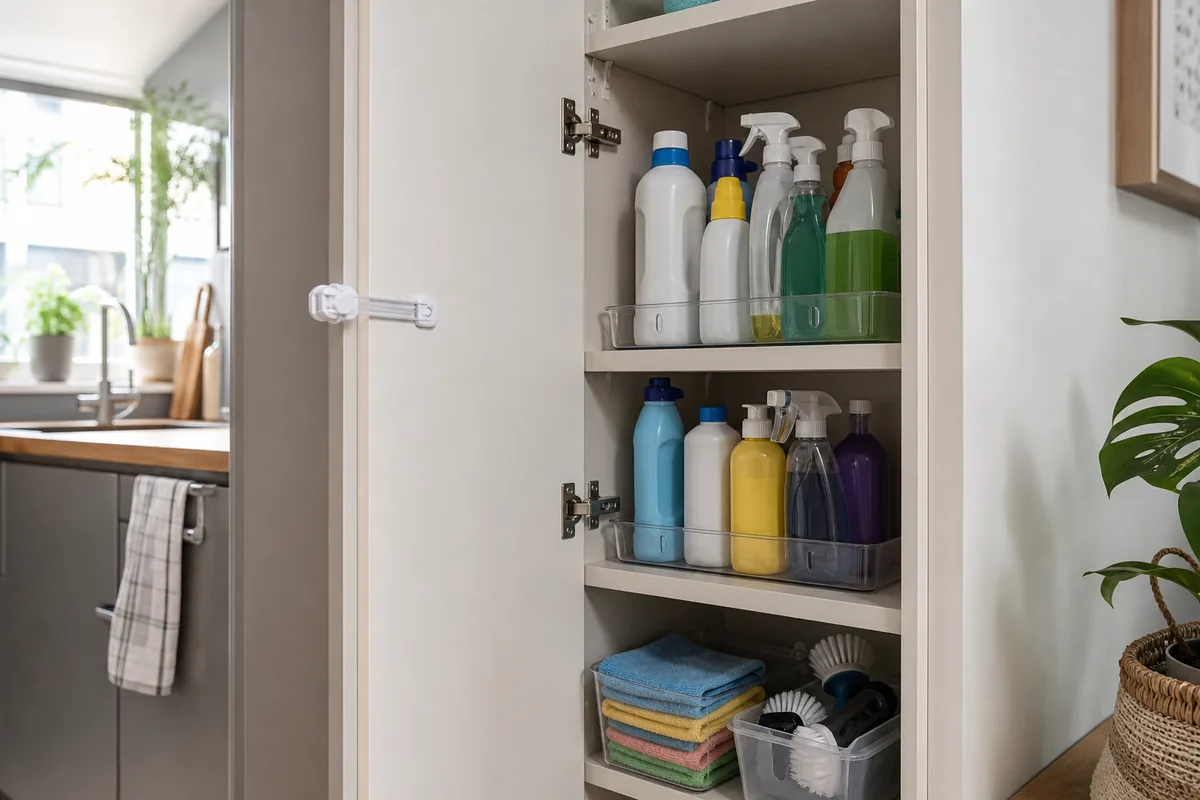
Plan for children, pets and shared homes
Keep children and pets outside the work area before the container is opened. Put bowls, toys, bedding and food away from the cleaning zone. Do not leave a bucket, cloth, open bottle or wet surface unattended. Finish the labelled rinse, drying or room-return step before access resumes.
Pet-safe, baby-safe and natural are broad marketing phrases unless the claim defines a product, use and test. An ingredient of natural origin can still irritate, damage a surface or be harmful if swallowed. Fragrance-free can reduce one source of scent without proving that every user will tolerate the rest of the formulation.
Tell other adults which product is in use and where the surface remains wet. In a shared flat, a note on a closed bathroom door is more useful than assuming everyone saw the bottle. Keep the container with you so another person cannot add a second product to the same area.
Families who need a tighter routine can use the separate child safety checks. The aim is controlled access and correct use, not a promise that one shopping label removes every household risk.
Know what to do after an exposure
Stop the task and read the product’s first-aid directions. Remove yourself from fumes without taking an unsafe route through a spill. For skin or eye contact, follow the stated rinsing instructions and remove contaminated clothing when directed. Do not apply another household chemical to cancel the first one.
If someone may have swallowed, touched or breathed a harmful chemical, use current NHS poisoning advice. Call 999 or go to A&E for severe symptoms or a possible harmful exposure needing urgent assessment. Call NHS 111 if you are unsure what level of help is needed.
Do not make the person vomit and do not give food or drink unless a healthcare professional tells you to. Keep the product packaging, label or a clear photograph available. Note the time, likely amount, route of exposure and symptoms. Do not delay urgent help to calculate an exact dose.
A spill without personal exposure still needs a boundary. Keep people away, remove ignition sources only when it is safe, and follow the spill instructions. Unknown liquid, widespread contamination, a damaged pressurised container or a reaction involving heat or fumes does not belong in a routine household clean.
How COSHH changes cleaning at work
COSHH is the UK workplace framework for controlling substances hazardous to health. Employers must assess exposure from the cleaning task and decide how it will be prevented or controlled. That can include choosing a less hazardous product, changing the method, providing ventilation, training, storage and suitable protective equipment.
A safety data sheet can inform the assessment; it is not the assessment itself or a set of household cleaning instructions. The employer must consider the actual amount, frequency, route of exposure, room, worker and task. Decanting, spraying and repeated wet work may change the exposure even when the product name stays the same.
Current HSE cleaning guidance notes risks including skin allergy, asthma, burns and eye damage from some cleaning products. It points employers towards reduced exposure, spill control, safe storage, hand care, ventilation and task-appropriate PPE.
At home, COSHH does not turn a cupboard into a workplace file. The product label, manufacturer directions and household conditions remain the immediate controls. A domestic employer, landlord, cleaner or business using products as part of paid work may have duties beyond ordinary consumer use and should follow the relevant HSE route.
When regular home cleaning is the practical route
A repeatable routine reduces rushed product choices. Clear labels, agreed products, separate cloths and a known order of work make it easier to clean kitchens, bathrooms, floors and reachable surfaces without improvising. This is where regular professional help can support a household that already knows its product restrictions and priority rooms.
Samyx can follow an agreed checklist during domestic cleaning and record product preferences before the visit. Tell the office about allergies, sensitive occupants, delicate finishes, products that must or must not be used, pets, children and access constraints. Keep manufacturer care information available for unusual surfaces.
Routine domestic cleaning is not a hazardous-spill or poisoning service. Unknown chemicals, active fumes, fire damage, sewage, specialist decontamination, pest treatment and large mould problems need the correct specialist or incident route. Product compatibility for a valuable, coated or unusual material may need the manufacturer or surface supplier.
Book Domestic Cleaning
Enter your postcode to view our rates and availability in your area.
Build a household product record
A five-minute record prevents many avoidable mistakes. It gives a family member, cleaner or housemate the same baseline and makes a product easier to identify during an incident. Check it when a product changes formulation, the label becomes unreadable or a new surface is installed.
- Photograph the front and back label, including the product name, directions, warnings and manufacturer contact.
- Write the approved task and surfaces, plus any surface or person the product must avoid.
- Record the stated dilution, application, contact time, rinse, ventilation and PPE without shortening the meaning.
- Mark the locked storage location and disposal route, and check that the original cap and measure remain present.
- Remove old, duplicate or unidentifiable products through the appropriate local route rather than keeping them for an unknown future job.
The record does not replace the container. Keep both. A photograph may miss updated directions, and a loose note cannot show whether the liquid has been transferred or contaminated. When the product, label and record disagree, stop and confirm the current manufacturer guidance.
Frequently asked questions
-
How safe are cleaning products?
Cleaning products can be used safely only within the conditions stated for that formulation and task. Read the label, use the stated amount, ventilation and protective equipment, keep products separate and store them in the original container. Stop for symptoms, unusual fumes, damage or an unknown product.
-
What are the safety precautions of a cleaner?
Check the product and surface, control access, ventilate as directed, wear the stated PPE, avoid splashes and mist, use separate cloths and never mix products. Close and store each container after use, wash hands after glove removal and follow the label’s incident directions if exposure occurs.
-
Are cleaning products covered by COSHH?
Cleaning products used at work may fall within a COSHH assessment when they can expose workers to substances hazardous to health. The employer assesses the real task, amount, frequency and exposure route, then chooses controls, training, storage and PPE. A safety data sheet supports the assessment and does not replace it.
-
What are the regulations for cleaning products?
Different UK rules can apply to product classification, labelling, supply, workplace use, transport and waste. For a household user, the immediate source is the current product label and manufacturer directions. Businesses and employers should use the relevant HSE and supplier information for their actual products and tasks.
Important: Follow the current product label, manufacturer directions and surface-care instructions over general guidance. Never mix cleaning products, including bleach with acids or ammonia. Use the stated dilution, ventilation, PPE, contact time and rinse, and keep the product in its original container. Stop for symptoms, unknown liquid, unusual fumes, a damaged container or an uncontrolled spill. Use NHS advice for suspected poisoning and HSE guidance for workplace exposure control.
Author: Svetlana Georgieva (Clara)
Hi, I’m Svetlana Georgieva, but you can call me Clara. As the co-founder and heart behind Samyx Cleaning, I’m devoted to sharing the art of a clean space. Let’s journey into a cleaner, more joyful life together with tips from London's cleaning experts.

Discover more of our cleaning secrets: