
7 Time-Saving Cleaning Tools That Make Cleaning Easier

Last modified on: 13/09/2026
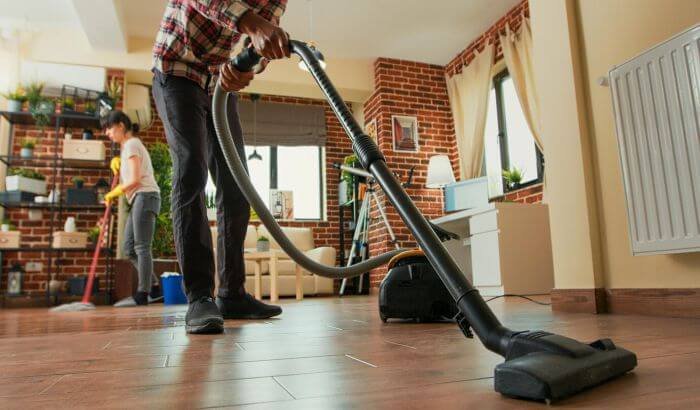
Time-saving cleaning tools work best when each one removes a specific source of wasted effort: repeated passes, unnecessary bending, carrying supplies between rooms, or waiting for one tool to do a job it was not designed for. A smaller, well-matched kit is usually faster than a cupboard full of gadgets.
Build a faster cleaning kit around four bottlenecks
- Use a vacuum that suits the floors and furniture layout so loose soil comes off in fewer passes.
- Keep separate microfibre cloths and a flat mop ready for wiping, dusting and controlled wet cleaning.
- Add automation or steam only where the home layout and surface instructions make the extra machine useful.
- Carry the core kit in one caddy so time is not lost walking back to a cupboard for every product or attachment.
Key Takeaways
- The fastest cleaning tool is the one matched to the surface, soil and room layout, not the one with the most features.
- A capable vacuum, microfibre cloth system and flat mop cover most routine household cleaning without repeated tool changes.
- Robot vacuums save active labour on routine floor maintenance, but still leave stairs, edges and spot work for manual cleaning.
- Steam cleaners are task-specific machines. Surface compatibility matters more than the claim that steam works everywhere.
- A cleaning caddy can save more time than another gadget when the main delay is repeatedly fetching supplies from storage.
Table of Contents
7 Time-Saving Cleaning Tools Compared
The seven tools below solve different forms of friction. Some reduce physical passes, some extend reach, and others remove active cleaning time. The useful comparison is not “which tool is best?” but “which repeated delay does this tool remove?”
1. Lightweight vacuum
Saves time on: loose dust, grit, hair and floor debris.
Main limit: the wrong floor head or blocked airflow can turn a fast pass into repeated work.
2. Microfibre cloth set
Saves time on: dusting, wiping and drying with fewer cloth changes.
Main limit: one cloth should not travel from a dirty or sanitary area to a food-contact surface.
3. Flat mop
Saves time on: broad hard-floor coverage and quick pad changes.
Main limit: moisture and cleaner compatibility still depend on the floor finish.
4. Extendable duster
Saves time on: high ledges, light fittings and tops of tall furniture.
Main limit: heavy deposits may still need controlled hand cleaning at close range.
5. Robot vacuum
Saves time on: repeated maintenance passes on accessible floors.
Main limit: clutter, thresholds, stairs and detail work still need human attention.
6. Steam cleaner
Saves time on: compatible hard surfaces and crevices where heat and moisture loosen attached soil.
Main limit: not every sealed, painted, glued, waxed or wooden surface tolerates steam.
7. Cleaning caddy
Saves time on: carrying cloths, gloves, brushes and labelled products between rooms.
Main limit: storage still needs to keep incompatible products and child-access risks under control.
Build the Core Kit Before Adding Specialist Gadgets
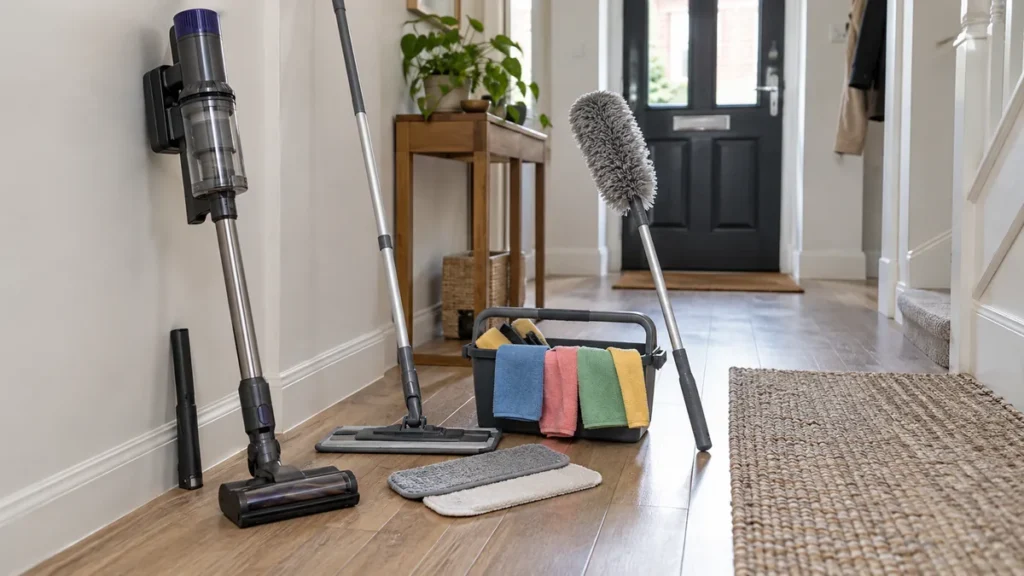
The fastest kit is usually small enough to carry and complete enough to prevent repeated trips to a cupboard. Start with the tools used in most rooms: a manoeuvrable vacuum with the correct floor head, clean microfibre cloths, a flat mop with spare pads, an extendable duster and a caddy for the products needed on that round. Add a specialist brush, scraper or machine only when a recurring task justifies the storage, setup and cleaning afterwards.
Prepare consumable parts as well as the tool itself. A flat mop stops saving time when its only pad is dirty halfway through the floor. A cordless vacuum loses its advantage when the battery is flat, the filter is blocked or the useful attachment is stored elsewhere. Keep charged batteries, clean pads and empty cloth bags ready, then return them to the same place after use.
1. Use a Vacuum That Matches the Floors and Layout
A vacuum saves time when it removes loose soil in one controlled pass and moves easily through the actual home. Weight, floor-head design, hose reach, battery runtime and access under furniture can matter more than headline suction claims.
Before replacing a machine, check whether the existing vacuum is losing performance because the bin, filter, brush roll or air path needs attention. The separate guide to cleaning and maintaining a vacuum cleaner covers those maintenance points in detail.
2. Build a Small Microfibre Cloth System
Microfibre cloths save time because one material can handle dry dusting, damp wiping and final drying when it is used correctly. The efficiency comes from having enough clean cloths ready, not from pushing one increasingly dirty cloth around several rooms.
Separate cloths by task or room type. That reduces trips to rinse a contaminated cloth and avoids carrying bathroom soil onto kitchen or general surfaces. For fibre choice, washing and reuse, see the dedicated microfibre cloth guide.
3. Use a Flat Mop With Removable Pads
A flat mop is efficient because it covers broad floor areas, reaches under low furniture and allows a dirty pad to be replaced without carrying a bucket through every room. Keep several washable pads available if the property has a large floor area.
The mop does not decide how wet the floor should be. Sealed wood, laminate, tile and resilient flooring have different moisture limits. The guide to mopping floors properly explains the floor-specific method and why loose grit should be removed first.
4. Add an Extendable Duster Before Buying Another Machine
High ledges, door frames, wardrobe tops and light fittings waste time when every surface requires a step stool to be moved and reset. A light extendable duster can remove routine loose dust from many of these points while the cleaner remains on the floor.
Extension does not make every elevated task safe. Heavy deposits, wet cleaning, electrical fittings and unstable access still need a different method. The time saving is greatest on regular dry-dusting routes where the tool can move from one high point to the next.
5. Use a Robot Vacuum for Maintenance, Not as a Full Replacement
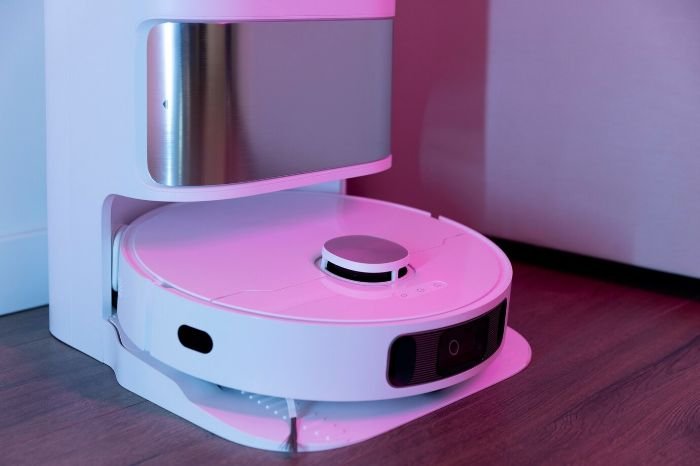
A robot vacuum can remove active labour from routine floor maintenance because it can run while another task is being done. It works best in rooms where cables, small objects and other obstacles are already controlled and where most of the floor is accessible.
The trade-off is setup and follow-up. Stairs, tight edges, spot cleaning, cluttered zones and some thresholds still need manual attention. A robot therefore saves the most time when it takes over repeat maintenance passes rather than being expected to replace the main vacuum completely.
6. Treat a Steam Cleaner as a Surface-Specific Tool
Steam can reduce scrubbing on compatible hard surfaces and in some crevices, but it is not a universal shortcut. Heat and moisture can affect finishes, adhesives, coatings and wood products, so both the machine instructions and the surface-care instructions need to permit the method.
Manufacturer guidance illustrates why this matters. Kärcher’s steam-cleaner FAQ, for example, allows low-steam use on some laminate or parquet only when the floor is not oiled or waxed and warns against leaving puddles. That is a useful boundary: compatibility should be checked before speed is considered.
Steam cleaning is also different from professional hot-water extraction used on carpets and upholstery. The steam cleaning versus hot-water extraction guide explains the equipment and method difference.
7. Keep the Core Kit in a Cleaning Caddy
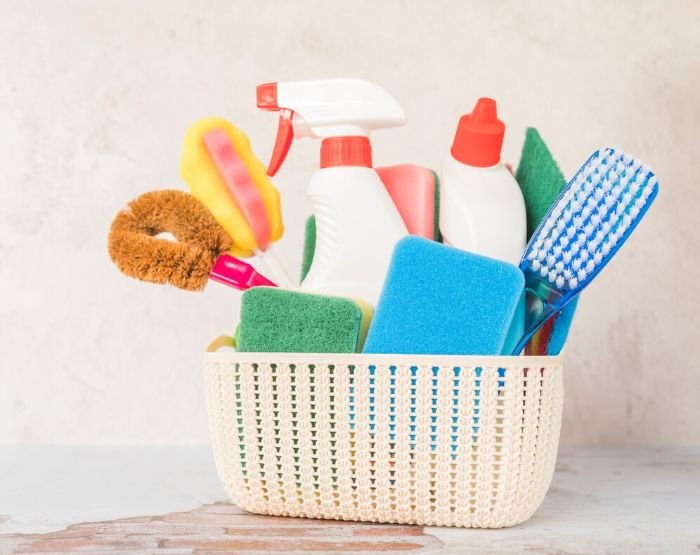
A caddy is low-tech, but it removes one of the most common delays in household cleaning: repeated trips for a cloth, brush, gloves or product. Keep only the core items used across several rooms and leave specialist products in their normal storage location.
The caddy should not become uncontrolled chemical storage. Keep labels readable, close caps properly and return products to secure storage after the cleaning session. The dedicated guide to storing cleaning supplies safely covers separation and household access risks.
Choose the Tool by the Time You Actually Lose
Buying another gadget only helps when the existing routine has a clear bottleneck. Watch one normal cleaning session and note where time disappears. The pattern usually points to the tool that will matter most.
- If floor debris needs several passes, check the vacuum head, airflow and access before replacing the whole cleaning system.
- If wiping stops because cloths are dirty, increase the number of clean task-specific cloths rather than using one for the whole home.
- If floor cleaning is slowed by buckets and furniture access, a flat mop with spare pads may remove more friction than another chemical product.
- If repeated maintenance is the problem, automation can help only after clutter and room access are controlled.
- If the delay is walking between rooms for supplies, fix transport and storage before buying another powered appliance.
You may also enjoy:

What Makes a Cleaning Tool Time-Saving in Practice?
Total time includes setup, the cleaning pass, rinsing or pad changes, drying, maintenance and putting the tool away. A machine that cleans quickly but takes ten minutes to assemble and clean afterwards may be slower for a small room than a simpler manual tool.
Storage distance matters too. Frequently used tools should be easy to reach without being left where children, pets or household traffic can interfere with them. The right setup is the one that shortens the entire task from first pickup to final storage, not only the few minutes when the tool is switched on.
Test a Tool Against the Whole Task
Use the same room and the same level of soil for a simple comparison. On one occasion, record the time from taking the tool out to putting it away. Include moving furniture, changing attachments, refilling water, replacing pads, emptying tanks and cleaning the equipment. Repeat the measurement on another normal occasion before deciding that a difference is real. You do not need laboratory precision; you need to know whether the tool removes a recurring delay in your home.
Also record the result it leaves behind. A quick pass that misses edges, pushes debris into corners or leaves a film creates another task later. The useful tool is the one that reaches the required standard with fewer interruptions and without shifting the work to rinsing, drying or maintenance.
Match the Setup to the Home
In a small flat, compact storage and low setup time normally outweigh a large machine with many accessories. In a multi-storey home, weight, stair safety and whether a second basic kit prevents repeated carrying become more important. Homes with pets may benefit from a floor head that releases hair easily, while households with mainly hard floors may gain more from spare mop pads and a light vacuum than from a carpet-focused machine.
Do not buy a steam cleaner, robot vacuum or powered scrubber because it appears on a generic list. Check the surfaces, thresholds, cables, clutter, storage and maintenance the device needs. If it cannot move through the actual layout or the manufacturer excludes the surface you need to clean, it cannot save time on that job.
When the Missing Resource Is Time, Not Equipment
There is a point where another tool does not solve the problem. If routine cleaning repeatedly gets postponed because the available time is already committed elsewhere, a scheduled domestic cleaning service in London addresses the capacity issue directly rather than adding more equipment to store and maintain.
Need a cleaning service?
Enter your postcode to view our rates and availability in your area.

Frequently Asked Questions
-
What are the best time-saving cleaning tools for a small home?
Start with a vacuum suited to the floors, several microfibre cloths, a flat mop with spare pads and a compact caddy. In a small home, low setup time and easy storage usually matter more than adding several powered gadgets.
-
Does a robot vacuum really save cleaning time?
It can reduce active labour on routine floor maintenance when the floor is accessible and clutter is controlled. It does not replace stairs, detailed edge work, spot cleaning or the main vacuum in every home.
-
Is a steam cleaner a good time-saving tool?
Only for compatible surfaces and tasks. Steam can loosen attached soil with less manual scrubbing, but the machine and surface instructions must allow heat and moisture. Setup, cooling and storage time should also be counted.
-
Why do microfibre cloths save time?
A prepared set can cover dry dusting, damp wiping and drying without repeatedly stopping to rinse one dirty cloth. Separate cloths by task or room so soil is not transferred between areas.
-
Should I buy more cleaning gadgets to clean faster?
Not automatically. First identify where time is being lost. A better attachment, extra clean pads, an extendable tool or a caddy can remove more wasted movement than another powered appliance.
Author: Svetlana Georgieva (Clara)
Hi, I’m Svetlana Georgieva, but you can call me Clara. As the co-founder and heart behind Samyx Cleaning, I’m devoted to sharing the art of a clean space. Let’s journey into a cleaner, more joyful life together with tips from London's cleaning experts.

Discover more of our cleaning secrets: