
Safe Cleaning Before Baby Arrives: A Practical Checklist

Last modified on: 18/08/2026
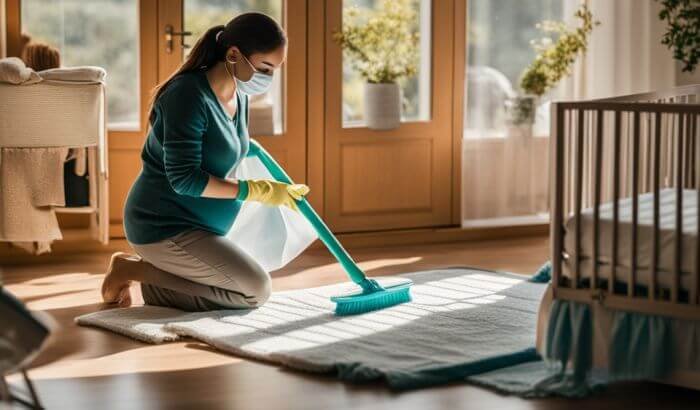
Safe cleaning before baby arrives begins with a manageable home, not a perfect one. Focus first on clear access, ordinary household hygiene, correctly used products and tasks that will be harder to manage after the birth.
You do not need to sterilise every room or complete an extreme nesting list. Decide what must be done, what would be useful if time and energy allow, and what another adult or professional should handle.
Key Takeaways
- Choose a short priority list over a whole-home perfection target.
- Clean for the way each room will be used.
- Treat labels and care instructions as the controlling directions.
- Keep cleaning, disinfection and specialist work as separate decisions.
- Brief helpers clearly and keep the final routine easy to maintain.
Table of Contents
Safe cleaning before baby arrives starts with priorities
Start with access and function. A clear path between the bedroom, bathroom, kitchen and front door is more useful than polishing a decorative shelf. Remove trip hazards, stabilise loose rugs where appropriate, put frequently used items within easy reach and keep exits and heating controls accessible.
| Priority layer | Typical tasks | Reason for doing it | Boundary |
|---|---|---|---|
| Do first | Clear routes, remove waste and spoiled food, clean food-preparation areas, bathroom touchpoints, visible floor soil and the intended sleeping area | Supports safe access and ordinary household hygiene | No need to disinfect every surface or move heavy furniture |
| Useful if practical | Dust accessible ledges, vacuum upholstery, clean inside the fridge, organise laundry supplies and reset storage | Reduces work waiting after the baby arrives | Skip low-use areas when time, access or energy is limited |
| Delegate or stop | High ledges, heavy appliances, strong oven products, extensive mould, unknown spills and tasks needing specialist equipment | Keeps awkward or uncertain work away from the person who should not handle it | PPE does not turn an unsuitable task into routine cleaning |
List rooms in the order they affect daily life. Then limit each room to a few outcomes: a usable surface, a clear floor, controlled waste, clean textiles where needed and products stored securely. This creates a finish line that another person can understand and continue.
Record problems that cleaning cannot solve. A leak, damaged seal, unstable shelf, pest activity, broken appliance or recurring damp patch needs the correct repair or inspection route. Cleaning over the symptom can hide it for a short time and leave the household with the same underlying problem after the baby arrives.

Plan the work without tying it to a perfect date
A due date is not a reliable cleaning deadline. Build a plan that still works if the household schedule changes. Complete storage decisions, repairs and delegated jobs early enough that they do not depend on one final weekend. Leave only a light reset for later: laundry, bins, food areas, bathroom surfaces and accessible floors.
Break the list into short, named tasks that can be handed over. “Clean the home” is difficult to share. “Vacuum the living-room rug, wipe the empty changing unit using its care instructions and take the bathroom bin out” is clear and checkable.
Pregnancy, symptoms and clinical advice can change what is appropriate for one person. This checklist does not prescribe exertion, posture, exposure or working time. Follow advice from the person’s midwife, GP or other appropriate clinician and reassign any task that does not fit it.
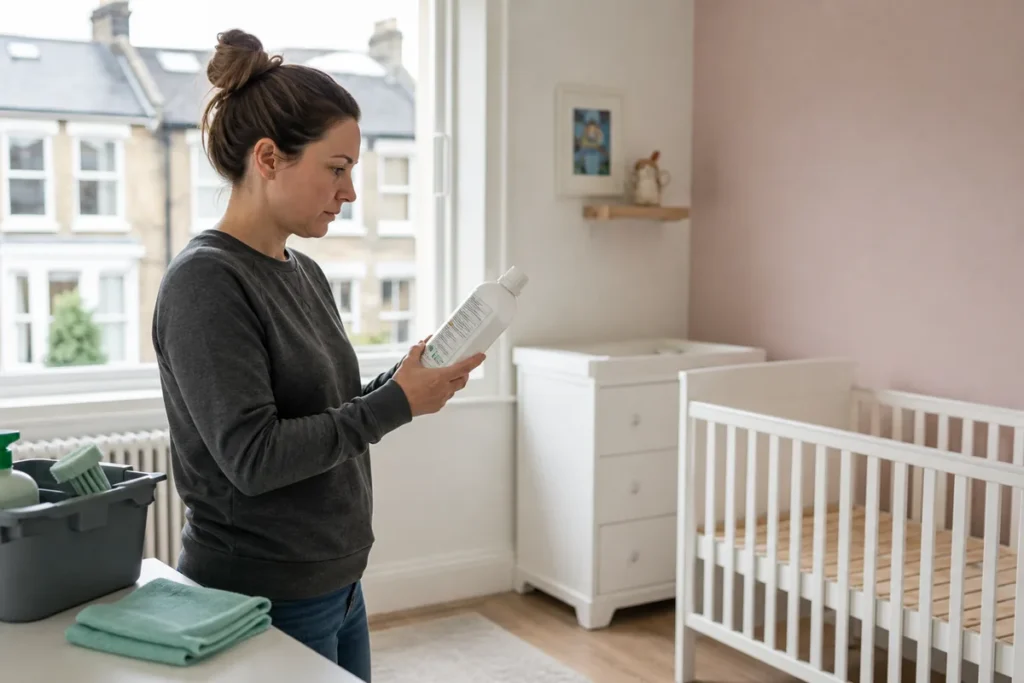
Read the label before calling a product baby-safe
Terms such as natural, plant-based, green, eco, fragrance-free and unscented do not answer every safety question. Check what the product is for, which surfaces it can contact, how it must be diluted or applied, whether ventilation is required and whether residue must be rinsed.
Use one product for its named purpose. Do not mix bleach with acids, ammonia or another cleaner, and do not add homemade ingredients to a commercial formula. A stronger smell, larger dose or longer contact is not proof of better cleaning. Detailed chemical safety remains a separate decision before the task begins.
Reduce spray and unnecessary handling through the application method permitted on the label. Open products only for the active task, close them afterwards and keep them in their original labelled containers. Store them securely away from children, food and baby equipment.
| Situation | First decision | Product boundary |
|---|---|---|
| Loose dust | Capture it with a vacuum attachment or damp cloth suited to the surface | A disinfectant adds no dust-removal benefit |
| Food spill | Remove the spill and clean the food-contact surface promptly | Use a product and rinse step approved for that surface |
| Routine bathroom soil | Identify soap residue, limescale or ordinary dirt | Choose one compatible product; do not combine acid, bleach or another cleaner |
| Known contamination | Check whether cleaning alone is enough or a defined disinfection process applies | Follow the named product, contact time and ventilation instructions |
| Unknown residue or fumes | Stop, keep people away and identify the correct response route | Do not test it with another product or cover it with fragrance |
Wet work and some cleaning ingredients can affect skin or breathing, so product choice, technique, airflow and task-specific protection need to work together. The HSE’s cleaning guidance explains these workplace controls without treating PPE as a substitute for safer work.
You may also enjoy:

Prepare the nursery for use, not for display
Work from the empty room towards the objects that will stay. Remove packaging and building dust, vacuum or damp-dust accessible surfaces, clean the floor by material and wipe furniture only with a method its maker permits. Let cleaned surfaces and textiles dry fully before they are enclosed or stored.
A new cot, mattress, changing unit, blind, rug or storage basket may have its own cleaning and care limits. Do not apply a household disinfectant merely because the item will be used by a baby. Check the named material and manufacturer instructions first.
Keep the room easy to maintain. Leave floor edges accessible, avoid storing cleaning products in the nursery and provide a closed route for waste and laundry. Detailed decisions about sleep setup, feeding equipment and baby care belong with current manufacturer, NHS and maternity guidance, not a household-cleaning checklist.
Used furniture and equipment need a condition check before cleaning. Loose parts, damaged coatings, mould inside porous material, missing instructions or an unknown product residue may make repair, replacement or manufacturer advice the next step. Cleaning should not disguise a defect that affects how the item is assembled or used.
Clean shared rooms by use and soil
Kitchen and food areas
Remove expired food and leaks, clean food-preparation surfaces using the correct product and rinse where the label requires it. Clean the sink, taps, bin area and the handles used during cooking. Keep cleaning cloths and products separate from food, feeding items and clean textiles.
Bathroom and toilet
Deal with ordinary soap residue, limescale and visible soil using compatible methods. Do not improvise a mould treatment or combine bathroom products. Recurring or extensive mould points to a moisture or repair problem and may need a landlord, contractor or specialist route.
Floors, upholstery and handled surfaces
Vacuum from cleaner areas towards the exit, using suitable attachments and avoiding damaged cables or filters. Damp-clean hard floors without leaving excess water or slippery residue. Give spills and visible soil priority over furniture that is already clean.
Frequently handled surfaces may need ordinary cleaning, a named disinfectant process or no extra treatment at all. The decision depends on the setting, contamination and product. Disinfection is reserved for a defined need and does not replace removal of visible soil.
Follow care instructions for laundry and baby equipment
Sort clothes, bedding, covers and reusable cloths by their care labels. Use the stated temperature, cycle, detergent dose and drying method. A separate baby load is not a universal cleaning requirement; colour, soil, fabric, household needs and care instructions determine sensible sorting.
Check the washing machine if it smells, leaves residue or has visible soil. Clean the drawer, seal, filter or drum only as the appliance instructions permit. Dry the machine where appropriate and keep detergent capsules, liquids and stain products secured in their original packaging.
Prams, car-seat covers, carriers, mattresses, changing mats, toys and feeding equipment have different materials and safety functions. Remove only the parts the manufacturer says are removable. Do not soak foam, straps, buckles, electrical parts or assembled equipment without explicit instructions.
Allow washed textiles and cleaned equipment to dry fully before storage or assembly. Damp fabric packed into a drawer, cover or bag can develop odour and create more work. Store clean items away from active cleaning products, footwear, waste and damp laundry so the clean state is easy to maintain.
Leave a routine the household can maintain
The large reset matters less if daily use immediately recreates blocked floors, overflowing waste and scattered products. Set up a simple route for used cloths, household laundry, recycling, food waste and ordinary rubbish. Give frequently used products a secure home and keep backup supplies out of the active room.
Choose a small maintenance list for the first days at home. It might include wiping a food spill, dealing with a full bin, cleaning the toilet when needed and keeping a clear route through the main rooms. Dusting every shelf, washing every window and reorganising storage can wait until the household has time and a reason.
- Keep one accessible basket for items that belong in another room.
- Separate clean cloths from used or damp cleaning textiles.
- Refill only the supplies the household already knows how to use.
- Write down repairs and specialist jobs rather than repeatedly cleaning around them.
- Share the routine without assigning every task to one person.
Keep the routine visible and easy to change. One short list on a household calendar is more useful than supplies scattered across several rooms. Note who can take out waste, run a laundry load, reset the kitchen or contact a repair service. Remove tasks when they no longer serve a current need. The aim is to reduce decisions during a busy period, not to create a cleaning standard that the household cannot maintain.
Delegate high, heavy or irritating tasks
Another adult or a professional cleaner can handle tasks that involve height, heavy movement, strong products, prolonged wet work or awkward access. Name the task and boundary clearly. A request to clean the top of a wardrobe from floor level is different from permission to climb on furniture or move the wardrobe.
Leave suspected asbestos, sharps, sewage, pest-treatment residue, unknown chemicals, extensive mould, exposed wiring and structural damage untouched. Close off access where practical and use the qualified person or emergency route appropriate to the hazard. More PPE does not make these ordinary domestic-cleaning jobs.
Plan high-reach tasks from safe floor-level access. Long-reach tools can help with some ledges; they do not justify working near live electrical equipment, unstable fittings or falling objects.
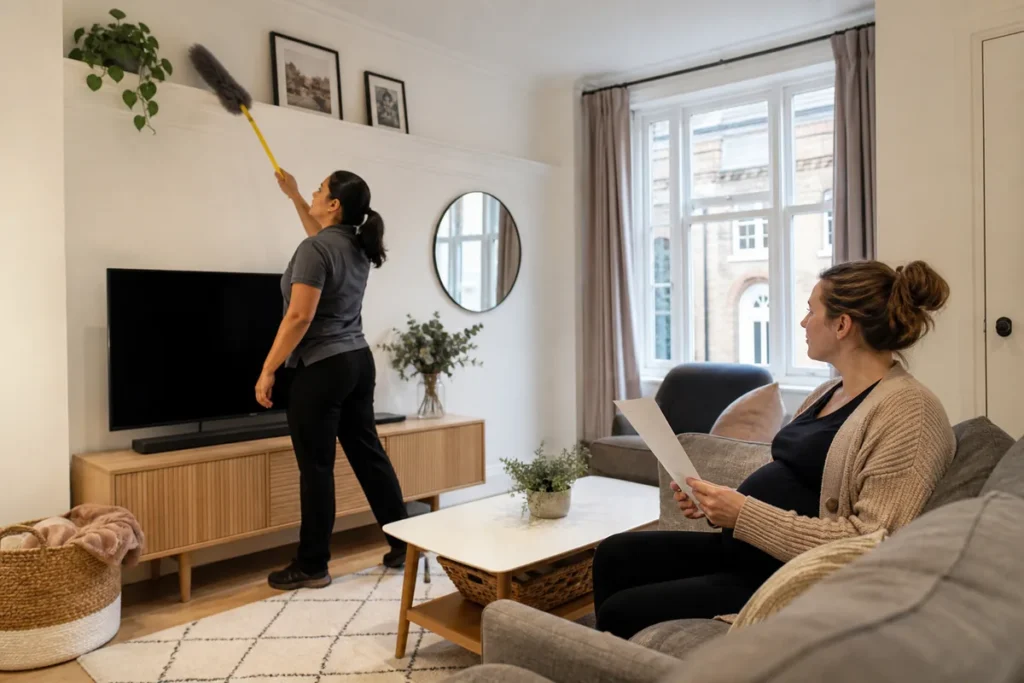
Give helpers a clear pre-baby cleaning brief
A written brief prevents the cleaner from guessing what “baby-ready” means. Include the priority rooms, surfaces that need special care, products that must or must not be used, allergies or sensitivities the household wants noted, pets, access restrictions and any damaged or unstable item.
- List must-do tasks separately from optional work.
- Identify furniture, appliances and textiles with manufacturer instructions.
- Agree who supplies products and where those products may be used.
- State which rooms should be left unused during work and drying.
- Exclude unknown spills, specialist contamination and unsafe access.
Arrange the visit early enough to resolve questions and allow normal drying or ventilation. A final light reset can be handled by the household if appropriate. The cleaner should not give pregnancy, newborn-health or product-medical advice.
Agree how questions will be handled during the visit. The cleaner should pause before using an unapproved product, treating an unidentified mark or moving an item outside the agreed scope. The household can identify a contact person and a room where products, damp equipment and active work remain separated from stored baby items. At handover, note any surface still drying, defect found, task left incomplete or specialist problem that needs another route.
How Samyx Cleaning Can Help
Samyx one-off cleaning can cover an agreed reset of accessible household rooms before the baby arrives. The booking should identify priority areas, surface restrictions, product preferences and access in advance.
The service does not promise a sterile, allergen-free or medically safe home. Unknown substances, sharps, sewage, suspected asbestos, extensive mould, specialist decontamination, unsafe height and repair work remain outside routine cleaning and need the correct specialist route.
Book a Pre-Baby Home Clean
Enter your postcode to view our rates and availability in your area.

Frequently asked questions
-
What should I clean before a baby arrives?
Start with clear walking routes, food-preparation areas, the bathroom, accessible floors, the intended sleeping area and visible spills or waste. Add low-use cupboards, decorative areas and detailed organising only when time and access allow.
-
Do I need to disinfect the whole home before the baby arrives?
No. Ordinary cleaning removes soil from most household surfaces. Disinfection is a separate decision for a named setting, contamination or instruction and requires a suitable labelled product. Routine whole-home disinfection can add unnecessary product exposure and residue.
-
Which cleaning products are safe before a baby arrives?
There is no universal product list for every person, surface and task. Read the complete label, use the product only for its named purpose, follow dose and ventilation instructions, never mix products and check the surface or equipment care instructions.
-
When should I hire a cleaner before the baby arrives?
Choose a date that leaves time for questions, drying and a light household reset, without depending on one final weekend. Give the cleaner a written task list, surface restrictions, product preferences, access details and clear exclusions for specialist hazards.
Safety note: This checklist covers general household cleaning decisions. It does not replace product labels, manufacturer instructions, maternity or medical advice, workplace assessment or specialist hazard procedures. Follow advice from your midwife, GP or other appropriate clinician when health or pregnancy affects a task. After suspected poisoning or harmful exposure, follow the product instructions and current NHS poisoning advice; call 999 for a severe or life-threatening emergency.
Author: Svetlana Georgieva (Clara)
Hi, I’m Svetlana Georgieva, but you can call me Clara. As the co-founder and heart behind Samyx Cleaning, I’m devoted to sharing the art of a clean space. Let’s journey into a cleaner, more joyful life together with tips from London's cleaning experts.

Discover more of our cleaning secrets: