
How to Keep House Clean with Busy Schedule: A Realistic Plan

Last modified on: 26/08/2026

How to keep house clean with busy schedule pressure starts with a smaller target: protect hygiene, keep the main routes usable and let appearance tasks wait when time disappears. A workable routine must survive late meetings, commuting, caring duties and low-energy days.
Rigid weekday plans often fail because they assume every Tuesday has the same capacity. A better system gives you a five-minute rescue, a fifteen-minute daily reset and a thirty-minute maintenance mode. You choose the mode after looking at the home and the time actually available.
The aim is a safe, functional home with controlled buildup, not a permanently polished display. Missed sessions are expected. The recovery rule below brings the routine back without doubling tomorrow’s list.
Protect hygiene first and scale the routine to your day
- Clear food residue, rubbish, spills and blocked walking routes before appearance work.
- Choose a five, fifteen or thirty-minute mode from the time and energy available today.
- Keep a short daily minimum, then rotate one buildup-control zone through the week.
- After a missed day, restore hygiene and access, then return to the current rotation without doubling tasks.
- If the backlog returns every week, reduce the standard, share ownership or add regular professional capacity.
Key Takeaways
- Define a hygiene minimum before assigning rooms or weekdays.
- Choose the time mode you can finish today rather than carrying an ideal plan in your head.
- Rotate zones by current need so missed days do not break the entire week.
- Give each household member ownership of complete tasks, including the reset afterwards.
- Treat recurring backlog as a capacity signal, not a character judgement.
Table of Contents
Set a clean-enough standard before making a schedule
Start with three levels. The first protects hygiene and everyday function. Buildup control comes second because delay makes the work harder. Appearance sits third. On a demanding day, completing level one is a successful reset.
| Priority | Typical tasks | Decision rule |
|---|---|---|
| Hygiene and access | Food residue, dishes needed next, rubbish, fresh spills, toilet and sink touchpoints, clear walking routes | Do these before appearance work |
| Buildup control | Vacuuming, bathroom deposits, kitchen grease, laundry flow, furniture dust and changing bed linen | Rotate the area showing the clearest need |
| Appearance and detail | Polishing, decorative arranging, perfect folding, inside cupboards and low-use display areas | Defer when time or energy is limited |
A home with a baby, pets, allergies, mobility needs or several residents may need a different minimum. Build from the people, materials and actual use of the space. Avoid copying a checklist that assumes a different household.
How to keep house clean with busy schedule time modes
The timer limits the session; it does not claim that every task or property fits the same duration. Stop at the end of the chosen mode, leave the tools ready and carry only the unfinished zone into its normal rotation.
| Mode | Use it when | Practical route |
|---|---|---|
| 5-minute rescue | The day has gone wrong | Remove food and rubbish, wipe one fresh spill, load the dishes needed next and clear one safe route |
| 15-minute daily reset | You can prevent tomorrow’s backlog | Close the kitchen, collect out-of-place items, reset the bathroom touchpoints and vacuum the busiest visible patch if time remains |
| 30-minute maintenance | You have one focused block | Complete the daily minimum, then work one zone such as the bathroom, floors, dusting or bed linen |
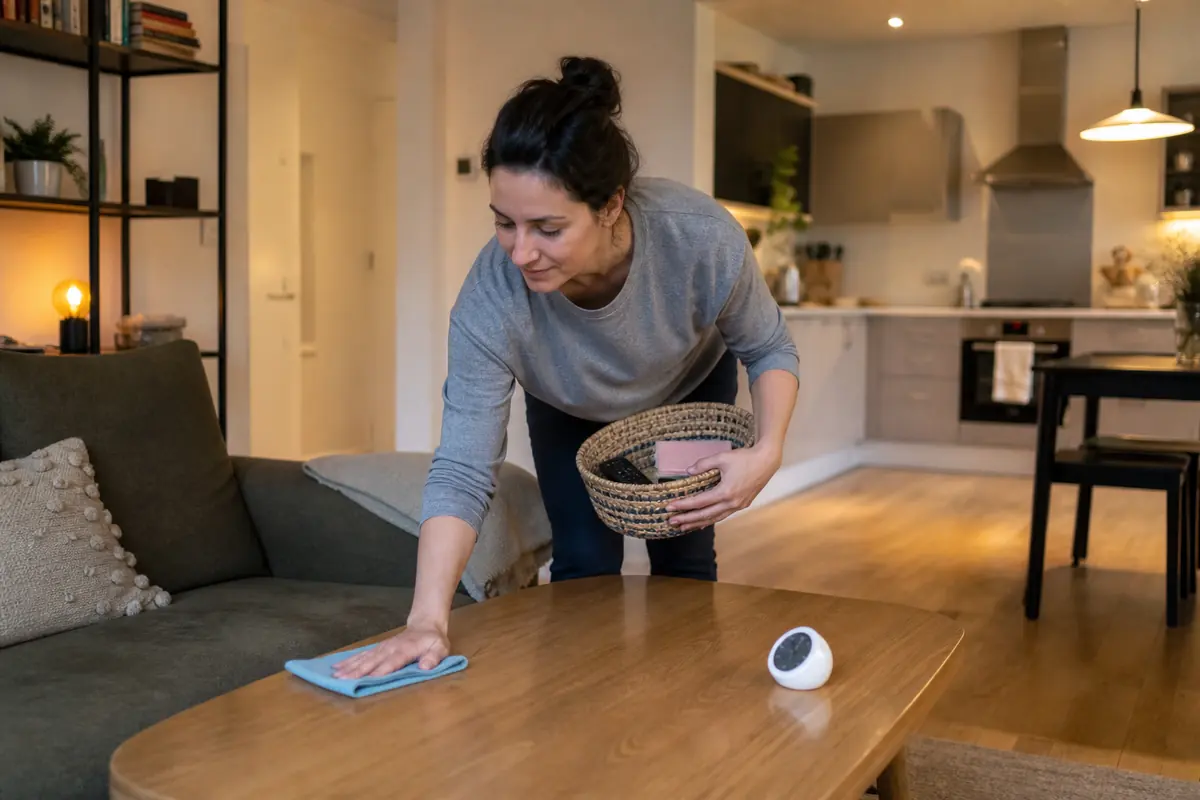
Keep the route short. Carry a basket for objects that belong elsewhere and return them after the cleaning stage. A small-flat routine can be adapted to larger homes by treating one floor or cluster of rooms as the active zone.
You may also enjoy:

Keep a daily minimum that closes the home
A closing routine reduces the number of decisions waiting the next morning. It can happen after dinner, before bed or at the end of your working day. The order matters more than the clock.
- Deal with exposed food, the dishes needed next and perishable waste.
- Wipe fresh spills using a method compatible with the surface.
- Reset the toilet, basin and the bathroom items used that day.
- Clear the route between the bed, bathroom, kitchen and exit.
- Move damp laundry to the next safe stage and put dry items in their destination basket.
- Return the cleaning tools so the next session can start without searching.
Some evenings need only the first four actions. Leave dusting, polishing and detailed storage for a maintenance block. The minimum exists to protect tomorrow, not to turn the end of every day into another shift.
Prepare the home for the next pressured day
Use the evening reset to remove obstacles from the next transition. Put keys, work bags and shoes in their landing place, leave the breakfast surface usable and keep the route to the exit clear. These small actions stop morning movement from spreading yesterday’s clutter through several rooms.
At the end of a home-working day, return cups and plates, clear the chair and close paperwork or equipment safely. The desk does not need a detailed clean every evening. It needs to be ready for work without borrowing space from the dining table, sofa or floor.
Rotate weekly work by zone, not a rigid weekday
Assigning the bathroom permanently to Tuesday creates an immediate problem when Tuesday disappears. Keep a queue of zones and take the first one that genuinely needs work. A visible trigger is more useful than a perfect calendar.
| Zone | Trigger to move it forward | Maintenance block |
|---|---|---|
| Kitchen | Grease film, crumbs in edges, marked cupboard fronts | Degrease compatible surfaces, clean fronts and vacuum edges |
| Bathroom | Visible deposits, soap residue, slow-drying surfaces | Clean toilet, basin, bath or shower and the floor |
| Bedrooms | Bed linen is due, dust is visible, floor access is reduced | Change linen, dust accessible surfaces and vacuum |
| Living areas | Dust, pet hair or out-of-place items dominate the room | Collect, dust, vacuum seating as suitable and clean the floor |
| Whole-home floor route | Grit, crumbs or hair travel between rooms | Vacuum or clean the main route using the floor-safe method |
Write the five zones in a phone note or on a reusable card. Move the completed zone to the bottom. Add seasonal and inside-cupboard work only after the active rotation stays manageable.
Set frequency from household triggers
A fixed schedule is only a starting point. Pets, open windows near busy roads, frequent cooking, several residents and young children can bring particular zones forward. A lightly used spare room may move back. Watch how quickly crumbs, hair, dust, deposits and laundry return, then adjust the queue one task at a time.
Separate event-driven tasks from routine ones. Clean a fresh spill when it happens. Reset the kitchen after heavy cooking. Vacuum the main route after muddy shoes or visible pet hair. These triggers belong outside the weekly rota because postponing them creates more work or affects safe access.
Keep low-use detail work on a monthly or seasonal list. Choose one item when a thirty-minute block has spare capacity. The list should never outrank food hygiene, bathroom function, laundry flow or the walking routes used every day.
Use a recovery rule after missed cleaning days
Do not combine yesterday’s list with today’s. That turns one missed session into a workload that keeps growing. Use one recovery block and then return to the present.
- Remove food residue, rubbish and anything causing an immediate smell or spill risk.
- Restore one clear route through the home.
- Reset the dishes, toilet, basin and laundry needed for the next day.
- Choose one visible buildup task that will make the next session easier.
- Resume the zone queue where it is now; do not restart the whole month.
If recovery mode appears most weeks, the routine is larger than the household’s current capacity. Remove optional detail, split tasks more fairly or decide which part needs outside help.
Stop clutter from consuming the cleaning window
Cleaning and deciding where possessions belong use different kinds of attention. Carry one return basket during the timed session. Put out-of-place items into it, clean the cleared surface, then make one delivery route around the home. Do not create several unsorted piles.
The basket needs an emptying rule. Clear it at the end of the thirty-minute mode or at a fixed weekly point. Items that repeatedly return to the basket need a home near their point of use, a storage decision or a place in the decluttering checklist.
Share complete task ownership
In a shared household, divide work by complete outcomes. Owning the bathroom means noticing its trigger, cleaning it with the correct products, replacing supplies and resetting the tools. It does not mean waiting for another person to plan every step.
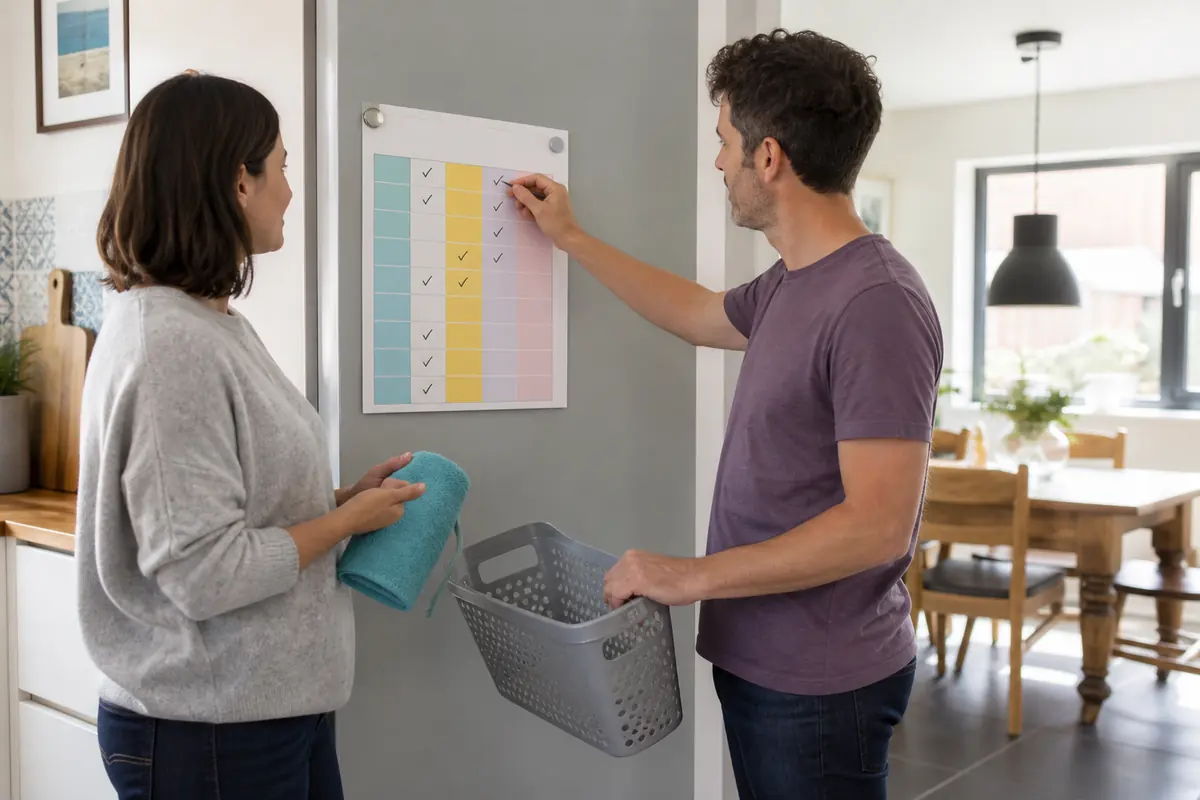
Match tasks to age, ability, confidence and available time without making gendered assumptions. Rotate unpopular jobs or balance them with another contribution. A reusable board with a few named zones is enough; a detailed management system can take longer than the cleaning.
Keep a small kit close to the work
Store a compact caddy where adults can reach it safely and children or pets cannot. Several clean cloths, gloves where the product label calls for them, a non-scratch tool and the compatible labelled products used in that zone are usually more useful than a crowded cupboard.
Keep the vacuum ready, with the correct attachment clean and the lead stored safely. Replace used cloths and empty the caddy of leaking or unlabelled products. Reducing setup time makes the five and fifteen-minute modes realistic.

Remove setup friction from repeated tasks
Notice what delays the first action. An empty vacuum, clean attachments and cloths stored near the correct zone make a short session possible. A sink full of unrelated items or products hidden behind an overfilled cupboard can consume the whole rescue mode before cleaning begins.
Prepare the next use as part of finishing the current one. Rinse and store reusable tools according to their instructions, replace the bin liner, return the vacuum attachment and move used cloths to laundry. Keep a small stock level for products you genuinely use; buying duplicates adds storage work without adding capacity.
Put frequently used objects close to their point of use and give incoming post, bags and shoes a defined landing place. The arrangement does not need to look decorative. It needs to prevent ordinary arrivals from blocking the cleaning route.
Do not let the timer create unsafe shortcuts
A timer is a stopping cue, not permission to rush a product’s contact time, wipe a live electrical item, climb on unstable furniture or walk away from a wet floor. Read labels before the session, ventilate as directed and keep products in their original labelled containers.
Never mix cleaners to save a second pass. If the method is unfamiliar, check the surface instructions and the product guidance before starting. The wider cleaning-product safety guide covers storage, compatibility and exposure decisions.
Audit the system before adding more tasks
Once a month, look at what was repeatedly skipped and what never became dirty enough to justify its place. Remove low-value repetition, change the order or split a zone that is too large for one maintenance block. Keep any task that protects hygiene, the property or safe access even if it is not visually rewarding.
Check whether the chosen time modes match reality. If a fifteen-minute reset usually takes thirty, reduce the route or rename it accurately. A useful plan predicts the work you can complete. It does not disguise a long list behind a small number.
Recognise when the routine lacks capacity
Look for patterns across several weeks. Repeatedly losing the same zone, spending every free block on recovery, running out of clean cloths or delaying food and bathroom hygiene indicates a capacity gap. Adding more colour coding will not create more hours.
First reduce optional work and simplify storage. Next rebalance ownership and choose a realistic service frequency if outside help is appropriate. A one-off reset may help after an unusual period; regular maintenance is the clearer fit when the gap returns every week.
Use regular domestic cleaning as planned capacity
Samyx regular domestic cleaning can take agreed routine work out of the weekly queue, leaving the household to manage short daily resets and personal tasks. The booking form lets you choose the hours needed for the home and priorities.
Before the visit, identify the rooms and tasks that repeatedly exceed capacity. Mention delicate surfaces, pets, access limits and products that need their own instructions. Ordinary domestic cleaning does not cover hazardous waste, widespread mould remediation, pest waste, electrical repair or moving heavy furniture.
Safety note: Follow product labels and surface instructions, never mix cleaners and keep wet floors controlled. Stop for sharps, unknown chemicals, pest waste, damaged electrics, widespread mould or any task requiring unsafe lifting or access.
Book Regular Domestic Cleaning
Enter your postcode to view our rates and availability in your area.

Frequently asked questions
-
What is the 80/20 rule in housekeeping?
The 80/20 rule is an informal priority idea: a small set of actions often produces most of the practical result. In a busy home, start with food residue, rubbish, fresh spills, toilet and sink touchpoints, clear routes and the dishes or laundry needed next. It is not a hygiene standard and does not replace product or surface instructions.
-
What is the 10 10 10 rule for cleaning?
There is no single recognised housekeeping definition. Different versions use ten minutes, ten objects or three short task groups. Use a version only if it helps you begin and stop. The five, fifteen and thirty-minute modes on this page are easier to scale because each starts with hygiene and access rather than an arbitrary item count.
Author: Svetlana Georgieva (Clara)
Hi, I’m Svetlana Georgieva, but you can call me Clara. As the co-founder and heart behind Samyx Cleaning, I’m devoted to sharing the art of a clean space. Let’s journey into a cleaner, more joyful life together with tips from London's cleaning experts.

Discover more of our cleaning secrets: