
Decluttering Checklist: A Room-by-Room Plan for Your Home

Last modified on: 02/08/2026

Decluttering checklist rule: work in one room at a time and give every item one of four destinations – keep here, relocate, leave the home or dispose of it safely.
A room-by-room plan removes the pressure to make every decision at once. Use the lists below as a practical route through the home, then clean the newly exposed surfaces once the sorting and removal work is finished.
You do not need an empty day or a fixed number of possessions to begin. Decide what the room must allow you to do, protect the items that support that use and give everything else a named next step. Progress is measured by safer access and easier routines, not by somebody else’s idea of minimalism.
Key takeaways
- A useful checklist creates decisions and destinations; a longer list of rooms alone will not do that.
- Start with ordinary, low-emotion items so that the sorting system becomes familiar before harder choices.
- Do not create a donation or recycling pile without deciding when and how it will leave the property.
- Short timed sessions work best when each one ends with a safe room and a clear restart point.
- Decluttering and cleaning are separate jobs: sort first, then clean the areas you can finally reach.
Table of Contents
How to use this decluttering checklist
Choose a room that can be made noticeably easier to use without opening every cupboard at once. A hallway, kitchen worktop or bedside area usually gives a clearer finish line than an entire loft. Before taking anything out, prepare four labelled containers or zones:
- Keep here: the item is useful in this room and has a sensible home.
- Relocate: the item stays and belongs in another named room or storage point.
- Leave the home: donate, give away, sell or return it through an agreed route.
- Dispose safely: use the correct route for waste, recycling or a controlled item.
The relocate container prevents a common distraction: carrying one object into another room, noticing a new problem there and abandoning the original area. Empty it only at the end of the session. The leave-home container also needs limits. If you intend to sell something, give it a listing date and a fallback route; otherwise it may become permanent storage under a new label.
| Decision | Ask | Next action |
|---|---|---|
| Keep here | Is it used in this room, and does it have a home? | Return it only after its shelf, drawer or hook is ready. |
| Relocate | Can you name exactly where it belongs? | Put it in the relocate container for the end of the session. |
| Leave home | Who will accept it, and by what date? | Choose donation, sale, return or giveaway and set a deadline. |
| Dispose safely | Is it ordinary waste, recyclable or controlled? | Check the appropriate local or product-specific guidance first. |
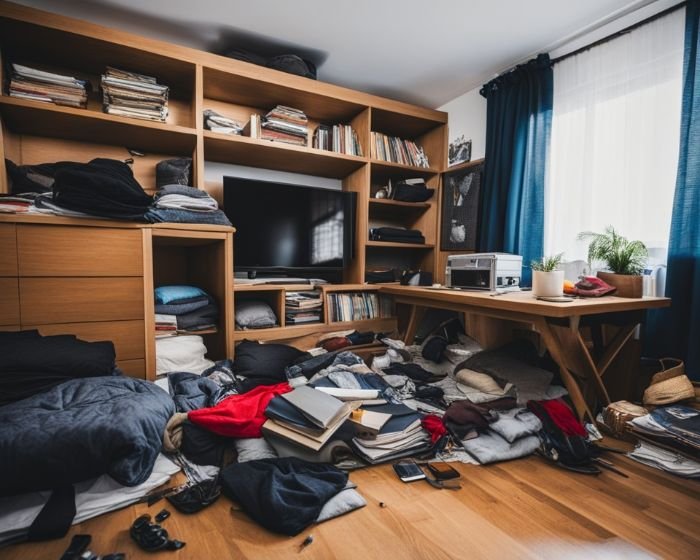
Do not spread the contents of a full room across the floor unless you can complete the job that day. Work shelf by shelf and leave exits, stairs, heaters, cookers and electrical equipment clear. If the space is already difficult to move through, begin beside the doorway and create a safe working route before sorting anything deeper inside.
Prepare only what helps the decisions: four containers, a marker, labels, a refuse sack for ordinary waste and a note for uncertain disposal routes. Avoid buying organisers before you know what will remain. Measure the usable shelf or drawer after sorting, then choose storage only if the kept category cannot work without it. Containers should make contents easier to find, not hide an unresolved mixture.
Set a capacity rule for each destination. The relocate box must be emptied before the next session, and the leave-home zone must fit without blocking normal use of the room. If either fills, close the current session and process it. This turns limited space into a useful boundary and prevents a neat work area from being achieved by making another room unusable.
Plan the Clean After Decluttering
Enter your postcode to view our rates and availability in your area.

Print-friendly room-by-room checklist
Copy or print these lists and tick only the areas that apply to your home. One completed zone is more useful than six rooms left half-sorted. Within each room, work from visible surfaces to contained storage so that you gain usable space without creating hidden overflow elsewhere.
Use the order as a suggestion, not a test. Prioritise a room that affects daily movement, food preparation, sleep or work. If visitors are expected, clear the entrance and shared surfaces without pushing their contents into private rooms. When time is limited, mark three levels on the printed list: access and safety first, everyday function second, deeper storage last.
Entrance and living areas
- Remove post, leaflets, empty packaging and obvious rubbish.
- Return shoes, coats, bags and keys to an assigned place.
- Check whether decorative objects still earn their display space.
- Collect chargers, controls and cables; label any uncertain ones before testing.
- Clear the floor around doors, radiators, sockets and walkways.
- Give books, magazines, toys and hobby items a defined limit.
Kitchen and pantry
- Clear worktops of items used less than weekly.
- Match food-storage containers with their lids and remove damaged pieces.
- Group opened packets and duplicates into visible pantry zones.
- Check food dates and packaging condition; follow label and local disposal advice.
- Keep frequently used utensils close to their point of use.
- Move papers, medicines and unrelated household items out of food-preparation areas.
Bedrooms and wardrobes
- Clear bedside surfaces and the floor beside the bed.
- Separate clothing that fits and is worn from repairs, seasonal storage and exits.
- Give borrowed items and returns a dated place by the door.
- Pair shoes and check that wardrobe access is unobstructed.
- Limit spare bedding to what fits the household and storage available.
- Do not discard another person’s clothes, keepsakes or documents without permission.
Bathroom and linen storage
- Remove empty bottles and products you no longer use.
- Check product labels and keep medicines on their proper return route.
- Store towels by household need and leave some shelf space free.
- Separate cleaning products from toiletries and keep them in original labelled containers.
- Keep the floor, bath edge and access to ventilation clear.
- Set aside leaking, unlabelled or damaged products for safe handling advice.
Home office and paperwork
- Gather loose papers into action, file, verify and shred groups.
- Identify unknown cables before recycling or disposal.
- Back up and wipe data-bearing devices before they leave the home.
- Return stationery to one accessible supply point.
- Clear the desk to the equipment needed for current work.
- Write a next action on unfinished projects and remove the unexplained pile.
Attic, garage and storage
- Keep access routes and the area around utilities unobstructed.
- Label closed containers with contents and a review date.
- Move damp, leaking or pest-affected items only when it is safe to do so.
- Separate tools, decorating supplies, seasonal items and household stock.
- Check paint, chemicals, batteries and pressurised containers against local guidance.
- Stop if stacks are unstable or lifting would be unsafe without help.

Storage spaces need a defined purpose, not merely a tighter arrangement. When an attic is part of the job, use our focused attic plan for the access, sorting and cleaning sequence without moving every box at once.
You may also enjoy:

Make the disposal plan before you start
Decluttering stalls when everything marked to leave is placed in a hallway, boot or spare room without a destination. Before a session, check which nearby charity shops accept the item type and condition you have. Acceptance can vary with storage, demand and safety requirements, so ask and never leave bags outside a closed shop. For resale, decide the lowest worthwhile price and a date after which the item moves to another route.
Separate ordinary household waste from anything needing a controlled route. Batteries, electrical equipment, paint, solvents, sharp objects, pressurised containers and unknown chemicals should not be put into a general bin by default. Check the product label and use the appropriate retailer, manufacturer or local-council service. Store unwanted cleaning supplies upright in their original labelled containers during route checks; never mix leftovers to save space.
Take unwanted or expired medicines to a pharmacy route that accepts them; never flush them or place them loose in household rubbish. Needles and other sharps require an approved container and local collection or return instructions. If you find a leaking product, unknown substance, animal waste, extensive mould or evidence of pests, stop handling the area and seek suitable advice before continuing.
Create an exit schedule that matches the volume. One donation bag can leave after the next errand; a large furniture item may need an agreed collection. Do not block a communal corridor, pavement or fire route before collection. Keep a simple note with four columns – item, route, responsible person and deadline – and treat the task as unfinished until the item has actually left.
Condition matters when choosing the route. A charity or reuse group may welcome clean, working goods and decline damaged furniture, untested electricals or textiles that cannot be reused. Describe the item honestly and confirm collection conditions before dismantling it or carrying it downstairs. For bulky items, consider weight, doorways, lifts and parking access; arrange enough help and do not rely on a cleaning appointment to move them.
Use short sprints without losing the whole-home plan
Five-minute sprints remain a useful way to act on a larger checklist. The timer is a work boundary, not a challenge to make rushed decisions. Choose a small unit you can leave safe if the timer ends: one cutlery section, one row of books or the top of a chest of drawers.
- Set up for one minute: place the four destination containers nearby and photograph the starting point if that helps you see progress.
- Sort for five minutes: handle one item at a time and use the same four decisions. Leave uncertain possessions in place so the session does not turn into an investigation.
- Close for two minutes: return kept items, put rubbish in its safe route and move the relocate container out of the walkway.
- Mark the restart: write the next shelf, drawer or pile on the checklist so another session begins without surveying the room again.
If five minutes is too short for the selected unit, use a longer block and retain the close-down time. If energy or attention is limited, stop after one safe finish and do not open a second zone. The visible result should make the room easier to use: a clear chair, an accessible cupboard or a walkway restored. Number of discarded items is not a useful universal target because homes, needs and possessions differ.
In a shared home, assign separate zones and do not ask everybody to sort the same pile. One person can make decisions about their belongings as another labels destinations or records collection details. End with a brief handover: what is complete, what is waiting for consent and which container must leave next. This keeps later sessions connected to the room-by-room plan without treating speed as the measure of success.

Paperwork, sentimental items and shared belongings
Leave emotionally difficult categories until the sorting system is working. For papers, separate items that require action from records you may need to retain. Check issuer, legal, tax, warranty, tenancy and insurance requirements before destroying documents; retention needs depend on the record and your circumstances. Shred papers containing personal data instead of placing them intact in recycling.
For sentimental possessions, decide what you want the category to represent and how much protected space it can occupy. A labelled pause box with a review date is better than making a pressured choice or returning an unexplained pile to storage. Photographs can preserve some memories, and they are not a reason to discard an object you genuinely want to keep. Choose carefully and do not apply a rule designed for somebody else’s home.
Shared belongings need consent. Agree common-room limits with the people who use them, and give each person a place for undecided items. Children can take on supervised, age-appropriate jobs, such as returning toys to labelled containers or choosing between outgrown books. Adults should handle chemicals, broken objects, heavy storage and anything containing personal information.
Data-bearing devices need another pause. Back up anything required, sign out where appropriate and follow the maker’s instructions for erasing the device before sale, donation or recycling. Remove memory cards and SIMs where relevant. An old laptop or phone should not leave simply because its visible files were moved to the recycle bin.
Clean after the sorting decisions are finished
Cleaning too early can mean wiping around objects that are about to move, then repeating the work. Once a shelf, drawer or floor zone is empty, remove loose dust, clean with a product compatible with the surface and let it dry before returning the keep-here items. Work from higher surfaces down and from the cleaner part of the room towards the exit. Follow product labels and do not combine cleaning chemicals.
Use the newly assigned homes to set a light maintenance trigger. A relocate basket can be emptied each evening, post can be processed on a chosen day and one shelf can be reviewed when it becomes difficult to put items away. The trigger should respond to a visible problem without creating a demanding daily routine.
Review the room after it has been used normally for a week. If frequently used items are awkward to return, change their storage point and do not expect the household to maintain an impractical system. If an exit bag is still present, revise the route or deadline. A workable result supports ordinary routines and leaves the room safe to clean; a staged appearance for one afternoon is not the goal.
When Samyx can help after decluttering
If sorting has opened access across several rooms and the cleaning stage is larger than you want to tackle, Samyx can discuss one-off cleaning after the items have been sorted, removed or safely contained. Confirm access and scope before booking. The service is for cleaning the prepared areas; it does not include deciding what to keep, valuation, moving, storage, rubbish removal or hazardous-waste handling.
Book a One-Off Home Clean
Enter your postcode to view our rates and availability in your area.
Frequently asked questions
Where should I start when decluttering a whole home?
Start with one visible, low-emotion zone that can be completed safely, such as an entrance surface, one kitchen drawer or a bedside table. Use the four destinations consistently before moving to the next zone.
What are the biggest decluttering mistakes?
Common mistakes include emptying too much at once, creating donation piles with no exit date, moving clutter into another room, discarding shared items without permission and cleaning before the sorting decisions are finished.
What should I do with items that are hard to let go of?
Keep them out of the first sessions. Use a limited pause box with a review date, decide what the category represents and avoid making pressured decisions. Keeping a meaningful item is a valid outcome.
Should I clean before or after decluttering?
Remove obvious dirt only when needed for safe handling, then do the main clean after sorting. Empty shelves and cleared floors are easier to clean properly, and you avoid repeating the same work.
Important: stop if you find needles, broken glass, unknown or leaking chemicals, pest contamination, unstable stacks, unsafe lifting or a blocked fire route. Keep medicines, batteries, electricals, paint, solvents, sharps and pressurised containers out of general waste unless the relevant local or product guidance explicitly permits that route.
Author: Svetlana Georgieva (Clara)
Hi, I’m Svetlana Georgieva, but you can call me Clara. As the co-founder and heart behind Samyx Cleaning, I’m devoted to sharing the art of a clean space. Let’s journey into a cleaner, more joyful life together with tips from London's cleaning experts.

Discover more of our cleaning secrets: