
Home Cleaning Schedule: Daily, Weekly and Monthly Tasks

Last modified on: 17/08/2026

Home cleaning schedule planning works best when daily resets stay short, weekly work is spread across the week, and slower jobs rotate through the month. A usable plan should match the rooms, people, pets and time in your home. It should also show what can wait when a busy week changes the workload.
The schedule below gives you a complete starting point. Use the full version for a family home, trim it for a small flat, or mark the tasks handled by a regular cleaner. The result is a routine you can repeat without turning every Saturday into a long catch-up clean.
Build the schedule in three layers
- Use a 10 to 15-minute daily reset for dishes, worktops, clutter, spills and the busiest floor areas.
- Spread bathrooms, dusting, vacuuming, mopping, bedding and a kitchen clean across the week.
- Rotate slower jobs such as appliances, cupboards, grout, upholstery edges and high dusting through the month.
- Add extra frequency only where people, pets, allergies, cooking or heavy use create it.
- Keep one catch-up slot and delegate work that repeatedly exceeds the time available.
Key takeaways
- Daily cleaning should protect function and hygiene without repeating the whole weekly clean.
- A weekly plan works when the workload is split by room, task or available time.
- Monthly jobs need a rotation date or they quietly become an occasional deep clean.
- Household size, pets, cooking habits and floor types change frequency more than a generic calendar does.
- A realistic schedule includes a rule for unfinished work and a point at which outside help makes sense.
Table of Contents
Use this home cleaning schedule for daily, weekly and monthly tasks
Start with the tasks that stop a home becoming harder to use. Food residue, wet bathroom surfaces, tracked dirt and clutter in walkways deserve earlier attention than an untouched spare room. Give every recurring task one normal frequency, then increase it only when the home shows a reason.
The planner is deliberately adjustable. Print it from your browser, copy the relevant lines into a calendar, or use the boxes as a weekly household handover.
Whole-home cleaning planner
Tick each task when it is done. Cross out rooms you do not have, add the person responsible, and move one unfinished low-priority task into the catch-up slot.
Daily reset
- Wash dishes or load the dishwasher
- Wipe kitchen worktops and the dining table
- Deal with spills while they are fresh
- Return clutter from walkways and shared rooms
- Wipe the bathroom basin if visibly marked
- Sweep or vacuum the busiest floor area
- Empty a full or food-waste bin
- Run a short evening room reset
Weekly clean
- Clean the toilet, basin, bath and shower
- Dust reachable furniture and ledges
- Vacuum carpets, rugs and soft-furnishing edges
- Mop compatible hard floors
- Change bed linen and used towels
- Clean the hob, sink and appliance fronts
- Wipe high-touch handles and switches
- Check the fridge for spills and old food
Monthly rotation
- Clean one appliance more deeply
- Wipe cupboard fronts and one shelf zone
- Dust skirting boards, vents and higher ledges
- Vacuum beneath accessible furniture
- Clean mirrors, interior glass and frames
- Check grout, sealant and damp-prone corners
- Vacuum mattress and upholstery edges
- Wash bins and clean-tool storage
Catch-up rule: carry forward one low-priority task. If the same job is postponed for three cycles, reduce another commitment, split the task, or delegate it.
Set up the plan in 15 minutes
List the rooms you actually use
Write each room and shared zone once, including the entrance, hall, stairs and utility space. Mark bathrooms, cooking areas and the main route through the home as higher-use zones. A spare room, second shower or formal dining area can stay on a slower cycle when it is rarely used.
Give every task one normal frequency
Place each task under daily, weekly or monthly before adding exceptions. A kitchen spill may need immediate attention, though the appliance fronts can wait for the weekly clean. One default frequency prevents the same job appearing on several lists and makes the real workload visible.
Add time, ownership and a catch-up slot
Estimate the first month from real cleaning sessions and your actual pace. Name the person responsible in a shared home, or mark the tasks assigned to a cleaner. Leave one open slot each week for delayed work. After four weeks, shorten tasks that repeatedly overrun, increase frequency where visible build-up returns early, and remove work that has no clear result.
Keep the plan where decisions are made: a shared calendar, household app or printed page near the cleaning supplies. A hidden schedule quickly becomes another forgotten document.
Plan Regular Domestic Cleaning
Enter your postcode to view our rates and availability in your area.

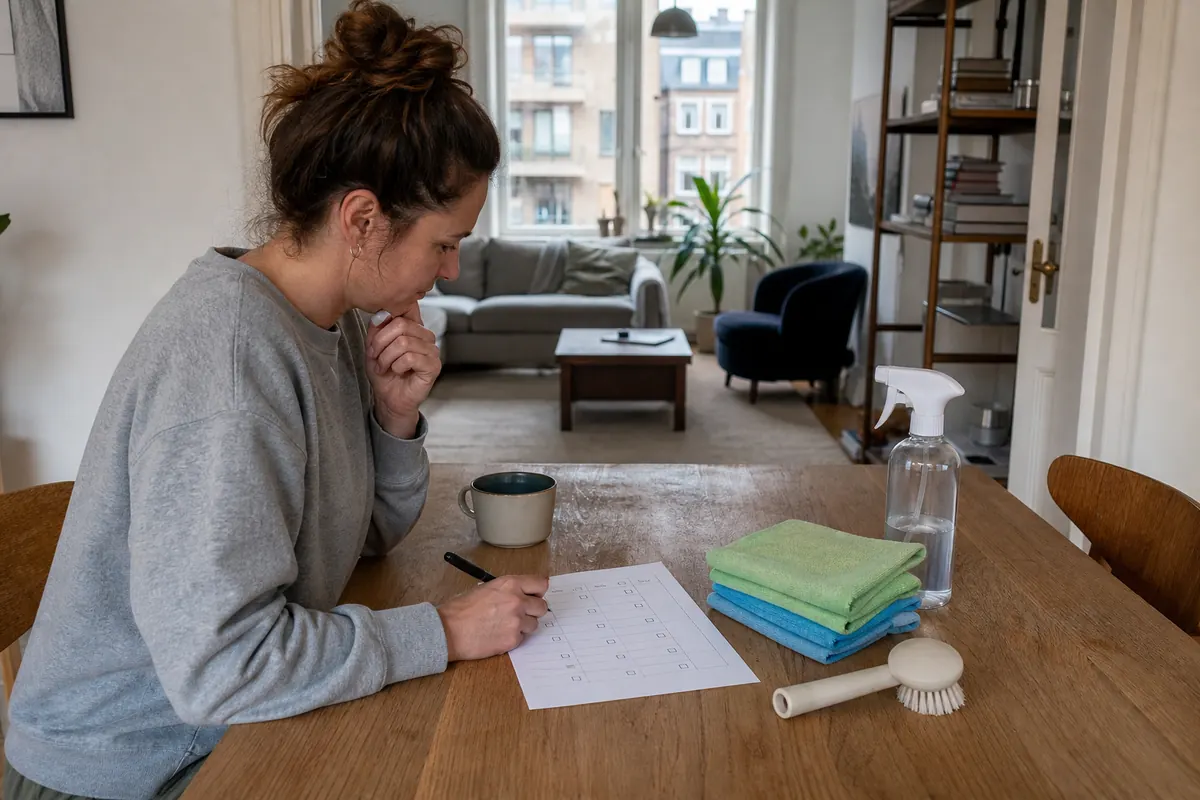
Keep the daily reset short
Daily cleaning protects the next meal, the next shower and the next walk through the room. It does not need to include full dusting, every floor or a detailed bathroom clean. When the daily list grows beyond 15 or 20 minutes, move slower work into the weekly rotation.
Morning or first-use reset
Open curtains, air rooms when suitable, make beds if that helps the bedroom stay usable, and put away anything that blocks a surface or walkway. A household that leaves early may prefer to move these tasks to the evening. The time of day matters less than having a repeatable trigger.
Kitchen and dining reset
Clear food, wash dishes, wipe the areas used for preparation and deal with fresh spills. Check the hob only after it has cooled. A quick floor sweep around the cooking and dining areas prevents grit and crumbs spreading into adjoining rooms.
Evening close-down
Return items to their rooms, clear the main seating area and prepare one small task for tomorrow. Ten focused minutes are often enough. If the home needs a faster recovery after a demanding day, use a defined sequence of short resets and avoid starting several rooms at once.
Choose a weekly pattern that fits your time
A weekly house cleaning schedule can follow rooms, task types or one longer cleaning block. Each approach works when it covers the same priority areas and leaves enough drying time between steps.
Room-a-day pattern
- Monday: kitchen beyond the daily worktop reset.
- Tuesday: bathroom and toilet.
- Wednesday: bedrooms and linen.
- Thursday: living room and shared spaces.
- Friday: floors throughout the home.
- Weekend: catch-up, one monthly task or no cleaning block.
Room-based cleaning limits the number of tools you carry and makes progress easy to see. It can be awkward when dust from a room cleaned on Thursday lands on a floor already mopped on Tuesday. Put whole-home floors after dusting where possible.
Task-a-day pattern
Assign one category to each day: bathrooms, dusting, vacuuming, mopping, linen and kitchen detail. The order follows professional cleaning logic more closely because dry dusting comes before floor work. It also suits homes with open-plan rooms where one task naturally crosses several zones.
One weekly block
Begin with clutter and dry dusting, clean the kitchen and bathroom, then vacuum and mop. Work from higher surfaces down and from drier jobs towards wetter ones. Keep a second cloth set for bathroom areas and replace dirty water before it is carried through the home.

Rotate monthly jobs across the calendar
Monthly cleaning is easier when each week receives one slower task. Clean an appliance in week one, higher and lower dust zones in week two, cupboards or storage in week three, then upholstery edges and overlooked floor areas in week four. A fifth week can absorb a postponed job.
Some jobs need a different interval. Curtains, mattresses, filters and appliance parts should follow the item label and manufacturer guidance. Seasonal changes can also create extra work, such as pollen near open windows, wet footprints in winter or garden debris by an entrance.
Use one visible monthly list. A task still waiting needs a date, not a permanent place under “later”. Keep deeper weekly care separate from slower monthly work so both frequencies remain visible.
You may also enjoy:

Adjust the routine to the household
Generic schedules fail when they treat every room as equally busy. Add frequency where the household creates soil, moisture or clutter, and remove it from spaces that see little use.
Family homes and pets
Put food areas, bathroom touchpoints, entry floors and visible pet hair near the top of the weekly list. A crawling child, shedding pet or muddy school run may make one floor zone a daily task. Keep toys and belongings in the tidying part of the plan so cleaning time is not consumed by moving them.
One person or a small flat
Reduce frequency before reducing hygiene. The kitchen worktop, dishes, toilet, basin and main floor route still need attention. A spare room or lightly used shower can move to a slower cycle. People working long hours may find a compact routine for busy schedules easier to keep than a seven-day room plan.
Shared homes
Assign a person and a deadline for each communal task. Agree what finished means: cleared basin, cleaned toilet, rinsed bath or shower, mirror wiped, floor vacuumed and mopped. Rotate unpopular jobs and record supplies that need replacing.
Homes with allergies or sensitivities
Prioritise dust capture, compatible vacuum filtration, washable bedding and the places where dust collects around beds and seating. Product choice should follow the label, the surface and the person’s known sensitivities. Cleaning can reduce household dust; it should not be presented as treatment for a health condition.

Separate tidying, cleaning and household maintenance
Tidying returns objects to their places. Cleaning removes dust, residue and soil. Household maintenance covers work such as changing a filter, reporting a leak or arranging a repair. Mixing all three in one list makes a cleaning session appear longer than it really is.
Clear access before the cleaning block begins. A room that regularly loses half its cleaning time to belongings may need a separate decluttering plan. Put repairs on their own list so they reach the right person and do not return as postponed cleaning.
Decide what to skip, defer or delegate
| Situation | Best decision | What stays protected |
|---|---|---|
| You have ten minutes | Deal with food, spills, wet areas, bins and walkways | Basic hygiene and safe access |
| A low-use room is still clean | Move it to the next cycle | Time for higher-use rooms |
| One task is always postponed | Split it into zones or assign a fixed date | A realistic monthly rotation |
| The backlog returns every week | Reduce commitments or delegate recurring work | Consistency across the home |
| The job needs height, repair or specialist treatment | Stop and route it to a suitable professional | Personal safety and the material finish |
A missed task is information about capacity. Repeatedly moving it to tomorrow adds pressure without changing the available time. Compare the task with the available cleaning window, then shorten, reschedule or hand it over.
When regular cleaning keeps the schedule workable
Professional help fits when the weekly bathroom, dusting, vacuuming and floor work keeps displacing the rest of the plan. It can also help a household protect a fixed baseline as occupants handle short daily resets between visits.
Samyx Cleaning provides domestic cleaning across London. Choose the hours you need in the booking form and set priorities for the visit. The right frequency depends on the property, household and workload; the separate guide to cleaning frequency can help you compare weekly and fortnightly support.
Keep the brief specific when time is limited. Name the rooms and priority tasks, clear access where possible, and identify any surfaces that need special care. A cleaner can then spend the booked time on the work that most affects the household routine.
Book Regular Domestic Cleaning
Enter your postcode to view our rates and availability in your area.
Frequently asked questions
-
What is the 80/20 rule in housekeeping?
The 80/20 rule means putting most effort into the small set of tasks that affects how the home functions: food areas, bathrooms, walkways, busy floors and visible clutter. It is a priority method, not a reason to ignore slower maintenance indefinitely.
-
How long should a weekly house clean take?
There is no fixed time for every home. Room count, bathrooms, occupants, pets, floor types, clutter and the gap since the last clean all affect the workload. Time one normal clean, then build the schedule around that evidence.
-
What is the 20/10 cleaning rule?
The 20/10 method uses 20 minutes of focused work followed by a 10-minute break. It can make a large task easier to start, and the work should still follow a sensible order and stop before fatigue leads to rushed handling.
-
Is two hours a week enough for a cleaner?
Two hours may cover priority maintenance in a smaller or well-kept home; it is not a universal allowance. Match the booked time to the rooms and tasks, state priorities clearly, and rotate lower-priority work when the full list does not fit.
Important: Follow cleaning product labels and manufacturer care instructions. Patch-test where surface compatibility varies, ventilate the room, wear suitable gloves, rinse when directed and let surfaces dry. Never mix cleaning products, including bleach with ammonia, acids or alcohol. Stop if a finish discolours, dulls, etches, softens, swells or sheds fibre. Ask the manufacturer or a suitable professional before treating delicate, valuable, unknown or damaged materials, moving heavy appliances, or using ladders.
Author: Svetlana Georgieva (Clara)
Hi, I’m Svetlana Georgieva, but you can call me Clara. As the co-founder and heart behind Samyx Cleaning, I’m devoted to sharing the art of a clean space. Let’s journey into a cleaner, more joyful life together with tips from London's cleaning experts.

Discover more of our cleaning secrets: