
How to Remove Grease Stains from Walls and Surfaces

Last modified on: 03/09/2026
Publish: 17th Jun 2024
Views:
Category: DIY
Tags:
Baking soda, Cleaning tips, Eco-friendly cleaning, Kitchen cleaning, White vinegar
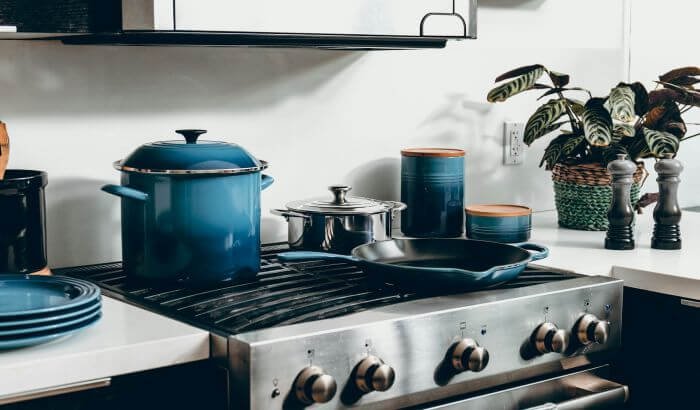
How to remove grease from walls depends on the finish beneath it: begin with a soft cloth and a small amount of mild washing-up liquid in warm water, patch-test out of sight, then use the least moisture and pressure that lifts the film. Stop if colour transfers, the paint becomes dull or tacky, wallpaper seams lift, or the surface starts to soften.
Raise your hand if this has happened to you – you’ve just finished cooking a delicious meal. You’ve made the whole thing from scratch with fresh ingredients, just like Anthony Bourdain ordained. Heck, Gordon Ramsay wouldn’t even scream at you. Yes, you did well. You take the dish out of the oven and turn around.
Suddenly, your smile turns into a frown as you take a look around the kitchen. Not only are there dirty pots everywhere (did you even know you had this many pots?) but the walls are greasier than that burger place down the street. So now instead of enjoying the delicious meal, you need to figure out how to remove grease stains from your walls.
OK, this hypothetical might be a bit specific, but it’s what happened to me yesterday. So after spending half a day scrubbing the walls (best day off ever…), I decided I had to share some tips with you so you don’t have to waste as much time as I did. Without further ado, let’s see how you can clean grease off your walls.
Key takeaways
- Paint sheen, condition and age matter more than the colour of the grease mark.
- Mild washing-up liquid is a better first step than jumping straight to acids, powders or heavy degreasers.
- A patch test must be allowed to dry because dulling and colour loss may not show while the wall is wet.
- Wallpaper, painted walls, tile and grout need separate moisture, pressure and product decisions.
- Grease left before painting can interfere with preparation; damaged finishes need decorating or repair, not stronger cleaning.
Table of Contents
How to remove grease from walls: check the finish first
| Wall finish or condition | First route | Stop signal |
|---|---|---|
| Eggshell, satin or washable paint in good condition | Soft cloth with a weak washing-up-liquid solution, followed by a clean damp wipe | Colour transfers, sheen changes or paint feels tacky |
| Flat, matt, chalky, cracked or unknown paint | Dry dusting, then follow the paint maker’s care instructions; keep the test area very small | Powdering, burnishing, patchiness or lifting paint |
| Newly painted wall | Wait for the coating’s stated cure period and follow the product instructions | Softness, imprinting or colour transfer |
| Wallpaper | Check whether it is washable or scrubbable; work from the seam away with minimal moisture | Raised seams, bubbling, bleeding colour or torn surface |
| Glazed tile and grout | Degrease the tile first, then treat porous grout separately | Scratching, dulling or damage to adjacent stone or sealant |
A wall can look clean while wet and reveal streaks after drying. Use fresh cloth sections, avoid flooding switches and sockets, and inspect the test patch from an angle once it is dry.
Understanding the problem
Grease stains are particularly challenging to remove because grease repels water. If you want to see this in action, pour a bit of cooking oil into a glass of water. The oil and water don’t mix and the oil gets to the surface.
This makes oil stains resistant to standard water-based cleaning methods. To make matters worse, grease often binds to dirt and dust. This creates the sticky residue we’re all so fond of. But of course, oil stains are more or less unavoidable.
If you have a splashback, it’s definitely better but not all kitchens are equipped with one. So when you start cooking, through splatter or handling food with oily hands, grease stains will inevitably make their way to your walls.
The good news is that even though it’s not the easiest thing in the world to deal with, grease is not impossible to remove. All you need is a bit of preparation and know-how.
If the whole kitchen needs attention, an agreed One-Off Cleaning visit can cover accessible household surfaces without turning a damaged finish into a restoration job.
Plan a One-Off Kitchen Clean
Enter your postcode to view our rates and availability in your area.

Preparation before cleaning
Before diving into cleaning, it’s essential to gather all necessary supplies. As I always say, victory loves preparation so make sure you’re thorough. And take safety precautions – no one will make fun of you, I promise. Even though most of the things we’ll use are natural and safe ingredients, you still never know. Better safe than sorry and having a sad story.
Here’s what you’ll need:
Essential supplies
- Microfibre cloths
- White vinegar
- Baking soda
- Dish soap
- Commercial degreasers (usually as a last resort)
- Spray bottle
- Warm water
- Rubber gloves
- Scrub brush or sponge

Safety precautions
- Wear gloves to protect your hands from harsh chemicals (if you use commercial degreasers) and hot water.
- Ensure proper ventilation by opening windows or using exhaust fans. You want to avoid inhaling fumes from the commercial degreasers.
- Test cleaning solutions on a small, inconspicuous area first to ensure they don’t damage the wall surface.
Current finish check: Natural does not mean compatible with every coating. Vinegar is acidic, bicarbonate of soda is mildly abrasive, and a labelled degreaser may still soften or mark paint. Check the paint or wallpaper instructions first, never spray liquid towards electrical fittings, and never mix cleaning products.
How to get grease off walls
Cleaning grease stains effectively starts with identifying the type of wall surface you’re dealing with. Each wall type requires specific cleaning methods to ensure the stains are removed without causing damage. Otherwise, you might need to call someone for wall repairs and it’s going to be a lot more expensive than cleaning.
Step-by-step guide for each type of wall
Painted Walls
Painted walls are common in many homes and while they’re colourful and lively, they can be sensitive to harsh cleaning chemicals. But don’t worry – here’s how to clean grease stains from painted walls effectively.
Before using the original method below: Treat it as a finish-dependent option, not a universal recipe. If the maker does not permit vinegar or abrasive powders, use its care method instead. On unknown, matt, chalking, damaged or recently painted walls, begin with the mild washing-up-liquid route and stop at the first finish change.
Step-by-step cleaning grease off a painted wall:
- Dust and wipe:
- Dust the wall to remove loose fragments or dust. You can use an old rag or a microfibre cloth for this.
- Wipe the area with a dry microfiber cloth to remove surface grime.
- Prepare the cleaning solution:
- Mix one part vinegar with two parts water in a spray bottle.
- Apply the cleaning solution:
- Spray the vinegar solution on the grease stain.
- Let it sit for a few minutes to break down the grease.
- Scrub the grease stain:
- Use a soft sponge sprinkled with baking soda to scrub the area gently.
- Be careful not to scrub too hard to avoid damaging the paint.
- Rinse and dry:
- Wipe the area with a damp cloth to remove any residue.
- Rinse with clean water and dry with a microfibre cloth to prevent water spots.
It may sound strange to use vinegar for an oil stain but it helps. When you later use the baking soda, it reacts with the vinegar and helps lift the grime.
Current chemistry note: The fizz shows an acid-base reaction, but much of the vinegar and bicarbonate neutralise one another. Any cleaning benefit also comes from moisture, wiping and the powder’s abrasion, which can change a delicate paint sheen. Do not read fizzing as proof that the combination suits the wall.
You may also enjoy:

Wallpapered walls
Now this is going to be a real challenge. Wallpaper is popular as a wall decoration and can unfortunately be found in many kitchens (mine included). The problem is that it can be delicate and prone to tearing if not cleaned carefully. Follow these steps to clean grease stains from wallpapered walls.
Check the wallpaper symbol first: Washable and scrubbable are different ratings, and neither permits soaking the seams. If the covering is unlabelled, textured, hand-printed, grasscloth, metallic or already lifting, seek the maker’s advice before adding moisture.
Step-by-step instructions:
- Dust and wipe:
- Very gently dust the wall to remove loose particles using a microfiber cloth.
- Prepare the cleaning solution:
- Mix a few drops of dish soap with warm water in a spray bottle.
- Apply the solution:
- Lightly spray the soapy water solution on the grease stain. Avoid saturating the wallpaper to prevent damage.
- Blot the stain:
- Blot the stain gently with a microfibre cloth or a soft sponge. Avoid rubbing to prevent tearing the wallpaper.
- Rinse and dry:
- Wipe the area with a damp cloth to remove any soap residue.
- Dry immediately with a microfibre cloth to avoid water damage to the wallpaper.
- For non-washable wallpaper: If the wallpaper is not washable, avoid water-based solutions. Instead, use a dry cleaning method such as wallpaper dough. Roll a small amount of the dough into a ball and gently press and roll it over the greasy area to lift the stain without damaging the wallpaper.
Tiled walls
Tiled walls are common in kitchens and bathrooms and are generally more resistant to cleaning. Here’s how to clean grease stains on tiled walls.

Step-by-step instructions:
- Dust and wipe:
- Wipe the area with a dry microfibre cloth to remove surface grime.
- Prepare the cleaning solution:
- Mix a stronger solution of dish soap and warm water.
- Alternatively, use a commercial degreaser following the product instructions. Personally, I prefer the former method. This is what worked marvellously for the tiles in my kitchen. It did take a bit more elbow grease, though (pun intended).
- Apply the cleaning solution:
- Apply the cleaning solution to the grease stain.
- Let it sit for a few minutes to break down the grease.
- Scrub the tiles:
- Use a scrub brush or sponge to scrub the area thoroughly. Careful not to scratch them, though.
- Focus on grout lines where grease can accumulate. It’s usually the most painful part of the cleaning process.
- Rinse and dry:
- Rinse the tiles with clean water to remove any residue.
- Dry with a microfibre cloth to prevent water spots.
How to prevent future grease stains
An ounce of prevention is worth a pound of cure. The best way to spare yourself weekends lost in cleaning grease off of your kitchen walls is to ensure there’s no grease accumulation. Here’s how.
Regular maintenance tips
- Wipe down walls after cooking. Yes, every time.
- Clean up spills immediately to prevent stains from setting. Again, yes, every time.
- Use a mild detergent for regular cleaning.
Protective measures for kitchen walls
- Install splashback panels behind stoves and countertops. This is not the cheapest solution, but it will make cleaning so much easier.
- Use splatter guards when frying.
- Apply a grease-resistant coating to kitchen walls.
When wall grease needs more than a household wipe
Samyx Cleaning can include accessible kitchen and household wall wiping within an agreed One-Off Cleaning scope in London. Tell the office about the finish and the extent of the build-up before booking. The service does not include paint stripping, painting, plaster repair, wallpaper restoration, specialist commercial-kitchen degreasing or a promise to remove permanent discolouration or finish damage.
Book a One-Off Deep Clean
Enter your postcode to view our rates and availability in your area.
Frequently Asked Questions (FAQs)
-
How to get grease off the wall without damaging the paint?
Use mild solutions like vinegar and water or dish soap and water. Avoid abrasive scrubbers that can scratch the paint. Check the paint maker’s care instructions first: vinegar is not suitable for every coating, and any method should be tested and allowed to dry before the wider wall is cleaned.
-
Can I use household cleaners to get rid of oil stains on walls?
Yes, many household cleaners like vinegar, baking soda, and dish soap are effective for grease removal. Always test on a small area first. Product compatibility still depends on the paint, wallpaper or tile finish, so start with the mildest suitable route and do not mix cleaners.
-
What’s the best way to remove old grease stains?
For old stains, use a stronger solution like a commercial degreaser or a more concentrated mixture of dish soap and baking soda. Allow it to sit longer before scrubbing. Only follow that escalation when the product label and wall-care instructions permit it; repeated scrubbing can turn a cleaning problem into paint or wallpaper damage.
-
Can I paint over greasy kitchen walls?
Do not rely on paint to hide a greasy film. Clean and rinse the surface, let it dry fully, then follow the paint manufacturer’s preparation and primer instructions. Flaking, soft or contaminated coatings may need a decorator’s assessment rather than more household cleaner.
Important: Follow the cleaner label and the wall, paint or wallpaper maker’s care instructions over general guidance. Patch-test out of sight and judge the result when dry. Wear the stated protection, ventilate the room, rinse residue where instructed and keep liquids away from electrical fittings. Never mix cleaning products, including bleach with ammonia or acids. Stop if colour transfers, paint dulls or softens, wallpaper seams lift, grout or sealant changes, or the surface becomes tacky. Valuable, unknown, damaged or recently finished walls need manufacturer, decorator or restoration advice first.
Conclusion
Removing grease stains from walls is a pain, but it’s not mission impossible. With the right methods and regular maintenance, it’s not that hard to keep your walls spotless. Always focus on prevention rather than cleaning to save yourself some time. And, as always, if you need us, we’re never more than a phone call away.

Author: Atanas Dzhingarov
Hi, I’m Atanas - brand consultant and writer. I’m helping Samyx Cleaning create the best cleaning company blog on the Internet. Join us on our journey and learn how to live a cleaner, healthier, happier life in the process.
Discover more of our cleaning secrets: