
Clean Rust Off Metal: Safe Methods by Object, Finish and Rust Severity

Last modified on: 30/07/2026

To clean rust off metal without avoidable damage, identify the metal, its finish, the depth of corrosion and whether the object can be safely dismantled or submerged. Light surface rust may need only controlled hand cleaning; flaky scale or deep pitting can require a labelled remover, coating repair or professional assessment.
Key takeaways
- Rust removal is a material decision, not a universal vinegar or scrubbing recipe.
- Bare iron and carbon steel tolerate different treatment from stainless, chrome, plating, paint and powder coating.
- A soak suits only compatible removable parts; fixed, assembled and powered objects need a controlled local route.
- Removing heavy corrosion can reveal pits or dangerously thin metal. A cleaner colour is not proof that a part remains sound.
- Complete drying and the correct protective finish matter as much as removing the visible oxide.
Table of Contents
Before you clean rust off metal, identify the surface
True red or brown rust forms on iron-containing metal. A similar orange mark on tile, fabric or stone may be a transferred stain from a wet can, fastener or garden item. Treating the stained material as if it were a steel tool can bleach, etch or abrade the surrounding surface and leave the source of the mark untouched.
Next, identify the finish. Bare iron and carbon steel expose the base metal directly. Stainless steel relies on a corrosion-resistant surface and can be scratched or contaminated by unsuitable carbon-steel brushes and wool. Chrome, zinc and other plating may be thin. Paint and powder coating protect the metal underneath, so rust at an edge or chip often signals a coating repair problem. Scouring the whole surface is the wrong response.
Look at the complete object before choosing chemistry. A removable spanner is different from a lock, hinge, tap, powered tool, bearing or appliance panel. Liquids can enter joints, wash lubricant from moving parts, swell wooden handles and reach electrical components. Food-contact metal also needs a method and final rinse approved for that use.
If the material is unknown, do not identify it from colour, weight or a magnet alone. Look for a maker’s mark, care label, plating edge, existing coating and evidence of earlier repairs. Check both visible and hidden faces because a bright outer surface can conceal a different base metal at a scratch or joint. Treat uncertainty as a reason to reduce the test area or seek object-specific advice, particularly for decorative, old or high-value items.
Choose the rust-removal method by object and severity
Use the table as a starting selector. The object maker’s care information and the rust-remover label take priority, especially where the alloy, coating or previous treatment is unknown.
| Surface or object | Rust state | Best starting route | Avoid or stop |
|---|---|---|---|
| Bare iron or carbon steel, removable | Light film | Dry inspection, then a compatible hand pad or brush on a test patch | Chasing every dark mark into sound metal |
| Bare iron or steel, removable | Widespread or flaky | Labelled soak or remover with frequent inspection, followed by the stated residue-removal step | Assuming an overnight soak is safe for every item |
| Fixed bare metal | Local rust | Controlled hand abrasion or a compatible gel/paste that stays within the affected area | Flooding joints, timber, grout or adjacent finishes |
| Stainless steel | Surface marking | Manufacturer-approved non-abrasive stainless method, working with the grain | Carbon-steel wool or brush, harsh scratching and unknown acids |
| Chrome, plating, paint or powder coat | Stain, chip or lifting finish | Gentle cleaning and an assessment of the damaged coating | Acid soaking and aggressive abrasion across intact finish |
| Powered, electrical or assembled mechanism | Any rust | Isolate it and follow the manufacturer or a repair specialist | Immersion or liquid entering moving and electrical parts |
| Deeply pitted, thin, structural, safety-critical or valuable metal | Heavy corrosion | Professional assessment or restoration | Continuing until the part looks bright |
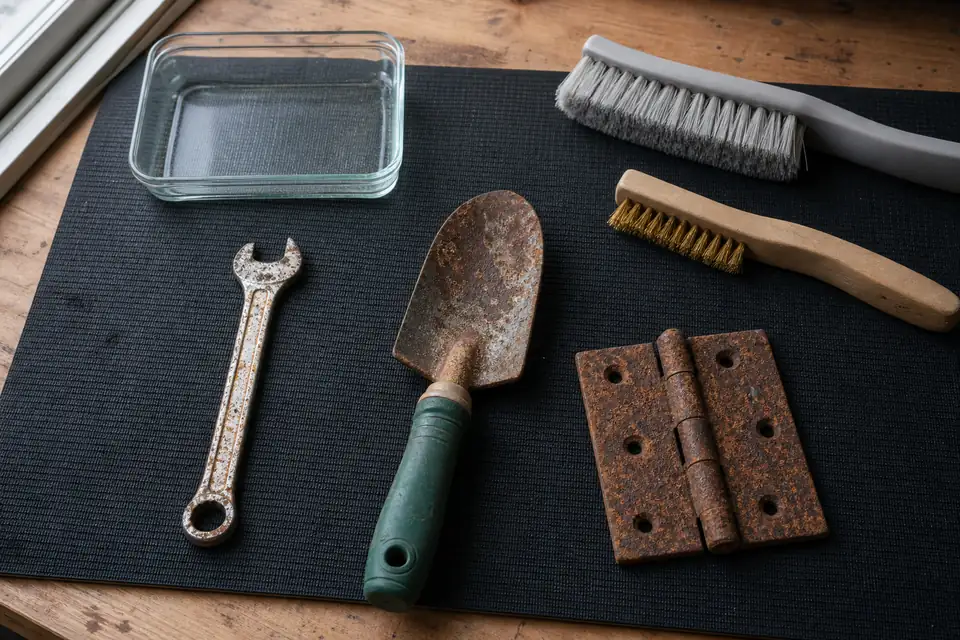
A light orange film may release before the surrounding metal changes. Thick flakes can hide pits beneath them. If the edge of a tool, screw head, hinge leaf or load-bearing part has lost section, further cleaning removes evidence without restoring strength. Replace or assess the component; polishing it for appearance cannot restore lost metal.
Record the starting condition before a test. A close photograph helps you compare colour, scratch pattern and the boundary between intact finish and corrosion after the patch has dried. Examine the cloth, brush and collected residue as well: coloured coating flakes, bright metal particles or a widening edge mean the method is reaching more than loose oxide. Stop, rinse or wipe as the chosen process requires, and reassess before enlarging the treated area.
Prepare the metal and work area
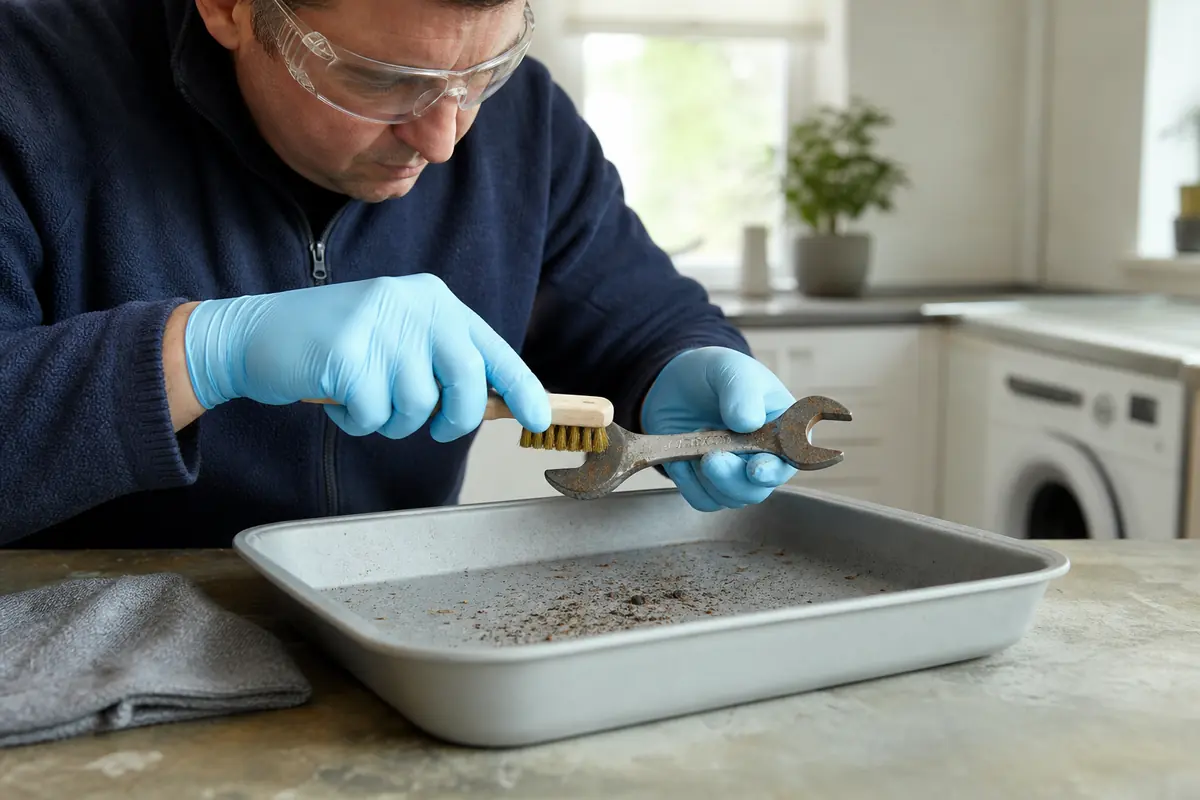
Move the work to a stable, ventilated area and protect the bench, floor and nearby finishes. Photograph how a mechanism fits before dismantling anything. Remove loose ordinary dirt with a dry or lightly damp method the object permits, then let the area dry. Collect loose rust over a tray so it is not brushed across the room.
Read the remover label before opening it. Its chemical safety controls include ventilation, contact limits, storage and protective equipment. Choose compatible cleaning gloves from product and glove information, and use eye protection where splashes or flying particles are foreseeable.
- Test a hidden or low-value area and compare it in good light after drying.
- Remove detachable wooden, rubber or fabric parts only when the object is designed to come apart.
- Keep acids, commercial removers and contaminated residue away from children and pets.
- Never combine rust removers, bleach, limescale products or other cleaners.
- Keep a clean rinse cloth, dry cloths and the intended protective finish ready before treatment starts.
Methods for light, moderate and heavy rust
Controlled mechanical cleaning
A nylon brush, fine non-woven pad or suitable brass brush can remove loose oxidation from compatible bare steel and still give close control. Work in a small area and inspect frequently. Match the tool to the substrate: a brush that is gentle on a thick garden tool may scratch polished metal, blur an engraved mark or cut through thin plating.
Wire wool, aluminium foil, coarse paper and powered wire wheels are not default household choices. They can alter the scratch pattern, round an edge, shed particles or remove sound metal. Carbon-steel media can leave contamination on stainless steel. Powered abrasion also creates flying debris and heat, so it belongs to a properly controlled restoration process, not a shortcut in a furnished room.
Vinegar or another mild-acid soak
Plain white vinegar can loosen rust on some low-value, removable bare iron or steel items. It is not a finish-safe universal bath. Acid keeps acting after the visible rust softens and may darken, etch or pit the base metal, attack plating and enter joints. Check the item regularly and stop as soon as the oxide releases with the planned gentle tool.
Do not add salt as a default accelerator, and do not copy an overnight timing from a different object. Keep handles, springs, bearings, locks, electrical parts and assembled mechanisms out of the bath unless their manufacturer explicitly permits immersion. After treatment, follow the chosen method’s instructions for rinsing or neutralising and move directly to complete drying.
Bicarbonate paste for limited surface work
A bicarbonate-of-soda paste acts mainly as a mild abrasive on light surface marks. It does not dissolve deep rust or restore pitted metal. Its particles can lodge in seams and its rubbing action can haze polished, painted or plated finishes. Use it only on a compatible test area, with minimal pressure, then remove all residue and dry the object.
Commercial rust removers, gels and converters
Commercial products are not one category. Some dissolve or lift corrosion, some bind it through a chelating process, and rust converters prepare compatible remaining corrosion for a coating system. A converter does not make a thin or unsafe component strong again. Select a product that names the metal, finish and intended use, then follow its dwell, temperature, agitation, residue and disposal instructions exactly.
A clinging gel can keep treatment on a fixed vertical patch and can also reach paint edges, joints and porous surroundings. Masking does not replace careful application. WD-40 Multi-Use Product may help loosen light surface corrosion or seized parts when its label permits. It is neither a universal rust cure nor permanent protection for every object.
How to clean rust off tools
Hand and garden tools are common candidates because many can be inspected from every side. Remove soil first, identify the blade, teeth, joint, fasteners and handle, then decide which metal surfaces can be treated. A detachable all-steel spanner may tolerate a controlled soak. Secateurs, shears and trowels combine cutting edges, pivots, springs, coatings and handles, so local hand cleaning is usually easier to control.
Rust removal and sharpening are separate jobs. Do not grind a cutting edge merely to make the whole tool bright. Clean the corrosion, assess pitting and movement, then sharpen only to the tool maker’s bevel and maintenance instructions. Lubricate pivots with a compatible product after all cleaning residue and moisture have gone.
Power tools need a different boundary. Disconnect the power source and follow the manufacturer. Do not immerse housings, batteries, chucks, motors or switches. Rust on a guard, arbor, electrical contact or safety component can affect operation and needs a competent repair decision.
Special surfaces: stainless steel, chrome and coated metal
Stainless steel can collect iron contamination or develop local corrosion where moisture, deposits and damage remain. Use a non-abrasive method approved for that stainless finish, work with the visible grain and use clean tools reserved for stainless. Avoid carbon-steel wool and brushes, which can scratch the finish and leave particles that later rust.
Chrome and decorative plating can be thinner than the rust suggests. A reddish spot may begin at a pinhole where the base metal is corroding beneath the finish. Aggressive rubbing enlarges the exposed area. Painted and powder-coated objects behave similarly around chips and seams: clean the intact coating gently, remove only loose corrosion from the damaged edge and use the specified repair system.
You may also enjoy:

Bathroom taps and fittings may combine chrome, stainless, brass, sealants and plastic. A treatment suitable for a bare steel tool can mark those finishes. If the apparent rust is coming from a screw, damaged plating or water-borne iron, address that source. Repeated acid application across the whole fitting can damage unaffected materials.
Rinse, neutralise, dry and protect the metal
Finish the method you actually used. A labelled remover may require water rinsing, wiping, a neutralising step or no water at all. A vinegar treatment may need thorough residue removal and an alkaline neutralising wash when compatible. Do not add bicarbonate blindly to an unknown commercial product; follow its label.
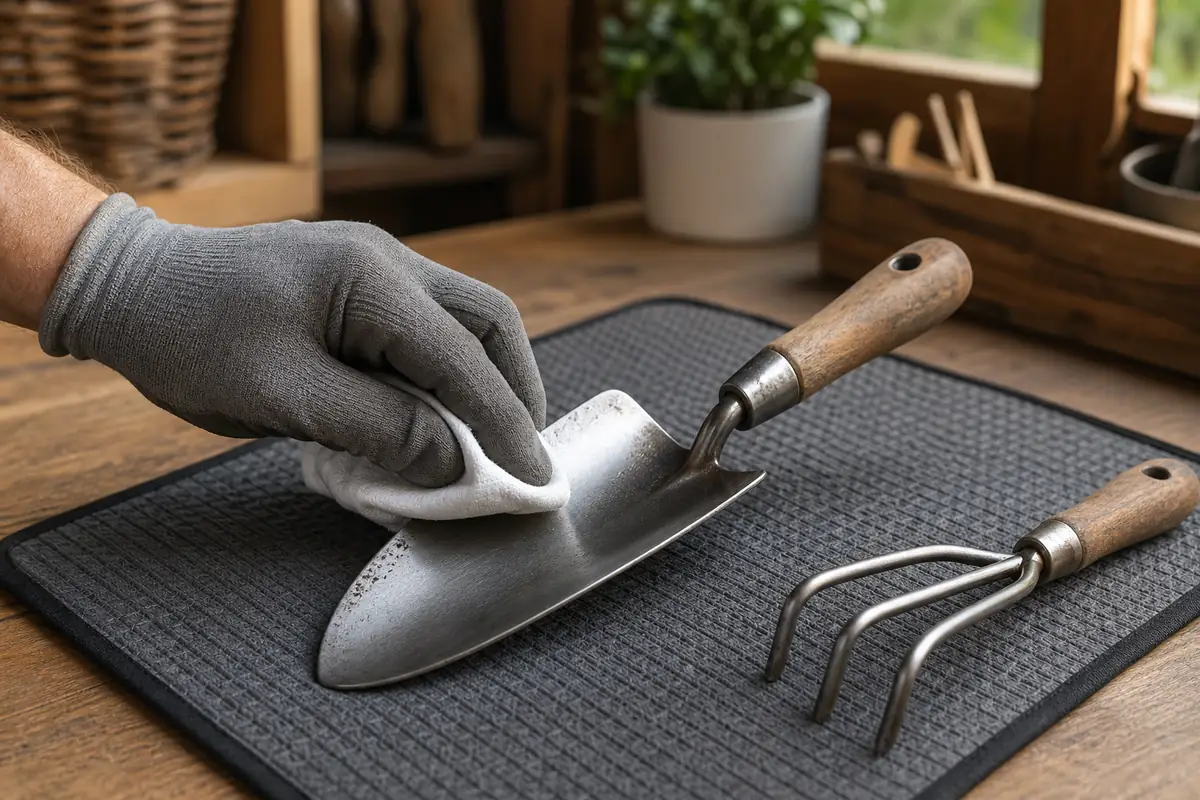
Dry the object immediately, including holes, seams and the underside of handles. Clean cloths remove visible water; gentle moving air can help where the manufacturer permits it. Avoid uncontrolled heat on tempered steel, coatings, seals, plastics and glued assemblies. New orange specks soon after cleaning often indicate residual moisture or acid, exposed unprotected steel or contamination left in a recess.
Apply the protection suited to the object only after it is clean and fully dry. Hand tools may use a thin compatible oil or wax. Outdoor steel may need primer and paint. A stainless appliance uses its own approved care route. Food-contact items need a finish expressly suitable for that use. More oil is not better; excess attracts soil and can make a handle or tool unsafe to grip.
Why rust comes back
Rust returns when the conditions that started it remain. Water can sit under a pot, inside a hollow handle, around a screw or behind failed paint. Damp storage, condensation, chloride residue and contact with wet soil all shorten the life of exposed steel. A recurring mark can also come from another rusting object above or beside the cleaned surface.
- Find and remove the moisture source before refinishing the metal.
- Let garden tools shed soil and dry before storage.
- Repair coating chips with a system compatible with the existing finish.
- Keep protected steel away from persistent condensation and wet absorbent materials.
- Inspect joints and undersides before rust spreads across the visible face.
No household method removes rust permanently from bare steel that is returned to the same wet conditions. Lasting control means removing active loose corrosion, preserving sound metal, drying it and restoring a maintained barrier between the metal and moisture.
Build inspection into storage and do not wait for a major clean. Check the object once the protective layer has settled and again after it has been used or exposed to damp conditions. Pay attention to the first orange line at a seam, chipped edge or fastener. Early local maintenance generally preserves more of the original surface than repeated cycles of heavy removal. If the same point corrodes again, investigate trapped water, incompatible metals, a failed seal or an unsuitable storage place before applying another product.
Rust stains on fabric, tile or patio need a different route
An orange mark on another material is not permission to use the metal method. Clothing needs fibre, colour, bleach and heat decisions. Patio treatment depends on concrete, stone, jointing and drainage. Tile requires identification of the tile body, glaze, polish and grout before acid is considered.
A ceramic or porcelain surface should follow a material-specific tile stain method. Remove the rusting can, leg, fastener or water source as well. Treating only the transferred mark guarantees another round of staining when moisture returns.
When rust removal becomes restoration
Stop household treatment when corrosion has changed the shape, thickness, fit or movement of a part. Deep pitting in a ladder, balcony component, tool head, fastener, gas appliance, electrical item or load-bearing bracket is a safety question. Brightening the surface cannot replace metal that has been lost.
Antiques, signed tools, firearms, clocks and objects with deliberate patina can lose value through ordinary cleaning. Professional restoration may preserve markings, dimensions and original finishes that an acid bath or wire brush would erase. The same caution applies when the alloy or coating cannot be identified.
How Samyx Cleaning can help with routine household cleaning
Rust repair and metal refinishing sit outside an ordinary domestic-cleaning promise. Samyx Cleaning can still help when routine kitchen, bathroom, floor and general-room work is falling behind around the affected object. A planned visit can remove ordinary soil and moisture-prone build-up from agreed household surfaces without representing corrosion treatment as a standard cleaning task.
Weekly and fortnightly regular domestic cleaning is available across London. Tell the office about damaged coatings, rust removers, valuable metal and any task requiring dismantling or specialist treatment before the visit. The request can then be scoped honestly, and unsuitable work can be excluded.
Book Regular Domestic Cleaning
Enter your postcode to view our rates and availability in your area.

Conclusion: remove the rust, then fix the exposure
A successful rust-removal job keeps three things aligned: the metal and finish, the depth and location of corrosion, and the least aggressive method that can reach it. Inspect first, test a small area, keep liquids out of unsuitable assemblies and stop before appearance takes priority over strength.
The final condition depends on what happens after the visible rust has gone. Remove residue as instructed, dry every recess, restore the correct protective barrier and change the damp storage or coating failure that allowed corrosion to start.
Frequently asked questions
-
What removes rust from metal instantly?
Nothing removes every type of rust instantly without risk. Loose surface oxidation may brush away quickly from compatible bare steel; widespread rust needs controlled dwell time and deep pitting may require restoration or replacement. Match the method to the metal and finish, not to speed alone.
-
Can WD-40 remove rust from metal?
WD-40 Multi-Use Product can help loosen light surface corrosion or seized parts when its label and the object maker permit it. It is not a universal remover for heavy rust, every finish or food-contact metal, and it does not replace the correct long-term protective coating.
-
Does vinegar remove rust from metal?
White vinegar can loosen rust on some removable bare iron or steel objects. It can also attack base metal, plating, coatings and joints if the object or exposure is unsuitable. Check frequently, stop when the rust releases, remove residue as the method requires, dry immediately and protect the metal.
-
How to get rust off metal permanently?
Remove loose active corrosion, preserve sound metal, dry the object completely and restore the finish, oil, wax or coating intended for that item. Rust will return if bare steel is exposed to the same moisture, residue or coating failure, so the source and storage conditions must also change.
Important: Rust removal can damage plating, paint, patina, stainless finishes, edges and sound metal. Check the object and product manufacturer’s instructions first and test a hidden area. Wear the protection and use the ventilation stated on the label; keep acids and removers away from skin, eyes, children and pets, and never mix products. Do not immerse electrical tools, powered parts, locks, springs, bearings, wooden handles or assembled items unless the manufacturer explicitly permits it. Stop if the surface changes colour, a coating lifts, pitting deepens, the metal becomes thin or movement or strength is affected. Food-contact, antique, valuable, structural or safety-critical metal needs material-specific professional advice.
Author: Svetlana Georgieva (Clara)
Hi, I’m Svetlana Georgieva, but you can call me Clara. As the co-founder and heart behind Samyx Cleaning, I’m devoted to sharing the art of a clean space. Let’s journey into a cleaner, more joyful life together with tips from London's cleaning experts.

Discover more of our cleaning secrets: