
How to Get Oil Out of Clothes: Fresh, Set-In, Motor and Hair Oil

Last modified on: 31/07/2026

How to get oil out of clothes depends on the fabric, the source of the oil and whether heat has already set the mark. For a fresh spill, keep the area dry at first, lift excess oil, use an absorbent backing and do not tumble-dry or iron the garment until you have checked that the stain has gone.
Key takeaways
- Water alone does not lift oil well, so the first aim is to remove as much grease as possible before washing.
- The care label sets the temperature and treatment limits; hotter is not automatically better.
- Fresh cooking oil, old grease, hair oil and motor oil need different cautions even when their basic treatment sequence overlaps.
- A small motor-oil spot may be treatable at home. Keep heavily contaminated workwear out of ordinary laundry until you have checked workplace or garment instructions.
- Heat can make a remaining oil mark much harder to remove, so air-dry and inspect before using a tumble dryer or iron.
Table of Contents
Before treating the stain, identify what you are dealing with
Pause before reaching for the nearest household product. Read the garment’s care label and identify the fibre if you can. Washable cotton and many polyester blends tolerate more handling than silk, wool, acetate, embellished clothing or anything marked dry-clean only. A treatment that is uneventful on a work T-shirt can dull colour, disturb a finish or leave a ring on a delicate garment.
Next, work out what caused the mark. Cooking oil usually leaves a grease stain without another hazard. Hair oil may also carry colour, fragrance or plant extracts. Used engine oil can contain dark particles and residues that should be kept away from other laundry. An old mark may have been washed, ironed or tumble-dried already, which changes the realistic outcome.
Test any treatment on an inconspicuous seam. Put a clean white cloth, folded kitchen paper or another absorbent backing under the stained area so oil and loosened residue do not pass into a second layer. Avoid coloured towels that might transfer dye.
Look at the garment’s construction as well as its fibre. A lined jacket, padded coat, bonded sports fabric or printed T-shirt can contain several materials even when the outer face looks washable. Treating one layer may move oil into the lining, loosen an adhesive or change the printed finish. If you cannot isolate the stained layer from the rest of the item, use a more conservative method.
Photograph the dry stain before you begin. The picture gives you a useful comparison after washing, especially on dark fabric where a wet patch can hide the remaining oil. Note anything already applied. If you later take the garment to a cleaner, an accurate treatment history is more useful than a guess.
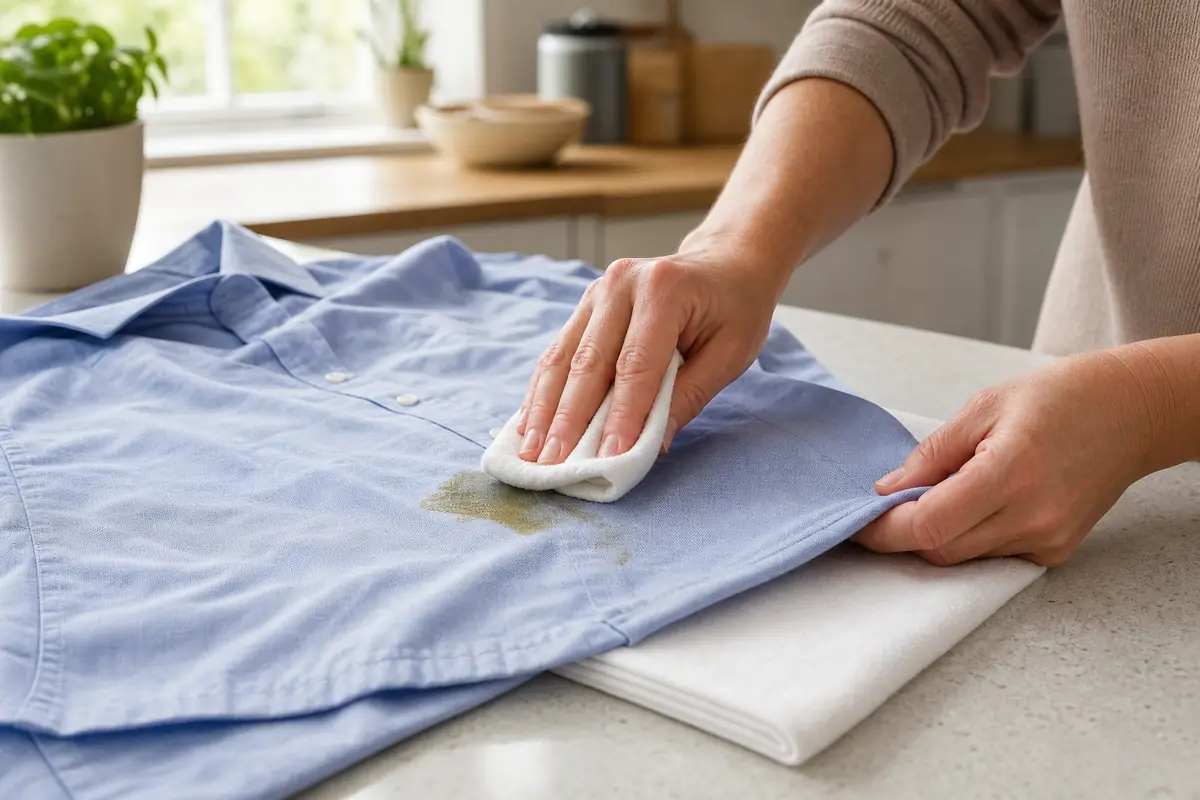
How to get oil out of clothes: the core method
This method is for a small oil or grease stain on a washable, colourfast garment. If the label, fabric or contamination level does not fit that description, use the decision table below before continuing.
1. Lift excess oil without spreading it
Use the edge of a spoon or a blunt card to lift thick food grease. For liquid oil, press a clean white cloth onto the spot and lift it away. Work from the edge towards the centre. Do not scrub: friction can push the oil across a wider area and stress the fibres.
2. Let a dry absorbent do the first work
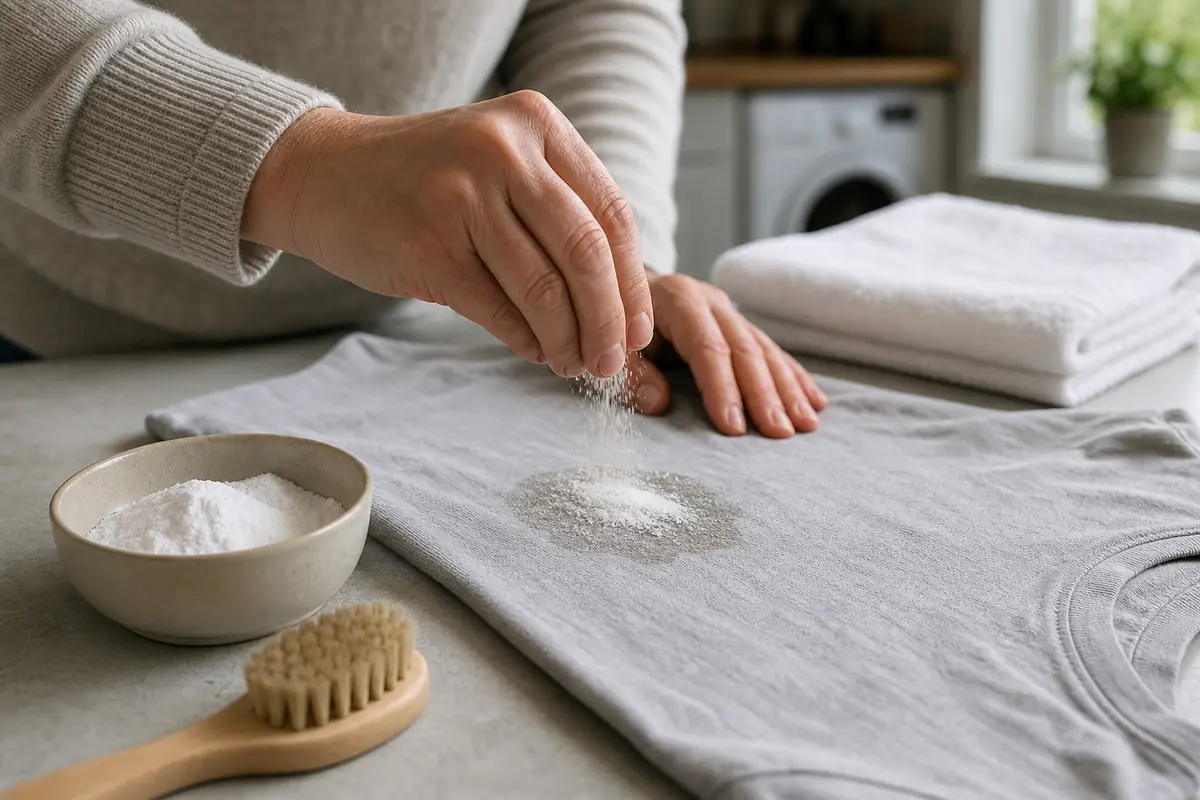
For a compatible washable fabric, cover the stain with an absorbent powder such as cornflour or plain talc. Leave it long enough to take on the oil; a faint mark may need 15 to 30 minutes, and a heavier spill can need longer and a fresh application. Lift or brush the powder away gently once it is dry. Do not turn it into a paste.
Powder is an absorption step, not proof that the stain has gone. Replace it if it becomes clumpy or translucent. Vacuum loose powder from a textured, washable garment only with a clean low-suction attachment held just above the surface. Avoid grinding particles into knitwear or seams.
3. Pretreat the remaining grease
Apply a laundry pretreatment labelled for the fabric and follow its dwell time. On sturdy washable cotton or polyester, a small drop of plain washing-up liquid can help break up cooking grease. Use only enough to cover the mark, work it in gently with a fingertip and rinse it out before machine washing. Too much hand-dishwashing liquid can create excess foam in a washing machine, and additives such as colour or fragrance may not suit every fabric.
Keep the pretreatment within the stained area. Saturating a large clean margin can create a tide line, especially on tightly woven or dark fabric. Observe the product’s maximum contact time and never let a treatment dry on the garment unless its label specifically says to do so.
4. Wash within the care-label limit
Wash the garment separately when the stain is dark or the source is uncertain. Use a normal dose of suitable laundry detergent and the warmest temperature the care label allows. That may be 30°C for one item and 40°C or more for another; the stain does not override the label.
Do not overload the drum. The item needs enough movement and rinse water for released oil and detergent to leave the fabric. After a dark motor-oil mark or a very greasy food spill, check the drum, door seal and dispenser for residue before running a normal load.
5. Inspect before applying heat
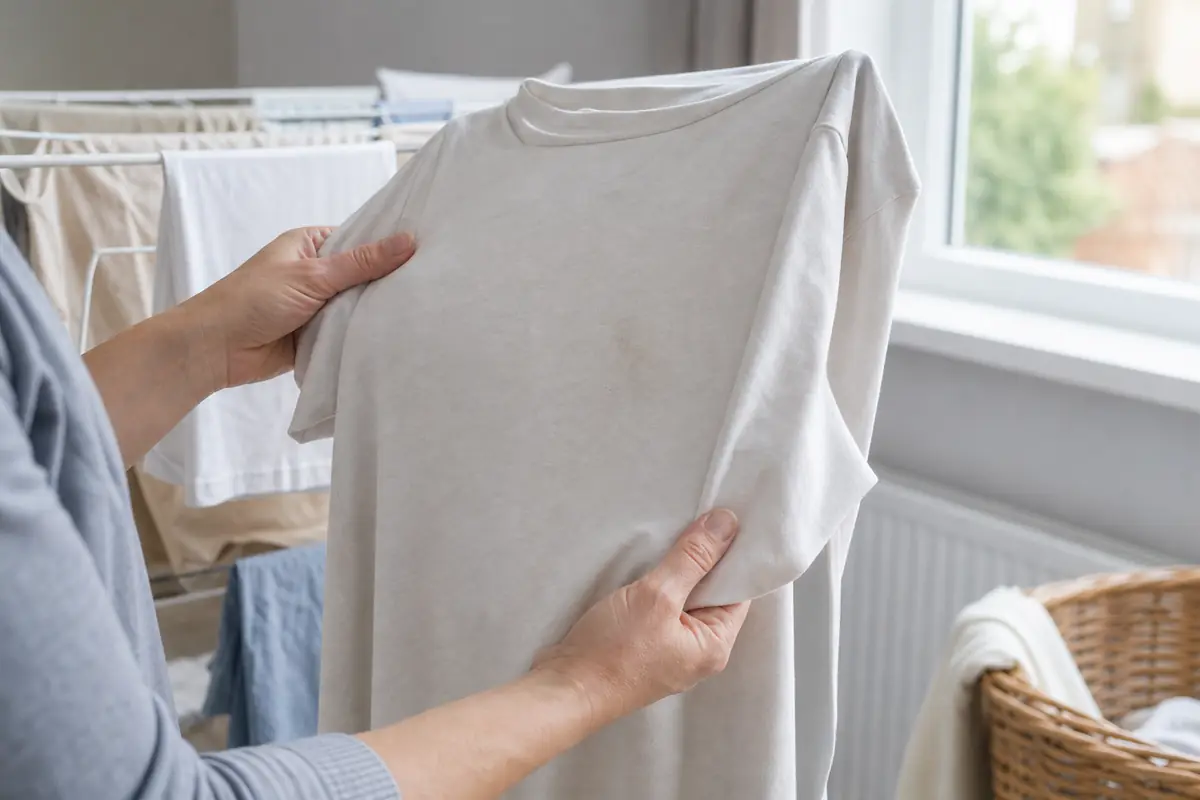
Check both sides of the damp fabric, then air-dry it and look again in natural light. Oil can seem to disappear when wet and reappear as the garment dries. If you can still see a shadow, repeat the compatible pretreatment and avoid tumble-drying or ironing it.
| Stain or garment | First move | Compatible route | Stop or escalate when |
|---|---|---|---|
| Fresh cooking oil | Lift or blot; keep it dry initially | Absorbent powder, laundry pretreatment, label-safe wash | Colour transfers or the fabric finish changes |
| Old or previously washed oil | Place backing under the dry mark | Pretreat, wash, air-dry and repeat if the fabric remains stable | The mark does not improve after repeated compatible cycles |
| Small motor-oil spot | Separate from other laundry and lift residue | Fabric-safe degreasing pretreatment and a separate label-safe wash | Strong odour, widespread contamination or unknown chemical exposure remains |
| Heavily contaminated workwear | Keep it out of ordinary household laundry | Follow employer, PPE or specialist-laundry instructions | The garment is saturated or classed as contaminated protective clothing |
| Hair oil | Blot and check for added colour | Absorb, pretreat gently, wash within the label limit | Dye moves, a ring forms or the fabric is delicate |
| Delicate or dry-clean-only fabric | Blot without rubbing | Use the care-label route or consult a cleaner | Home washing is prohibited or the item is valuable |
You may also enjoy:
Choose the route by oil source
The shared sequence is lift, absorb, pretreat, wash and air-dry. The source decides how cautious you need to be and whether the garment belongs in a household machine at all.
Cooking oil and grease
Salad dressing, frying oil, butter and oily sauces can leave a translucent patch that darkens the fabric. Remove food solids with a blunt edge first. Blot the remaining oil, add the backing and use the dry absorbent stage before introducing water.
If a sauce contains tomato, turmeric or another pigment, you are treating more than grease. Remove the oily part first, then reassess the colour. Do not stack several remedies or mix products in the hope of treating every component at once. A coloured food stain may need a separate fabric-safe stain remover after the grease has lifted.
A plain washing-up liquid may help on a sturdy, washable item because it is designed to cut food grease. It is not a universal laundry product. Use a very small amount, rinse it out and keep it away from dry-clean-only, non-colourfast or specially finished fabric unless the manufacturer permits it.
Motor oil on clothes and workwear
Start by separating a small accidental spot from genuinely contaminated workwear. A coin-sized mark on washable cotton trousers may follow the same absorb, pretreat, wash and air-dry sequence. Used engine oil can carry dark particulate residue, and a saturated garment is not an ordinary stain-removal job.
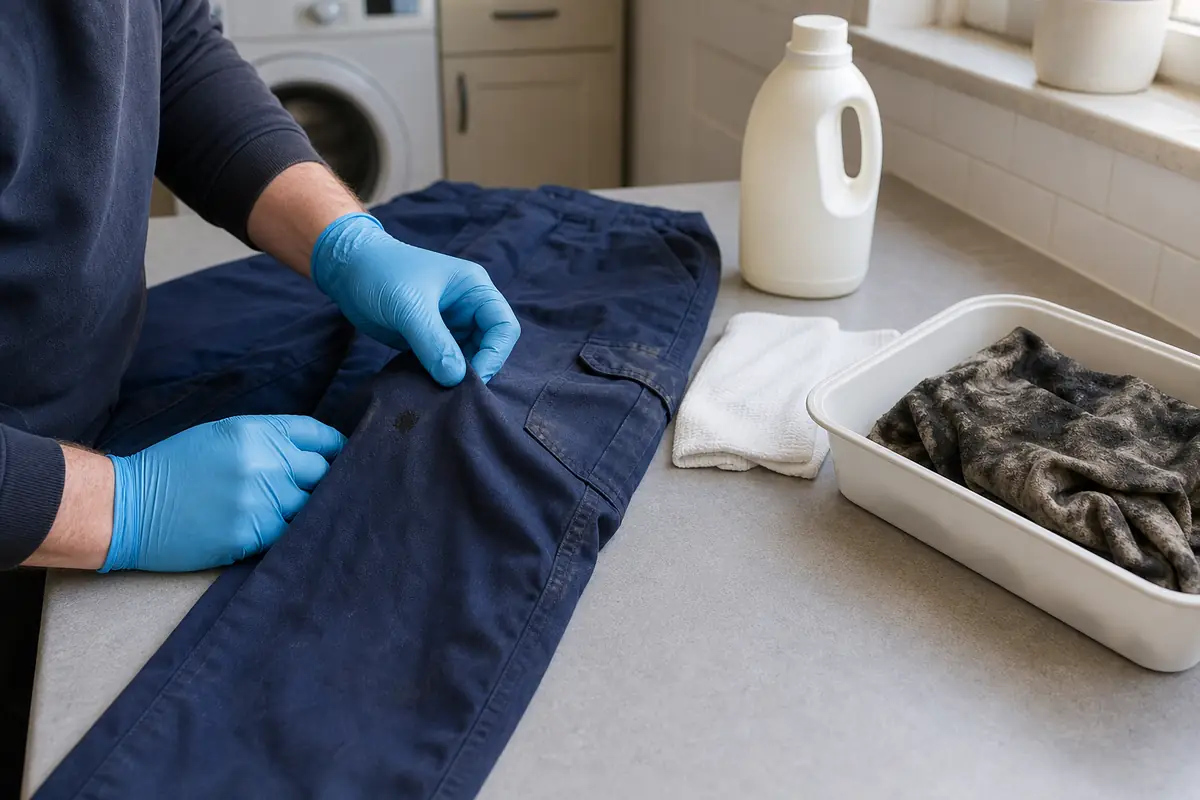
Lift any thick residue and use fresh backing so the mark does not print onto another part of the garment. Apply only a laundry degreaser or pretreatment compatible with the fibre. Keep the item separate from normal clothes for washing and check the machine after the cycle.
Do not use petrol, brake cleaner, WD-40 or a garage solvent on clothing. These products can create inhalation, skin, fabric and fire risks, and residue may remain through washing. If workwear is heavily soiled, has a persistent fuel or solvent smell, or is protective clothing, follow the employer’s PPE and laundering procedure. That may require a specialist service or a disposal route in place of a domestic washing machine.
Keep contaminated items in a suitable separate container until you know the correct route. Do not leave an oily garment near a boiler, heater, naked flame or hot appliance. If the source involved fuel, solvent or an unknown workshop chemical, treat it as a contamination question first and a visible stain second.
Hair oil on clothes and pillowcases
Hair oils and serums can transfer to collars, pillowcases and the shoulders of clothing. The oily carrier is treated much like cooking oil: blot, absorb and pretreat. The difference is that some formulas also contain fragrance, botanical colour or silicone, so the remaining ring may not be grease alone.
Check the product ingredients if the label is available. This is not permission to experiment with stronger chemicals. On a washable pillowcase or cotton top, use the core method. On silk, wool or a non-colourfast scarf, blot and follow the care label or ask a professional cleaner. Avoid rubbing oily hair products deeper into the weave.
Treat the mark before washing the whole bedding load. An oily pillowcase can transfer residue to another item in a tightly packed drum. For repeated hair-oil marks, protect the pillow with a washable cover and allow newly applied product time to absorb before getting dressed or going to bed.
Can you remove an old or heat-set oil stain?
An old oil stain is not automatically permanent. It usually needs more than one careful cycle. Put backing behind the dry mark, apply a compatible pretreatment, allow the stated contact time and wash within the care-label limit. Air-dry and compare the result in daylight. Improvement after the first cycle is a reason to repeat the same safe route, not to jump to a harsher chemical.
If the garment has already been tumble-dried, the remaining oil may have oxidised or bonded more firmly with the fibres. You may lighten it without removing the full shadow. Stop if colour lifts, the surface changes, the fabric weakens or a ring grows around the treated area. For a valuable garment, the sensible endpoint may be a textile cleaner in place of another home attempt.
Turn the garment inside out and check whether the stain is visible through the reverse. A deep mark needs fresh backing during each treatment so loosened oil has somewhere to go. Treat only after the fabric is fully dry from the previous cycle; judging a damp patch can lead to unnecessary product and overworking.
An oily mark that appears only after washing may have a different cause. Repeated new spots across several garments can point to excess softener, detergent residue, a dirty machine component or a mechanical leak. Do not keep treating each spot as a cooking-oil stain if the pattern begins in the washer. Pause the laundry cycle and diagnose the appliance separately.
Adjust the method for white, dark and delicate fabrics
White clothes
White does not mean bleach-safe. Read the fibre label before using an oxygen-based stain product, and never mix it with other cleaners. Chlorine bleach can damage some fibres, react with residues and create discolouration in place of fixing it. The advice for white clothing covers the wider colour and fabric checks.
Dark or strongly coloured clothes
Test behind a hem or inside a seam and blot with a white cloth. If colour transfers, stop. Vigorous scrubbing can create a pale patch that looks worse than the original oil mark. Use the shortest compatible contact time and rinse thoroughly.
Silk, wool and dry-clean-only items
Blot gently and resist the urge to soak. Water, alkalinity, agitation or concentrated detergent can distort a delicate fibre or leave a tide mark. Give a textile cleaner the oil source, everything already applied and the approximate age of the stain. Do not hide a home treatment, because that information affects what they can safely try.
Seven mistakes that make oil stains harder to remove
- Rubbing the fresh spill: this spreads oil and drives it between fibres.
- Flushing with water immediately: oil resists water, so lift and absorb the grease first.
- Using the hottest wash: the care label, not the stain, sets the safe maximum.
- Pouring in washing-up liquid: a small spot treatment can help on compatible fabric; a large dose can cause excess foam and difficult rinsing.
- Mixing stain products: more chemicals do not mean more cleaning and may create harmful reactions or fibre damage.
- Using garage solvents on motor oil: they are not laundry pretreatments and can leave hazardous residues.
- Tumble-drying too soon: a faint remaining mark can become much more difficult to shift after heat.
Aftercare, prevention and the point to stop
Once the mark is gone, wash any cloths used for blotting according to their labels and wipe the work surface so oil is not transferred back to clean laundry. If the spill reached a wall, cupboard or worktop, use a method designed for grease on surfaces; a clothing treatment may damage paint or another finish.
Keep aprons near the hob, store hair oils upright and separate workshop clothes from everyday washing. Prompt sorting also makes regular laundry more effective because a stain can be treated before it disappears into the basket and reaches the dryer unnoticed.
Keep a small stain kit where spills usually happen: white absorbent cloths, a blunt spoon, a suitable powder and the laundry pretreatment you already know is compatible with common household fabrics. The kit reduces delay without encouraging product mixing. Label any decanted product clearly or, preferably, keep it in its original container with the instructions intact.
When to stop treating the garment at home
Stop when the care label prohibits washing, colour transfers, the fabric distorts, the stain spreads, a chemical odour remains or repeated compatible treatment produces no improvement. Seek a textile cleaner for valuable, delicate or structured clothing. Use workplace guidance for contaminated PPE and heavily oil-soaked workwear.
A cleaner cannot guarantee every old stain, so set a practical limit based on the value, condition and purpose of the item. More treatment is a poor trade if it replaces a faint shadow with colour loss, thinning or a visible tide mark.
How Samyx Cleaning can help after an oil spill
Samyx Cleaning does not provide dry cleaning, specialist garment restoration or contaminated-workwear laundering. If an oil spill has also left residue across floors, cupboards or the wider room, our one-off cleaning service may help with the surrounding home clean-up after the clothing has been dealt with separately.
Tell the team what spilled, where it spread and what you have already applied. This allows the surrounding surfaces to be assessed separately from the garment and avoids an unsuitable product being placed over an unknown residue.
Book One-Off Cleaning
Enter your postcode to view our rates and availability in your area.

Conclusion: finish with a care-label-safe result
Aim for the least aggressive compatible sequence that removes or meaningfully reduces the oil without trading the stain for dye loss, fibre damage or a chemical residue. Stronger treatment is not automatically safer or more effective. Fresh spills reward quick dry absorption; old marks reward patience and repeated inspection.
Keep heat out of the process until the dry garment passes a natural-light check. If the mark remains stable after careful cycles, accept the fabric’s limit or hand the item to a textile professional with a full account of the stain and treatments used.
Frequently asked questions
-
How do you get dried oil stains out of clothes?
Place an absorbent backing behind the dry mark, apply a fabric-compatible laundry pretreatment, wash at the warmest care-label-safe temperature and air-dry. Repeat the same compatible cycle if it improves the stain. Keep the garment out of the tumble dryer until no shadow remains.
-
Does washing-up liquid get oil out of clothes?
A very small amount can help cut cooking grease on sturdy, washable and colourfast fabric. Test first, use only enough for the mark, rinse it out and follow the care label. It is not suitable for every fibre and too much can cause excess foam in a washing machine.
-
Does oil stain clothes permanently?
Not always. Fresh oil often responds to prompt absorption and compatible pretreatment. Old, oxidised or heat-set oil can be harder to remove and may leave a permanent shadow, so avoid ironing or tumble-drying until you have inspected the garment.
-
Can motor oil be removed from clothing?
A small spot on washable work clothing may improve with careful lifting, a compatible laundry degreaser, a separate wash and air-drying. Heavily contaminated workwear or PPE needs employer or specialist-laundry instructions and should not automatically go into an ordinary household machine.
Safety note: Always follow garment and product labels, test an inconspicuous area and keep cleaning products separate. Do not use flammable garage solvents on clothing or place chemically contaminated workwear in a domestic washer or dryer without authoritative laundering guidance.
Author: Svetlana Georgieva (Clara)
Hi, I’m Svetlana Georgieva, but you can call me Clara. As the co-founder and heart behind Samyx Cleaning, I’m devoted to sharing the art of a clean space. Let’s journey into a cleaner, more joyful life together with tips from London's cleaning experts.

Discover more of our cleaning secrets: