
How to Clean Hard to Reach Places Safely at Home

Last modified on: 26/08/2026
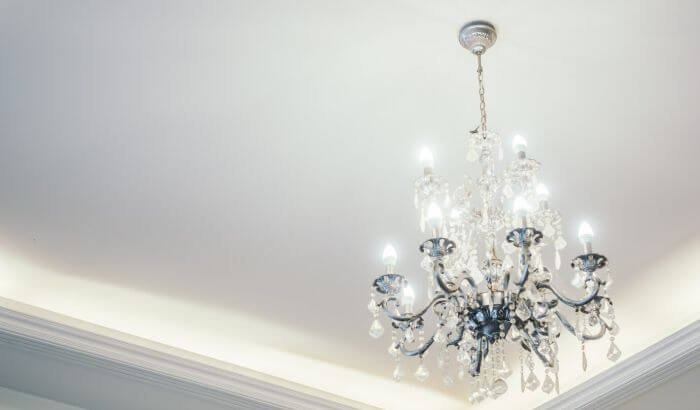
How to clean hard to reach places starts with deciding whether the area can be reached from stable ground, what soil is present and whether electricity, heat, weight or sharp debris changes the job. Use a controlled extension tool for ordinary dust, collect dry debris before adding moisture and stop when access requires unstable climbing or moving something too heavy to control.
Key takeaways
- Choose access before technique: an extension tool is useful only when it remains light and controllable at full length.
- Match the head to the soil and surface, using soft microfibre for dust, a vacuum nozzle for loose debris and a compatible brush for a washable crevice.
- Work from high to low and dry to damp so falling dust is collected once.
- Leave heavy furniture, connected appliances and electrical interiors in place unless a competent person has a controlled method for the task.
- Clean and segregate tool heads after use so a narrow tool does not carry bathroom or floor soil into food or living areas.
Table of Contents
How to clean hard to reach places: assess access first
A hidden patch of dust is rarely urgent enough to justify a fall, strained back or damaged appliance. Look at the route as well as the target. A long handle may clear a wardrobe top from the floor; the same handle can become hard to control in a narrow room or near a fragile light.
| Place | Likely soil | Controlled starting tool | Stop point |
|---|---|---|---|
| Ceiling corners, door tops and cabinet tops | Loose dust and cobwebs | Light telescopic microfibre or cobweb head used from stable floor | Tool contacts lights, cables or fragile fittings, or the target remains out of controlled reach |
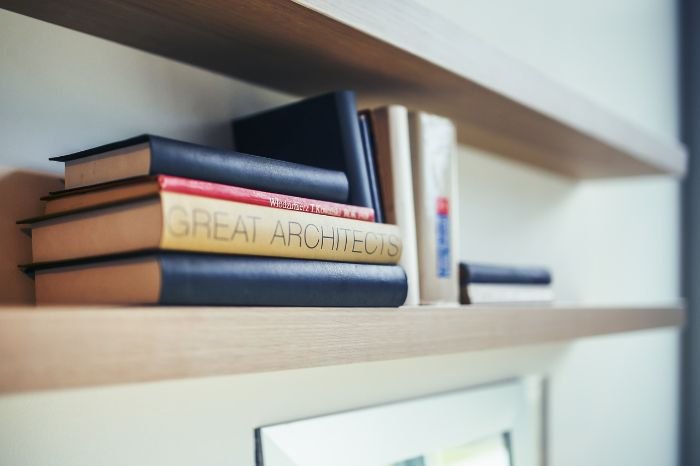
| Bookshelves and wardrobe ledges | Dust around objects and narrow edges | Soft brush, folded microfibre cloth and vacuum with adjustable suction | Valuable, unstable or heavy objects cannot be removed safely |
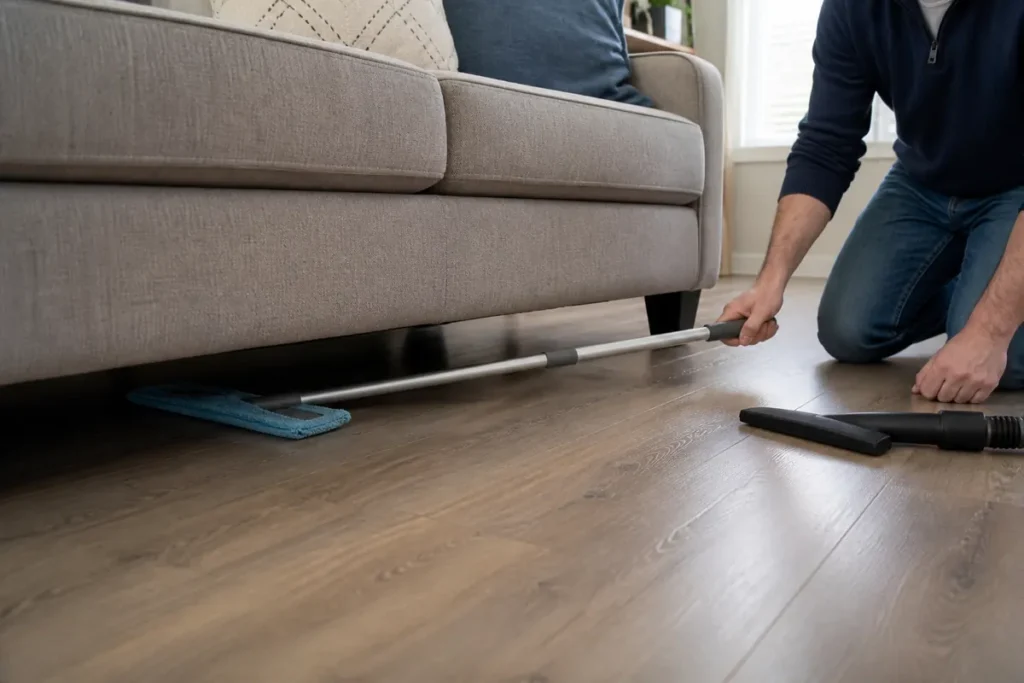
| Under sofas and beds | Dust, hair and small dropped items | Torch, low-profile duster and crevice or floor nozzle | Sharp object, trapped cable, damaged floor or furniture that must be lifted |
| Radiator fins, tracks and skirting gaps | Dry dust, grit and fibres | Narrow vacuum nozzle or flexible non-scratch brush | Hot surface, exposed wiring, sharp metal edge or a wet electrical heater |
| Behind or beside appliances | Dust, grease, crumbs and lost objects | Dry crevice tool from the accessible side | Gas, water, fixed wiring, unstable appliance or movement beyond the maker’s instructions |
| Exterior upper windows and roofs | Weathered dirt | No routine indoor tool recommendation | Specialist access and an appropriate contractor are required |
Check the tool at its working length before touching the surface. A head that twists, sheds fibres or feels top-heavy will be harder to control overhead. Shorten the handle or stop. People with limited grip, balance or shoulder movement may benefit from a lighter head, an angled joint and seated low-level work, provided the position remains stable and the tool stays within easy control.
Plan a One-Off Deep Clean
Enter your postcode to view our rates and availability in your area.

Build a small tool kit around the task
A large gadget set can create clutter without improving access. Start with a vacuum that accepts a crevice nozzle and soft dusting brush, a flexible low-profile duster, a telescopic handle with a washable head, several folded microfibre cloths and a torch. The broader comparison of cleaning tools for busy homes covers storage and everyday use without turning this task into a shopping list.
| Tool feature | Why it matters | Check before use |
|---|---|---|
| Reach and locking handle | Keeps the user on stable ground | Lock holds without rotation or sudden collapse |
| Low-profile flexible head | Fits beneath furniture without lifting it | Flexes smoothly and has no exposed hard edge |
| Soft removable cover | Captures dust and can be washed after use | Cover is secure, clean and suitable for the surface |
| Crevice nozzle | Collects loose grit from narrow dry gaps | Nozzle cannot scratch the finish or catch a cable |
| Small non-scratch brush | Loosens dry residue around tracks and edges | Bristles suit the material and do not shed |
| Torch | Reveals cables, sharps, damp and dropped objects | Area can be viewed without putting a hand into the gap |
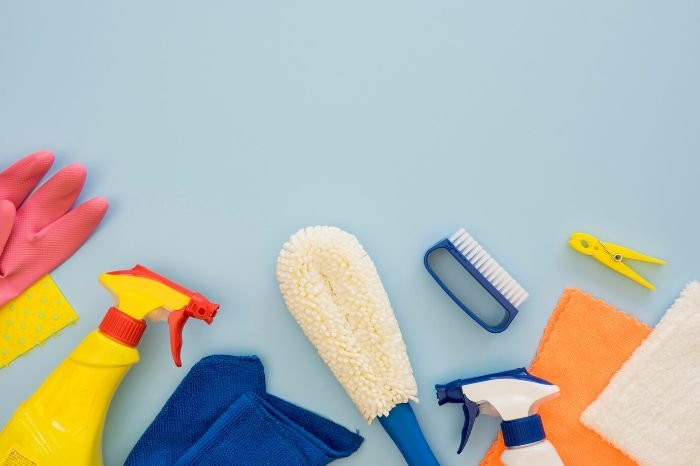
Avoid wrapping a wet cloth around a knife, ruler, wire or other sharp improvised tool. It can cut fabric, scratch a coating, puncture a cable or leave the cloth trapped. A purpose-made flexible head with a secured cover is easier to retrieve and clean. Wash reusable heads by their care instructions, let them dry fully and store toilet, floor and food-area tools separately.
Use a dry-first sequence that does not spread debris
- Clear the walking route and remove light objects that block access. Use a decluttering checklist when possessions, cables or boxes make the route unsafe.
- Inspect with a torch. Pick up visible large objects with a suitable grabber or by hand only when the area is clearly safe.
- Vacuum loose dust, hair and grit with the least aggressive suitable attachment. Reduce suction around delicate paper, vents, loose fabric and fragile objects.
- Loosen remaining dry soil with a soft brush or microfibre head, then vacuum again. Do not drive debris deeper into a vent or sealed appliance gap.
- Use a damp treatment only on a known washable surface and only after the hidden-area check. Put product on the cloth or tool head, not into the gap.
- Dry the surface and inspect the result. Clean the attachment afterwards; the steps to clean a vacuum safely help prevent a blocked nozzle or retained odour.
Dust high shelves, cabinet tops and ceiling edges
Begin above eye level and finish at the floor. Remove small stable objects one group at a time, keeping their order clear. Vacuum or wipe each object according to its material, then capture loose dust from the shelf edge and surface. Fold a cloth into a small pad so it stays controlled and presents a clean face as you work.
Use a telescopic head from the floor for cabinet tops, door frames and ceiling corners. Keep the head slightly in front of you so falling debris does not land on your face. Do not stand on chairs, boxes, worktops or bath edges. If a suitable floor-operated tool cannot reach without contacting a light, cable, picture or fragile fitting, leave the spot for safer access.
Ceiling fans and high light fittings add electricity, movement and fragile parts. Switch off the correct supply and wait for moving or hot parts to stop only when the manufacturer permits exterior cleaning. No damp overhead method belongs near an energised fitting. Fixed covers, internal dust and uncertain isolation need an electrician or appropriate technician.
You may also enjoy:

Clean beneath sofas, beds and freestanding furniture
Shine a torch through the gap before inserting a duster or vacuum nozzle. Remove coins, toys and other visible objects first. A low-profile microfibre head can draw dust and hair towards the accessible edge; follow with a suitable vacuum nozzle. Work from both open sides when possible, using short strokes that do not trap the tool beneath a central support.
Hard flooring may take a compatible barely damp pass after dry debris is gone. Check the floor-care instructions and keep moisture away from unfinished wood, furniture feet and electrical extension leads. Carpet needs dry extraction first. Do not push a wet pad beneath furniture where it cannot be retrieved or where the surface cannot dry.
Do not lift a sofa, bed or cabinet alone to gain a few centimetres of access. Weight, loose legs and an uneven floor can turn quickly. Furniture that must be moved needs enough people, a clear route and a method suitable for the item and floor. Leave it in place when those conditions are absent.
Treat appliances, radiators and narrow crevices as separate risks
Behind and beside appliances
Use a dry crevice nozzle from the accessible side and keep it clear of cables, hoses and ventilation openings. Follow the appliance instructions before moving or cleaning around it. A freestanding lightweight item may have a permitted method; a gas, plumbed, built-in or heavy appliance is not a routine furniture-moving task. Never insert a wet or metal tool into an appliance gap.
Radiators and heaters
Turn the heating off and let the unit cool. Protect the floor, vacuum accessible dust and use a flexible dry radiator brush only where the design permits it. Sharp fins can cut a cloth or hand. Electric heaters, controls and wiring need a dry exterior method from the manual; liquids and inserted tools are excluded.
Tracks, skirting gaps and vents
Vacuum grit before brushing a track, since rubbing loose particles can scratch it. Use a small compatible brush to lift residue towards the nozzle. A folded cloth on a blunt secured cleaning head can wipe an open washable channel. Do not push tools through vent slots or remove a fixed cover solely to reach hidden dust.
Match the next step to the soil, not the gap
| What you find | Next controlled step | Why the method changes |
|---|---|---|
| Loose dust, lint or cobwebs | Vacuum or capture with dry microfibre | Moisture can turn loose soil into a film |
| Pet hair under furniture | Loosen with a suitable rubber or microfibre head, then vacuum | Hair may cling through static and friction |
| Greasy dust on a washable cabinet top | Dry removal, then a labelled compatible degreaser on a cloth | Grease needs a surface-safe product and controlled contact |
| Limescale near a tap or track | Confirm the material, patch-test and use a labelled compatible treatment | Acids can harm stone, metal plating and grout |
| Damp mark or small mould-like spot | Stop and identify the moisture source before treatment | Cleaning the mark alone does not correct a leak or condensation problem |
| Droppings, insects, sharps, broken glass or unknown residue | Do not disturb it with an ordinary duster or vacuum | Containment, disposal or specialist handling may be required |
Read the product label for dilution, contact time, ventilation, protective equipment and rinsing. The wider rules for safe chemical use apply even when only a small amount reaches the cloth. Never combine products in a narrow gap where residue is difficult to rinse away.
Keep difficult areas manageable between deeper cleans
Divide the home into high, low and narrow zones. Inspect one zone during the room’s normal clean and act when visible dust, hair or crumbs begin to collect. Manufacturer intervals still control filters, appliances and ventilation equipment. A fixed weekly rule cannot account for pets, open windows, cooking, building work or room layout.
- Keep the floor route clear so an extension tool can be used without stepping around boxes or cables.
- Store the correct nozzle and washable head beside the vacuum so the task does not depend on improvisation.
- Use washable trays or organisers on cabinet tops only when their weight and removal remain manageable.
- Report leaks, damaged sockets, loose furniture and appliance faults before they become hidden behind possessions.
- Record areas that stayed inaccessible and include them in the scope when arranging professional cleaning.
When a one-off clean is the safer option
Samyx Cleaning can include agreed, safely accessible high, low and narrow areas within one-off cleaning in London. Describe the height, clearance, furniture and known hazards when booking so the scope can be matched to the property. Clear light possessions and identify delicate finishes, loose fittings, leaks or electrical concerns before the visit.
The cleaning route does not cover unsafe high-level access, heavy or connected appliance moving, electrical dismantling, pest waste, sharps, structural damp or specialist mould work. A cleaner can remove ordinary accessible soil with suitable tools; another trade or controlled access method is needed when the obstacle defines the risk.
Book One-Off Cleaning
Enter your postcode to view our rates and availability in your area.
Frequently asked questions
-
What tools are used to clean hard to reach places?
A practical set includes a vacuum crevice nozzle, soft dusting brush, flexible low-profile microfibre duster, light telescopic handle, folded cloths, a non-scratch detail brush and a torch. Choose by location, soil, surface and control at full reach, not by the number of gadgets in a set.
-
How do you get dust out of hard to reach places?
Inspect the gap with a torch, remove visible objects, then vacuum or draw loose dust towards you with a dry microfibre head. Vacuum again before using any compatible damp method. Stop if the gap contains cables, sharps, pest waste, damp or an unknown residue.
-
How do you clean narrow crevices without scratching them?
Remove loose grit with a vacuum first. Use a soft material-compatible brush or a secured blunt cleaning head, working towards the nozzle. Avoid knives, wire, metal picks and abrasive powders. Patch-test any damp product where the finish is uncertain.
-
Should I move heavy furniture to clean underneath it?
Do not move or lift heavy furniture alone. Use a torch, low-profile duster and vacuum from accessible sides. If the item must move, the job needs enough people, a clear route and a method suitable for the furniture and floor. Leave connected appliances to their instructions or an appropriate professional.
Important: Follow product labels and surface, furniture and appliance care instructions over general guidance. Patch-test where a finish may vary, use the stated ventilation and protective equipment, rinse where directed and let cleaned areas dry. Never mix cleaning products, including bleach with ammonia, acids or other cleaners. Do not stand on chairs, boxes, worktops or bath edges, lift heavy furniture alone, insert wet or metal tools near electrics, or work on hot equipment. Stop for discolouration, dulling, coating change, unstable access, exposed wiring, sharps, pest waste, extensive mould or an unknown leak. Delicate, valuable, damaged or unfamiliar items need suitable professional or manufacturer advice before work continues.
Author: Svetlana Georgieva (Clara)
Hi, I’m Svetlana Georgieva, but you can call me Clara. As the co-founder and heart behind Samyx Cleaning, I’m devoted to sharing the art of a clean space. Let’s journey into a cleaner, more joyful life together with tips from London's cleaning experts.

Discover more of our cleaning secrets: