
How to Clean a Pantry: A Food-Safe Checklist

Last modified on: 15/08/2026
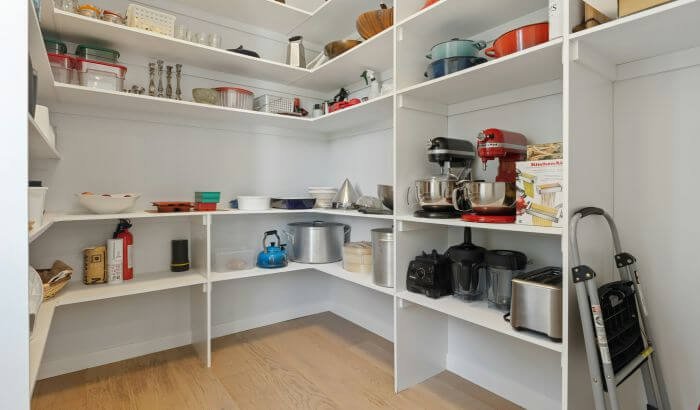
Knowing how to clean a pantry means protecting the food first, then removing crumbs and residue, cleaning each compatible shelf and letting every surface dry before anything goes back. The safest order also separates ordinary clutter from damaged packaging, date-label decisions, recalls and signs of pantry pests.
You do not need matching jars or a completely empty kitchen to begin. A clean staging surface and one shelf at a time are enough for most household pantries. The process below keeps labels, allergens and cooking instructions attached to the food and treats organisation as the final step.
Key takeaways
- A use-by date is a safety limit; a best-before date is mainly about quality.
- Damaged, leaking, recalled or pest-affected food needs a separate decision before shelf cleaning begins.
- Dry debris comes off first so a damp cloth does not spread crumbs into joints and corners.
- Laminate, sealed timber, unsealed wood, wire shelving and stone have different moisture and product limits.
- Containers are optional; readable dates, allergen details and stock rotation matter more than a matching display.
Table of Contents
How to clean a pantry step by step
| Order | Task | Decision point | Finished when |
|---|---|---|---|
| 1 | Prepare a clean staging area | Whole pantry or one shelf at a time? | Food can be grouped without touching the floor or cleaning products |
| 2 | Sort packages | Keep, use soon, check recall, donate unopened or dispose? | Questionable items are isolated from sound stock |
| 3 | Inspect the empty zone | Ordinary crumbs, spill, pest evidence, damp or shelf damage? | The cause controls the next action |
| 4 | Remove dry soil | Vacuum, soft brush or removable liner? | Corners, support holes and shelf edges are free of loose debris |
| 5 | Clean the material | How much moisture and which labelled product can it tolerate? | Residue is removed and any required rinse is complete |
| 6 | Dry and restock | Are packages sound, labels readable and zones practical? | The surface is fully dry and older suitable stock is visible first |
Keep a rubbish bag, a box for unopened donations, a tray for items needing a label or recall check and a separate sealed bag for pest-affected packages. A vacuum with a clean brush or crevice attachment, several clean cloths and one shelf-compatible product are usually enough. Store the cleaning product away from the food during sorting.
Work one shelf at a time in a small kitchen
Emptying every cupboard onto a crowded worktop creates new mix-ups. Choose one shelf, place its contents on a clean tray, make the food decisions, clean and dry that shelf, then return only the sound stock. Continue downwards so crumbs from a higher shelf do not land on a finished lower one.
Keep food for a person with an allergy or medically required diet together with its original label throughout the process. Do not place an unlabelled ingredient into that group. Wash hands and change cloths after handling a leak, pest debris or another contaminating package.
Sort food by date, package condition and recall status
Read the whole label before deciding that a product is old. The FSA’s date-label guidance distinguishes a use-by date, which concerns safety, from a best-before date, which concerns quality. Never use smell or appearance to overrule a use-by date.
A dry product past its best-before date is not automatically unsafe. Check its storage instructions, packaging seal and condition, then decide whether the quality remains acceptable. Special products, infant formula and food with separate after-opening instructions should follow their own label. Write an opening date only when that helps you follow the stated storage period.
Check the FSA’s current recalls and alerts when a product, batch or allergen notice is in question. Follow the action in the notice; do not donate or pass on a recalled item. Keep enough of the package information to identify the product and batch until the action is complete.
| What you find | Immediate action | Keep or remove? | Do not do |
|---|---|---|---|
| In-date, sealed and undamaged | Wipe the outside only if needed and compatible | Keep | Remove the original label without preserving key information |
| Past use-by date | Separate from food being kept | Remove according to the product and local waste route | Rely on smell or taste |
| Past best-before date | Check package, storage and quality | Judge quality using the product guidance | Treat the date alone as proof of danger |
| Recalled batch | Follow the recall notice | Return or dispose exactly as directed | Donate, decant or use it |
| Leaking, swollen or badly rusted | Isolate it and protect other food | Remove; seek product advice if uncertain | Wipe it and put it back |
| No label or unknown contents | Do not guess where allergens or instructions matter | Remove when identity and safe use cannot be confirmed | Mix it into a newly labelled batch |
Food and packaging that must leave the pantry need a suitable household waste route. Emptying every expired product down a sink or placing contaminated loose food into recycling can create another cleaning problem. Follow the package and local collection instructions.
Plan Regular Domestic Cleaning
Enter your postcode to view our rates and availability in your area.

Respond to pantry pests and damaged packaging first
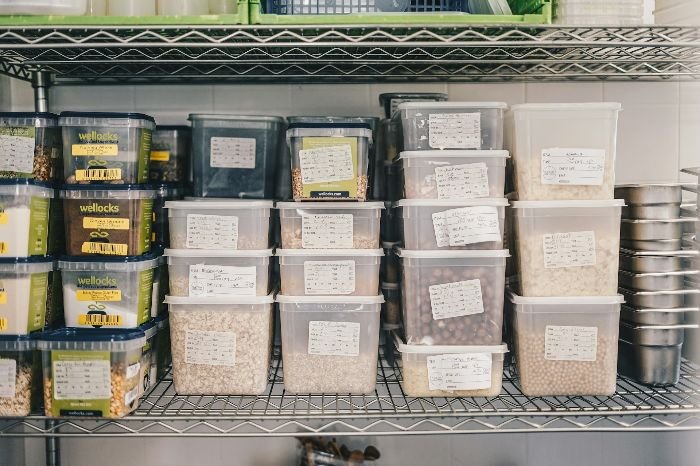
Webbing, larvae, small beetles, shed skins, droppings, gnaw marks or fine dust emerging from a packet are different from ordinary shelf crumbs. Stop moving food into another cupboard. Place visibly affected packages into a sealed bag and inspect nearby flour, cereal, grains, nuts, dried fruit, pet food and spices, including unopened paper or thin plastic packs.
Vacuum shelf holes, joints, corners and the underside of removable components. Empty the vacuum into a sealed bag outside the food-storage area and clean the attachment before it returns to household use. Clean the cupboard material as directed and let it dry fully. Monitor the area before refilling it with a large new shop.
Do not spray a general insecticide inside a food cupboard unless its label explicitly permits that exact use and all stated food-removal, ventilation, cleaning and waiting instructions can be followed. Continued activity, widespread evidence or pests entering wall voids needs professional pest-control advice. Cleaning removes food debris; it does not repair an entry route or confirm that an infestation has ended.
Treat damp and mould as a source problem
A musty smell, swollen board, staining around a pipe or recurring mould points to moisture. Remove food from the affected zone, check for leaks and avoid restocking against a damp surface. Surface wiping cannot repair plumbing, condensation, failed seals or water-damaged board. Arrange the appropriate repair and assess food exposed to moisture or mould separately.
Remove dry crumbs before damp cleaning
Lift removable liners carefully so debris does not scatter. Use a vacuum brush or crevice tool on dry crumbs, flour, onion skins and dust. Pay attention to shelf-pin holes, door hinges, front lips and the corners where packets sit. A dry first pass prevents the cloth from turning loose food into paste.
Choose the product only after identifying the shelf. Read the surface directions, dilution, ventilation, contact time and any rinse requirement. A product described as natural is not automatically suitable for food storage, stone, unfinished timber or a painted coating. The product label guide explains how function and instructions matter more than the marketing description.
Match the method to the shelf material
- Laminate or melamine: use a well-wrung cloth and keep water out of raw edges, joints and shelf-pin holes. Dry swollen or chipped sections promptly and avoid scrubbing through the decorative layer.
- Sealed timber: follow the finish instructions, use minimal moisture and dry with the grain. Clouding, stickiness or colour transfer is a stop signal.
- Unsealed timber: avoid soaking. Absorbed spills, odour or pest contamination may need material-specific assessment beyond routine wiping.
- Wire or coated metal: remove shelves only when their fittings allow it. Clean around joins, rinse when required and dry to prevent trapped water or corrosion.
- Stone or tile: identify the material and sealer. Acidic vinegar or lemon can etch some stone, and abrasive powders can dull finishes or lodge in grout.
Clean handles and the door edge with a fresh cloth so shelf residue does not transfer to the touchpoints. If the product requires rinsing, use a separate clean cloth and the stated amount of clean water. Leave doors open where safe and allow every joint, corner and liner to dry before food returns.
Check shelf liners before putting them back
A removable liner can make crumbs easier to collect, though it can also hide a leak, pest debris or moisture beneath it. Lift each liner during the clean and inspect both sides. Wash a reusable liner only by its care instructions, then dry it away from the cupboard. Replace paper, card or damaged porous material that cannot be cleaned without losing its shape.
Do not cover ventilation slots or use adhesive material that may pull off paint or laminate. A liner should lie flat, remain stable when a jar is moved and stop short of raw shelf edges where trapped moisture could enter the board. If the shelf itself is bowed, cracked or loose, remove the load and deal with the support problem before restocking.
The same sequence supports wider kitchen food safety: remove soil, keep tools separated by task, follow product instructions and stop a dirty cloth from travelling between food-storage and preparation areas.
You may also enjoy:

Restock in zones without losing label information
Put frequently used ingredients between waist and eye level, heavy bottles and appliances on a strong lower shelf, and light backstock higher up only when it remains safely reachable. Keep oils away from heat and sunlight as their labels direct. Do not overload adjustable shelves or place a heavy glass jar where it could fall during normal access.
Useful household zones might include breakfast, baking, meal ingredients, snacks, drinks and unopened backstock. Give each zone enough space to see what is present. Place older suitable stock at the front and newer items behind it. A small open basket can hold packets that tip over without hiding their labels.
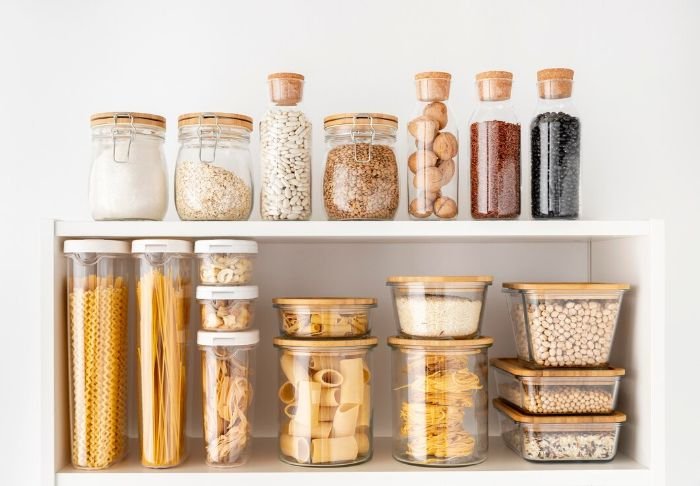
Decanting is optional. A container should be clean, fully dry, suitable for the food and easy to close. Transfer the product name, best-before or use-by information where relevant, allergen details, cooking instructions and batch information needed for a recall. Do not top up an old residue with a new pack; empty, clean and dry the container first.
Keep allergen-controlled food in a defined location with its label and clean handling tools. A shared scoop moved between flour, nuts and another dry ingredient defeats the benefit of separate containers. Household needs differ, so follow the medical advice and food labels that apply to the people using the pantry.
Make the clean pantry easier to maintain
Leave enough space to lift one product without dragging several others forward. Put frequently opened powders on a washable tray that can be removed without emptying the shelf, and keep a separate tray under bottles that may leave an oily ring. These controls shorten the response to a small spill without turning every tidy-up into a full cupboard clean.
Use a simple shopping habit to prevent hidden backstock: look through the relevant zone before adding an item to the list. When groceries arrive, check that chilled or frozen products have not been set in the pantry by mistake, then place new dry goods behind older suitable stock. Flatten empty delivery packaging promptly so it does not become a long-term hiding place for crumbs or pests.
Do not use fragrance to mask a pantry odour. Remove the source, clean the compatible surface and confirm that the area is dry. A smell that returns after ordinary cleaning can point to a concealed spill, damp material, damaged food or pest activity and needs another inspection before more products are stored there.
Pantry cleaning checklist by trigger
A fixed deep clean every week creates unnecessary handling. Use the visible condition and household pattern to set the interval. A busy family pantry, pet-food cupboard or shelf used for flour and grains may need more frequent checks than sealed backstock.
| Trigger | Action | Useful baseline | Escalate when |
|---|---|---|---|
| Fresh spill or leak | Remove affected packs, clean the compatible shelf and dry it | Immediately | Liquid enters board joints or reaches other food |
| Routine use | Return items, wipe handles and check opened packs | Weekly or according to use | Crumbs, odour or clutter return sooner |
| Stock rotation | Check dates, package condition and backstock | Before a larger food shop or monthly | A recall or unknown decanted item appears |
| Empty-shelf clean | Remove dry soil, clean by material and dry fully | Every few months or when visible soil builds | There is damp, mould or shelf damage |
| Pest evidence | Isolate packs, inspect the whole food group and clean cracks | Act as soon as evidence appears | Activity continues or spreads beyond the cupboard |
Keep the checklist on a phone or inside the cupboard door only if it does not block ventilation or damage the finish. Record the few details that prevent waste: products to use soon, opened dates that matter, items to replace and a recall check still awaiting confirmation.
When pantry cleaning belongs in a regular home routine
The pantry is one part of the kitchen route. Crumbs on shelves, handles, skirting and the accessible floor can be included in recurring household work, provided the food has been sorted and specialist pest, mould or repair issues have been separated first.
Samyx Cleaning provides regular domestic cleaning across London. Agree access and priorities in advance, remove or identify valuable and allergen-controlled food, and point out shelf finishes or product restrictions. Food decisions, pest treatment, repairs and specialist decontamination remain separate from an ordinary recurring clean.
Book Regular Domestic Cleaning
Enter your postcode to view our rates and availability in your area.
Frequently asked questions
-
What can I use to clean pantry shelves?
Remove dry crumbs first, then use a product labelled for the shelf material and follow its dilution, rinsing and food-area directions. Laminate, sealed timber, unsealed wood, wire shelves and stone have different moisture limits. Dry every surface fully before restocking.
-
How often should you clean out a pantry?
Wipe fresh spills immediately, check opened packs and handles according to use, rotate stock before a larger shop or about monthly, and clean empty shelves every few months or when soil appears. Pest evidence, leaks, odour or damp require action sooner.
-
Should I throw away food past its best-before date?
Not automatically. A best-before date relates mainly to quality, so check the package, storage instructions and food condition. A use-by date concerns safety and must not be overruled by smell or appearance. Follow separate instructions for special products and recalls.
-
What should I do if I find pantry moths or beetles?
Isolate visibly affected packages in a sealed bag, inspect nearby dry foods, vacuum cracks and shelf holes, clean the compatible surfaces and monitor the cupboard. Avoid unapproved insecticide use around stored food. Continued or widespread activity needs professional pest-control advice.
Important: Follow food labels, recall notices, cleaning-product directions and shelf-manufacturer instructions over general guidance. Test a hidden area where compatibility varies, wear stated protective equipment, ventilate and rinse or dry as directed, and never mix cleaning products – especially bleach with acids or ammonia. Stop if a finish discolours, swells, dulls or becomes sticky. Seek appropriate advice for allergen-sensitive households, infant or medical foods, valuable or unknown finishes, active pests, mould, structural damp or damaged shelving.
Author: Svetlana Georgieva (Clara)
Hi, I’m Svetlana Georgieva, but you can call me Clara. As the co-founder and heart behind Samyx Cleaning, I’m devoted to sharing the art of a clean space. Let’s journey into a cleaner, more joyful life together with tips from London's cleaning experts.

Discover more of our cleaning secrets: