
Fridge Cleaning: A Food-Safe Step-by-Step Guide for Home

Last modified on: 18/08/2026
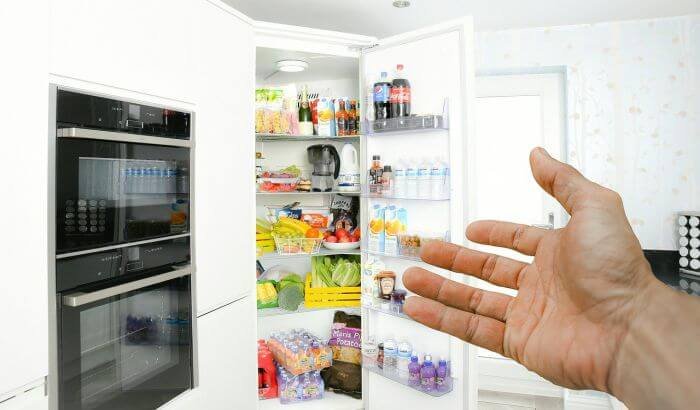
Fridge cleaning starts with keeping chilled food cold, checking the appliance instructions and choosing a method that will not damage shelves, seals or electrical parts. Move food to another working fridge or an insulated cool box for a full clean, then work from removable parts to the cabinet, dry everything and wait for the fridge to return to the correct temperature before restocking it.
Key Takeaways
- Protect chilled food before opening the fridge for a long clean.
- Manufacturer instructions decide power, removable parts and hidden-component access.
- Temperature change can damage a cold glass shelf even when the cleaning product is mild.
- Cleaning removes soil; disinfection is an additional labelled process for a defined need.
- Complete drying and a verified cold temperature belong to the method, not to the tidy-up afterwards.
Table of Contents
Fridge cleaning starts with food and appliance safety
A sticky shelf and a leaking raw-food pack do not call for the same response. Identify the reason for the clean before choosing a product. Routine soil normally needs compatible washing and drying. A raw-food leak adds cross-contamination controls. Widespread mould, an unknown chemical or an electrical sign moves the job outside an ordinary household method.
| What you find | First action | Method boundary |
|---|---|---|
| Crumbs, light residue or a small food spill | Remove loose material and clean the compatible surface | Routine cleaning is normally enough; dry before refitting food |
| Leaking raw meat, fish or poultry | Keep the pack contained, separate nearby food and clean the affected route | Clean first; use a suitable labelled disinfectant only when the contamination decision requires it |
| Broken container or cracked glass shelf | Keep hands and food away from fragments | Do not reuse damaged parts; follow the manufacturer replacement route |
| Small visible mark on an accessible seal | Check the seal-care instructions and clean gently | Stop if the seal splits, lifts or hides growth that cannot be reached safely |
| Extensive or recurring mould | Isolate affected food and assess the appliance condition | Do not turn a broad contamination or moisture fault into a routine wipe-down |
| Burning smell, damaged cable, sparking, repeated leak or loss of cooling | Stop using the appliance as its safety instructions direct | Cleaning cannot repair an electrical, drainage or refrigeration fault |
Read the model instructions before switching the appliance off or moving it. Some cleaning steps require disconnection; other models provide a cleaning mode or give a different sequence. Never apply water around a live component or pull a built-in fridge from its housing without a safe, permitted method.
Prepare cold storage before emptying the fridge
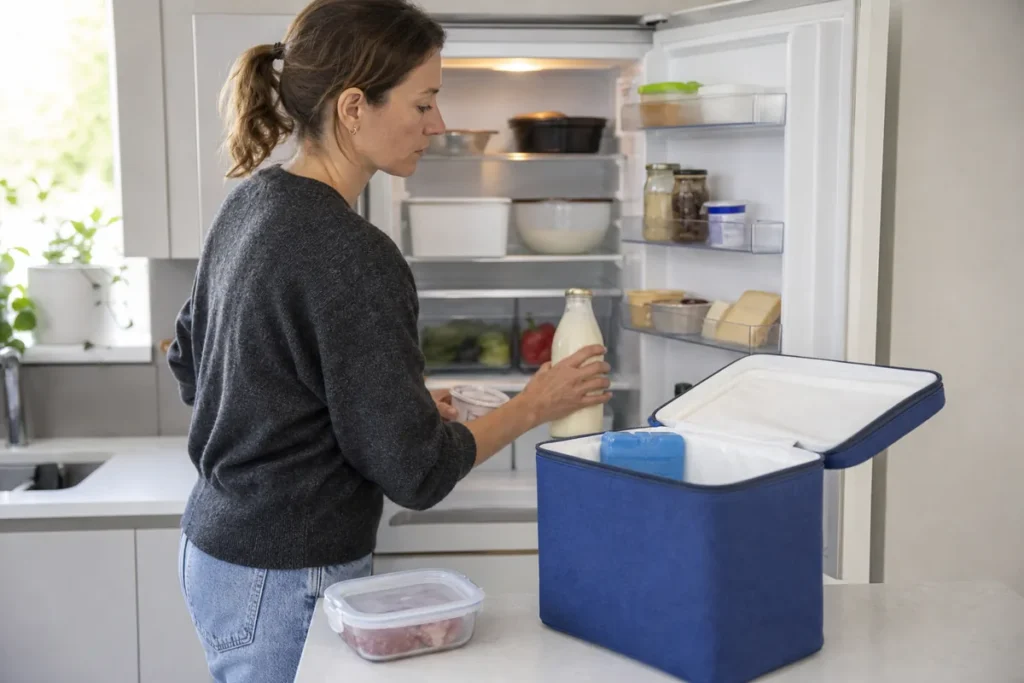
Clear a second working fridge or prepare an insulated cool box with ice packs before moving the first item. The Food Standards Agency recommends that a fridge operates at 5°C or below. Keep chilled food outside that controlled space for the shortest practical time.
Work shelf by shelf. Keep raw meat, fish and poultry sealed in a separate leakproof container, away from ready-to-eat food. Check storage and use-by instructions; smell alone cannot establish safety. Best-before dates concern quality, so they are not an automatic disposal instruction.
Group clean, sealed items by the order in which they will return. Set aside leaking packaging and expired or suspect food so residue cannot spread through the cool box. Wipe the outside of a sound container if it has picked up a spill, without transferring cleaner onto food or inside the packaging.
Remove shelves and drawers without thermal shock
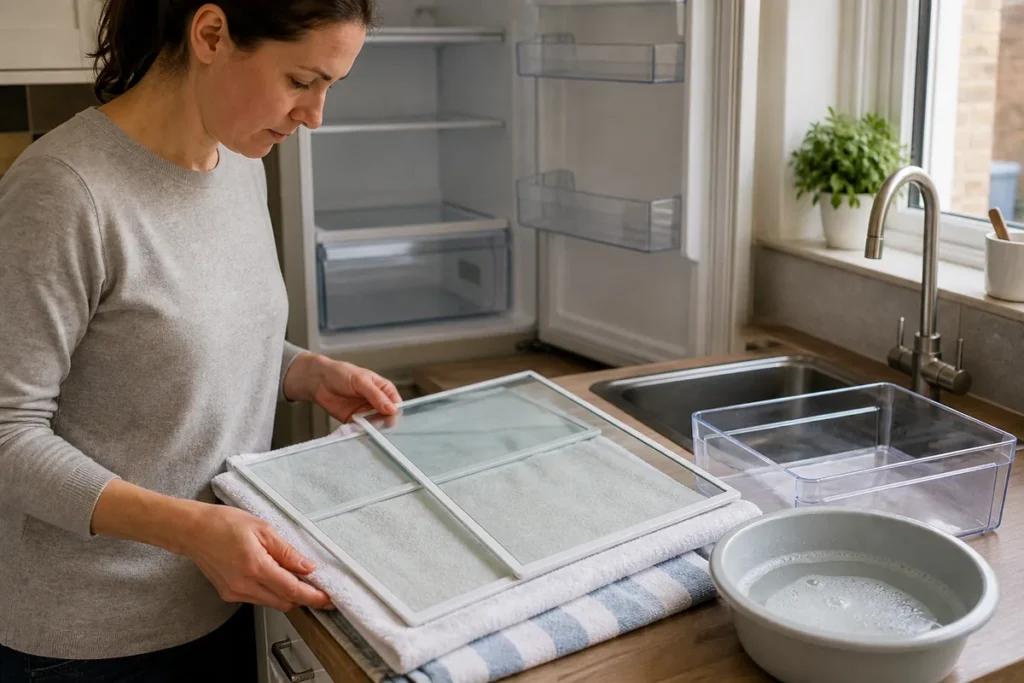
Photograph the shelf positions if their arrangement is easy to forget. Remove only components designed to come out, using the direction and support points shown in the manual. Do not twist a shelf past a door bin, force a frozen drawer or lever a clip with a knife.
Cold glass can fail after a sudden temperature change. Place shelves flat on clean towels and let them approach room temperature naturally. Wash them only when the appliance instructions permit, using lukewarm water and a soft cloth or non-scratch sponge. Hot water, a hot radiator and direct heat are poor shortcuts.
Check plastic drawers and rails for cracks before washing. Support a large drawer with both hands and avoid loading it with water while carrying it. A distorted rail, chipped edge or damaged shelf needs the correct replacement part, not adhesive or a more aggressive cleaning method.
Clean the empty interior from top to bottom
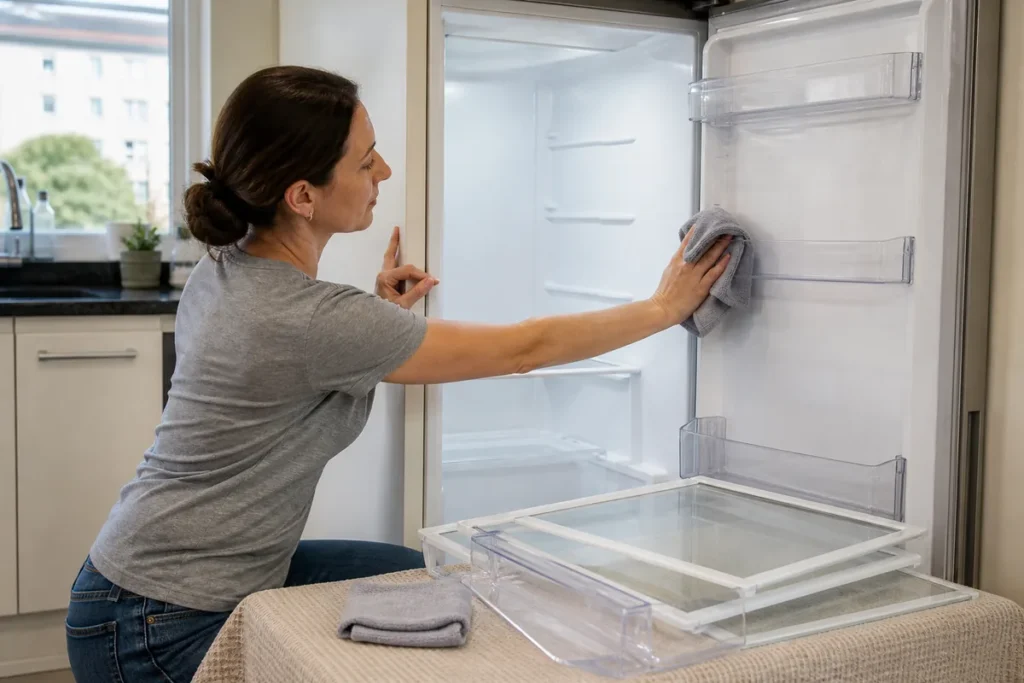
Remove loose crumbs first so they do not turn into wet debris. Apply a compatible solution to a cloth when possible and avoid spraying towards vents, controls or the lamp. A small amount of washing-up liquid in lukewarm water suits some appliances, and a manufacturer may specify its own food-area cleaner. The manual and product label decide.
- Wipe the ceiling and upper side walls, folding the cloth to expose a clean face.
- Clean shelf supports, accessible corners and the back wall without flooding openings.
- Lift softened residue with repeated gentle passes. Avoid metal scrapers and abrasive pads.
- Clean the lower channels and cabinet floor after the dirt above has been removed.
- Wipe again with clean water when the product or food-contact use requires a rinse.
Door seal, channels and accessible drain
Open the folds of the door seal gently and remove crumbs with a soft cloth. Do not stretch the rubber, scrub it with a hard brush or saturate it. A seal that is split, loose or no longer closes evenly affects cooling and needs an appliance-service decision.
Condensation channels and drain openings vary by model. Clean only the accessible area and use a supplied tool only as instructed. Blindly pushing wire, skewers or excess liquid into a drain can move debris deeper or damage a hidden part. Persistent water under the drawers or on the floor calls for the manufacturer or a qualified engineer.
A smell that remains after visible residue has gone may come from a missed channel, seal, drip tray, damaged component or cooling fault. Follow the dedicated fridge odour checks. Fragrance cannot remove the source.
Cleaning and disinfection are different jobs
Cleaning removes food, grease and other soil from a surface. A disinfectant is used after that step when a defined contamination reason justifies it. Disinfectant applied over dirt may not reach the surface evenly, and an unsuitable formula can leave residue or damage plastic, metal or a seal.
For a raw-food leak or another named need, choose a product labelled for the surface and food-area use. Follow its dilution, application, contact time, ventilation and rinse instructions exactly. Do not turn a generic online ratio into a fridge recipe. White vinegar is an acid cleaner, not a substitute for every labelled disinfectant, and mixing vinegar with bicarbonate consumes much of the useful acidity.
Use one product at a time. Never mix bleach with vinegar or another acid, ammonia or a second cleaner. Keep products in their original labelled containers and prevent drips from reaching food, lights, controls and ventilation openings. Wider food hygiene also depends on clean hands, cloth separation and avoiding transfer from raw food to ready-to-eat items.
You may also enjoy:

Dry, reassemble and cool before restocking
Use a clean dry cloth on the cabinet, seal, shelves, drawers and rails. Check corners, the underside of glass and the channels where water collects. Damp parts can create streaks, trap residue and encourage a new odour once the door closes.
Refit every component in its correct position without forcing clips or overloading door bins. Restore power or leave cleaning mode exactly as the manual directs. A display or dial shows a setting, not always the actual food temperature, so use the appliance’s approved check and wait until the fridge is back at 5 C or below before returning chilled food.
Restock ready-to-eat food above raw food. Keep raw meat, fish and poultry covered on the lowest suitable shelf so a leak cannot drip across other items. Leave enough space for cold air to circulate and position short-dated food where it will be seen.
Clean handles, doors and hidden parts carefully
Clean the handle and door face with a method suited to the finish. Work with the grain on brushed stainless steel, remove product residue and do not polish over it. Keep moisture out of control panels, displays, hinges and gaps around the dispenser.
Condenser coils, ventilation grilles, drip trays and the area behind a freestanding fridge can collect dust or residue. Access them only when the manufacturer instructions provide a safe method. Disconnect power where directed, use the specified vacuum attachment or soft brush and avoid bending pipes or moving a heavy appliance alone.
A built-in model may not have owner-accessible coils or a removable tray. Do not dismantle covers to imitate a method written for another fridge. Dust around the permitted grille and leave sealed compartments, fans, wiring and refrigerant components to an engineer.
Use a maintenance rhythm based on what the fridge shows
Wipe a fresh spill as soon as the food has been made safe and the surface can be cleaned correctly. Check food and packaging regularly, clean the handle when visibly marked and wash a drawer or shelf when it becomes soiled. A full empty clean is due when accumulated residue prevents that smaller maintenance from working.
A fixed calendar can support the routine, though it cannot account for a leaking pack, a crowded shelf or a power problem. Watch for sticky channels, damaged packaging, repeated condensation, a door that does not close evenly and temperature readings above the instructed range. The practical effect of fridge neglect is easier to prevent when small faults and spills are handled before they spread.
Stop routine cleaning when the problem needs another route
- Widespread or recurring mould, especially inside inaccessible cavities or porous insulation.
- An unknown chemical, pest contamination, sewage or spoiled food after a long power failure.
- A burning, fishy, solvent-like or electrical odour with no ordinary food source.
- Damaged wiring, sparking, repeated tripping, a hot plug or water near electrical parts.
- A cracked shelf, split seal, persistent leak, failed drain or fridge that will not cool correctly.
Keep people away from an immediate electrical or chemical hazard and follow the appliance or product safety instructions. Contact the manufacturer, a qualified appliance engineer, a food-safety authority or an appropriate contamination specialist for the part of the problem they own.
When Samyx can include a fridge clean
Samyx Cleaning may agree inside-fridge cleaning as an additional quoted task within a wider one-off clean in London. Confirm the appliance, current condition, emptying arrangements, accessible components and product restrictions before the visit.
The household remains responsible for food decisions and for providing safe access to an appliance ready for the agreed work. Extensive mould, pest contamination, unknown substances, dismantling, seal replacement, drainage faults, electrical work and cooling repair need a different specialist route.
Ask About a Fridge Clean
Enter your postcode to view our rates and availability in your area.

Frequently asked questions
-
What is the best thing to use for cleaning inside a fridge?
Use the method and product permitted by the fridge manufacturer. Many interiors can be cleaned with a soft cloth and a small amount of mild washing-up liquid in lukewarm water, followed by a clean-water wipe where needed and complete drying. A named appliance cleaner may be specified for that model.
-
Do I need to unplug the fridge before cleaning it?
Check the appliance manual. The correct decision depends on the model, cleaning step and access to electrical parts. Never apply water around a live component or move a built-in appliance without a safe manufacturer-approved method.
-
How do I disinfect a refrigerator safely?
Remove food and visible soil first. When contamination justifies disinfection, use a product labelled for the surface and food-area use, then follow its dilution, contact time, ventilation and rinsing instructions. Never mix cleaning products.
-
How often should a fridge be cleaned?
Clean fresh spills promptly, check food and packaging regularly and wash individual shelves or drawers when soiled. Plan a full empty clean when residue has accumulated or after a contained contamination event, following the appliance and food-safety instructions.
Important: Product labels and the fridge manufacturer’s instructions take priority over general guidance. Test a permitted method on a small hidden area when finish compatibility varies. Use any gloves, ventilation, rinsing and drying steps named for the product and task. Never mix bleach with vinegar or another acid, ammonia or any second cleaner. Stop if plastic discolours, metal dulls, a coating lifts, glass chips, a seal changes shape or liquid reaches an electrical part. Seek manufacturer or professional advice before treating a valuable, unfamiliar or damaged appliance, extensive mould, unknown contamination, a persistent leak or a cooling or electrical fault.
Author: Svetlana Georgieva (Clara)
Hi, I’m Svetlana Georgieva, but you can call me Clara. As the co-founder and heart behind Samyx Cleaning, I’m devoted to sharing the art of a clean space. Let’s journey into a cleaner, more joyful life together with tips from London's cleaning experts.

Discover more of our cleaning secrets: