
Kitchen Cleaning for Food Safety: A Practical UK Guide

Last modified on: 17/08/2026
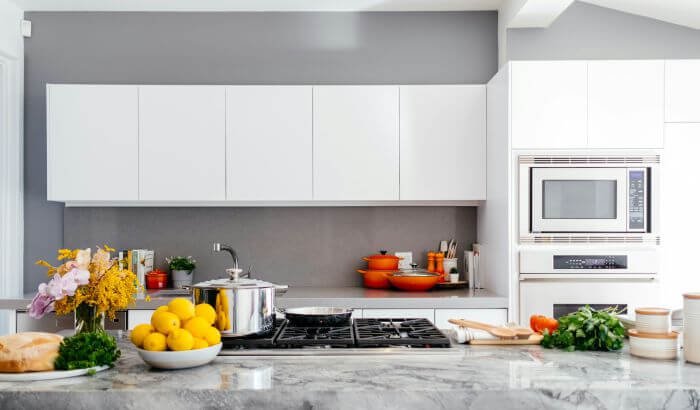
Kitchen cleaning for food safety starts with a simple rule: remove visible dirt, stop raw-food transfer and use any sanitising product exactly as labelled. A kitchen can look tidy while a leaking pack, reused cloth or unwashed hand moves contamination between food, handles and worktops.
This guide turns the UK Four Cs into a practical home routine. It explains when ordinary cleaning is enough, when a disinfectant or sanitiser may be needed, and which jobs belong to food handling rather than the cleaner.
Key takeaways
- A tidy surface is not automatically a food-safe surface; the preparation route matters.
- Cleaning removes soil, while disinfection or sanitising requires a compatible labelled product and enough contact time.
- Raw-food separation prevents more risk than repeatedly spraying every surface without a plan.
- Cloths, hands, taps, handles and packaging can reconnect areas that were separated on the worktop.
- Domestic cleaning supports a safer routine but cannot replace cooking, chilling, allergy controls or food-business duties.
Table of Contents
Kitchen cleaning for food safety: use the Four Cs
The Food Standards Agency groups food hygiene around cleaning, cooking, chilling and cross-contamination. Only the first and fourth are mainly cleaning decisions, but all four must work together. A spotless worktop cannot make undercooked food safe, and correct cooking cannot undo contamination placed on a ready-to-eat salad afterwards.
| The Four Cs | Domestic action | Boundary |
|---|---|---|
| Cleaning | Wash hands, tools, worktops and contact points at the right trigger. | Use products according to their labels and the surface instructions. |
| Cooking | Cook food thoroughly and check the recipe, packaging or trusted guidance. | This article does not replace cooking-temperature advice. |
| Chilling | Return chilled food promptly and keep the fridge working correctly. | Follow current storage instructions and use-by dates. |
| Cross-contamination | Separate raw and ready-to-eat routes, including hands, utensils and packaging. | Allergen separation and business controls need their own plan. |
Start by identifying the next food task, not by spraying the whole room. Clear enough space, remove unrelated items and decide where raw packaging, waste, clean utensils and ready-to-eat ingredients will go. This turns the Four Cs into a sequence rather than a slogan.
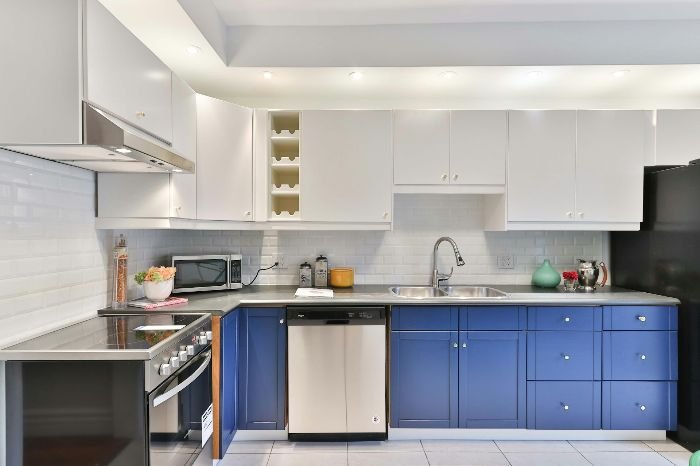
Reset a food-contact surface in five steps
Use this reset after raw-food contact, a leaking pack, a spill, visible soil or another event that changes the surface from ready to questionable. It is more reliable than adding another spray to an already greasy worktop.
The food-safe surface reset
1. RemoveMove food away and discard loose debris or contaminated disposable material.
2. WashUse a compatible detergent to lift food, grease and visible soil.
3. RinseRemove detergent residue when the product or surface instructions require it.
4. TreatApply a suitable disinfectant or sanitiser for the full labelled contact time when needed.
5. FinishComplete any final rinse, let the surface dry and store the cloth away from clean tools.
If the surface is cracked, chipped, swollen or no longer cleanable, product strength is not the solution. Stop using the damaged area for food preparation and repair or replace it as appropriate.
Plan Regular Kitchen Cleaning
Enter your postcode to view our rates and availability in your area.

Cleaning, disinfecting and sanitising are different jobs
Detergent helps remove food, grease and dirt. That physical cleaning must happen before a disinfectant can work reliably on a visibly clean surface. A sanitiser may combine cleaning and antimicrobial directions, or it may require a two-stage process in which the surface is cleaned before the product is applied again for a stated time.
Read the label rather than deciding by smell or ingredient reputation. Check the intended job, compatible surface, dilution, application method, contact time, ventilation and whether a food-contact rinse is required. Broader chemical safety also depends on correct storage, ventilation and protective equipment.
When ordinary cleaning is usually enough
Routine dust, crumbs, light grease and food that has not introduced a higher-risk contamination route normally call for suitable cleaning. Disinfecting every cabinet front after every meal adds product exposure without fixing poor handwashing, a dirty cloth or raw-food transfer.
When an antimicrobial step may be appropriate
Consider a labelled disinfectant or sanitiser after raw-food contact, a leaking package or another contamination event when the surface can tolerate the product. Follow current FSA cleaning guidance and the finished product label. Illness outbreaks, sewage, pests, extensive mould and significant allergy contamination need advice suited to that incident.
Vinegar is not a universal kitchen sanitiser, and a homemade mixture has no reliable contact-time claim simply because its ingredients sound familiar. Never mix cleaning products or add household ingredients to a supplied cleaner.
Separate raw and ready-to-eat preparation
Choose two preparation routes before opening raw packaging. Keep salad, bread, cooked food and serving utensils away from the raw zone. Place the unopened raw pack on a tray or inside a leakproof container, then use a dedicated board and utensils once it is opened.
- Take ready-to-eat ingredients and their clean utensils out first.
- Move the raw pack directly to its tray and board without placing it on the ready-to-eat surface.
- Do not wash raw meat, fish or poultry; splashing can spread contamination around the sink.
- After raw handling, wash hands and clean the tap, handle or container touched on the way.
- Reset the raw zone and utensils before they return to ordinary use.
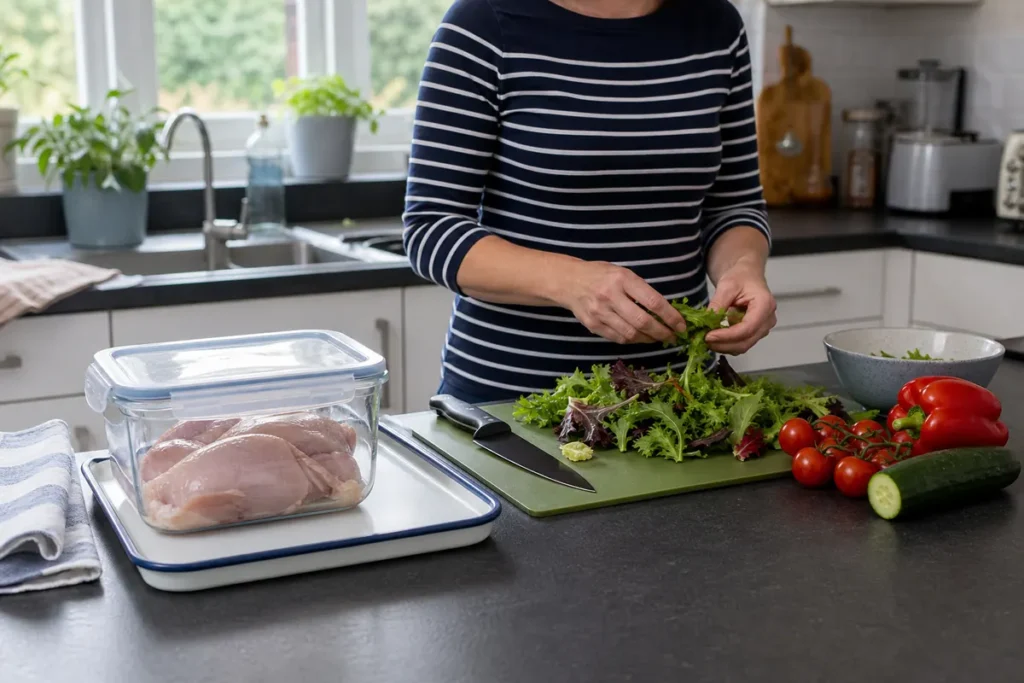
Store raw meat, fish and poultry below ready-to-eat food where leaks cannot drip onto other items. If a pack leaks, move unaffected food away, contain the source and clean each contacted shelf, drawer, handle and reusable container. Neglected spills and residue can undermine fridge hygiene beyond the visible shelf, so do not leave them to build.
Control the transfer points around the room
Hands, taps and handles
Wash hands before food preparation and after raw food, waste, pets, cleaning cloths or another dirty task. Think about what was touched between the raw pack and the sink: the fridge handle, tap lever, soap pump, bin lid and cupboard pull may all belong to the same contamination route. Effective hand hygiene therefore includes the contact points touched between dirty and clean tasks.
Cloths, sponges and tea towels
A single damp cloth can reconnect the hob, sink, bin and food-preparation area. Assign cloths by task, change or wash them regularly and let them dry fully between uses. Do not use a tea towel that dried hands or dishes to wipe raw-food liquid from a worktop.
Discard a disposable cloth after a high-risk spill when reuse would spread contamination. For reusable cloths, follow their wash instructions and keep the clean supply dry and separate from used items.
Boards, knives and serving tools
Use separate boards and utensils for raw and ready-to-eat foods where practical. Deep grooves, splits and loose handles can make proper cleaning difficult, so replace items that can no longer be cleaned reliably. A dishwasher may help with compatible utensils, but regular dishwasher cleaning is still needed to control residue around filters, spray arms and seals.
The sink and drain area
The sink is a wash zone, not clean storage. Remove food debris promptly, clean the bowl and tap after raw-food contact, and keep washed salad or clean utensils out of contact with a soiled basin. A bad drain smell, slow flow or recurring backup is a plumbing or waste problem, not a reason to pour incompatible chemicals together.
Use a clean-to-dirty order for the whole room
Plan the room clean so that a floor cloth, bin lid or greasy filter never returns to a food-contact surface. Put food away first, bring only the tools needed for the current zone and keep the clean cloth supply separate from the used pile.
- Clear and contain: put food away, isolate leaking packaging and empty obvious waste without placing the bin on a worktop.
- Start high and clean: deal with suitable shelves, cupboard fronts and low-soil touchpoints before greasy or contaminated zones.
- Reset preparation areas: clean worktops, boards, taps and sink surfaces with the product and sequence appropriate to each one.
- Move to appliances and waste: handle cooled, isolated appliances as instructed, then clean the bin and its surrounding floor area.
- Finish at floor level: vacuum or sweep loose debris before mopping, keep people out of the wet route and let the floor dry.
Change the cloth, water or tool when it crosses from a dirtier zone to a cleaner one. A bucket that has collected floor soil should not be used on cupboard fronts, and a cloth used around a bin should not return to a handle or worktop.
Respond to the incident, not only the visible mark
| Incident | What the route includes |
|---|---|
| Leaking raw-food pack | The shelf or worktop, container, hands, fridge handle and any surface touched while moving it. |
| Overflowing bin | The lid, rim, surrounding cabinet, floor and hands used to replace the liner. |
| Dropped utensil | The utensil and the surface it contacted; use a clean replacement rather than wiping it quickly on a towel. |
| Broken glass near food | Discard food that may contain fragments, secure the area and inspect beyond the obvious pieces. |
| Power cut or warm fridge | Food safety depends on time and temperature, not on cleaning alone; use current incident guidance. |
Clean appliances without creating a new hazard
Unplug a small appliance when the manufacturer instructs it and keep water away from plugs, controls, motors and ventilation openings. Let hot appliances cool before cleaning. Use the care manual for removable parts, coatings, seals and self-cleaning cycles rather than copying one method across every appliance.
Crumbs in a toaster, grease around an extractor, spills inside a microwave and residue around fridge seals each need a different safe-access method. Stop if cleaning requires dismantling, electrical access or movement of a heavy connected appliance. Repair faults and damaged seals instead of trying to clean around them indefinitely.
You may also enjoy:

Store clean tools so they stay clean
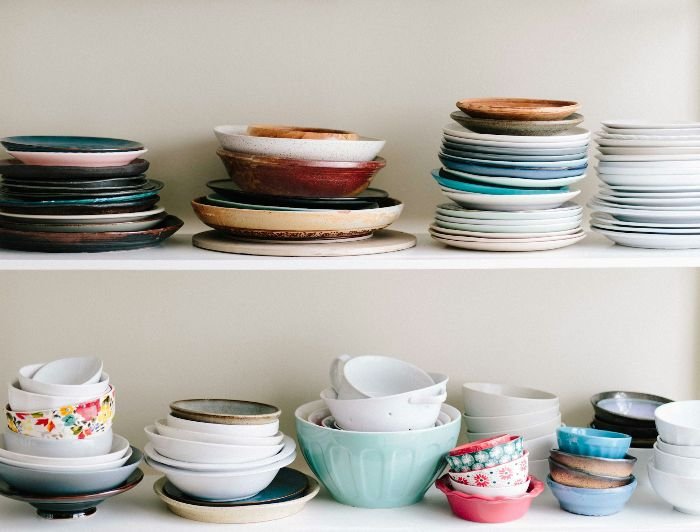
Let boards, dishes and cleaning tools dry before stacking or closing them inside a cupboard. Store food-contact utensils away from floor tools, used cloths and open cleaning products. Keep cleaners closed, upright and away from food, and retain their original labels.
Do not pour a cleaner into an unlabelled drinks bottle or combine leftovers to save space. If a label is missing or a mixture is unknown, do not use it on a food-contact surface. Follow the council or product guidance for disposal rather than tipping an uncertain chemical into the sink.
Use triggers instead of one universal schedule
| Trigger | Action |
|---|---|
| Before food preparation | Clear the work zone, wash hands and confirm that boards and utensils are clean and dry. |
| After raw-food contact | Wash hands, contain waste and reset every contacted surface and tool. |
| After a spill or leak | Remove food from the route, contain the source and clean beyond the visible mark. |
| At the end of cooking | Deal with leftovers safely, wash tools, wipe transfer points and replace soiled cloths. |
| When grease or residue builds | Schedule the appropriate appliance, cupboard, wall or floor task before soil becomes difficult to remove. |
| When a surface is damaged | Stop using it for food preparation until it can be repaired or replaced. |
A trigger-based plan responds to the real contamination event. It also avoids the opposite mistakes of disinfecting everything repeatedly and leaving a risky spill until the weekly clean.
Review the plan when the household changes. A new pet, shared kitchen, baby feeding equipment, reduced mobility or different appliance can create new transfer points and access limits. The safer adjustment is usually a clearer route and better tool separation, not a stronger product used more often.
Where regular domestic cleaning fits
Regular professional cleaning can support the routine condition of agreed worktops, cupboard fronts, appliance exteriors, floors and bins. It cannot control what happens between visits, guarantee food safety, wash a resident’s hands, decide whether food is safe to eat or replace appliance repairs.
Samyx Cleaning provides domestic cleaning across London. Choose the hours in the booking form and list the kitchen priorities that matter most. Ask the office before booking if the work involves internal appliances, specialist equipment, heavy grease, pests, mould, sewage or a commercial kitchen.
Book Regular Domestic Cleaning
Enter your postcode to view our rates and availability in your area.
Frequently asked questions
-
Does every kitchen surface need disinfecting every day?
No. Routine dirt and grease usually need suitable cleaning, while a labelled disinfectant or sanitiser is reserved for compatible surfaces and relevant contamination events. Handwashing, raw-food separation and clean cloths often matter more than spraying every surface.
-
Can vinegar sanitise a kitchen worktop?
Do not treat vinegar as a universal kitchen sanitiser. It has no general food-safety contact-time claim and can damage some materials. Use a suitable labelled product when an antimicrobial step is needed, and follow the surface-care instructions.
-
Should raw chicken be washed in the sink?
No. Washing raw chicken can spread contaminated droplets around the sink, tap, worktop and nearby utensils. Move it from its packaging to the cooking process without washing it, then clean the handling route and wash your hands.
-
Can a domestic clean replace commercial kitchen hygiene controls?
No. A domestic cleaning visit cannot replace a food business’s risk assessment, food-safety management system, staff training, monitoring, allergen controls or legal duties. Commercial premises should use guidance and services appropriate to their operation.
Important: Follow the food label, cleaning-product label and surface or appliance instructions over general guidance. Never mix cleaning products, wash raw meat, use a damaged food-contact surface or apply an unlabelled mixture. Stop if a product causes breathing discomfort, skin or eye irritation, discolouration, dulling, coating change or other material damage. Seek incident-specific advice for suspected food poisoning, serious contamination, pests, sewage, extensive mould, significant allergen exposure or commercial food-safety duties.
Author: Svetlana Georgieva (Clara)
Hi, I’m Svetlana Georgieva, but you can call me Clara. As the co-founder and heart behind Samyx Cleaning, I’m devoted to sharing the art of a clean space. Let’s journey into a cleaner, more joyful life together with tips from London's cleaning experts.

Discover more of our cleaning secrets: