
The Easy Way to Clean the Kitchen Cupboards

Last modified on: 03/09/2026
Publish: 25th Dec 2021
Views:
Category: DIY
Tags:
Cleaning tips, Cupboard cleaning, Eco-friendly cleaning, Kitchen cleaning

How to clean kitchen cupboards safely depends on the finish, the type of soil and how little moisture the material can tolerate.
How to clean kitchen cupboards without damaging the finish
- Identify whether the front is laminate, painted MDF, lacquer, veneer, sealed wood, oiled or waxed wood, or glass before choosing a cleaner.
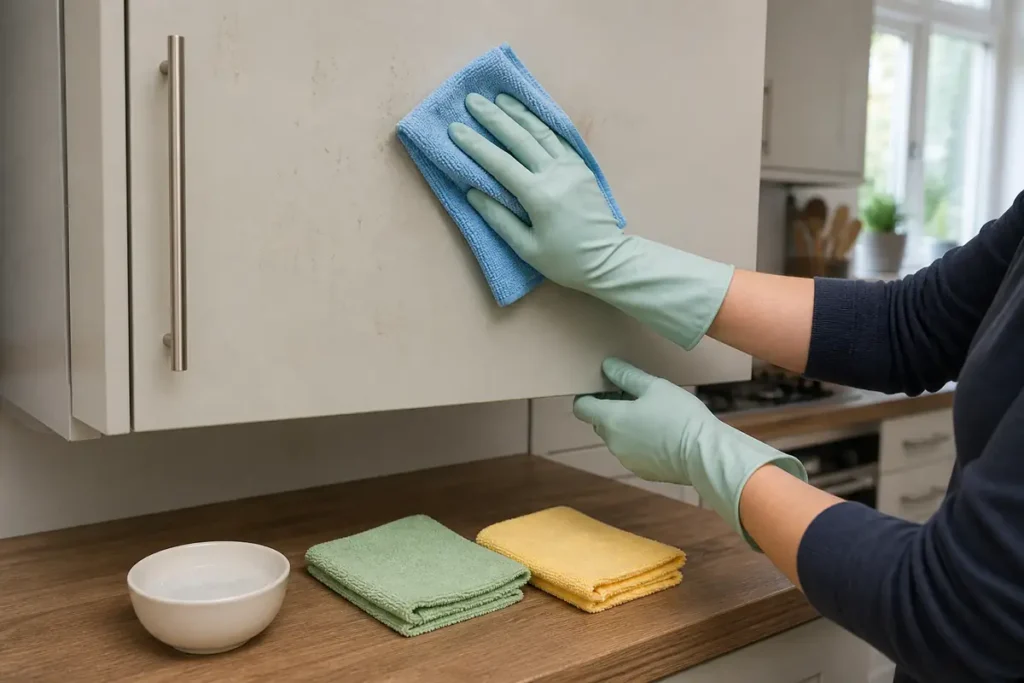
- Remove dry dust and crumbs first, then put a small amount of mild washing-up-liquid solution on a well-wrung microfibre cloth rather than spraying the cupboard.
- Work in small sections. Use repeated gentle passes for grease and keep moisture away from joins, exposed MDF edges, hinges and damaged coating.
- Wipe away cleaner residue with a second clean damp cloth, then dry the surface immediately with a third cloth.
- Stop if the finish softens, dulls, changes colour, becomes sticky or begins to lift. Follow the kitchen manufacturer’s care instructions where they differ.
Cleaning the kitchen cupboards is not a fun way to spend your afternoon. However, it’s a necessary evil so we might as well make it easier and more enjoyable.
Key takeaways
- Start with the cupboard finish, not with a favourite household cleaner.
- A mild detergent, three separate cloths and immediate drying cover most routine washable fronts.
- Grease usually responds better to repeated gentle passes than to a stronger abrasive or acidic mixture.
- Do not spray cleaner directly onto wood, MDF edges, seams, hinges or damaged coating.
- Stop when the colour, sheen or texture changes and seek finish-specific advice before continuing.
Table of Contents
Choose the method by cupboard finish
The same mark can need a different response on laminate, painted MDF and natural wood. If you cannot identify the finish, check the kitchen manufacturer’s information or test only the mildest method in a hidden area.
| Finish | Reasonable first method | Main limit |
|---|---|---|
| Laminate or melamine | Well-wrung cloth with warm water and a little washing-up liquid | Dry seams and edges; avoid abrasive pads |
| Painted MDF or lacquer | Soft damp cloth and a finish-compatible mild cleaner | Keep liquid out of chips and exposed MDF edges |
| Sealed wood | Manufacturer-approved wood cleaner or a very mild solution | Use minimal moisture and dry immediately |
| Oiled, waxed, bare or damaged wood | Use the care product specified for that finish | Do not improvise with acids, abrasives or wet cleaning |
| Glass insert in another frame | Apply compatible glass cleaner to the cloth | Keep it off the surrounding frame and hardware |
How often should you clean your kitchen cupboards?
If you’re like me, the answer is probably something along the lines of once in a blue moon. Seriously, I hate cleaning the kitchen cupboards. Give me bathroom cleaning, cleaning the ceramic hob, or the kitchen sink. Just keep cupboards away from me. Cleaning them always takes more time than you intend.
That being said, ever since I increased the cleaning frequency and decreased the intensity, things have been better (who knew, right?).
What do I mean by that? Instead of investing the time to deep clean the cupboards every once in a while, I clean them lightly every week.
I know this sounds horrible, but trust me – it’s a great way to cut down on your cleaning. You simply spray some soapy water or multipurpose cleaner on a microfiber cloth wipe down your cupboards every weekend. It’s literally that simple.
This way, you can afford to deep clean them seasonally (especially during spring cleaning). Once I started employing this tactic, the task of cabinet cleaning has become a lot more manageable. Don’t get me wrong – it’s still annoying, but it’s a lot more manageable.
How to clean kitchen cupboards with the three-cloth method
This sequence separates cleaning, residue removal and drying. It reduces streaks and limits the time water stays on the cupboard, but it does not make an unsuitable cleaner safe for a delicate finish.
- Prepare three cloths. Use one for the cleaning solution, one for clean rinse water and one that remains dry.
- Remove loose soil. Dust from the top down and clear crumbs from handles, grooves and the tops of doors before adding moisture.
- Clean a small section. Wring the first cloth thoroughly. Put the solution on the cloth, not directly on the cupboard, and wipe without flooding the surface.
- Lift grease gradually. If the care instructions allow it, leave the mild solution on a greasy patch briefly, then repeat gentle passes. Do not increase pressure until you have ruled out damage to the finish.
- Remove residue. Wipe the section with the second well-wrung cloth using clean water. Avoid pushing liquid into joints and hinge holes.
- Dry immediately. Use the third cloth on the front, underside, handles and surrounding edges before moving to the next section.
How to remove stains from kitchen cupboards
Sometimes, soapy water or a multipurpose cleaner won’t be enough to save the day (especially if you haven’t cleaned in a while). Since we’re talking about the kitchen, there’s plenty that can go wrong. From splatter made during last Thursday’s chili con carne to pizza grease from last night’s takeout, there’s always something.
In those cases, you’ll need to use something stronger than soapy water. But this isn’t a “one size fits all” situation, so let’s dive deeper and see what we can do.
Editorial safety update: identify the finish before using any stronger method below. Bicarbonate of soda can abrade or dull some paint, lacquer, gloss and delicate coatings; vinegar can affect wood finishes, paint, natural stone and some metal coatings. Wet MDF edges may swell. Follow the cupboard manufacturer’s instructions and patch-test in a hidden place.
- Grease and fingerprints – whether you’ve touched your kitchen cupboards with an oily hand or there’s greasy splatter from cooking, grease is annoying to deal with. Some people recommend using a 1:1 vinegar and water solution but this is total nonsense. White vinegar is not a magic solution. Instead, make some paste from baking soda and water (don’t add vinegar) and lightly clean the oily stains with it.
Current compatibility note: on painted, lacquered, veneered, waxed, oiled or damaged fronts, do not use a bicarbonate paste unless the care instructions specifically allow it. Start by repeating the mild washing-up-liquid method with short controlled contact time.
Note: If you this your first time trying this and you’re not sure how your cupboard will handle it, simply test the solution on a small patch out of sight. This way, even if there is a problem, you won’t ruin your cupboards.
- Food splatter – small pockets of air sometimes form during cooking and food splatters everywhere when they burst. Obviously, take care of yourself if the splatter has burnt you. If you’re unharmed but your kitchen cupboards look like a modern art canvas, you need to act quickly before the stains get a chance to set in. Wipe off the stains with a paper towel (preferably recyclable) and then clean them with a paste of baking soda and water. If this is your first time trying baking soda on your cupboards, refer to the note above.
- Hard water stains – sometimes, it’s not food but water that leaves its mark on your cabinets. Luckily, you probably have the perfect tool to clean them up in your kitchen already. Now you can whip up a 1:1 solution of white vinegar and water use it to clean the hard water stains. White vinegar is perfect for cleaning mineral deposits. Again, if this is your first time trying this, refer to the note above.
Current compatibility note: do not let vinegar or a bicarbonate paste touch surrounding wood, painted frames, stone worktops, plated hardware or damaged coating unless the relevant care instructions confirm compatibility. Blot fresh food splashes first, then use the least aggressive finish-safe method.
Note: Many people don’t like the smell of white vinegar. The good news is, you can easily make your own scented white vinegar for cleaning at home.
You may also enjoy:

How to clean painted cupboards

Painted cabinets are a great way to spruce up your kitchen without having to completely remodel it. Unfortunately, they can also be a nightmare to clean.
Since it’s easy to damage the paint, you should put extra care in cleaning painted kitchen cupboards. Usually, soapy water will get the job done. If you need something stronger, try baking soda and water.
Current compatibility note: some painted and lacquered finishes can be dulled by bicarbonate. Use it only when the manufacturer permits it and a hidden patch test shows no change in colour, sheen or texture.
Alternatively, you can use an all-purpose cleaner, or better yet – a cleaner specifically for painted surfaces. I’d advise against using white vinegar since it can damage the paint.
How to clean wooden cupboards
Wooden cupboards give your kitchen a more classical feel. You can’t go wrong with wood in the aesthetics department, but it’s not always easy to maintain.
For one, it’s not a good idea to use white vinegar on a wooden cupboard. It strips down the polish, giving the wood a dull, tortured look no one likes.
Also, you should mind the dampness. Never use a wet cloth to clean wood. Slightly damp – yes. Wet – no. Wood is excellent at absorbing moisture. Once it’s had its fill of moisture, it will expand and deform.
Baking soda and water also won’t work here. It’s best to use a non-abrasive solution, so either soapy water (again, slightly damp cloth) or a wood cleaner.
How to clean glass cupboards

This is where we enter a gray area. While white vinegar is a great homemade glass cleaner (solution of 2 parts vinegar and 1 part water), you should be extra careful with how you apply it. While it won’t damage the glass, it may damage adjacent surfaces or materials.
The same goes for commercial glass cleaners. The best way to avoid problems is to use a microfibre cloth and spray the cleaning product on the cloth instead of the glass. Then wipe the glass parts of the cupboards and remove any smudges without touching other materials.
How Samyx Cleaning can help with cupboard buildup
If sticky grease covers several doors, has reached the tops and undersides of units, or sits alongside wider kitchen buildup, cleaning one mark at a time may no longer be practical. A one-off deep clean can address the wider kitchen workload. Ask the Samyx office to confirm whether cupboard fronts or interiors are included in the agreed scope before booking.
Book a One-Off Deep Clean
Enter your postcode to view our rates and availability in your area.

Frequently asked questions
What is the best thing to clean kitchen cabinets with?
For most compatible washable cupboard fronts, begin with a soft microfibre cloth, warm water and a small amount of washing-up liquid. The cloth should be well wrung out. Remove residue with a second clean damp cloth and dry immediately with a third. Manufacturer care instructions take priority.
What is the best cleaner for kitchen cupboard doors?
The best cleaner depends on the finish. Mild detergent may suit laminate and some painted fronts, while sealed, oiled or waxed wood may need a product specified for that finish. Avoid treating vinegar, bicarbonate of soda or a multipurpose spray as universally safe.
How do you remove sticky greasy gunk from kitchen cabinets?
Identify the finish, soften the grease with a compatible mild detergent on a well-wrung cloth, allow only the contact time permitted by the label and repeat gentle passes. Do not flood joints or increase abrasion. Stop if the finish dulls, softens, changes colour or becomes sticky.
How do I make my kitchen cabinets look new again?
Cleaning can remove dirt, grease and residue, but it cannot replace missing paint, repair swollen MDF, reverse deep scratches or restore a failed coating. If careful cleaning and drying do not improve the appearance, the cupboard may need finish-specific repair or refinishing rather than a stronger cleaner.
Safety note: this guide covers ordinary household soil on cupboards whose material and finish are known. Follow manufacturer care instructions and commercial product labels, ventilate as directed, wear the stated protective equipment and keep products away from children, pets and food. Never mix cleaning products. Do not soak wood or MDF, force liquid into electrical fittings or hinges, or continue when a coating changes colour, gloss, texture or adhesion. Valuable, unknown, damaged or structurally swollen cupboards need finish-specific professional advice.
Conclusion
While cleaning your cupboards is not an enjoyable experience, it’s a necessary evil. However, you can lighten the load by cleaning more frequently (prevention, as they say, is the best cure).
When it comes to stains or deep cleaning, it’s a good idea to know what you’re up against. Using the proper cleaner against a certain stain on a certain surface will save you a world of hurt. I hope this article helps.
For more useful articles, subscribe to our blog or follow us on social media. Don’t feel like going through all the hassle of cleaning your kitchen cupboards? Give us a call and we’ll do it for you.

Author: Atanas Dzhingarov
Hi, I’m Atanas - brand consultant and writer. I’m helping Samyx Cleaning create the best cleaning company blog on the Internet. Join us on our journey and learn how to live a cleaner, healthier, happier life in the process.
Discover more of our cleaning secrets: