
What Is a Microfibre Cloth? Uses, Selection and Care

Last modified on: 26/08/2026
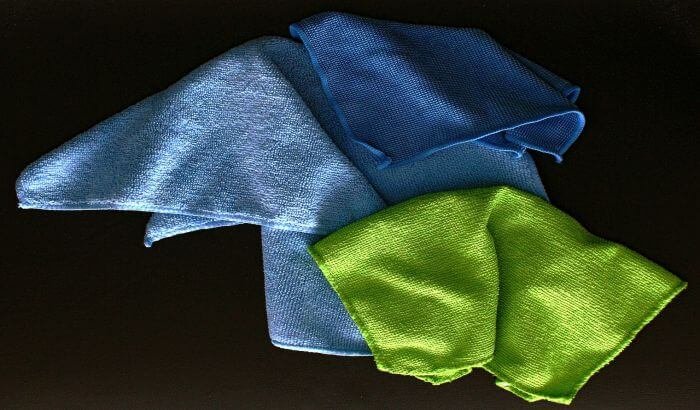
What is a microfibre cloth? It is a reusable cleaning textile made from very fine fibres, most commonly polyester and polyamide, with a structure designed to collect loose dust, moisture and soil from a surface.
The name alone does not tell you how a cloth will behave. Fibre blend, whether the fibres are split, weave, pile, edge finish and manufacturing quality all matter. A smooth glass cloth, a short-pile general cloth and a plush polishing cloth may all be sold as microfibre, yet they should not be treated as interchangeable.
This guide explains how the material works, how to match it to a task, when to use it dry or damp, and how to wash it without shortening its useful life.
Choose the cloth by surface, soil and finish
- Read the composition and care label; colour and softness alone do not prove cloth quality.
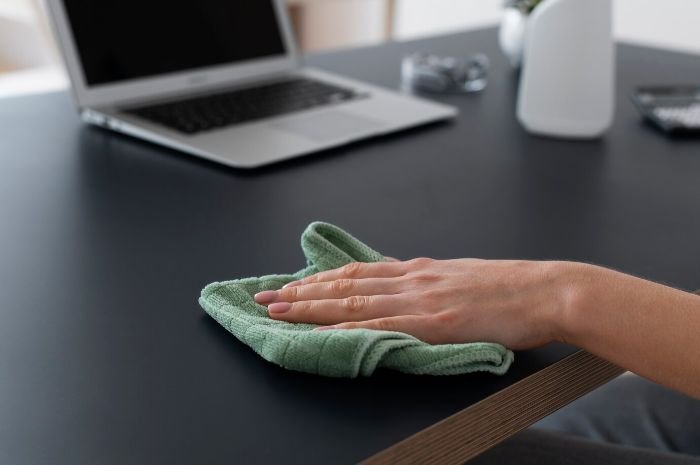
- Use a clean dry cloth for loose dust and a clean, slightly damp cloth for suitable marks and residue.
- Match the pile and weave to the task instead of using one cloth on every surface.
- Fold the cloth into quarters, rotate to a clean face and change it before grit or soil is transferred.
- Wash it as labelled, away from lint-producing laundry, and avoid conditioner or high heat unless the manufacturer permits them.
Key Takeaways
- Check fibre, weave and pile before assigning a cloth to a surface.
- Remove abrasive grit before wiping and test delicate finishes in a hidden area.
- Use dry, damp or product-assisted cleaning according to the soil and surface instructions.
- Rotate clean faces and separate work zones to control soil transfer.
- Launder and retire cloths by condition, not by an arbitrary number of uses.
Table of Contents
What is a microfibre cloth made from?
Microfibre describes fibre fineness, not one single fabric recipe. Household cleaning cloths are commonly made from polyester, sometimes blended with polyamide, also called nylon. The yarn can then be knitted or woven into different surface structures. Some cleaning cloths use split fibres, which create many fine edges and channels; others use different constructions for polishing, drying or general wiping.
That structure gives the cloth a large working surface compared with a coarse conventional fibre. Dry fibres can attract and hold loose particles through contact and electrostatic effects. When the cloth is damp, small spaces in and between the fibres help draw in water and loosened soil. Mechanical wiping still does much of the work, so pressure, folding and using a clean face remain important.
Microfibre is not a cleaner or disinfectant by itself. A cloth may remove visible soil, but a task that requires disinfection still needs an appropriate labelled product, correct dilution and the stated contact time. Do not assume that water alone meets every hygiene requirement.
How can you identify a microfibre cloth?
Start with the packaging or sewn-in label. Look for the fibre composition, intended use and washing limits. A label that only says “cleaning cloth” gives less useful information than one that identifies the material and care instructions. If the cloth is unlabelled, its texture can suggest a type, but it cannot confirm the blend or whether the fibres were split.
A cloth that catches slightly on dry skin may have fine exposed fibres, and an absorbency check can reveal whether it takes up water or pushes it around. Neither is a definitive quality test. Skin condition, finishes applied during manufacture and the cloth’s first wash can change the result. Judge an unfamiliar cloth on a low-risk test area before using it on a valuable surface.
Microfibre cloth versus a regular cotton cloth
“Regular cloth” is not one standard material, so a fair comparison starts with the actual construction. A looped cotton terry cloth, a flat cotton tea towel and a disposable nonwoven wipe behave differently. Microfibre often offers more fine contact points and tends to hold loose particles within its pile. Cotton readily absorbs water and may suit heat-tolerant or heavy-rinse tasks when the surface and cleaning method allow it.
| Decision | Microfibre may suit | Cotton may suit |
|---|---|---|
| Loose dust and fine finishing | When a clean fine-fibre cloth can capture particles with limited lint | When the finish is not lint-sensitive and the cloth can be changed frequently |
| General damp wiping | When the weave is compatible and controlled moisture is useful | When higher water capacity or frequent rinsing suits the task |
| High-temperature laundering | Only within the synthetic cloth’s stated care limits | Some cotton cloths allow hotter washing, but the label still decides |
| Delicate surface | Only with a clean approved cloth and no trapped grit | Only if the surface maker approves that cloth and method |
Neither material wins every job. Choose by the soil, required finish, contamination level, laundry process and surface guidance. A cloth that works well on a sealed kitchen worktop may still be wrong for a camera lens, unfinished timber or a high-gloss coating.
Match weave and pile to the cleaning task
The most useful buying decision is not “microfibre or not”. It is whether the cloth’s surface is suited to the finish and soil in front of you. Product names vary, so treat this matrix as a selection guide and confirm the manufacturer’s intended use.
| Cloth structure | Useful tasks | Main caution |
|---|---|---|
| Smooth, tight weave | Glass, mirrors and compatible polished surfaces where low lint and a controlled finish matter | Any trapped grit can mark a glossy surface; use a clean cloth and light pressure |
| Short, even pile | General wiping on sealed worktops, cupboard fronts and other compatible hard surfaces | Do not carry grease or bathroom soil into another zone |
| Plush, high pile | Loose dust, drying and gentle final buffing where the surface maker allows it | Long fibres can catch on rough edges and may leave moisture on a finish if overloaded |
| Waffle or textured weave | Absorbing moisture and wiping suitable kitchen or bathroom surfaces | Texture is not automatically safe for delicate coatings or screens |
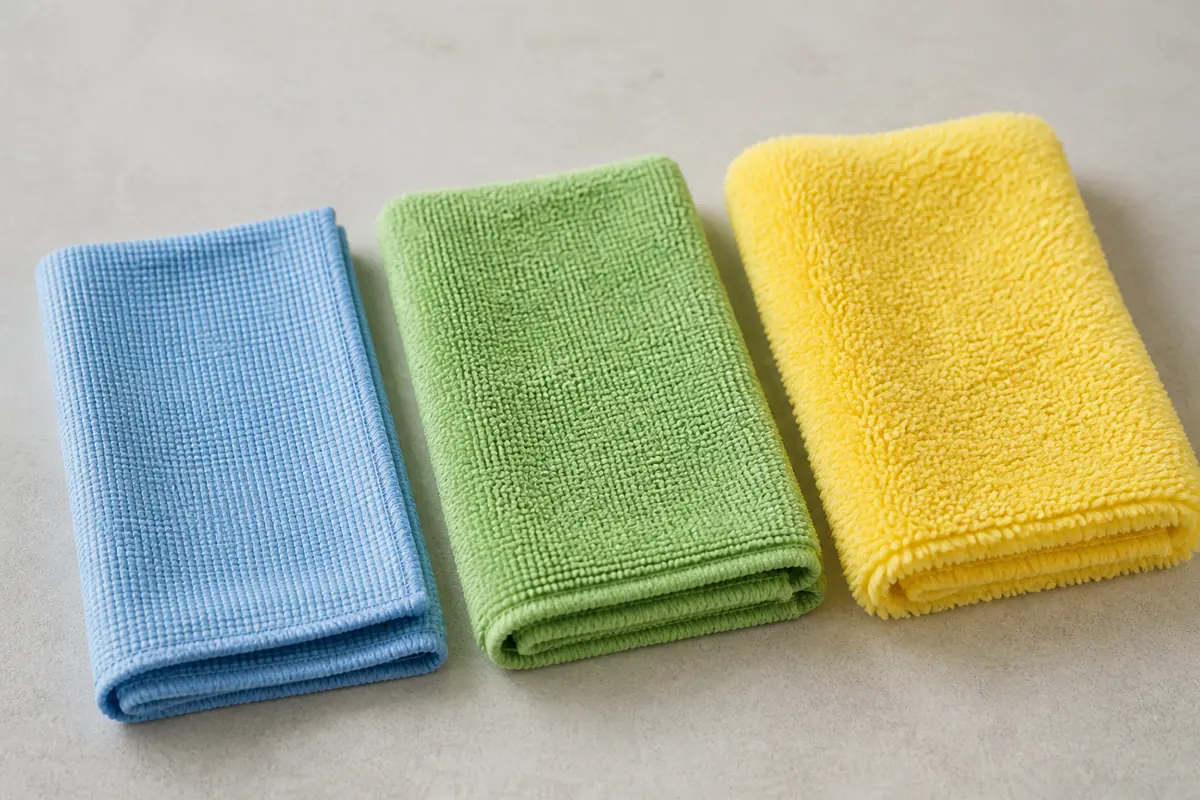
Keep at least one cloth dedicated to glass if a streak-free finish matters. The technique, water quality and residue already on the surface also affect the result, so use the separate glass-cleaning guide when the problem is mineral deposits, grease or dried product rather than ordinary dust.
Should a microfibre cloth be wet or dry?
| Condition | Best starting use | Stop or change when |
|---|---|---|
| Dry | Loose dust, crumbs and light particles on a compatible dry surface | The cloth is loaded, the surface is gritty or the movement starts redistributing dust |
| Slightly damp | Finger marks, light residue and routine wiping where moisture is permitted | Water beads at joints, the finish changes or the cloth leaves a wet trail |
| With a labelled cleaner | Greasy or bonded soil that water and wiping cannot remove safely | The label, surface guidance or test patch shows incompatibility |
For damp cleaning, wet the cloth with clean water and wring it thoroughly rather than flooding the surface. Apply cleaning products according to their label. Spraying onto a cloth can reduce overspray on some routine tasks, but only when the product instructions allow that application method.
Use a fresh dry cloth for the final pass if the surface needs buffing. Do not keep rubbing harder when streaks remain. Residual cleaner, a saturated cloth, hard-water deposits or the wrong weave may be the real cause.
Fold and rotate the cloth instead of bunching it
Lay the cloth flat, fold it in half and then in half again. This gives eight usable faces: four on one side of the folded cloth and four after turning it over. Wipe a manageable section, inspect the face and refold to expose a clean one before visible soil reaches the edge.
Use overlapping passes rather than random circles across the whole surface. On furniture, work from cleaner upper areas towards lower, dirtier areas, and remove loose grit before wiping. The aim is to collect soil and carry it away, not spread it into a thinner film.
You may also enjoy:

Use colour coding as a zone rule
Colour does not change cleaning performance. It can, however, act as a simple visual reminder that one cloth belongs to the kitchen, another to general living areas and another to the bathroom. Choose a system the household can remember and store clean and used cloths separately.
Colour coding is not a substitute for laundering or changing a loaded cloth. A bathroom cloth does not become safe for another bathroom surface because its colour is correct. Assign zones, rotate clean faces, then remove the cloth from service when it is soiled.
Know where microfibre needs extra caution
A clean, suitable microfibre cloth is useful on many sealed household surfaces, but “scratch-free” is not a universal property. Damage can come from grit trapped in the cloth, an abrasive edge, excessive pressure or a finish that should not be rubbed. Test first on high-gloss paint, soft coatings, valuable furniture, lacquer, specialist stone finishes and any surface with uncertain care guidance.
For a useful test, remove loose grit from a hidden patch, inspect the cloth for hardened edges and use the least moisture and pressure likely to work. Let the area dry fully before judging it. Stop if colour transfers to the cloth, gloss changes, the coating softens, fibres snag or a tide mark develops. A successful small patch reduces uncertainty but does not prove that the whole item is identical, especially on repaired, aged or sun-faded finishes.
For screens, camera lenses, coated glass and electronics, follow the device or coating manufacturer’s instructions. Switch off and unplug equipment where instructed, keep liquid away from openings and use only the cloth and product type approved for that item. A general household cloth may be too coarse or contaminated for optical coatings.
Do not use a cloth carrying metal filings, masonry dust, dried adhesive, heavy grease or unknown residue on ordinary domestic surfaces. Dedicated cloths are also sensible for toilets, pet accidents and other high-soil tasks. Wash or dispose of them according to the contaminant and local guidance rather than returning them to a mixed cleaning caddy.
Choose cleaning products by label, not by cloth
Microfibre can reduce the amount of product needed for some routine soil, but it does not make an incompatible cleaner safe. Check both the product label and the surface instructions. The product labels guide explains how to separate ingredients, hazard information, dilution and use directions.
Never mix cleaners on the cloth or use it to combine residues from different products. Rinse or replace the cloth between incompatible tasks. When disinfecting is justified, first remove visible soil, then use the labelled product exactly as directed, including contact time and any rinse requirement.
How to wash microfibre cloths
- Check the care label and remove cloths contaminated with substances that need specialist handling.
- Shake or rinse out suitable loose debris without sending solids down a drain unnecessarily.
- Separate microfibre from cotton towels and other lint-producing laundry.
- Use the detergent amount, temperature and cycle permitted by the cloth maker.
- Avoid fabric conditioner because coatings can reduce the fibre’s working contact; avoid bleach unless the label explicitly allows it.
- Air-dry or use only the permitted low-heat setting, then store the cloth completely dry.
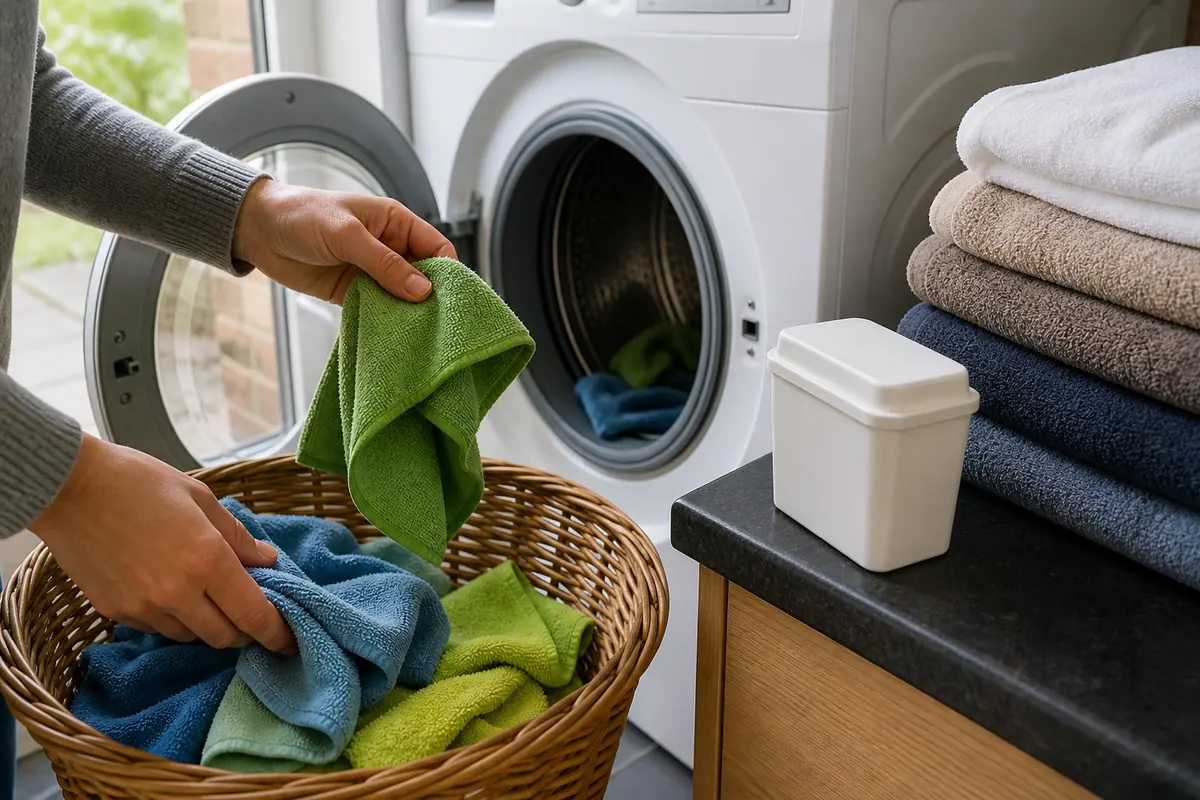
One universal temperature rule would be misleading. Heavily soiled professional cloths, delicate household cloths and specialist lens cloths may have different requirements. Follow the item-specific label, and do not reuse a cloth while it still smells, feels greasy or retains visible residue after laundering.
When should you replace a microfibre cloth?
Do not throw away an ordinary cloth after one routine use if it can be laundered safely. Retire it from delicate work when the pile stays flattened, the edge hardens, the fabric becomes stiff, or embedded grit cannot be removed. A downgraded cloth may still suit a low-risk dirty task if it is clearly separated from finish work.
Discard or route the cloth appropriately when it is torn beyond safe use, contaminated with a substance that should not enter domestic laundry, or remains malodorous after correct washing and drying. Do not preserve a cloth merely to reach a promised number of washes; condition and task risk are more useful tests.
Consider the environmental trade-offs
Reusability can reduce reliance on disposable wipes, and effective mechanical cleaning may reduce product use on suitable routine tasks. Most household microfibre cloths are also synthetic textiles. Washing can release fibres, so describing every microfibre cloth as automatically eco-friendly ignores part of its lifecycle.
Extend useful life by buying a task-suitable cloth, avoiding unnecessary high heat, washing full but not overloaded loads and repairing the cleaning system before repeatedly replacing cloths. A compatible laundry filter or capture device may reduce some released fibres, but performance varies. The broader environmental impact guide helps compare packaging, water, energy, ingredients and tool lifespan together.
How Samyx uses microfibre cloths in regular cleaning
A professional result comes from the whole method, not from the cloth name. Samyx cleaners match cloths and products to the agreed task, separate work zones, expose clean faces as they work and change a cloth before it starts transferring soil. Delicate materials and owner instructions still take priority.
Our regular domestic cleaning service can cover agreed recurring dusting, wiping and surface-care tasks in London homes. Tell us about specialist finishes, manufacturer restrictions, pets or household product preferences before the visit so the work can be planned around them.
Surface and safety note: Follow the cloth, product and surface manufacturer’s instructions. Test an inconspicuous area before treating an unfamiliar finish, never mix cleaning products, and keep moisture away from electrical openings. Cleaning and disinfection are different tasks; use a disinfectant only where justified and exactly as its label directs.
Book Regular Domestic Cleaning
Enter your postcode to view our rates and availability in your area.

Frequently asked questions
-
How do I know if a cloth is microfibre?
Check the packaging or sewn-in label for the fibre composition and care instructions. Texture and absorbency can suggest how a cloth may behave, but they cannot prove its blend, construction or quality. Test an unlabelled cloth on a low-risk hidden area before using it on a valuable finish.
-
Should I use a microfibre cloth wet or dry?
Use it dry for suitable loose dust and slightly damp for compatible finger marks or light residue. Add a labelled cleaner when the soil and surface require it. The cloth, product and surface instructions take priority over any universal wet-or-dry rule.
-
What are the disadvantages of microfibre cloths?
Quality and surface suitability vary, trapped grit can mark delicate finishes, poor laundering can reduce performance and synthetic cloths can release fibres during washing. These limits are managed by task-specific selection, clean-face rotation, careful laundering and replacement based on condition.
Author: Svetlana Georgieva (Clara)
Hi, I’m Svetlana Georgieva, but you can call me Clara. As the co-founder and heart behind Samyx Cleaning, I’m devoted to sharing the art of a clean space. Let’s journey into a cleaner, more joyful life together with tips from London's cleaning experts.

Discover more of our cleaning secrets: