
Best Way to Clean Windows Inside and Outside Without Streaks

Last modified on: 26/08/2026

The best way to clean windows is to remove dry grit first, use a small amount of compatible cleaning solution, wash the pane evenly, then remove the liquid with a clean squeegee and detail only the edges.
That sequence works because it separates soil removal from finishing. It also prevents the most common causes of streaks: too much product, dirty tools, missed frame dirt and water left to dry on the glass. The exact route changes for inside panes, accessible outside windows, screens, mirrors and specialist glazing, so identify the surface and access risk before you begin.
Clean the frame, wash the pane, then control the water
- Choose a cool, overcast time and make sure every pane is safely reachable from the floor or ground.
- Brush or vacuum loose dirt from frames, tracks, sills and screens before adding water.
- Wash the glass with clean water and only a small amount of a compatible labelled product.
- Pull a clean, sharp squeegee across the wet pane in controlled, overlapping strokes.
- Wipe the blade between passes, dry the edges with a clean lint-free cloth and diagnose any remaining marks before repeating the process.
Key takeaways
- Remove dry grit from frames and tracks before washing the glass.
- Use less product than you think; excess detergent leaves residue that attracts marks.
- Keep the glass wet until the squeegee has removed the solution.
- Work from ground level and leave inaccessible glazing to properly equipped professionals.
- Treat mineral deposits, adhesive and damaged coatings as separate problems, not ordinary dirt.
Table of Contents
Choose the route before you wet the glass
A good method begins with access and surface identification. Do not assume every transparent panel is ordinary untreated window glass. Tinted films, self-cleaning coatings, decorative leadwork, acrylic panels and some shower screens may have different care requirements.
| Surface or access | Practical route | Main caution |
|---|---|---|
| Inside window | Protect the floor, clean the frame first, then wash and squeegee the pane | Keep excess water away from timber, walls, sockets and furnishings |
| Accessible outside window | Remove loose debris, wash from ground level and rinse tools often | Do not climb, lean out or work near overhead electrical hazards |
| Mirror or interior glass | Use minimal liquid and finish with a clean lint-free cloth | Do not flood edges, backing, joints or electrical fittings |
| High or inaccessible glazing | Use a suitable ground-based system or a competent specialist | Ordinary household equipment does not make work at height safe |
Tools that make the method easier
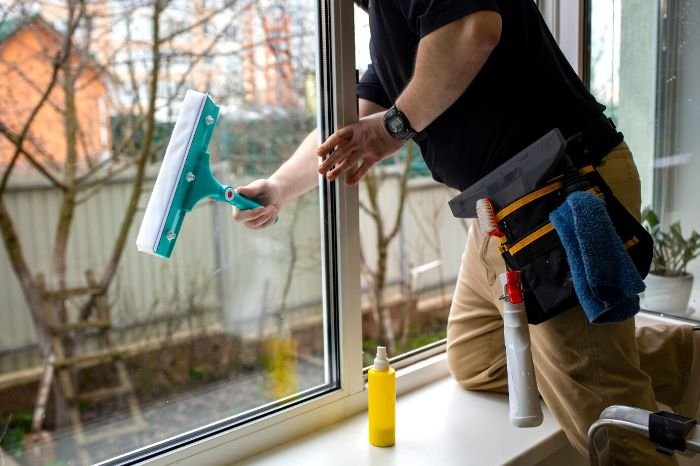
You do not need a cupboard of specialist liquids. You do need clean tools sized for the pane. Assemble a bucket, a soft brush or vacuum attachment, a window washer or clean non-abrasive sponge, a good squeegee, several lint-free cloths, clean water and a suitable labelled cleaner. Add absorbent towels for indoor floors and sills.
Inspect the rubber edge of the squeegee. Nicks, hardened rubber and trapped grit leave a line on every pass. Keep one clean cloth for the blade and a separate one for edge detailing. A cloth already carrying furniture polish, grease or laundry residue can turn a clean pane hazy.
Match the squeegee to the available working width. A blade that is slightly narrower than the pane is usually easier to control around handles and deep reveals than an oversized professional tool. Wash new cloths as instructed before relying on them for finishing, and reserve a separate brush for exterior frames so masonry grit does not reach indoor glass.
You may also enjoy:

Best way to clean windows step by step
1. Pick the right conditions
Work on cool glass in shade or on an overcast day where possible. Strong sun and warm panes shorten the time available to remove the solution, so droplets and product can dry before the squeegee reaches them. Indoors, close nearby vents if moving air is drying the pane too quickly.
2. Prepare the area and the window
Move fragile objects, protect the floor and clear the sill. Brush or vacuum cobwebs, dust, insects and loose grit from the frame, tracks and corners. Cleaning these areas after the pane simply puts dirty water back onto the finished glass. Deal with nearby textiles separately using the curtain-cleaning guide.
3. Remove loose exterior grit
Outside panes may hold wind-blown sand and masonry dust. Do not grind it into dry glass. Use a soft brush where appropriate or flush loose soil away with clean water while controlling runoff. Replace dirty bucket water rather than carrying grit from one pane to the next.
4. Mix a mild solution
Follow the cleaner label and the window manufacturer’s instructions. For ordinary compatible glass, clean water with only a few drops of washing-up liquid in a bucket is often enough to provide slip for the washer and squeegee. More detergent does not mean more cleaning power; it creates more residue to remove.
Do not mix household cleaners. Avoid turning vinegar, ammonia, alcohol or another solvent into a universal recipe. A product that is acceptable on plain glass may affect films, seals, frames, stone sills, paint or nearby metals. Test an unfamiliar method discreetly and stop if the finish changes.
5. Wash the pane evenly
Wet the washer, squeeze out excess liquid for indoor work and cover the pane from top to bottom. Loosen fly spots and greasy marks with repeated gentle passes rather than aggressive scraping. Pay attention to corners but avoid flooding frame joints and seals.
6. Remove the solution with a squeegee
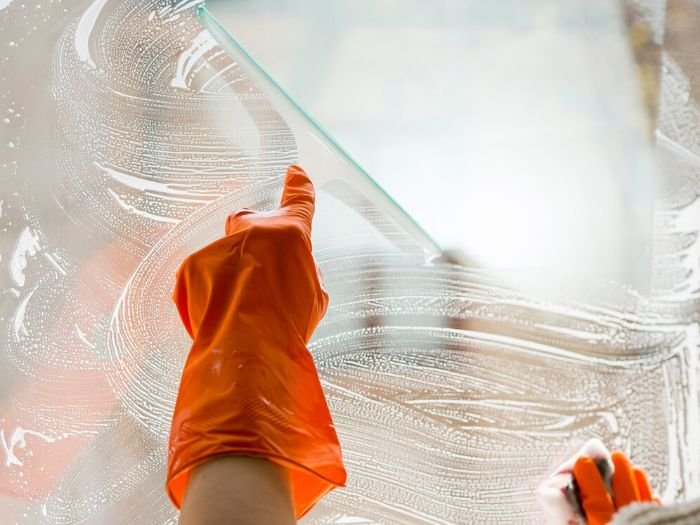
Start at the top. Either make straight overlapping pulls or use a continuous fanning movement if you can keep the rubber edge in contact with the glass. Overlap the previous dry line slightly. Wipe the blade after each pass so collected dirt and water do not return to the pane.
Hold the handle at a consistent angle and use light, even pressure. Pressing harder does not compensate for damaged rubber. For straight pulls, dry a narrow strip along the top edge first so the blade has a clean starting line. On a wide pane, divide the work into sections that can stay wet until each pass is complete.
7. Detail the edges
Use a clean, dry corner of a lint-free cloth to pick up the narrow bead left at the glass edge. Do not polish the whole pane automatically: repeated rubbing with a damp or contaminated cloth can reintroduce haze. Check the result from two angles and correct only the area that needs attention.
How to clean windows inside
Indoor window cleaning is mainly about controlling liquid. Place towels below the sill, keep the washer damp rather than dripping and use a smaller squeegee where furniture or reveals restrict movement. Start with the least soiled panes so your tools stay cleaner for longer.
If the outside is also accessible safely, clean one side with horizontal squeegee strokes and the other with vertical strokes. The direction of a remaining mark then identifies which side needs correction. This is a diagnostic technique, not a requirement for the final finish.
Open windows only when their hinges and restrictors allow safe control. Do not sit on a sill, lean outside or improvise access. Some reversible windows are designed so the outer pane can be cleaned from indoors, but use that feature only as described in the instructions for the exact model.
Kitchen panes often carry an airborne grease film, while bedroom and living-room panes may hold mainly dust and fingerprints. Use the same sequence but change the water and washer after greasy glass. Otherwise residue can spread through the home even though each pane appears clean while wet.
Best way to clean windows outside
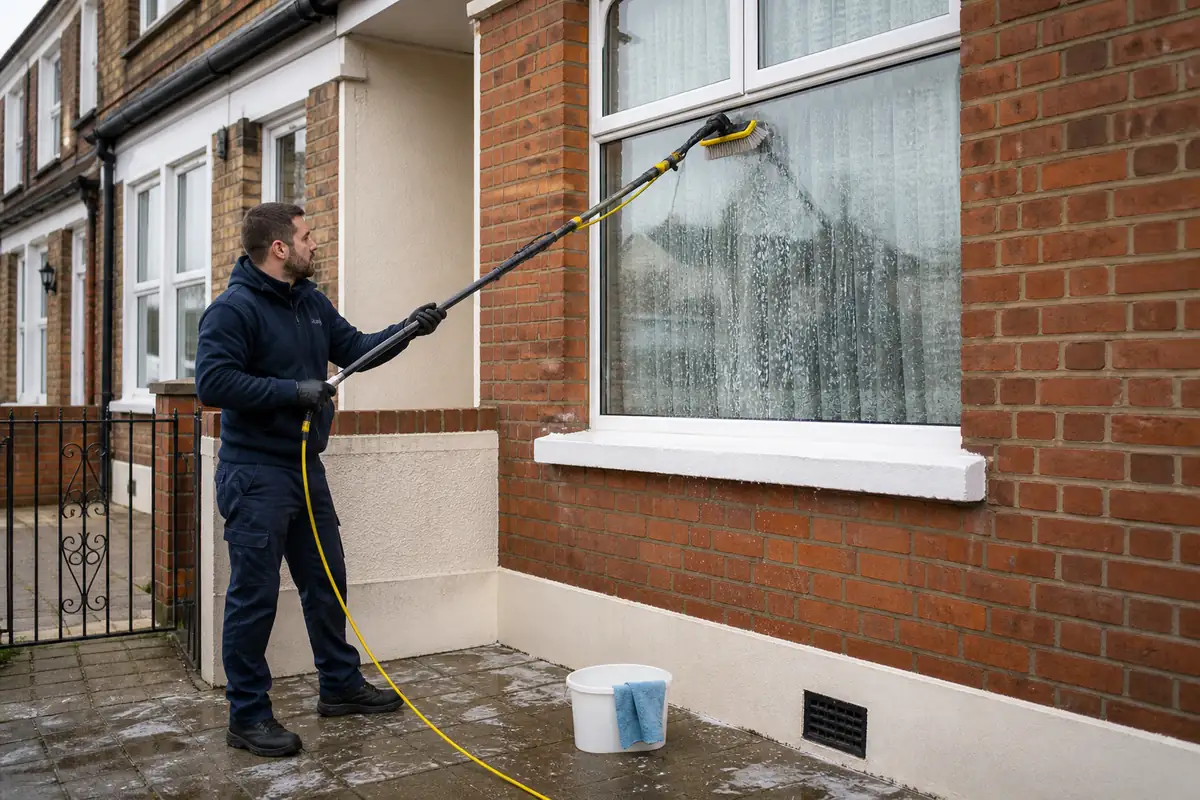
For an accessible ground-floor pane, clear the area, remove loose debris, wash from top to bottom and keep rinsing the washer when it becomes gritty. A telescopic pole can extend reach while you remain on firm ground, but it must be suitable for the task and controllable without overreaching. Watch for pedestrians, open windows, vehicles and electrical hazards.
Do not use a chair, household ladder or improvised platform simply because the upper pane looks close. UK HSE guidance prioritises avoiding work at height where reasonably practicable and using ground-based methods where suitable. High-level, awkward or damaged glazing needs competent people with the right access system and training.
Manage runoff as part of the job. Do not send dirty or chemically dosed water into a neighbour’s property, across a public path or onto porous stone without checking compatibility. In cold weather, postpone the work if water could freeze on the ground. In windy conditions, a long pole can become difficult to control even when your feet remain safely on the ground.
Clean frames, screens and specialist glass
Vacuum tracks with a narrow attachment before damp cleaning. Wipe compatible frames with a well-wrung cloth and an appropriate product, working clean to dirty. Avoid saturating timber, forcing water into drainage channels or assuming one chemical suits uPVC, aluminium, painted wood and natural stone.
Remove detachable insect screens only if the design allows it. Brush or vacuum loose dust, wash gently according to the manufacturer’s advice, rinse and let the screen dry before refitting it. A wet, dirty screen can spot a freshly cleaned pane as soon as the window is opened.
Inspect drainage slots while the frame is dry enough to see them. Clear only loose accessible debris with a non-damaging tool; do not enlarge openings or dismantle frame parts. Persistent water inside the frame, damaged seals, loose glazing beads or difficult hardware are maintenance issues rather than cleaning tasks.
Adapt the method for mirrors and specialist glass
Mirrors need less liquid than exterior windows. Spray a compatible product onto the cloth rather than flooding the surface, especially near edges where moisture may reach the backing. For bathroom mirrors, first remove ordinary splashes with a damp cloth, then finish with a separate dry lint-free cloth.
For tinted film, coated, etched, frosted, leaded, laminated or self-cleaning glass, follow the glazing or film manufacturer’s care instructions. Do not use abrasive pads, metal scrapers or razor blades as a default. They can scratch glass, catch a film edge or damage a coating even when a similar-looking pane tolerated them.
Frosted and textured surfaces can retain lint in their relief, so use a compatible soft brush or low-lint cloth rather than forcing a blade over an uneven finish. Leaded panels need limited moisture around joints. If the age, construction or coating is unknown, use the least aggressive method on a small inconspicuous area and seek specialist advice before stain removal.
Fix stubborn marks and streaks
Treat stubborn marks as separate problems
A normal window wash removes loose soil and light greasy film. It may not remove mineral deposits, adhesive, paint, cement splashes or scratches. Identify the mark before escalating the method.
- Chalky rings or cloudy patches: these may be mineral deposits. Check the surface and use the material-safe route in the limescale guide.
- Tape or label residue: soften and remove it using a method compatible with the glass, film and frame. See the tape-residue guide.
- Paint or building residue: ask the glazing supplier or a specialist before scraping. Tempered and coated products can carry specific restrictions.
- A mark visible when dry and wet: it may be a scratch, failed seal or coating damage rather than removable dirt.
Why windows still look streaky
| What you see | Likely cause | What to change |
|---|---|---|
| Parallel lines after every pull | Damaged blade or grit on the rubber | Clean and inspect the blade; replace it if nicked |
| General grey haze | Too much product, dirty water or contaminated cloths | Use fresh water, clean tools and less cleaner |
| Dry drip marks | Solution dried before removal | Work on a smaller area in cooler conditions |
| Dirty corners | Frame soil moved back onto the pane | Clean frames first and use a fresh detailing cloth |
| Cloudiness between panes | Possible insulated-glass seal failure | Cleaning the exposed surfaces will not reach it; seek glazing advice |
If streaks return immediately, change one variable at a time. Fresh water is more useful than adding another chemical. A clean washer, sound rubber and a dry edge cloth make the cause easier to isolate.
View the pane against both a bright and a darker background. A line that follows every squeegee pass points to the blade; irregular smears usually point to residue or a dirty cloth. Marks that remain fixed while your viewing angle changes may be on the opposite side, within the glazing unit or part of the surface itself.
How often should windows be cleaned?
There is no useful universal schedule. A street-facing pane near traffic, trees, sea air or building work may need attention sooner than a sheltered window. Clean when soil affects light, visibility or operation, and deal promptly with bird mess, adhesive or deposits that may become harder to remove.
Between full washes, remove fresh fingerprints with a clean cloth and clear loose debris from tracks. Avoid repeated spot spraying over old product residue. If the pane develops a persistent haze, return to the full wash-and-squeegee process with clean tools.
Where a domestic cleaning service fits
An agreed one-off cleaning visit can help with reachable internal windows as part of a wider home clean. Confirm the panes, access and priorities when booking. External, high-level, specialist or damaged glazing may need a separate window-cleaning or access specialist.
Safety note: Stop if a pane is cracked, a frame is unstable, access requires climbing or leaning, or the work would place tools near electrical equipment. Keep products in their original labelled containers, ventilate indoor areas and never mix cleaners.
Ask About One-Off Cleaning
Enter your postcode to view our rates and availability in your area.

Frequently asked questions
-
What do professional window cleaners put in their water?
The method depends on the system and glazing. Traditional cleaners commonly use clean water with a very small amount of detergent for slip, while water-fed pole systems may use purified water. More product is not automatically better, and the glass and frame instructions still apply.
-
Is washing-up liquid good for cleaning windows?
A few drops in clean water can work on compatible ordinary glass because it helps the washer and squeegee move smoothly. Use very little, follow the product and glazing instructions, and rinse or remove the solution fully. Do not treat it as suitable for every coating, film, frame or surrounding material.
-
What is the best way to clean outside windows?
Remove loose grit, wash the pane from top to bottom with clean tools and a mild compatible solution, then squeegee and dry the edges. Stay on firm ground and use a suitable ground-based system. High or inaccessible windows should be handled by competent professionals with appropriate access equipment.
Author: Svetlana Georgieva (Clara)
Hi, I’m Svetlana Georgieva, but you can call me Clara. As the co-founder and heart behind Samyx Cleaning, I’m devoted to sharing the art of a clean space. Let’s journey into a cleaner, more joyful life together with tips from London's cleaning experts.

Discover more of our cleaning secrets: