
Rubber Gloves – Your Trusted Tool for Safe and Effective Cleaning

Last modified on: 27/09/2024

Do you know that cleaning can expose your hands to harmful chemicals and bacteria? Rubber gloves are key for keeping your hands safe. They act as a shield against harsh substances found in cleaning tasks.
These gloves stop contamination and boost hygiene. They are not just useful; they are essential. We will discuss why rubber gloves are important, the different types, and how to use them best.
Key Takeaways
- Rubber gloves protect your hands from harsh chemicals and prevent germ spread.
- Various sizes, such as those from Supertouch, cater to different hand circumferences.
- Disposable and reusable rubber gloves each serve unique cleaning purposes.
- Proper usage of gloves can significantly improve cleaning performance and safety.
- Environmentally friendly glove options are available for those seeking sustainable solutions.
In this article:
- Key Takeaways
- Why You Should Always Use Rubber Gloves for Cleaning
- Protecting Your Hands from Harsh Chemicals
- Reducing the Spread of Germs and Bacteria
- Different Types of Rubber Gloves for Cleaning Tasks
- Disposable Gloves vs. Reusable Gloves
- Choosing Between Latex, Nitrile, and Vinyl Gloves
- Tips for Properly Using Rubber Gloves
- How to Put On and Take Off Gloves Correctly
- Knowing When to Replace Gloves During Cleaning
- How Rubber Gloves Improve Cleaning Performance
- Better Grip and Handling for Cleaning Tools
- Preventing Slips and Accidents in Wet Conditions
- Taking Care of Your Rubber Gloves
- Cleaning and Storing Reusable Gloves
- Recognising Signs It’s Time for a New Pair
- Environmentally Friendly Glove Options
- Biodegradable Gloves for Sustainable Cleaning
- Proper Disposal of Rubber Gloves
- Conclusion
- FAQ
- Why should I use rubber gloves while cleaning?
- What are the differences between disposable and reusable rubber gloves?
- Are there any allergy concerns with using rubber gloves?
- How can I ensure I’m using rubber gloves correctly?
- What are the signs that my rubber gloves need replacing?
- Are there environmentally friendly options for rubber gloves?
Why You Should Always Use Rubber Gloves for Cleaning
Using rubber gloves when you clean is very good for your hands. They protect you from strong chemicals in cleaning products. This stops skin irritation and health problems later on.
Rubber gloves also help kill germs. This is very important in places like kitchens and bathrooms where germs grow a lot.
Need a cleaning service?
Enter your postcode to view our rates and availability in your area.

Protecting Your Hands from Harsh Chemicals
Cleaning products have strong stuff like detergents and bleach. These can burn or irritate your skin if you touch them. Gloves keep your hands safe and let you clean better.
For example, you can wash dishes in hot water with gloves. This makes cleaning more effective and keeps your hands safe.
Reducing the Spread of Germs and Bacteria
In places like sinks and toilets, gloves stop germs like salmonella. Without them, you might spread these germs easily. Gloves act as a barrier, making cleaning safer and keeping your home clean.
Different Types of Rubber Gloves for Cleaning Tasks
It’s key to know the different rubber gloves for cleaning. They come in disposable and reusable types. Each has its own role in keeping things clean and safe.
Disposable Gloves vs. Reusable Gloves
Disposable gloves are great for quick clean-ups. They help stop germs from spreading. They’re made from materials like nitrile, which are strong and comfy.
Vinyl gloves are cheaper and good for short jobs. But they might not protect as well. Reusable gloves last longer and are perfect for daily cleaning. Your choice depends on the job and where you’re cleaning.
Choosing Between Latex, Nitrile, and Vinyl Gloves
Choosing the right glove material is important for cleaning. Latex gloves are stretchy and comfy, great for detailed work like medical cleaning. But, they might cause allergies in some.
Nitrile gloves are tough and safe for jobs in labs and hospitals. Vinyl gloves are cheap and okay for simple tasks like food prep or general cleaning. Each type has its own use, making cleaning safer and more efficient.
Tips for Properly Using Rubber Gloves
It’s important to know how to use gloves right when cleaning. Using them correctly keeps you safe and clean. Learn how to put on, take off, and replace gloves for better cleaning.

How to Put On and Take Off Gloves Correctly
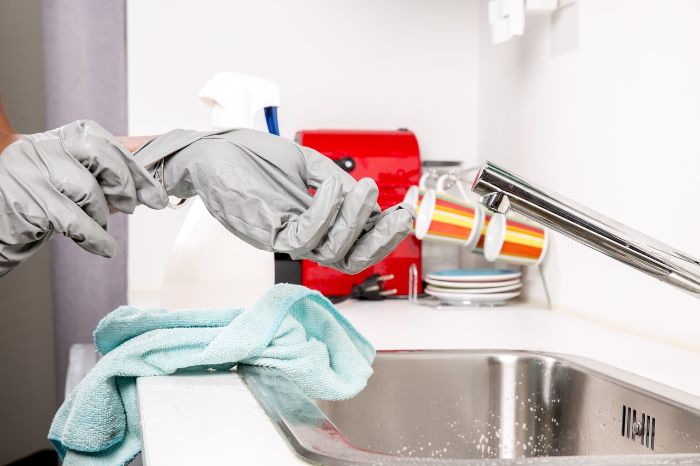
Start by wearing gloves with dry hands. Don’t touch the inside to avoid dirt. When removing, pull one glove off from the wrist, keeping the inside away from your skin.
Hold the glove in your other hand and do the same with the second one. Throw the gloves away right away, without touching dirty things.
Knowing When to Replace Gloves During Cleaning
It’s key to change gloves often to stay safe and clean. If they’re dirty, torn, or change colour, throw them away. If you touch blood or other fluids, change them right away.
Follow health rules on how often to change gloves. This stops dirt spreading and helps clean better.
How Rubber Gloves Improve Cleaning Performance
Rubber gloves are key to better cleaning. They help in many ways, making cleaning easier and safer. They improve grip and handling of tools and keep you safe in wet conditions.
Better Grip and Handling for Cleaning Tools
Rubber gloves have a textured surface. This helps you hold cleaning tools tightly. It’s great for avoiding drops on slippery surfaces or when you’re doing lots of tasks at once.
Preventing Slips and Accidents in Wet Conditions
Wet surfaces can be very dangerous. They can cause slips and injuries. Rubber gloves help by giving extra grip. This lets you work safely without fear of slipping or accidents.
You may also enjoy:

Taking Care of Your Rubber Gloves
Looking after your rubber gloves is key. It makes them last longer and work better for cleaning. Cleaning and storing them right keeps them in top shape.
Cleaning and Storing Reusable Gloves
Always clean your gloves after use to stop dirt and germs. Rinse them well inside and out with clean water. Make sure to dry them properly before putting them away.
Keep them in a cool, dry spot, away from sunlight. Don’t put them near heat as it can damage them.
Recognising Signs It’s Time for a New Pair
Check your gloves often to see if they need replacing. Look for tears, holes, or if they’re not as stretchy as before. If you see these signs, it’s time for new ones.
Checking them regularly helps keep things clean and makes them last longer.
Environmentally Friendly Glove Options
As we worry more about the planet, picking the right gloves for cleaning is key. Biodegradable gloves are a big step towards a greener future. They help reduce harm to our environment compared to old disposable gloves.
Biodegradable Gloves for Sustainable Cleaning
Many brands now make biodegradable gloves for those who care about the planet. For example, Unigloves BioTouch nitrile gloves break down a lot in 490 days. They come in Violet Blue and Black, so they look good and do good.
Other gloves, like TraffiGlove TD02 Sustain Eco-Friendly Biodegradable Nitrile Gloves, break down 82% in 90 days. This shows how choosing the right gloves can help a lot.
Proper Disposal of Rubber Gloves
It’s also important to know how to throw away gloves right. Proper disposal helps the planet and follows health rules. Gloves should go in special bins, not down the drain or in regular trash.
By choosing biodegradable gloves and disposing of them right, we all help make the planet better for everyone.
Conclusion
Rubber gloves are key for safe and effective cleaning. They protect your skin from harmful substances. This reduces the chance of skin irritation and infections.
Knowing the different types of rubber gloves is important. It helps make your cleaning better. Keeping them in good condition is also crucial.
But, keeping hands clean is still a big issue. Many people know they should wash their hands before and after using gloves. Yet, not everyone does it.
Only 18.6% of people wash their hands before wearing gloves. This shows we need to work on our cleaning habits.
Choosing between disposable latex gloves and nitrile gloves is important. Using rubber gloves makes cleaning safer and more effective. It’s a big step towards better cleaning for everyone.
FAQ
-
Why should I use rubber gloves while cleaning?
Rubber gloves protect your skin from harsh chemicals in cleaning products. They also stop skin irritation. Plus, they keep germs and bacteria away, especially in places like kitchens and bathrooms.
-
What are the differences between disposable and reusable rubber gloves?
Disposable gloves are good for quick jobs and stop germs spreading. Reusable gloves last longer and are better for big cleaning jobs. Pick the right one based on your cleaning task.
-
Are there any allergy concerns with using rubber gloves?
Yes, latex gloves can cause allergies in some people. If you’re allergic to latex, choose nitrile or vinyl gloves instead. They’re safe and protect your hands well.
-
How can I ensure I’m using rubber gloves correctly?
First, make sure your hands are dry before putting on gloves. When taking them off, hold the outside to avoid touching dirty surfaces. Always replace gloves if they get dirty or damaged.
-
What are the signs that my rubber gloves need replacing?
Look for tears, punctures, or if they’re not as stretchy as before. Checking your gloves often keeps you clean and safe while cleaning.
-
Are there environmentally friendly options for rubber gloves?
Yes, there are biodegradable gloves that are better for the planet. They break down naturally, unlike regular gloves, which is good for the environment.
Author: Svetlana Georgieva (Clara)
Hi, I’m Svetlana Georgieva, but you can call me Clara. As the co-founder and heart behind Samyx Cleaning, I’m devoted to sharing the art of a clean space. Let’s journey into a cleaner, more joyful life together with tips from London's cleaning experts.

Discover more of our cleaning secrets: