
How to Get Stains Out of White Clothes Without Setting or Spreading Them

Last modified on: 31/07/2026
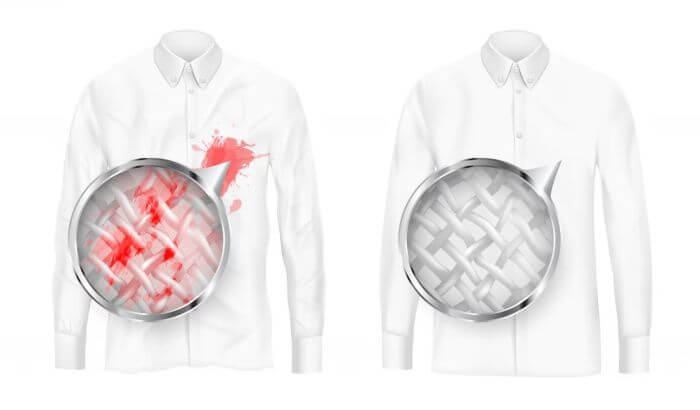
How to get stains out of white clothes depends on the mark and the fabric. The first rule is always the same: remove excess, keep the area away from heat and check the care label before applying a treatment.
A white cotton T-shirt, a stretch-denim jean and a lined dress may show the same brown or yellow mark, and they cannot automatically take the same product, temperature or soaking time. Work from the stain’s likely source and the garment’s construction, then use the mildest label-compatible route that can release it.
Key takeaways
- The word “white” describes appearance, not bleach tolerance. Fibre, finish and care symbols still control the method.
- Oil, protein, tannin, pigment and mineral or product build-up need different first actions.
- Oxygen bleach and chlorine bleach are different products. Neither belongs on every white garment.
- A washed or dried mark may respond to another compatible pretreatment; heat-set stains can remain.
- Keep the garment out of the tumble dryer and away from an iron until the stain has disappeared in good light.
Table of Contents
Check the label, fibre and stain before treatment
Begin with the sewn-in care label. The wash symbol gives the permitted washing process and maximum temperature. A crossed-out triangle rules out bleaching. A plain triangle may permit bleaching, and a triangle with diagonal lines normally points to non-chlorine bleach. Labels vary, so use the symbol guide supplied with the garment or appliance if anything is unclear.
Next, look beyond the main fibre. A white shirt may contain elastane, coloured embroidery, a heat-transfer logo, coated buttons or bonded interfacing. A dress may be lined even when the outer fabric is washable. Any one of those details can make strong treatment or long soaking unsuitable.
Identify what happened before the evidence changes. Greasy stains often look darker or translucent. Blood and dairy contain protein. Tea, coffee, wine and curry leave coloured plant or food residues. Ink and cosmetics may combine oil, dye and pigment. Yellowing can come from sweat, deodorant, sun cream, storage, detergent residue, minerals or fibre ageing. An unknown mark deserves a mild first pass, not a cocktail of home remedies.
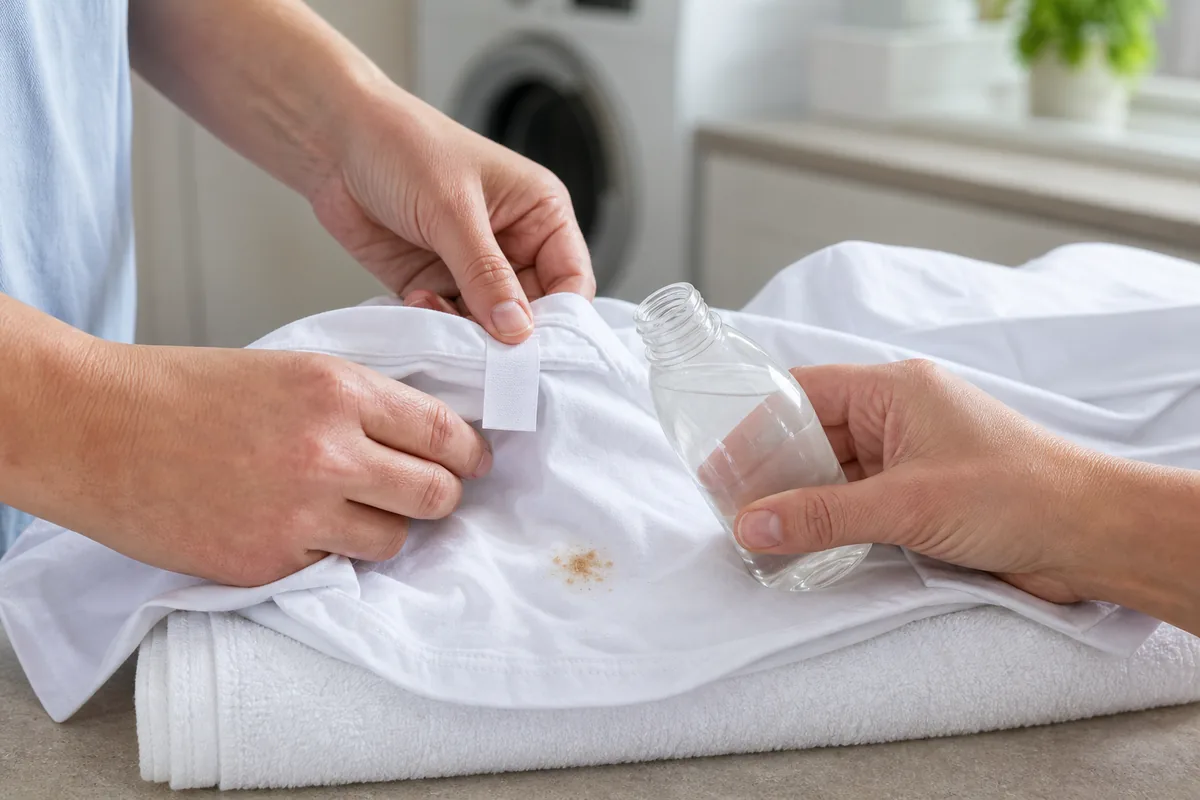
Work over a colourfast white towel so you can see what transfers. Use a spoon edge or blunt scraper for solids and a clean cloth for liquid. Do not scrub. Press the cloth against the mark. Test the proposed treatment on an inside seam, wait as directed and check the test area after rinsing. Colour transfer, roughness, stretching, shine or a weakened surface means stop.
How to get stains out of white clothes by stain type
The quickest useful choice is based on the stain family. The table below is a routing tool and does not replace the garment and product labels.
| Stain clue | First action | Label-compatible route | Stop or change course |
|---|---|---|---|
| Oil, grease or makeup | Lift excess and blot; keep water controlled | Use a compatible grease-cutting laundry pretreatment, then wash | An oily ring spreads, dye transfers or the care label excludes normal washing |
| Blood, egg, milk or other protein | Rinse from the reverse with cool water | Use a compatible enzyme detergent or stain product, then wash | Hot water has set the mark or the fibre cannot take the product |
| Tea, coffee, wine, fruit or curry | Blot liquid and remove solids | Rinse as the label permits, pretreat and consider oxygen bleach only if allowed | Pigment spreads, the mark contains oil or the trim reacts |
| Ink or transferred dye | Blot and isolate from other fabric | Use the ink product or specialist method permitted for the fibre | The dye moves beyond the original edge or the solvent is not label-safe |
| Yellowing or dullness | Decide whether it is local or across the item | Treat the cause, correct washing practice and use a permitted whitener if needed | The fibre itself is aged, oxidised or already weakened |
| Unknown or set-in mark | Photograph it, brush off dry residue and start mild | Use a broad label-compatible pretreatment, rinse and reassess | Repeated treatment changes the fabric or the source remains uncertain |
Oil, grease and makeup
Do not soak an oily mark before removing surface grease. Lift thick residue, place a towel behind the stain and apply a small amount of a compatible laundry pretreatment. Work from the outer edge towards the centre so the ring does not grow. A detailed method for oil stains changes with cooking oil, motor oil and hair oil. Treatment for makeup stains also depends on powder, wax and waterproof binders.
Washing-up liquid may help on a washable, colourfast cotton item when both labels permit it. Use very little and rinse it out before machine washing. Excess hand-dish detergent can foam heavily in a washing machine. A dedicated laundry stain product is easier to dose and may be a better choice for frequent treatment.
Blood, egg, milk and other protein marks
Use cool water first because high heat can bind protein more firmly to the fibres. Hold the reverse of the stained area under a gentle flow so residue travels out the way it entered. Follow with an enzyme-containing laundry product only when the garment label permits it. Wool and silk are protein fibres too, so an enzyme product or aggressive rubbing can damage the garment.
Tea, coffee, wine, fruit and curry
Blot a wet spill, remove food particles and rinse from the reverse at a label-safe temperature. Pretreat before the coloured residue dries. Curry and sauces may also contain fat, which means a water-only rinse may leave a shadow. Oxygen bleach can help compatible washable whites after normal pretreatment. Check the care label before using it.
Ink, pigment and transferred colour
Place ink face-down over a clean absorbent towel and use only a solvent or ink remover allowed for that fibre and finish. Keep moving the garment to a clean part of the towel as colour transfers. Flooding can carry dissolved dye beyond the original line. A broad colour run affecting several areas is a different task, especially when the item has already been washed with a bleeding garment.
You may also enjoy:

Avoid the mistakes that spread or set a stain
Hard rubbing pushes liquid across the weave and can roughen cotton, polish denim or distort a knit. Press with a clean cloth and change to a fresh area as residue transfers. Treat from the edge towards the centre. A soft laundry brush is useful only when the product and garment labels allow agitation and the fabric passes the hidden-area test.
Do not stack treatments because the first one appeared slow. Vinegar and bicarbonate can neutralise one another; peroxide and chlorine bleach are not interchangeable; an unknown solvent can mobilise dye as well as ink. Rinse away the first product as directed and reassess before trying another compatible method. Mixing cleaners can produce hazardous reactions or leave residues that damage fibres.
Extra detergent is not a substitute for pretreatment. Too much can remain in the fabric, trap soil and leave whites looking grey. Heat is another common shortcut: hot water can set protein. An iron or tumble dryer can make a remaining stain harder to shift. Let the stain type and care label decide the wash, then inspect before drying.
Remove yellow stains and general yellowing by cause
A yellow patch at the underarm is different from a white sheet that has become dull all over. Local underarm discolouration often combines body soil, deodorant residue and repeated heat. Treat it before the main wash with a compatible enzyme or oxygen-based laundry product. The focused route for sweat stains is more useful when the garment repeatedly yellows in the same place.
Sun cream can produce orange or yellow marks that deepen after washing, especially where mineral-rich water and some product ingredients meet. Treat the oily element first and avoid chlorine bleach unless its own label and the garment label permit it. Chlorine can intensify some sun cream stains instead of clearing them.
General greying may come from overloaded washes, too much or too little detergent, soil redeposition, hard-water minerals or washing whites with coloured items. Sort properly, use the machine and detergent doses for the water hardness and load, and leave enough drum space for garments to move. Repeatedly adding more product can create fresh residue without improving the wash.
Yellowing after long storage can reflect oxidation, old invisible body soil or ageing fibres. A label-permitted oxygen-bleach soak may improve a washable cotton or linen item. Follow the product’s dose and time. Stop if the fabric feels brittle, develops pinholes or changes texture. Age-related fibre damage is not a removable stain.
Choose oxygen bleach or chlorine bleach carefully
Oxygen bleach is a non-chlorine laundry whitener found in many powders and stain products. Compatible washable whites, widespread dullness and some coloured organic marks may respond to it. Correct dosing, water temperature and contact time come from the product label. Wool, silk, leather, special finishes, metal trims and other excluded materials need a different route.
Chlorine bleach is stronger and has a narrower garment-care role. Use it only when the care symbol, fibre and bleach product instructions all allow it. A white appearance does not prove compatibility: elastane, nylon, prints, logos, coloured stitching, resins and optical finishes can discolour or weaken. Never pour concentrate directly onto a garment unless the product label gives that exact instruction.
Never combine chlorine bleach with vinegar, lemon, descaler, ammonia or another cleaner. Rinse away a prior treatment fully and follow the product directions before changing methods. If you cannot identify what is already on the fabric, stop. Do not layer another chemical onto it.
Bleach does not repair colour that has already been stripped from a garment. A pale patch caused by bleach is usually dye loss, even when it is described as a stain. Repeated stain remover will not wash the missing colour back into the fibre.
Treat white shirts, jeans, dresses and delicates differently
White shirts
Check the collar, cuffs and underarms as separate soil zones. A cotton shirt may accept an enzyme detergent and oxygen bleach. A stretch shirt or one with a printed logo may not. Unbutton the shirt, remove collar stays and treat small marks before washing. Keep strong product away from coloured embroidery or contrast stitching.
White jeans
White denim tolerates handling better than many dresses. Abrasion can leave a polished patch, and stretch denim can react poorly to chlorine bleach. Blot or pretreat the stain without hard brushing, fasten the jeans and wash according to the label. Check pockets and coloured leather or synthetic badges before soaking.
White dresses and delicate construction
A dress may combine an outer fabric, lining, interfacing, zip tape, boning, beads or glued decoration. Treat the complete construction as the limit, not only the fibre named on the outer layer. Dry-clean-only items, silk, wool, acetate and unstable dyes need the more cautious route used for delicate fabrics. A valuable or occasion garment is a poor place to experiment with an untested recipe.
Wash, inspect and air-dry before using heat
After pretreatment, rinse if the product directs it and wash at the maximum temperature allowed for that item, not the highest temperature your machine offers. Sort whites from coloured garments and separate heavily soiled workwear. Dose detergent for the load size and local water hardness. Overfilling reduces movement and can leave loosened soil on the fabric.
Check the mark as soon as the cycle ends. Wet fibres can hide a faint shadow, so inspect from both sides under bright neutral light. If the stain remains, repeat the same compatible pretreatment or choose another label-permitted route after rinsing the first one away. Repeated aggressive treatment is more likely to damage the fibre than one controlled second pass.
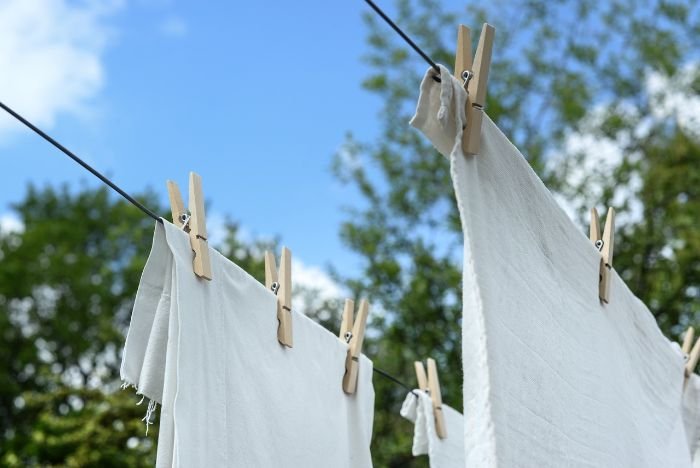
Air-dry whenever uncertainty remains. Sunlight can change some stains and fibres, and it is not a controlled substitute for washing or bleach. Follow the garment’s drying label, avoid prolonged strong sun on vulnerable items and check the dry fabric again before ironing or tumble-drying.
What to do with old, washed or dried stains
An old stain is harder because heat, oxidation and repeated washing may have changed it. Start by brushing off dry residue, re-wetting only as the care label allows and applying a compatible pretreatment for the most likely stain family. Give the product its labelled contact time, rinse and wash. A second controlled cycle is better than scrubbing until the fabric thins.
If the item has been tumble-dried, a remaining shadow may still lighten. Full removal is uncertain. Heat-set oil can leave a translucent ring; tannin and pigment can bond more firmly; protein may darken. Inspect the fibres as carefully as the mark. Fraying, thinning, a shiny patch or loss of stretch means the treatment is becoming the larger problem.
Do not disguise damage as cleaning progress. Chlorine bleaching a whole item to chase one stubborn spot can weaken sound fabric and alter trims. A garment-care specialist can assess an unknown, valuable or dry-clean-only item. Professional treatment still cannot reverse every chemical change or fibre loss.
How Samyx Cleaning can help after a clothing spill
Stop when the care label excludes the process, dye transfers to the test cloth, the stain spreads, the surface becomes rough or shiny, the fibres weaken, or the garment contains vulnerable lining or decoration. Dry-clean-only clothing, silk, wool, acetate, vintage pieces and valuable occasion wear belong with a garment-care specialist. Samyx Cleaning does not provide laundry, dry cleaning or garment restoration.
A clothing spill sometimes reaches floors, cupboards, worktops or several parts of a room. Once the garment has been isolated for separate care, Samyx one-off cleaning can help with compatible household surfaces and the wider clean-up. The booking covers the home-cleaning task, not treatment of the garment.
Book One-Off Cleaning
Enter your postcode to view our rates and availability in your area.

Frequently asked questions
-
How do you remove a stain that has already dried on white clothes?
Brush off dry residue, identify the likely stain and apply a care-label-compatible pretreatment. Wash as directed and air-dry for inspection. A heat-set stain may need another controlled treatment and may not disappear completely.
-
Should you use hot or cold water on stains in white clothes?
Use the temperature suited to the stain and permitted by the garment label. Cool water is the safer first rinse for blood, egg and other protein marks. Oil may respond better to warmer washing; the care label sets the maximum.
-
Does washing-up liquid remove stains from white clothes?
A very small amount can help release grease from some washable, colourfast fabrics. It is not suitable for every garment and must be rinsed out before machine washing. A correctly dosed laundry pretreatment is often easier to control.
-
Is oxygen bleach safer than chlorine bleach for white clothes?
Oxygen bleach is often compatible with more washable white fabrics. Some fibres and finishes still exclude it. Chlorine bleach has narrower uses. Check both the garment label and product label before using either one.
Important: White garments vary in fibre, dye, finish, trim and care instructions. Follow the garment label and stain-remover label, test any permitted treatment on a hidden area and never mix cleaning products. Do not combine chlorine bleach with acids, ammonia or other cleaners. Stop if colour transfers, the fabric changes texture or fibres weaken, and use a garment-care specialist for dry-clean-only, delicate, embellished, valuable or already damaged items.
Conclusion: protect the fabric as well as the colour
A successful result is a cleaner garment that has kept its strength, shape and finish. The stain source tells you what needs to move; the care label tells you how much treatment the item can take. Prompt blotting, a clean backing towel and one well-chosen pretreatment usually give a washable white item its best chance.
Finish by checking the garment wet and dry in neutral light. Repeat only a method that remains compatible after rinsing the first product away. A faint heat-set shadow is preferable to fibre thinning, dye loss or damaged trim. When the construction, prior treatment or stain source is uncertain, stopping and using a garment-care specialist is the more careful result.
Author: Svetlana Georgieva (Clara)
Hi, I’m Svetlana Georgieva, but you can call me Clara. As the co-founder and heart behind Samyx Cleaning, I’m devoted to sharing the art of a clean space. Let’s journey into a cleaner, more joyful life together with tips from London's cleaning experts.

Discover more of our cleaning secrets: