
How to Remove Smell from Fridge: Find the Source First

Last modified on: 26/08/2026
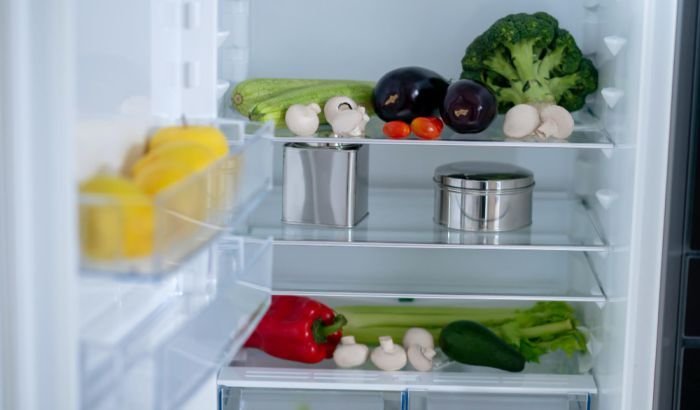
If you are trying to work out how to remove smell from fridge safely, start by finding what is producing it before adding any deodoriser.
A forgotten container is the easy answer. A leak beneath a drawer, residue in a seal channel, trapped moisture or a fault can be harder to locate. The useful order is to protect the food, remove the source, clean only compatible accessible parts, dry everything fully and then reassess the empty fridge.
Key Takeaways
- A deodoriser cannot remove spoiled food, a hidden spill or an appliance fault.
- The smell clue and its location decide which area to inspect first.
- Use one compatible labelled cleaner and keep liquid away from electrical openings.
- Complete drying matters because retained moisture can create another odour route.
- Persistent smell after a complete accessible clean needs diagnosis, not a sequence of stronger mixtures.
Table of Contents
How to remove smell from fridge starts with the source
Open the fridge and pause before wiping. Smell is evidence that something is present or has happened. It does not identify the cause by itself. Work from the most direct clue: a strong food smell near a container, a sour note beneath a drawer, a damp smell around a seal, or a hot or electrical smell near the controls.
| What you notice | Likely place to check | Controlled first action | Stop or escalate when |
|---|---|---|---|
| Strong fish, cheese, onion or spice smell | Open or poorly sealed food and nearby packaging | Remove the source, inspect for drips and clean the affected compatible area | The smell remains in an empty, dry fridge after the accessible area is complete |
| Sour, sweet or rotten smell low in the cabinet | Produce drawer, drawer channel, lower corner or leaked container | Lift out removable parts as the manual allows and inspect beneath them | Liquid has entered a vent, lining joint or inaccessible opening |
| Damp or musty smell | Wet seal fold, condensation route, residue or localised visible growth | Find the moisture source and clean only accessible compatible material | Growth is extensive, returns, or sits inside insulation, vents or damaged material |
| Smell from the back or below | User-accessible drain or drip pan only if the manual identifies one | Follow the model instructions without removing fixed panels | Access needs tools, the appliance must be moved unsafely, or wiring is exposed |
| Burning, hot-plastic, electrical or unusual chemical smell | Controls, plug, cable, compressor area or cooling system | Follow the appliance safety procedure and keep people away from the suspected fault | Do not continue cleaning; contact the manufacturer or a qualified engineer |
Start with visible food and packaging. A lid may look closed. Liquid can still run down its side. Check the underside of containers, the lip of the shelf and the channel beneath the drawer. Use a torch for shadowed corners. Keep tools out of vents and controls.
Use timing and location as clues
Notice when the smell is strongest. An odour released as the door opens often directs attention to food, packaging or an interior spill. A smell strongest below or behind a closed appliance may point towards a drainage or appliance route. This is a search aid, not a diagnosis. Do not lean over a suspected electrical or chemical source to identify it by smell.
Check one zone at a time and use a clean cloth for each suspect area. This prevents residue from a drawer being transferred to a seal or shelf. Record where transfer appears. The pattern helps you decide whether an accessible clean is complete or the problem sits outside ordinary household work.
Separate odour from a temperature problem
A fridge can smell neutral and still be too warm. It can also hold the correct temperature and contain a local food spill. Use a fridge thermometer and the appliance instructions to check the temperature separately from the cleaning assessment. UK guidance uses a range of 0°C to 5°C for chilled food storage.
If the appliance is above that range, check door closure, loading and any user checks named by the manufacturer. Cleaning an accessible dirty seal may help it close. Cleaning cannot repair a split seal, sensor, fan, compressor or cooling-system fault. The consequences of a dirty fridge and the consequences of failed chilling require different decisions.
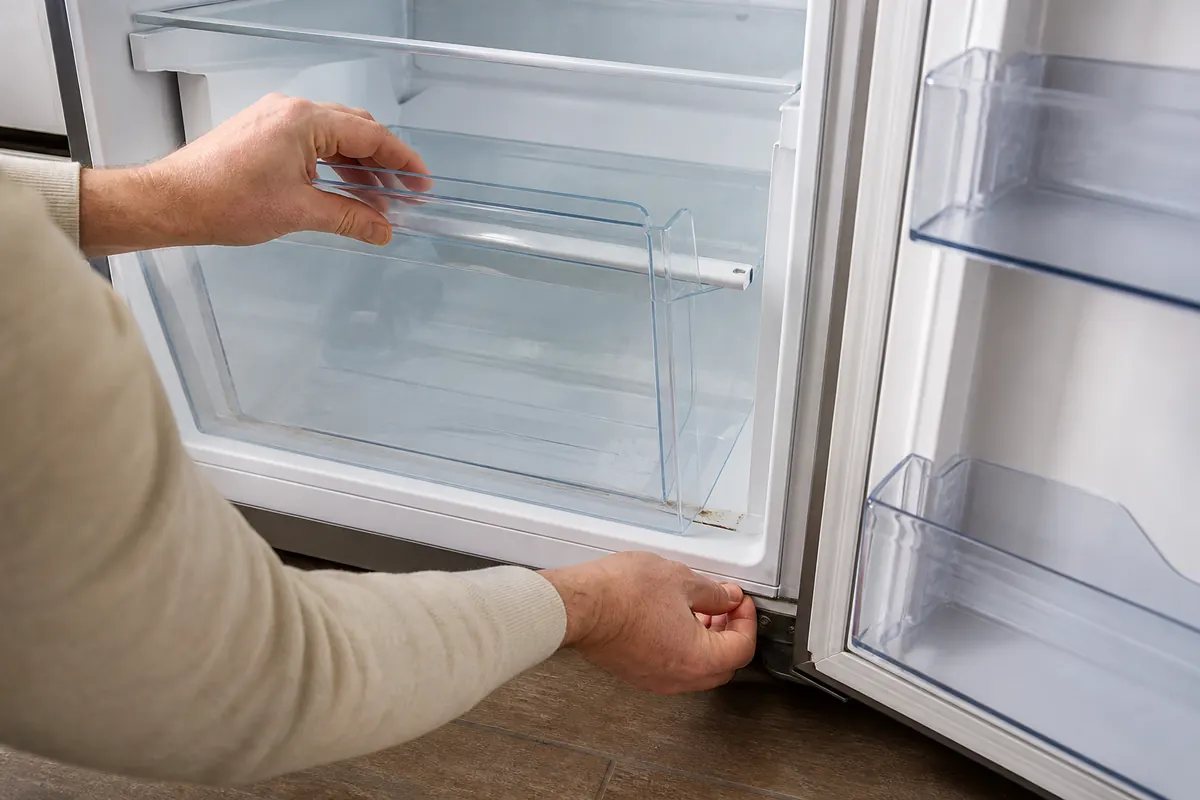
A source-first method for ordinary fridge odours
This method is for ordinary food residue and smells on user-accessible domestic-fridge surfaces. It is not a route for an electrical fault, extensive mould, damaged insulation or a cooling-system problem. Read the appliance instructions before removing a shelf, drawer, drain cover or seal component.
1. Protect the food and prepare the appliance
Move chilled food to a suitable cool box or another working fridge before the temperature rises. Keep raw food sealed and separate from ready-to-eat items. If food may already have been too warm or spoiled, cleaning the shelf cannot reset its storage history. Follow current food safety guidance. Do not taste food to decide.
Switch off or unplug the appliance only when the manufacturer instructs you to do so for interior cleaning and you can do it safely. Keep the cable, plug, controls, lamp housing and ventilation openings dry. Lay a towel where a removable part will be placed, and use separate clean cloths for dirty work and the final pass.
2. Remove the source and loose residue
Bag spoiled food and leaking packaging without dragging it across other shelves. Blot free liquid before it spreads into a joint. Lift crumbs and dry particles. Do not grind them into plastic. If a container has leaked, inspect the shelf edge, support rail and part immediately below it.
Move the waste out of the kitchen promptly. Clean the handle, worktop or floor if the same package touched them, using a fresh cloth and the method appropriate to that surface. Fridge odour removal fails quickly when the source is left in an indoor bin or residue is transferred straight back by dirty hands.
3. Wash compatible removable parts
Remove shelves and drawers only in the order shown in the manual. Support glass with both hands. Sudden temperature change can stress some glass components, so do not move a cold shelf directly into hot water; follow the model instructions and allow any required temperature equalisation.
Use the cleaner, dilution and water temperature permitted for that component. A mild detergent solution is suitable only when the manufacturer says so. Soaking, a dishwasher or abrasive scrubbing can cloud plastic, damage coatings or affect fitted trims. Rinse where the product label or manual requires it.
4. Clean the accessible interior and door seal
Work from the cleanest upper surfaces towards the lower corners. Apply product to the cloth when spraying could enter a vent, control or lamp opening. Give dried residue the labelled contact time. Avoid hard scraping. A soft, non-scratch tool may help only if both the surface and manufacturer guidance permit it.
Wipe accessible seal folds gently and support the rubber. Do not stretch, detach or flood the seal. Clean the matching cabinet edge and check for food trapped at the lower hinge side. A split, loose or distorted seal is a repair question because cleaning cannot restore its shape.
5. Dry, refit and reassess
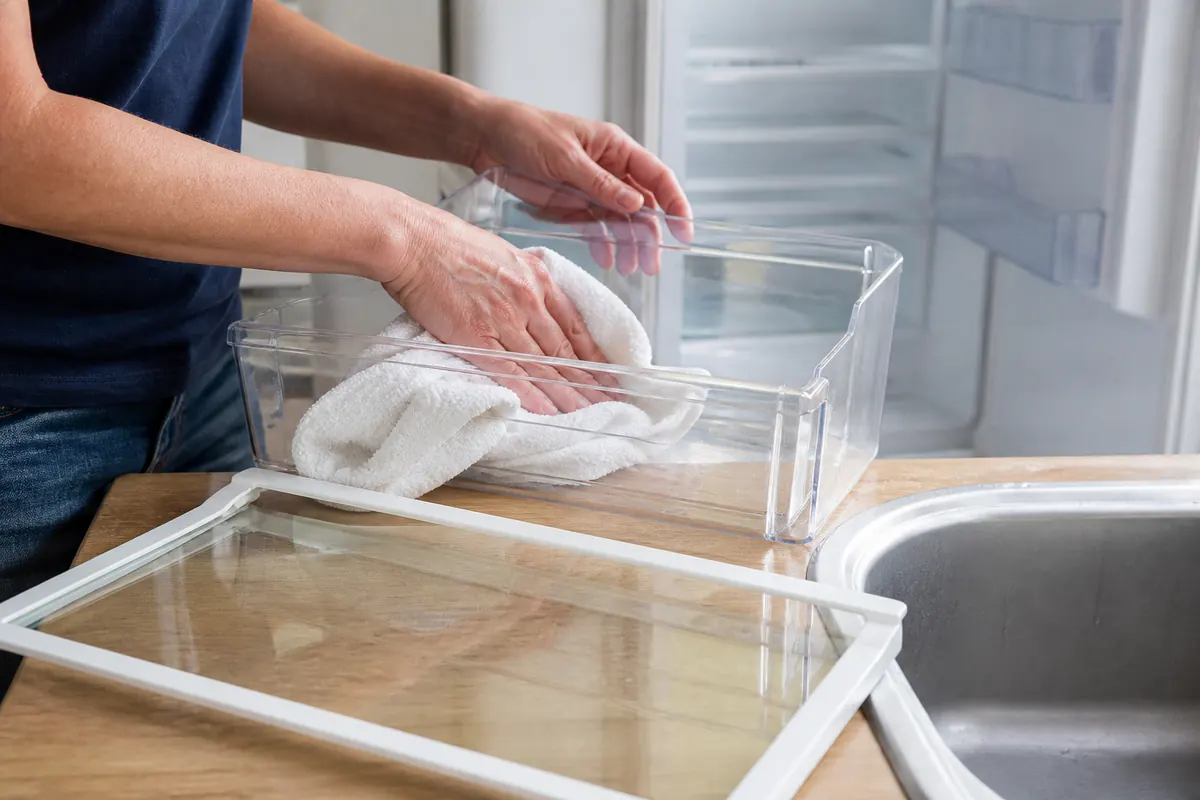
Dry the interior, seal, shelf supports, drawers and shelves completely with clean lint-free material. Look for water in channels and corners before refitting anything. Reassemble in the documented order without forcing clips or rails, then return clean, closed containers only after the fridge is operating as instructed.
Assess the smell with the fridge empty and dry before adding an absorber. A faint food aroma may disperse after ventilation permitted by the manual. A strong smell that returns points to a missed source, retained moisture or a route beyond accessible cleaning.
Ask About a Fridge Clean
Enter your postcode to view our rates and availability in your area.

What odour absorbers can and cannot do
An absorber belongs at the end of the process. It may reduce molecules remaining in the air. It cannot make spoiled food sound, draw a spill out of insulation or repair a drain, seal or cooling fault. Keep any loose material in a stable open container where it cannot spill onto food or block an air path.
| Option | Reasonable role | Important limit |
|---|---|---|
| Bicarbonate of soda | May help with residual odour in a clean, dry fridge | Use a fresh, food-area-suitable container and replace it as the maker advises; it does not clean the source |
| Activated-charcoal fridge absorber | Designed to adsorb some airborne odour when used as directed | Check the product’s placement and replacement instructions and keep loose granules contained |
| Coffee, citrus or vanilla | Adds or exchanges scent without proving that the original odour is gone | Can spill, retain moisture or create another food smell; it is not a diagnostic method |
| White vinegar | May be allowed for a particular removable part or surface only when the manual permits it | Acidity can affect materials, seals and metals; the white vinegar limits still apply and it must never be mixed with bleach |
| Scented commercial deodoriser | May be formulated for a refrigerator if the label explicitly says so | Fragrance can mask a persistent problem; protect food and follow all placement instructions |
Do not build a multi-ingredient recipe inside the fridge. Acids, alkalis, oxidisers, fragrances and detergents have different material and residue risks. Choose one route that the appliance manual and product label both permit.
You may also enjoy:

Why the fridge still smells after cleaning
A spill remains beneath or behind a removable part
Repeat the inspection, not the chemistry. Check the underside of the drawer, shelf supports, lower corners, door bins and accessible seal folds. Look for residue that was softened and moved without being removed. Use a clean white cloth to see whether colour or soil still transfers.
The drain or drip pan needs a model-specific route
Some appliances have a user-accessible drain opening or drip pan; others do not. Locate it in the manual before touching anything. Never remove fixed panels, tip the appliance, work around exposed wiring or pull a heavy fridge forward without a safe method. A blocked or inaccessible route belongs with the manufacturer or a suitable engineer.
Moisture, mould or damaged material is involved
A small accessible mark still needs material-compatible treatment and a moisture-source check. Widespread growth, repeated return, damaged lining or contamination inside vents and insulation is not an ordinary wipe-down. Stop. Do not disperse growth or pour products into a hidden space.
The smell suggests an appliance fault
A burning, hot-plastic, electrical or unusual chemical smell needs immediate caution. Follow the maker’s safety instructions, avoid switches or plugs if doing so would be unsafe, ventilate as appropriate and contact the manufacturer or a qualified engineer. Surface cleaning is not a test for refrigerant, wiring or compressor faults.
Handle common fridge-smell situations differently
Strong food such as fish, cheese or onion
Remove the food, its packaging and any liquid transfer. Wash or replace the storage container as its instructions permit. Clean the exact shelf and adjacent surfaces, dry them and return strong-smelling food only in a sound sealed container. Adding lemon or vanilla simply creates a second smell.
A sour milk, meat-juice or produce leak
Contain the liquid before moving other items. Treat raw-food leakage as a cross-contamination route: keep it away from ready-to-eat food, wash hands and clean every compatible surface the package or liquid touched. Replace porous or damaged accessories when the manufacturer says they cannot be cleaned safely.
Spoiled food after a power or cooling problem
Separate the food decision from the cleaning decision. Use current food-safety guidance for food that may have warmed, and do not taste it as a test. Once unsuitable food is removed, clean the accessible residue and dry the fridge. Confirm that the appliance returns to its intended temperature range before restocking; repeated loss of cooling needs appliance support.
A switched-off or second-hand fridge
Inspect the whole accessible interior before use. Old residue can sit beneath drawers, around seals or in an accessible drainage route. Check for damage, missing parts, insects, extensive mould and unknown chemical residue. If the history is unclear or the appliance smells electrical when powered, seek manufacturer or engineer advice before storing food.
Keep the smell from returning
- Wipe a compatible fresh spill promptly as soon as it is safe to move the food around it.
- Store strong-smelling and liquid foods in clean containers with sound lids.
- Keep older suitable food visible so it can be used before it is forgotten.
- Leave the air paths shown by the manufacturer clear and avoid overpacking shelves.
- Check that the door closes fully and that containers do not press against the seal.
- Use a fridge thermometer and keep the appliance within the 0°C to 5°C range recommended in UK food-safety guidance.
These checks reduce missed spills and forgotten food. They do not replace model-specific maintenance. A repeated drain, seal, condensation or cooling problem needs its own diagnosis.
When Samyx Cleaning can help with a fridge clean
Samyx Cleaning can discuss an inside-fridge clean as an agreed additional task within wider one-off cleaning in London. State the appliance condition, whether it will be emptied and safely prepared, and which wider kitchen or home areas need attention when requesting a quote.
The agreed work covers accessible compatible surfaces. Food disposal decisions, extensive mould, pest contamination, drainage dismantling, seal replacement, cooling faults, electrical work and appliance repair require the appropriate food-safety, manufacturer, engineer or specialist route. No cleaning visit can certify stored food as safe or guarantee that an inaccessible odour source will disappear.
Important: Follow the fridge manual and cleaning-product label over general guidance. Move food to suitable cold storage, patch-test where surface compatibility varies, use any stated gloves and ventilation, rinse when instructed and dry every part before refitting. Never mix cleaning products, especially chlorine bleach with vinegar, acids, ammonia or another cleaner. Stop for discolouration, cracking, seal damage, repeated mould, unusual heat, sparks, loss of cooling or a burning, electrical or refrigerant-like smell. Seek manufacturer, qualified engineer or specialist advice for a valuable, damaged, unknown or unsafe appliance before continuing.
Book One-Off Cleaning
Enter your postcode to view our rates and availability in your area.
Frequently asked questions
-
What absorbs bad smells in a fridge?
Bicarbonate of soda or a labelled activated-charcoal fridge absorber may reduce residual airborne odour after the source has been removed and the fridge is clean and dry. Neither can remove spoiled food, hidden liquid, mould or an appliance fault. Follow the absorber directions and keep it contained away from food and air vents.
-
Why does my fridge still smell after cleaning?
A spill may remain beneath a drawer, in a seal channel or in a user-accessible drain or drip pan. Retained moisture, damaged material, repeated mould or an appliance fault can also be responsible. Reinspect accessible parts using the manual, then seek manufacturer or engineer help if the source is inaccessible or the smell suggests heat, electrics or cooling trouble.
-
Does bicarbonate of soda remove fridge odours?
It may help manage a mild residual smell in a clean, dry fridge. It does not clean or disinfect the source. Put it in a stable open container, follow any product directions and replace it when advised. A persistent smell needs another source check, not a larger amount of bicarbonate.
-
How long does it take for a fridge smell to go away?
There is no reliable universal time. A light food aroma may fade after source removal, cleaning, complete drying and permitted ventilation. A strong smell that returns or remains in an empty dry fridge suggests missed residue, retained moisture, damaged material or a fault that needs further diagnosis.
Author: Svetlana Georgieva (Clara)
Hi, I’m Svetlana Georgieva, but you can call me Clara. As the co-founder and heart behind Samyx Cleaning, I’m devoted to sharing the art of a clean space. Let’s journey into a cleaner, more joyful life together with tips from London's cleaning experts.

Discover more of our cleaning secrets: