
Cleaning High Touch Surfaces: When Cleaning Is Enough

Last modified on: 29/07/2026
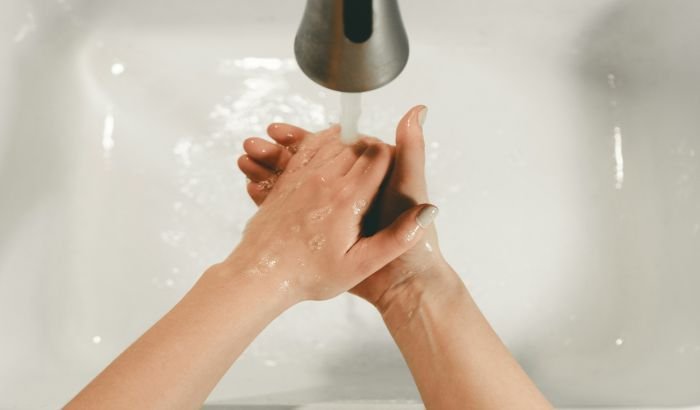
Cleaning high touch surfaces at home starts with a simple distinction: routine cleaning removes grease, dust and much of the material left by hands. Disinfection is an additional step for a specific contamination or health risk. Door handles, switches, taps and shared controls deserve regular attention, though they do not all need the same product or frequency.
Clean first; disinfect only when the risk justifies it
- For an ordinary household routine, use a clean cloth with a surface-compatible detergent or cleaner and remove the residue the label tells you to remove.
- If a surface is visibly dirty or sticky, clean that soil away before considering a disinfectant. Dirt can stop the product reaching the surface evenly.
- Add disinfection after a relevant contamination, during illness when current advice calls for it, or for another clearly identified risk. Every touched object does not need disinfecting after every use.
- The product label controls dilution, contact time, ventilation, rinsing and excluded materials. Device and surface care instructions take priority over a general household method.
Key takeaways
- Prioritise shared touchpoints that are used frequently, become visibly soiled or sit near food and bathroom tasks.
- Routine cleaning and disinfection are different actions. Disinfectant use needs a reason, a compatible surface and the full label contact time.
- A fresh cloth face, sensible room order and separate cloth zones reduce the chance of carrying soil from one surface to the next.
- There is no universal twice-daily rule for every home. Frequency changes with shared use, visible soil, food preparation, illness and the people using the space.
- Electronics, painted finishes, plated metal and food-contact surfaces need their own care instructions; one spray cannot suit them all.
Table of Contents
What counts as a high touch surface at home?
A high touch surface is an item handled repeatedly by one person or shared by several people. Touch frequency matters alongside location and use. A cupboard pull beside raw-food preparation carries a different cleaning decision from a bedside drawer handle used by one person.
Start with the route people take through the home. Hands meet the front-door handle, light switches, stair rails and room handles before reaching taps, appliance controls and shared electronics. The list below is a priority map, not a demand to treat every item with disinfectant.
| Area | Common touchpoints | What changes the priority |
|---|---|---|
| Entrance and hallway | Front-door handle, keys, light switches, stair rail and alarm panel | Several arrivals, visitors, children or visible marks |
| Kitchen | Tap, fridge handle, cupboard pulls, kettle handle, oven controls and bin lid | Raw-food handling, cooking grease and food-contact transfer |
| Bathroom | Tap levers, flush controls, door handle, cabinet pull and soap dispenser | Shared use, splashes and visible residue |
| Living and work areas | Remote controls, keyboards, mice, desk edges and shared switches | Several users, food at the desk or a device used outside the home |
| Bedrooms and children’s rooms | Door handles, drawer pulls, bedside switches and shared toys | Age, mouthing behaviour, illness and manufacturer cleaning limits |
| Portable shared items | Phones, tablets, game controllers and reusable bags | Movement between rooms, public spaces and food areas |
Cleaning or disinfecting: choose by risk
Cleaning uses physical action plus a suitable detergent or cleaner to lift soil from the surface. Disinfection uses a product with a stated antimicrobial purpose and depends on correct preparation, coverage and contact time. Applying disinfectant over crumbs, grease or dried residue skips the first part of the job.
| Household situation | First action | When disinfection may be appropriate | Main limit |
|---|---|---|---|
| Normal routine with no special health concern | Clean shared touchpoints with a compatible detergent or household cleaner | Usually unnecessary unless the product, task or current advice gives a reason | A stronger product does not replace wiping and residue removal |
| Visible dirt, grease or sticky marks | Remove loose matter, then clean until the soil is gone | Only after cleaning, when there is a separate contamination reason | Grease and dirt can interfere with even product contact |
| Raw-food or bodily-fluid contamination | Contain the contamination and clean with materials kept away from other rooms | Use a suitable product and method required for that contamination and surface | Food-contact rinsing, PPE and disposal instructions may apply |
| Illness or a vulnerable person in the home | Prioritise shared touchpoints and follow current professional or official advice | Use only the advised, label-compatible product and interval | A general cleaning article cannot replace infection-specific advice |
| Electronics, painted finishes or unknown coatings | Check the manufacturer’s care instructions before adding moisture | Only when the device/surface maker permits the product and method | Liquid can enter openings or damage a coating |
Much of the recorded healthcare surface research concerns hospitals and other controlled settings. It helps explain why frequently handled points receive attention without creating a fixed household timetable. Homes have different users, risks, materials and cleaning resources.
Need Help With Recurring Cleaning?
Enter your postcode to view our rates and availability in your area.

Set up a small, surface-safe cleaning kit
A compact kit makes the routine easier to repeat and reduces the temptation to reach for an unsuitable product. Keep several washable microfibre cloths, a material-compatible household cleaner, disposable paper for a contamination that should not enter the laundry, and any protection stated on the label. Colour-coded cloths can help separate kitchen, bathroom and general areas, provided everyone in the home knows what each colour means.
One bottle is rarely right for every touchpoint. Check varnished wood, plated metal, painted switches, natural stone, acrylic screens and electronic controls separately. Store the original labels with the products so dilution, contact time, ventilation and rinsing instructions remain available. A small dry cloth dedicated to screens and controls is useful because it is less likely to carry grease or bathroom residue.
- Choose enough clean cloths to change between zones and when a face becomes visibly loaded.
- Keep a soft brush or cotton bud only for dry detail work where the manufacturer permits it.
- Use a labelled laundry bag or container for used reusable cloths so they do not return to the clean kit.
- Replace damaged spray heads and unreadable labels; never identify an unknown liquid by smell.
Prepare only what the session needs. Extra diluted product can create a storage problem, especially when the label gives a short use period. Keeping the kit modest also makes it easier to notice when a cloth, glove or product needs replacing.
Cleaning high touch surfaces room by room
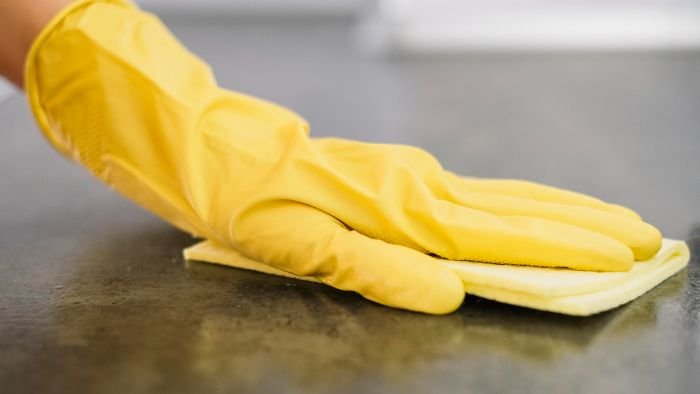
Prepare the route before wetting a cloth. Put away food, open a window when the product requires ventilation and choose separate cloths for kitchen, bathroom and general living areas. Fold each cloth into usable faces so a dirty side is not dragged across the next handle.
Read the product label before starting. It identifies dilution, dwell or contact time, rinsing, protective equipment and material exclusions. A surface that must stay wet for a stated period needs enough product to meet that instruction, without flooding joints, switches or edges.
Door handles, switches and cupboard pulls
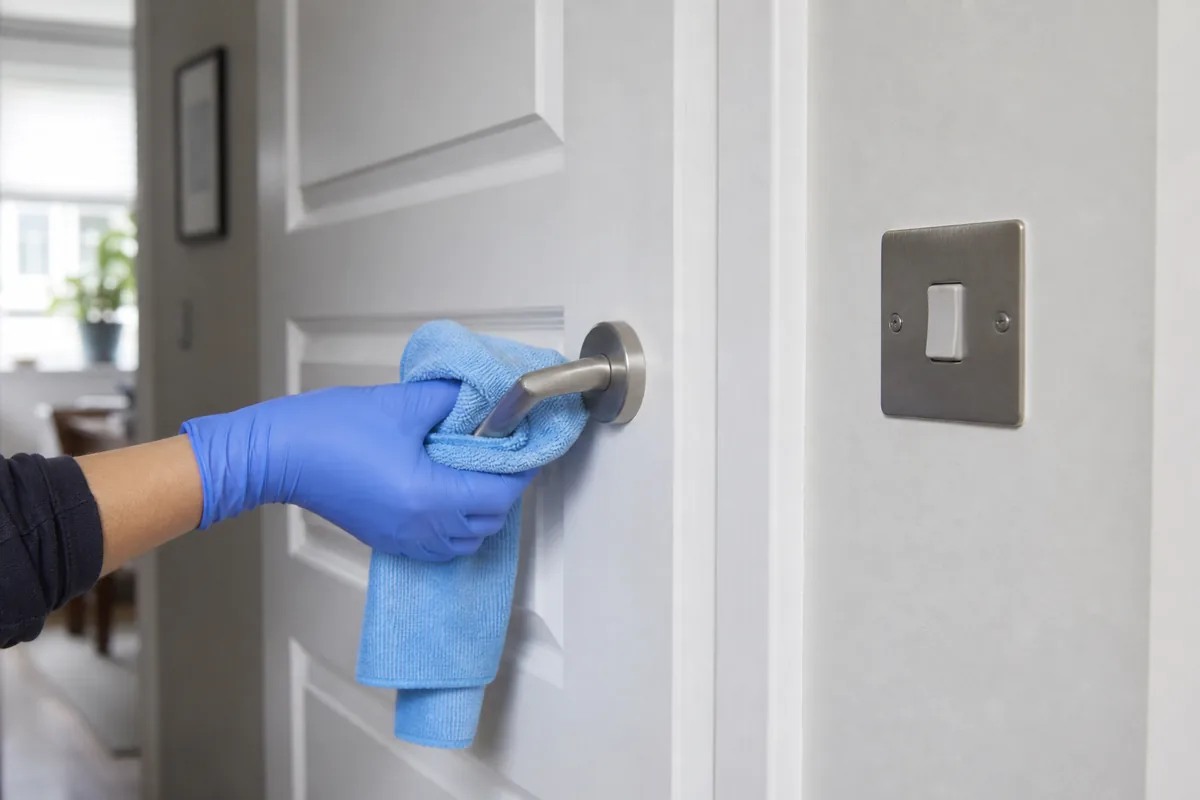
Remove dust from ridges and the join around the handle first. Wipe the handle, rose or backplate and the area where fingers push the door. Use a lightly damp cloth around switches and alarm panels, keeping liquid away from gaps. Dry plated metal if the care instructions call for it; prolonged moisture can mark some finishes.
Work from cleaner bedroom and living-area points towards kitchen and bathroom hardware. Change the cloth face when it shows visible soil. A switch that looks clean can still collect skin oils, so physical wiping matters even when no disinfectant is needed.
Kitchen handles, taps and food-area edges
Clean the fridge handle, tap lever, kettle handle, cupboard pulls, oven controls and bin lid as separate points in the kitchen route. Remove food residue and grease before using any product that requires a clean surface. Keep the cloth used on the bin away from taps, worktop edges and appliance handles.
Food-contact areas may need rinsing after product use. Follow the label before preparing food again. High-use kitchen points also sit within a wider kitchen food safety routine that separates raw-food tasks from ready-to-eat areas.
Bathroom taps, flush controls and door hardware
Soap film and limescale can shelter grime in seams around taps and controls. Use a material-compatible bathroom cleaner for the deposit, then remove or rinse it as directed. Keep toilet-area cloths within that zone. Move to the sink only with a fresh cloth or a clearly separated clean side.
Do not assume an acid-based limescale product suits plated taps, natural stone, grout, paint or a nearby wooden cabinet. Localised damage often starts where liquid is left around an edge. Apply to the cloth when the label permits, avoiding a broad spray across several materials.
Phones, keyboards, remote controls and electronics
Power down or unplug equipment when the manufacturer instructs you to do so. Remove loose dust with the approved dry method, then use only the amount of moisture and product the device maker permits. Never spray a screen, keyboard, remote or control panel directly. Liquid can enter around buttons and ports before it is visible on the outside.
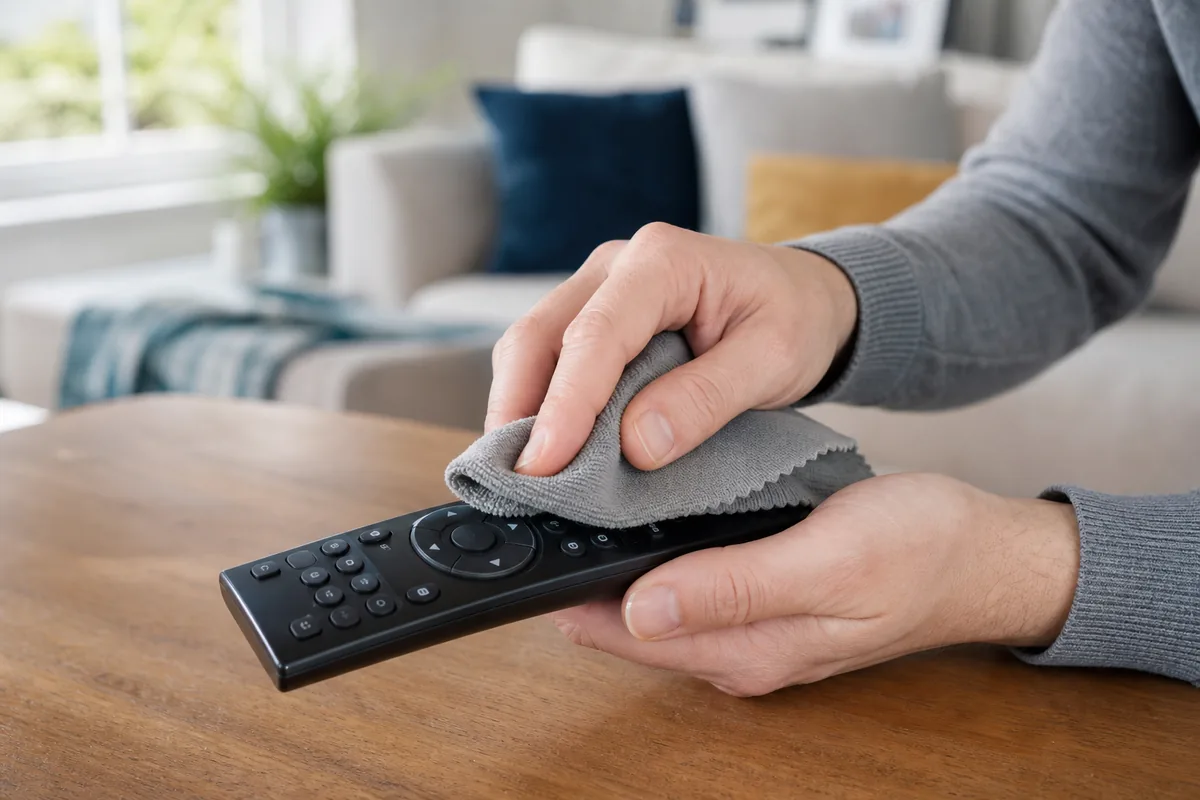
Use a clean dry corner around buttons and seams, and let any permitted dampness evaporate before the item is powered again. Shared devices can be added to the household routine without turning every use into a chemical treatment.
How often should high touch surfaces be cleaned?
Frequency should follow use and contamination. A shared front-door handle in a busy household may need attention during the daily reset. A spare-room switch may wait for the weekly clean. Visible soil, a spill or raw-food transfer overrides the calendar and should be dealt with promptly.
| Trigger | Practical timing | Reason |
|---|---|---|
| Sticky mark, spill or visible soil | Clean as soon as the surface can be handled safely | Fresh residue is easier to remove and should not be spread by later touches |
| Raw-food or bodily-fluid contamination | Deal with it immediately using the appropriate contained method | The event creates a specific contamination route |
| Shared, heavily used household point | Add it to a daily or regular reset according to actual use | Several hands and repeated use increase the cleaning load |
| Lower-use private point | Include it in the weekly room clean or when visibly marked | Use is limited and there is no reason for an intensive schedule |
| Illness or individual clinical advice | Follow the current interval and product advice for that situation | The health context changes the ordinary household decision |
A simple daily cleaning routine can carry the busiest handles, taps and shared controls without expanding into a whole-home deep clean. Lower-use points can stay on the weekly list. Review the pattern when occupants, working arrangements or health needs change.
Stop cross-contamination during cleaning
The cloth and the order of work matter as much as the product. A cloth collects grease, crumbs and residue as it moves. Continuing with the same soiled face can transfer that material to the next handle, even when the room now smells of cleaner.
- Keep kitchen, bathroom and general-area cloths separate.
- Fold a cloth into several faces and turn to a clean face before the used side becomes loaded.
- Change or rinse the cloth according to the product and task; one cloth should not travel across the whole home.
- Move from lower-soil areas towards toilets, bins and contamination points.
- Wash hands after contaminated tasks and before food handling.
- Store products in their original labelled containers and never combine leftover mixtures.
Product mixing, poor ventilation and using a chemical on the wrong finish are among the most preventable household cleaning hazards. Keep the method simple enough to repeat accurately, and stop when the surface response or label instruction is unclear.
You may also enjoy:

Common mistakes that damage surfaces or waste effort
- Spraying switches, sockets, keyboards or remote controls directly and ignoring the device instructions.
- Using one cloth from the kitchen bin to the tap, fridge handle and living-room controls.
- Applying disinfectant over grease or dried soil without cleaning the surface first.
- Wiping a disinfectant off immediately when its label requires the surface to stay wet for a stated contact time.
- Leaving a product on for longer than directed in the hope of a stronger result.
- Treating painted wood, plated metal, natural stone, plastic and glass as if they share one chemical tolerance.
- Mixing products or decanting them into an unlabelled bottle.
- Making disease-prevention claims for a domestic wiping routine or treating it as a replacement for situation-specific health advice.
A clean-looking surface may still carry product residue if the rinsing step was skipped. The opposite is also possible: a surface can look marked after cleaning because the finish has dulled or lifted. Repeated scrubbing will not repair a damaged coating. Stop and identify the material before another treatment.
Another missed step is cleaning the obvious centre of an item and leaving the edges people actually grip. Work around the underside of a handle, the rim of a flush control and the outer buttons of a remote, using only a method the material permits. Good coverage across the whole item comes from a deliberate wipe, not from adding more chemical.
How Samyx Cleaning can keep touchpoints under control
A recurring service becomes useful when handles, taps, switches and shared controls fall behind across several rooms, even though the household manages spills and daily food tasks. The professional value is a repeatable route and agreed priorities, not an occasional burst of strong product.
Samyx Cleaning includes kitchens, bathrooms and high-touch points in its London regular domestic cleaning visits. The client chooses the visit duration and priorities, so the cleaner can focus on the touchpoints that gather soil fastest as the rest of the agreed room routine continues.
Routine domestic cleaning is not a healthcare-grade infection-control or specialist decontamination service. Tell the office about recent illness, vulnerable occupants, damaged finishes and product restrictions before the visit so the request can be assessed honestly. A situation outside routine scope needs the appropriate professional route.
Book Regular Domestic Cleaning
Enter your postcode to view our rates and availability in your area.
Conclusion: use the lightest effective method
A reliable routine begins with the points people actually touch, then matches the method to the surface and the current risk. Clean visible soil first, separate cloths by zone and reserve disinfection for situations that justify it. This approach keeps ordinary household work manageable and reduces unnecessary chemical use.
Review the route when the home changes: more occupants, a new shared device, food preparation in another area or specific health advice can all move a touchpoint higher on the list. The product label and manufacturer instructions remain the final authority for safe use.
Write the busiest points into the room routine instead of relying on memory. A short route covering the entrance, kitchen, bathroom and shared controls is easier to maintain than a long generic checklist. When a task needs extra precautions, pause the normal route, contain that work and return with fresh materials.
Frequently asked questions
-
What should be used to clean high touch surfaces?
Use a clean cloth and a detergent or household cleaner that is compatible with the surface. Remove visible soil first. Use a disinfectant only when the situation calls for it, and follow the label for contact time, ventilation, rinsing and excluded materials.
-
How often should high touch surfaces be cleaned?
Clean after visible soil or a specific contamination and include shared, heavily used points in the household’s daily or regular routine. Lower-use private points may only need weekly attention. Illness or individual clinical advice can change that interval.
-
Do high touch surfaces need disinfecting every time?
No. Routine cleaning is often the appropriate household action when there is no special contamination or health concern. If disinfection is justified, clean away dirt first and then use a compatible product for the full label contact time.
-
How do you clean high touch electronics?
Follow the device manufacturer’s care instructions, power down or unplug it when directed, and keep liquid out of buttons, ports and openings. Use only the permitted cloth and moisture level, and never spray the device directly.
Important: Follow the cleaning-product label and the surface or device manufacturer’s care instructions; they take priority over general guidance. Test an inconspicuous area where colour or finish may change, ventilate as directed, wear the stated protection and never mix cleaning products. Keep liquid out of switches, sockets, controls and electronic openings, and follow any food-contact rinsing instruction before the surface is used again. Stop if a finish dulls, discolours, softens or lifts. For a vulnerable person, a diagnosed infection or a specialist surface, use current professional or manufacturer advice rather than a general household schedule.
Author: Svetlana Georgieva (Clara)
Hi, I’m Svetlana Georgieva, but you can call me Clara. As the co-founder and heart behind Samyx Cleaning, I’m devoted to sharing the art of a clean space. Let’s journey into a cleaner, more joyful life together with tips from London's cleaning experts.

Discover more of our cleaning secrets: