
What Happens If You Don’t Clean Your Fridge?

Last modified on: 23/07/2026
What happens if you don’t clean your fridge depends on whether the problem is residue, unsafe food storage, or a fault that stops the appliance cooling properly. Spills and old food can create odours and contamination routes. A warm fridge needs a temperature check and possibly an engineer, not another wipe-down.
The practical answer: separate dirt, food safety and faults
- Remove expired food and deal with leaks or sticky spills promptly; residue and odour show a cleaning problem, not proof of a named pathogen.
- Check that the fridge is holding 0°C to 5°C; if it is warm or food may have been stored unsafely, cleaning alone is not the answer.
- Keep raw meat, fish and poultry sealed on the bottom shelf and clean leaked areas with a product suitable for food-contact surfaces.
- Route persistent mould, repeated odour after cleaning, sparks, unusual heat or a cooling fault to the appropriate specialist.
Key takeaways
- Residue, expired food, unsafe temperature and appliance failure have different causes and responses.
- Safe chilling and food separation matter more than dramatic claims about germs.
- Visible dirt cannot identify a pathogen or prove why someone became ill.
- Spills and leaks need prompt attention; a deeper clean should follow the fridge’s condition and instructions.
- A warm fridge, an electrical warning sign or recurring mould needs more than ordinary cleaning.
Table of Contents
What happens if you don’t clean your fridge over time?
Spills, sticky residue and odour
A small leak rarely stays in one neat spot. Liquid can run under a drawer, collect around a shelf support or dry into a film that catches crumbs. Each new item placed on that surface can pick up some of the residue and move it elsewhere.
Odour usually becomes noticeable before the fridge looks heavily soiled. The source may be a leaking container, forgotten produce, liquid below a drawer or food left uncovered. Removing the source matters as much as wiping the visible mark. Fragrance only masks the clue and can make it harder to tell whether the source has gone.
Marks and smells that remain after the source has been removed need a more focused treatment. The material, age of the stain and location all affect what can be used safely, so persistent problems belong in a separate stain and odour process. A stronger version of the same quick wipe may damage the surface without reaching the source.
You may also enjoy:

Expired or spoiled food
Old food creates two practical problems. The food itself may no longer be suitable to eat, and its packaging may leak onto a shelf or neighbouring container. A crowded fridge makes both easier to miss because labels, dates and damaged packs disappear behind newer items.
Discard decisions should follow the label, storage history and current food-safety advice. Smell and appearance are useful warning signs. Their absence does not prove that food has remained safe. Cleaning the shelf after removing a leaking pack does not restore food that has been stored incorrectly.
Check use-by dates before eating food, and follow the storage instruction once a pack is opened. Best-before dates relate to quality, so the label and the food’s condition still matter. Leftovers also need a clear preparation or opening date. A container with no date and no reliable storage history creates a decision that surface cleaning cannot solve.
When removing several expired items, work from the most obvious leaks outwards. Keep clean food away from the affected shelf, bag waste before it drips through the kitchen and wash hands before touching ready-to-eat items. This short sequence prevents the clean-up from creating a second transfer route.
Leaks and cross-contamination
A leaking raw-food pack can soil the shelf, drawer handle, door seal and hands used to move it. Those hands can then touch ready-to-eat food or another kitchen surface. The problem is the route between items and surfaces, which is why containment, hand washing and cleaning the affected area work together.
Mould
Mould may appear on spoiled food, a damp seal or residue that has remained wet. A small, accessible patch associated with an obvious food spill is different from growth that returns after cleaning, extends into insulation or ventilation areas, or covers a large section. Repeated growth points to a moisture or access problem that ordinary surface cleaning may not resolve.
Do not scrape or brush a mouldy area in a way that spreads debris over nearby food. Remove exposed food as appropriate, isolate the affected area and follow the fridge and product instructions. Extensive, recurring or inaccessible growth needs specialist advice.
Temperature and appliance faults
A fridge can look clean and still store food too warm. An untidy fridge may also cool correctly. Temperature is therefore a separate check. A door left ajar, blocked airflow, a damaged seal or a technical fault may raise the temperature, and wiping the shelves will not correct the underlying cause.
Dirty fridge health risks: what cleanliness can and cannot cause
Dirty fridge health risks are best understood as routes, not a list of diseases. A raw-food leak can transfer bacteria to a shelf, a hand can move it to another container, and food stored too warm can allow bacteria already present to grow more quickly. Each route has a different control: containment, hand hygiene, surface cleaning or safe chilling.
A stain, odour or mould patch cannot identify Salmonella, E. coli, Listeria or another pathogen by sight. It also cannot prove the cause of someone’s symptoms. Laboratory evidence and a full food history would be needed for that level of attribution, so the safe household response is to remove the route without making a diagnosis.
Cleaning removes food residue and visible soil. Disinfection is a separate process used only when it is suitable for the surface and carried out according to the product label. A disinfectant used over grease or dried food may not reach the surface properly. A detergent does not become a disinfectant because it smells strong.
| Observation | Likely issue | Immediate action | When to escalate |
|---|---|---|---|
| Crumbs, a sticky spill or ordinary odour | Housekeeping and source removal | Remove the source, clean the affected surface and dry it | Investigate further if the odour remains |
| Expired, spoiled or leaking food | Food handling and a possible transfer route | Isolate or discard as appropriate, then clean nearby surfaces | Use current food-safety advice if storage safety is uncertain |
| Thermometer above 5°C | Unsafe chilling or an appliance-use problem | Check the reading, door closure and appliance instructions | Contact the manufacturer or an engineer if the safe range is not restored |
| Small localised mould patch | Moisture and residue on an accessible surface | Protect nearby food and follow material-safe cleaning instructions | Seek advice if growth is extensive, inaccessible or returns |
| Persistent mould or odour | A hidden source, moisture problem or inaccessible contamination | Stop repeated product changes and locate the source | Use a suitable specialist when the source cannot be accessed safely |
| Sparks, unusual heat, burning smell or no cooling | Possible electrical or mechanical fault | Follow the appliance safety instructions | Use a qualified appliance professional; do not treat it as a cleaning task |
Check temperature before blaming cleanliness
A household fridge should remain between 0°C and 5°C, with a fridge thermometer checked weekly. Put the thermometer where it can be read without leaving the door open for long, and follow the appliance instructions if they specify a location.
A reading above 5°C needs attention even when the shelves look clean. Check that the door closes fully, that containers are not blocking the internal air path and that the temperature control has not been moved. Give the appliance only the adjustment time stated by its manufacturer. A reading that stays high calls for appliance support and a separate decision about the food.
Cleaning can remove dirt from a seal. It cannot repair a split seal, sensor failure or cooling-system problem. Avoid dismantling covers or attempting refrigerant, wiring or compressor work. Those systems sit outside household cleaning.
Take two or three readings at the same location before deciding that one unusual number proves a fault. A recent door opening, a large warm food load or a moved control can affect a single reading. Follow the manufacturer’s settling time, then record the result. Food that may have been too warm still needs a separate safety decision, even if the appliance later returns to range.
Condensation also needs context. A few droplets after the door has been open are different from water that repeatedly pools beneath drawers or around a damaged seal. Recurring moisture can feed residue and mould, so find the cause before repeating the same clean.
Prevent leaks and cross-contamination
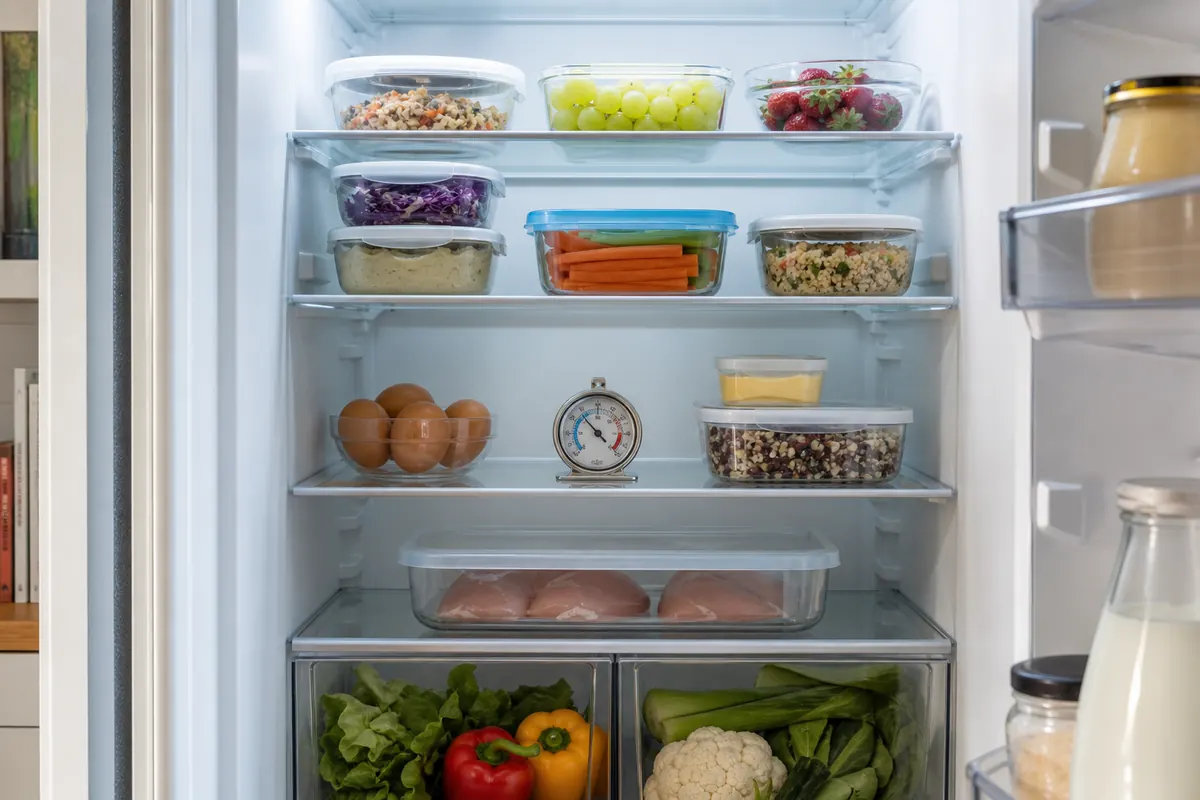
Raw meat, fish and poultry should be sealed and stored on the bottom shelf. A tray or leakproof container adds another barrier between the pack and the fridge surface. Ready-to-eat food stays above it, away from any drip route.
Hands and handles connect the fridge to the rest of the room. A leaking pack can soil a shelf and then travel through the handle, chopping board or worktop, so kitchen food safety depends on controlling the whole transfer path. Wash hands after handling raw food and clean the surfaces touched during the clean-up.
Remove old food before the packaging fails. Putting it straight into the correct waste stream reduces the chance of another leak. Sound household waste handling keeps the discarded source contained after it leaves the fridge.
A practical fridge-cleaning rhythm
Use the condition of the fridge to decide what needs doing. Wipe a fresh spill as soon as it is safe to move the food around it. Waiting for a scheduled deep clean lets liquid spread, dry or work beneath a removable part.
Once a week, check the thermometer, dates and open containers during food planning. Look under packs that may leak and make sure the bottom shelf arrangement still protects ready-to-eat items. This short check catches the problems that create the most urgent decisions without emptying the appliance unnecessarily.
A deeper clean is due when shelves and drawers have accumulated residue, an odour source has leaked, spoiled food has affected nearby surfaces or the appliance instructions call for it. Work in sections so chilled food spends as little time as possible at room temperature. Follow the manual for removable parts, switch-off requirements and restart time.
No single calendar suits every household. A busy shared fridge may need more frequent attention than a lightly used one. Actual spills, food turnover, temperature stability and the manufacturer’s directions give a better schedule than a rigid monthly claim.
Restocking deserves the same care as cleaning. Dry shelves and drawers before returning food, keep air paths open and place older suitable food where it will be seen first. Check that lids are secure and that tall containers will not stop the door closing. A clean shelf loses its value quickly when the same leaking pack goes straight back onto it.
Use a separate clean cloth for the final pass and launder reusable cloths after contact with food residue. A cloth that has already moved around the worktop can carry soil back into the fridge. Disposable material should go straight into the correct waste stream after the affected area is finished.
What cleaning products are safe inside a fridge?
Start with the fridge manual and the label on the cleaning product. Warm soapy water may be suitable for many removable parts and accessible surfaces. Some materials need a product approved by the manufacturer. Food must be protected from spray, residue and wet surfaces during the work.
Detergent removes dirt; disinfectant belongs on a visibly clean surface for the labelled contact time. More product or a stronger smell does not improve the process. Rinse where the label or manual requires it, then dry the surface before returning food.
The ingredients, intended surface and instructions decide whether a product belongs near food storage. Reading the cleaning-product label before use helps avoid residues, damaged plastics and combinations the manufacturer never intended. Never mix products or replace labelled guidance with an alcohol, bleach or homemade formula.
When cleaning is not enough
Food that may have spent too long above the safe temperature range is a food-safety question. Wiping the shelf does not reset its storage history. Check current advice and avoid tasting food to test it.
Extensive mould, growth that returns, or an odour that remains after the source and accessible residue have gone may sit beyond an ordinary domestic clean. The same applies when contamination appears inside a ventilation opening, damaged lining or other inaccessible part. Repeatedly applying different chemicals can damage the surface without reaching the source.
Sparks, unusual heat, a burning smell, repeated loss of cooling or a suspected refrigerant issue need the appliance’s safety procedure and a qualified professional. Neglect across other kitchen appliances creates different heat, grease and mechanical problems. The fridge decision remains centred on food storage and chilling.
How Samyx Cleaning can help with a fridge clean
A professional clean can help when fridge residue is part of a larger kitchen or whole-home job and the accessible surfaces fit the agreed scope. Samyx provides one-off and deep cleaning in London, with inside-fridge cleaning agreed and quoted as an additional task.
The booking should state whether the fridge will be emptied, switched off and ready before the cleaner arrives. Cleaners address the accessible surfaces included in that agreement. Food-safety decisions, extensive mould and cooling, electrical or mechanical faults remain with the appropriate food-safety, appliance or specialist route.
Need a cleaning service?
Enter your postcode to view our rates and availability in your area.

Frequently asked questions
-
What happens if you never clean your fridge?
Spills can dry into sticky residue, old food can leak or create odour, and crowded shelves can hide expired items. The bigger safety decisions concern cross-contamination and whether the fridge stays between 0°C and 5°C. Cleaning addresses accessible soil. A cooling or electrical fault needs appliance support.
-
Can a dirty fridge make you ill?
Poor food handling, a raw-food leak, cross-contamination or unsafe chilling can raise the chance of foodborne illness. The fridge’s appearance cannot identify a pathogen or prove where an illness came from. If someone develops symptoms or cannot keep fluids down, follow current NHS food-poisoning advice and seek help when advised.
-
How often should you clean inside your fridge?
Deal with spills and leaks promptly, then check temperature, dates and open containers each week. A deeper clean is condition-led, such as after a spoiled-food leak, persistent odour or visible residue across shelves and drawers. The fridge manual and the way your household uses it should shape the interval.
-
Does cleaning fix a fridge that is not staying cold?
No. Cleaning an accessible dirty seal may help the door close. Surface cleaning cannot repair a split seal, failed sensor, compressor or cooling-system fault. Check the thermometer, door closure, airflow and manufacturer instructions. If the temperature does not return to 0°C to 5°C, contact the manufacturer or a qualified engineer.
Important: Cleaning visible spills and food residue can reduce avoidable contamination routes; appearance alone cannot identify a pathogen or prove why someone became ill. If the fridge is not holding 0°C to 5°C, food may have been stored unsafely, or there is persistent mould, a refrigerant or electrical concern, or an illness concern, follow current FSA or NHS advice and contact an appropriate appliance or health professional. Always follow the fridge manual and cleaning-product label.
Author: Svetlana Georgieva (Clara)
Hi, I’m Svetlana Georgieva, but you can call me Clara. As the co-founder and heart behind Samyx Cleaning, I’m devoted to sharing the art of a clean space. Let’s journey into a cleaner, more joyful life together with tips from London's cleaning experts.

Discover more of our cleaning secrets: