
Vegan Cleaning Products And The Hidden Shifts They Trigger Indoors

Last modified on: 20/11/2025
Vegan cleaning products sound like a simple swap until the first streaked tap or the faint film that keeps returning on a bathroom tile. Many renters and cleaners recognise that uneasy moment when a room looks bright at a distance yet shows a dull patch under natural light. That small shift matters, because plant-based formulas change how moisture settles, how residue behaves, and how hard-water marks rebuild in tight flats.
The real reward is knowing where these gentler products hold and where they fall short, before haze and odours start building into hard-to-shift films.
Key takeaways:
- Spot early haze patterns before they anchor into hard films
- Match vegan formulas to rooms with slow drying and pooled moisture
- Avoid over-wiping, a common mistake that drags residue across surfaces
- Track weekly patterns to catch when rooms start resisting lighter products
- Plan support visits when rooms cycle back to dull patches despite careful work
In this article:
- Key takeaways:
- Define Vegan Cleaning Products Within Rental Context
- Identify vegan formulations
- Read product claims safely
- Match product-to-surface compatibility
- Table - Vegan cleaner types and rental-surface compatibility
- Evaluate Daily Performance of Vegan Products
- Assess cleaning strength on regular soil loads
- Handle limescale and soap film in bathrooms
- Use dwell time for improved cleaning
- Manage Safety, Air Quality, and Allergy Considerations
- Recognise antibacterial limitations
- Improve air quality in low-ventilation rooms
- Avoid dangerous product combinations
- Determine When DIY Vegan Cleaning Is No Longer Enough
- Identify threshold conditions for heavy soil and buildup
- Judge rental rooms against practical expectations
- Transition from routine upkeep to structured support
- Organise Long-Term Use of Vegan Products Through the Tenancy Cycle
- Store vegan products efficiently in small flats
- Select fragrance strength suitable for shared spaces
- Adapt routines to humidity and seasonal changes
- Practical Wrap-Up
- FAQ
- How can I tell if a vegan cleaner will cope with my daily routine?
- Do vegan cleaning products work on hard-water limescale in London bathrooms?
- Are plant-based cleaning products safe for stone and composite worktops?
- What is the right way to manage vegan products across the week?
- When should I switch from a vegan product to something stronger?
- Can eco cleaning products leave residue if the room is humid?
Define Vegan Cleaning Products Within Rental Context
Understanding vegan cleaning products helps cleaners choose materials that suit common rental surfaces without risking dulling, smearing, or pH-related damage. The practical question is where each formula fits, so you can see which vegan products suit routine domestic work and which do not.
Identify vegan formulations
A vegan cleaner contains plant-derived or mineral ingredients and excludes animal inputs. That means the surfactants, fragrances, and solvents come from sources that leave no animal residues behind. Many UK-labelled vegan cleaners fall into neutral to mildly alkaline ranges, which helps when dealing with laminate counters, ceramic tiles, and finished wood. I often check product datasheets first because some plant-based solutions lean slightly acidic and need careful use on sealants.
A quick indicator is the absence of tallow-based surfactants or casein binders. On top of that, the product should not rely on animal-derived glycerine. When the label lists coconut, sugar-beet, or corn-derived surfactants, you are usually dealing with a vegan-ready formulation. That gives predictable behaviour on common rental fixtures without overloading fragrance or solvent levels.
Read product claims safely
When clients ask “What is a vegan cleaner?”, the most accurate answer is that it is a product built without animal ingredients or animal testing, but it does not imply high strength or any special finish. Because UK regulations limit how strongly cleaners can talk about antimicrobial effects, most vegan-labelled products stick to claims around reducing visible soils or freshening surfaces. That helps keep expectations realistic, especially in older London flats where ventilation is limited and stronger chemical odours linger.
I always take note of pH hints on the back label. A neutral pH helps avoid hazing on acrylic baths and vinyl flooring. Mild alkalinity suits painted walls and standard kitchen cabinets. Anything that leans acidic is better held back from stone composites to avoid etching. One small line on the label usually tells you enough to decide where the product fits in a rental property.
Match product-to-surface compatibility
Compatibility matters more than strength at this stage. Vegan cleaners with neutral surfactants work reliably on glazed tiles, melamine fronts, and sealed laminates. On taps and fittings affected by hard-water limescale, they are stable but usually need a separate approach for scale removal, so they serve mainly as daily detergents rather than problem solvers.
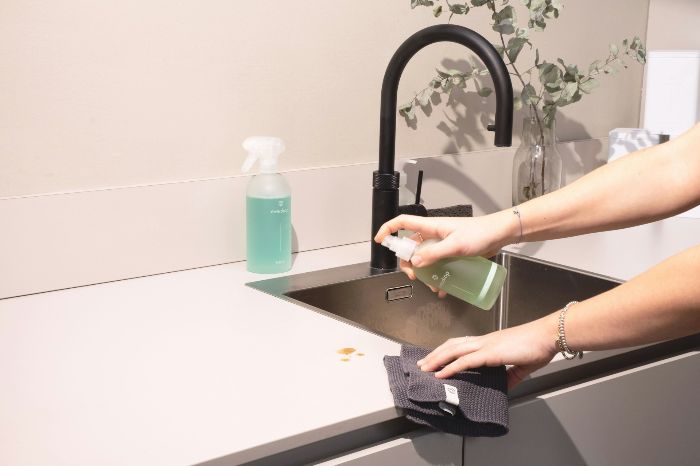
For finished wood, a vegan cleaner with plant-derived solvents is safe as long as dilution stays within the guidance. On stainless steel, check for oils that might smear; plant oils sometimes leave a light film if the cloth is over-saturated. Microfibre with a 300-350 GSM rating avoids streaking and spreads the product evenly across tighter kitchen areas common in London flats.
Table – Vegan cleaner types and rental-surface compatibility
| Product type | Suited surfaces | Residue tendency | Notes |
|---|---|---|---|
| Neutral plant-based sprays | Laminate, tile, vinyl | Low | Stable on most sealants |
| Mild alkaline plant surfactants | Painted walls, cabinets | Low-moderate | Avoid overuse on soft paints |
| Plant-derived solvent blends | Finished wood, stainless | Moderate | Wipe dry to prevent smearing |
| Light acidic plant cleaners | Ceramic sinks, taps | Low | Keep away from stone surfaces |
A simple compatibility table saves time when setting up a cleaning kit for a new tenancy rotation. It also helps avoid choosing a product that may haze or streak surfaces when working quickly in compact kitchens and wet rooms.
Smart vegan cleaning comes down to matching pH to the surface and letting cloth control do the work instead of harsher chemistry. For dwell-heavy tasks or areas that fall outside daily upkeep, clients can book regular domestic cleaning in London for a consistent routine.
Need Regular Domestic Cleaning service?
Enter your postcode to view our rates and availability in your area.

Evaluate Daily Performance of Vegan Products
Vegan cleaning products handle day-to-day soils reliably when used with the right dwell times and cloth control. Their behaviour is predictable on most rental surfaces, though they sometimes need small adjustments in method compared with chemical detergents. The goal is clear expectations for daily domestic work, without pulling you into label law or tenancy paperwork.
Assess cleaning strength on regular soil loads
Plant-based cleaners reduce light grease, fingerprints, and general kitchen or living-area marks when paired with a neutral pH and even application. When people ask whether plant-based cleaners work as well as chemical ones, the short answer is that they manage daily soils effectively as long as the cloth carries enough moisture to lift residues rather than smear them. On glossy laminates, a microfibre around 300-350 GSM gives enough bite without leaving drag marks.
On worktops and standard melamine fronts, a single pass loosens fresh debris, while a second pass removes what the first one lifts. I often notice that a light circular motion helps where chemical detergents might cut through faster in one go. The difference is small but noticeable in tight spaces like galley kitchens.
Handle limescale and soap film in bathrooms
Vegan cleaning products loosen soap film on ceramic and acrylic bathroom surfaces when given a practical dwell window of 2-4 minutes. For hard-water limescale on taps and shower fittings, they generally soften only the top layer, so visible marks return faster than with acidic chemical products. That is expected, not a failure of the product. Using a non-scratch pad with light pressure helps lift softened film without cutting the coating on older taps.
On shower screens, a two-step method works well: wet the screen to reduce drag, apply the cleaner evenly, then wipe with long vertical strokes to avoid streak patterns. Bathroom tiles respond predictably to plant-based surfactants, but grout lines may need repeated passes due to low alkalinity. When you reach that point, it is better to reset the area with a separate limescale-safe agent rather than forcing more dwell time.
Use dwell time for improved cleaning
Vegan cleaning products often need a short dwell to match the feel of a stronger detergent. A 2-7 minute range covers most daily situations. If you apply and wipe instantly, soil tends to smear instead of lifting cleanly. If the surface is pH-sensitive, keep dwell at the lower end to avoid softening sealants or finishes.
Cloth management matters as much as dwell. A damp-but-not-saturated microfibre prevents streaks on stainless steel and glass. When residue drag appears on the second wipe, rinse the cloth rather than adding more product. That saves time in small flats where water sources may be a few steps away from the work area.
Using vegan cleaning products effectively for daily domestic work depends on small adjustments in dwell, cloth choice, and stroke direction. When clients want a consistent routine across all rooms, they can book regular domestic cleaning in London for predictable maintenance between visits.
Manage Safety, Air Quality, and Allergy Considerations
Vegan cleaning products lower the overall chemical load in a home, but they still need controlled use when dealing with tight bathrooms, weak airflow, and clients with sensitivities. In practice, three things matter most: knowing the antibacterial limits, keeping air moving in older flats, and avoiding unsafe mixtures.
Recognise antibacterial limitations
When people ask what kills 100 percent of bacteria, the accurate answer is that no standard domestic cleaner does that, including cruelty free cleaning products. Vegan formulations reduce visible soils and freshen surfaces, but they rely on mechanical action and dwell rather than harsh actives. On high-touch points like door handles, switches, or fridge doors, a two-pass wipe leaves fewer residues and lowers the chance of smearing while keeping the load of irritants down.
On bathroom touchpoints, limit over-wiping with scented products if a client reacts to fragrances. Keep cloths rinsed so they do not reapply residues to the next surface. That approach protects people with mild sensitivities and fits well with routine domestic work in shared rental settings.
Improve air quality in low-ventilation rooms
Air quality drops quickly in older London flats where extractor fans struggle or windows open only part-way. Vegan cleaning products help by avoiding heavy solvent vapours, but they still need airflow to move the moisture out of the room. A short cycle of cross-ventilation clears lingering fragrance faster and reduces the chance of a client reporting discomfort after a clean.
Bathrooms with no windows can trap mist from even mild products. Keep the fan running for 10-15 minutes after finishing the room and use long strokes to prevent excess product from settling in corners. That lowers the load on both the cleaner and the occupants, especially during colder months when windows stay shut.
Avoid dangerous product combinations
Mixing products is one of the most common mistakes in tight domestic spaces. Even mild plant-based cleaners react poorly with bleach, descalers, or ammonia-based agents. If traces of another product are present on a surface, rinse first instead of layering over it. That prevents unwanted fumes and keeps the environment stable for clients with asthma or fragrance sensitivities.
Use one product family per task and keep cloths colour-coded so residues do not transfer across rooms. In wet rooms where several agents might be used across the week, washing cloths at high temperature removes film build-up that could affect the next visit.
Managing safety with vegan cleaning products means paying attention to airflow, fragrance load, and simple separation of product families. When households prefer a consistent low-irritant routine, they can book regular domestic cleaning in London to keep the pressure off daily upkeep.
Determine When DIY Vegan Cleaning Is No Longer Enough
Daily routines keep most rooms in workable condition, but vegan cleaning products reach a limit once soils harden, moisture cycles repeat, or fixtures pick up layers that no longer lift with light surfactant action. Cleaners need clear thresholds that show when normal vegan routines stop holding and a more structured visit is required.
Identify threshold conditions for heavy soil and buildup
A vegan cleaner can cope with fresh marks, but once grease cures on oven edges or settles under hob rings, the surfactant load is too light to shift it. The same applies to bathroom corners where soap-heavy films compact over time. When a surface requires pressure beyond a firm cloth pass and the film returns after a short wipe, the buildup has already moved beyond what plant-derived detergents handle during normal domestic work.

On kitchen fronts, signs include dull patches that stay even after a careful second pass. On taps, when hard-water deposits start forming a raised edge rather than a thin film, the area is beyond simple daily upkeep. These thresholds signal that the task has crossed into work requiring stronger, controlled agents and more time on site.
Judge rental rooms against practical expectations
Most rental rooms follow the same pattern: tight bathrooms, compact kitchens, and fittings that pick up marks quickly. If a room takes more than one full cycle of systematic wiping to return to a normal appearance, the soil load is no longer “daily.” Another indicator is time drift. If a standard bathroom refresh usually takes 10-15 minutes but starts pushing above that due to repeating films, the cleaner is fighting against buildup rather than maintaining the space.
In small London kitchens, repeated condensation around splashbacks creates thin residue lines. When these lines remain visible after a normal wipe, you have a practical signal that the room needs a reset with stronger tools.
Transition from routine upkeep to structured support
A good rule is simple: if a surface resists well-executed cleaning with a vegan product twice in a row, call it out and plan a focused revisit. That keeps the domestic routine efficient instead of stretching standard visit times. When clients want each room to stay within manageable soil levels, they can book regular domestic cleaning in London to stabilise the workload and prevent buildup from returning.
You may also enjoy:

Organise Long-Term Use of Vegan Products Through the Tenancy Cycle
Long-term use of vegan cleaning products works best when storage, cloth control, and seasonal moisture shifts are addressed early. Small adjustments keep rooms stable between visits and prevent supplies from degrading or leaving film in humid periods.
Store vegan products efficiently in small flats
London flats often have limited storage, so keeping vegan products in a cool, shaded cupboard prevents separation and thickening. Neutral plant-derived solutions stay stable when lids are sealed tightly and trigger heads are kept upright to avoid leaking into baskets. A shallow caddy with two compartments stops bottles from falling over during transport, which helps maintain consistent dosing at each visit.
High-traffic homes benefit from storing cloths and pads in breathable bags rather than airtight ones. That lowers the chance of residual dampness creating odours that could transfer during the next clean. A simple rule is to rotate cloth stacks weekly so no bundle sits on the shelf long enough to pick up stale moisture.
Select fragrance strength suitable for shared spaces
Fragrance levels vary across eco cleaning products, and shared hallways or open-plan rooms magnify the scent quickly. Mild citrus or herbal blends settle fastest in compact spaces, while heavier compositions linger and may trigger discomfort for residents with sensitivities. Using a measured spray rather than a saturated cloth stops scent from building up during longer visits.
In narrow corridors, apply product directly onto the cloth to avoid airborne mist. That keeps fragrance local to the surface and prevents it from drifting into neighbouring rooms. For regular domestic routines, this approach helps maintain a low-irritant environment across repeat visits.
Adapt routines to humidity and seasonal changes
Moisture cycles shift through the year, especially in older homes where condensation builds on windows and tiled edges. Vegan formulations can leave a faint film if the surface stays damp for too long, so allow a short drying window when tackling kitchens or bathrooms in winter. A light, dry wipe at the end of the task prevents marks from forming as the room cools.
During summer months, warmer air speeds up product evaporation, which can reduce glide on larger surfaces. Dampen the cloth slightly to restore smooth movement without adding more detergent. When humidity rises again in autumn, check shelves and baskets for moisture build-up that could soften labels or weaken trigger heads.
Planning storage, scent control, and seasonal adjustments keeps vegan cleaning products reliable over time. When households want their rooms maintained at a consistent standard, they can book regular domestic cleaning in London for long-term support.
Practical Wrap-Up
Long-term work with vegan cleaning products goes smoothly when cleaners follow clear signals on surface behaviour and moisture cycles. A useful rule is to reassess a room when the same film returns twice in a row despite careful wiping, as that pattern shows a need for a revised approach or a tighter visit cadence. Light dwell ranges of 2-7 minutes help stabilise results on routine soils, while weekly checks on cloth condition prevent residues moving from one room to another.
If air movement feels weak during winter or after long showers, open the nearest window for a short cross-flow before moving to the next task; that keeps fragrance low and avoids damp patches on tiled edges. When fragrance strength varies across product batches, test each new bottle on a single wall tile to confirm that drying behaviour stays even. Adjusting method at these small checkpoints maintains cleaner control in compact London flats with mixed ventilation.
Cleaners who prefer predictable upkeep across busy homes can book regular domestic cleaning in London to keep soil levels stable and visits efficient.
- Recheck rooms when films return twice after wiping
- Test new products on a single tile first
- Rotate cloth stacks weekly to limit residue transfer
- Ventilate rooms briefly during cooler months
- Track drying behaviour on high-use surfaces
FAQ
-
How can I tell if a vegan cleaner will cope with my daily routine?
Check how it behaves on a single high-use area such as a fridge door. If marks reappear after one or two normal wipes, the surfactant strength is too light and you will need either more dwell time or a tighter cleaning cadence to keep the surface stable.
-
Do vegan cleaning products work on hard-water limescale in London bathrooms?
They loosen the upper layer of scale but rarely shift the mineral base. If the deposit feels raised when touched with a fingertip, use a separate limescale-safe product and return to the vegan cleaner once the fixture is reset.
-
Are plant-based cleaning products safe for stone and composite worktops?
Most neutral products are safe, but always test a coin-sized patch first. If the surface darkens or turns matte after a 2-3 minute dwell, switch to a neutral pH spray and keep the cloth damp rather than wet to avoid softening the finish.
-
What is the right way to manage vegan products across the week?
Rotate cloth stacks weekly and rinse them thoroughly during visits so light films do not transfer from room to room. When humidity increases, allow a short drying window after each task to prevent streak formation on tiles and laminates.
-
When should I switch from a vegan product to something stronger?
Switch when a film returns after two well-executed wipes or when a sticky patch stays in place even after a sensible dwell. That signals a level of buildup that needs a reset with a stronger agent before returning to lighter products.
-
Can eco cleaning products leave residue if the room is humid?
Yes, in high humidity a faint film may form if the surface stays damp for too long. A quick dry pass at the end of the task stops this and reduces the chance of dull patches forming overnight.
Author: Svetlana Georgieva (Clara)
Hi, I’m Svetlana Georgieva, but you can call me Clara. As the co-founder and heart behind Samyx Cleaning, I’m devoted to sharing the art of a clean space. Let’s journey into a cleaner, more joyful life together with tips from London's cleaning experts.

Discover more of our cleaning secrets: