
Natural Cleaning: What Works, What Does Not and What Is Safe

Last modified on: 15/08/2026

Natural cleaning can handle a useful range of everyday household dirt when the method suits the surface, the soil and the result you need. Water, a cloth, a small amount of detergent, a mild acid or a mild abrasive can each solve a different problem. None is a universal cleaner, and a familiar kitchen ingredient does not become suitable simply because it is naturally derived.
Start by identifying the material and the visible problem. Grease needs a different mechanism from limescale, and ordinary soil needs a different finish from a hygiene-critical spill. Check the care instructions, use the least aggressive compatible option, and choose a labelled product when the job calls for verified disinfection, specialist surface care or controlled dosing.
Match the method to the soil and surface
- Name the surface, finish and soil before choosing an ingredient. The same worktop can include sealant, metal trim and grout with different tolerances.
- Use water and mechanical action for loose soil, a compatible surfactant for grease, a maker-permitted mild acid for mineral film, or a mild abrasive only where scratching is acceptable.
- Read the product and care labels. Patch-test an inconspicuous area when the finish, coating or previous treatment is uncertain.
- Treat cleaning and disinfection as separate outcomes. Use a labelled disinfectant for a hygiene-critical task when the instructions call for one.
- Never improvise mixtures or store homemade blends in unlabelled containers. Stop if the surface dulls, changes colour, softens, swells or loses its coating.
Key takeaways
- Natural describes an ingredient source or marketing position; it does not prove cleaning performance, surface compatibility or low risk.
- Water, detergent, acids and mild abrasives solve different jobs. Choosing by mechanism avoids repeated scrubbing and unnecessary residue.
- Vinegar and lemon may help with light mineral deposits on compatible materials, yet they can etch stone and affect grout, metals, seals and finishes.
- Bicarbonate can provide mild abrasion and alkalinity. It may scratch gloss surfaces, and mixing it with an acid does not create a stronger all-purpose cleaner.
- A labelled cleaner is the sounder choice for disinfection, valuable materials, manufacturer-controlled care or a problem that returns after correct routine cleaning.
Table of Contents
What natural cleaning means in a real home
The phrase covers several very different choices. It may mean using fewer products, choosing a plant-derived commercial formula, making a simple solution from a household ingredient, reducing fragrance, reusing cloths, or avoiding a particular substance. Those choices do not share one recipe or one level of performance.
A front label can describe the source of one ingredient without explaining the whole formula. Words such as plant-based, biodegradable, eco-friendly and non-toxic also answer different questions. Check the product label for the intended surface, dose, contact time, rinsing, warnings and storage directions before relying on the claim.
Performance depends on the job. A product can remove grease well and still be unsuitable for limescale. A mild acid can shift a mineral edge and leave oily soil behind. A fragrant spray can make a room smell different without removing the film on the surface. Define the result first, then decide whether a household ingredient, a labelled cleaner or professional work fits it.
Test one variable before treating a whole surface
A useful test is controlled and small. Confirm the material and finish, choose one compatible method, and apply it to an inconspicuous area with the same cloth, dilution and contact time planned for the visible surface. Mixing several ingredients at once makes it difficult to identify which one cleaned, reacted or caused a mark.
Inspect the area after rinsing and complete drying. Wet surfaces can hide haze, colour loss and fine scratching. Compare gloss, texture and colour from more than one angle under normal room light. A pass means the small area shows no adverse change; it does not prove the method belongs on every material nearby.
Stop before expanding the test if residue becomes tacky, a coating lifts, grout lightens, metal darkens, timber fibres rise or the surface feels rougher. Remove the product as its directions state and ask the manufacturer or a suitable specialist. Extra pressure and longer contact can deepen a reaction that routine cleaning cannot reverse.
Natural cleaning decision matrix
Choose a route by the visible soil and the finish you need to protect.
Job
Possible route
Suitability test
Risk or alternative
Loose dust and light surface soil
Dry removal, water, microfibre and controlled mechanical action
Can the surface tolerate moisture and rubbing?
Avoid driving dust into joins or soaking wood, laminate edges and electronics.
Grease and cooking film
A compatible detergent or soap solution used at the labelled dose
Will it rinse clean without affecting the coating?
Acid alone is a poor grease route; use an approved degreaser for heavy deposits.
Light mineral or soap film
A maker-permitted mild acid with controlled contact and rinsing
Is every material in the splash zone acid-resistant?
Keep acids away from natural stone and vulnerable grout, metal, seals and finishes.
Light odour or stuck-on soil
Remove the source; use mild abrasion only on a compatible hard surface
Can the surface take abrasion without a gloss or colour change?
A powder may scratch or lodge in texture and joints. Persistent odour needs source diagnosis.
Hygiene-critical contamination
Clean first, then use a suitable labelled disinfectant where required
Does the label cover the surface, organism claim and contact time?
Household staples are not a substitute for a verified disinfection process.
Share Product Preferences
Enter your postcode to view our rates and availability in your area.

How common natural cleaning ingredients work
Water and mechanical action
Dry removal, wiping, agitation and rinsing do much of the work in routine cleaning. Water dissolves some water-soluble soil and carries loosened residue away. Too much water creates a different problem around timber, laminate edges, unsealed grout, electrical parts and layered finishes, so control the cloth rather than flooding the area.
Detergent and soap
Surfactants help water spread and lift oily soil so it can be removed. A small amount of a compatible washing-up liquid may suit some washable hard surfaces, subject to the maker’s directions. Excess product leaves a sticky film that attracts dirt and needs extra rinsing. Soap can also react with hard water and leave deposits, which matters in London bathrooms and kitchens.
Vinegar and lemon
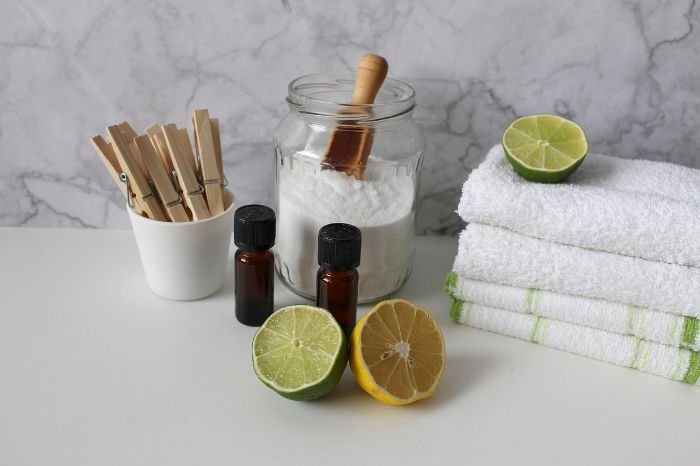
Acids can loosen some light alkaline mineral deposits and soap residue on acid-resistant materials. Household vinegar and lemon juice vary in formulation, acidity and added ingredients, so a casual ratio is not proof of compatibility. They may etch calcareous stone, weaken some grout, mark metals, affect rubber or sealants and dull coatings.
Acid also performs poorly against many greasy films. If wiping leaves a smear, identify whether oil, detergent residue or damaged finish is present before applying more. Repeated acid treatment can turn a small cleaning problem into a finish problem.
Bicarbonate of soda
Bicarbonate is mildly alkaline and its particles provide gentle abrasion. It can help lift some stuck-on soil from compatible hard surfaces when used with care. Gloss paint, polished metal, glass coatings, plastics and delicate finishes can show fine scratching or haze, especially when pressure is added.
The fizz from bicarbonate and vinegar is carbon dioxide released as the acid and alkali react. The movement may loosen light debris in a limited situation, though much of the useful acidity and alkalinity is consumed. Apply the mechanism needed for the soil rather than judging cleaning power by bubbles.
Plant-derived fragrance oils
Plant-derived fragrance oils mainly add scent in household recipes. They do not replace a surfactant, and drops floating in water do not prove an even or controlled dose. Fragrance can be unwanted around people with sensitivities, young children and pets. Surface compatibility, exposure and storage still need attention even when the source is botanical.
Hydrogen peroxide products
Hydrogen peroxide appears in products with different concentrations, stabilisers and instructions. Use only a clearly labelled household product for a stated compatible task. It can affect colour, fibres, finishes and some materials, and it must never be combined with other cleaners. A recipe copied without concentration or label context is incomplete.
Natural cleaning tools change the result
The cloth, brush and removal sequence can matter as much as the liquid. A clean microfibre cloth collects fine soil with little product; a soft brush reaches texture and joints; a squeegee removes water from smooth glass. A vacuum or dry cloth should collect loose particles before wet cleaning so they are not turned into abrasive slurry.
Choose pressure according to the finish. A rough pad can scratch even when the liquid is mild, and a saturated cloth can carry moisture into seams. Work from the least soiled area towards the dirtiest, turn or replace the cloth before it redistributes grime, then remove residue and dry the surface.
Separate cloths and brushes used around toilets, food preparation and general dust. Wash reusable tools according to their care instructions and allow them to dry fully before storage. A bottle described as natural cannot correct cross-contamination caused by a dirty cloth or a brush moved between incompatible tasks.
Why mixing ingredients can make the result worse
Combining products adds reactions, residues and exposure routes that are difficult to control in a home. An acid and bicarbonate neutralise each other as they fizz. Adding soap can create extra residue. Oils may separate. A closed bottle can build pressure when a reaction releases gas, and an unlabelled reused container creates a later identification risk.
Chlorine bleach must never be mixed with vinegar, lemon, another acid, ammonia or another cleaning product. Harmful gas can be released. Keep products in their original containers, follow the label and ventilate as directed. The wider rules for chemical mixing apply to household ingredients as well as commercial bottles.
You may also enjoy:
Natural, non-toxic and eco-friendly are different claims
Natural may describe where an ingredient came from. Non-toxic is often presented as a broad safety claim, even though risk depends on dose, route of exposure and use. Eco-friendly may refer to the formula, packaging, refill model, transport, biodegradability or one selected comparison. One word cannot answer all of those questions.
Look for a specific claim and a way to check it. Ask which part of the product it covers, compared with what, under which conditions and with which limits. Read the full directions as well as the front label. A clear ingredient or packaging claim does not cancel warnings, make the product suitable for every material or prove that a homemade alternative is better.
Choose the method room by room
Kitchen and food-contact areas
Remove loose soil, use a compatible cleaner for grease, then rinse and dry as the label or appliance instructions require. Chopping boards, worktops, appliance coatings, sealant, grout and metal trim can need different treatment within the same area. A food-safe ingredient is not automatically an effective cleaner or suitable disinfectant.
Bathroom surfaces
Identify soap film, body oils and mineral scale separately. Detergent can address oily film; a permitted acid may help light mineral residue. Stone tiles, coloured grout, metal fittings, shower coatings and sealant can limit that choice. Drying after cleaning reduces fresh water marks without adding another product.
Floors, timber and finished furniture
The finish owns the decision. Excess water can enter joints or swell fibres, acid can dull stone and some coatings, and powder can scratch gloss. Follow the flooring or furniture maker’s care method. Unknown, antique, valuable or already damaged surfaces need specialist advice before a household experiment.
Laundry and textiles
Read the care label and identify the stain before treatment. Acids, alkalis, peroxide products, heat and rubbing can change dyes or fibres. Blot liquids, avoid setting the stain with heat, and patch-test where the care instructions allow. Delicate, dry-clean-only or colour-unstable items should go to a suitable textile specialist.
Homes with children or pets
Reduce access and exposure through secure storage, measured use, ventilation, rinsing and complete drying. Do not assume a botanical fragrance is harmless to inhale, lick or touch. Keep ingredients and mixtures out of reach, retain original labels, and follow medical or veterinary advice after a suspected exposure.
When a labelled cleaner is the better choice
- The task requires disinfection with a stated organism claim and contact time.
- The manufacturer specifies a cleaner for a coated, sealed or specialist material.
- Heavy grease, carbon, scale or biological soil remains after the correct routine method.
- The surface is valuable, porous, unknown, damaged or already changing colour or texture.
- The homemade route would need repeated applications, extra heat, hard scrubbing or uncertain storage.
A labelled product gives a defined dose, surface scope, warning set and method. That does not make it suitable for every job. It gives you a clearer basis for the decision and a way to repeat the process consistently.
Make the method repeatable
Keep a short record of which product or simple method belongs on each important surface. Note sealed stone, timber finishes, coated glass, appliance instructions and any item that needs specialist care. Store the original directions with the product so another person in the household can follow the same limits.
Measure the product, use the stated contact time, remove residue and dry the area in the same order. Consistency shows whether the method is genuinely working. Changing the dilution, cloth and dwell time together makes a poor result difficult to diagnose and increases the chance of finish damage.
Retire leaking, unlabelled or unidentified containers. Do not top up one product with another or move a reactive mixture into a drink bottle. Follow the label and local disposal route for unwanted cleaner. A smaller, clearly assigned set of products is easier to use safely than a cupboard of overlapping recipes.
When a planned cleaning routine helps more than another recipe
Natural cleaning becomes harder to manage when several rooms contain different finishes, products have accumulated under the sink, or the household keeps switching methods after a rushed clean. A regular routine reduces the number of last-minute decisions and makes it easier to keep agreed products, cloths and room-specific methods in the right place.
Samyx Cleaning can follow agreed product preferences during domestic cleaning in London, subject to the service scope, product directions and surface care requirements. Tell the office about fragrance preferences, supplied products, sensitive materials and excluded items before the visit. Samyx does not certify a product as natural, non-toxic or environmentally superior.
Professional help is useful when routine soil covers several rooms, time is limited, residues keep returning or a controlled schedule matters more than testing another mixture. Restoration, specialist disinfection, hazardous contamination and damaged materials remain separate jobs that may need a suitably qualified provider.
Explore Domestic Cleaning
Enter your postcode to view our rates and availability in your area.
Frequently asked questions
-
What is the best natural cleaning method?
There is no single best method. Match the cleaning mechanism to the soil and surface: controlled water and wiping for light soil, a compatible surfactant for grease, a maker-permitted mild acid for mineral film, or a mild abrasive only where the finish can tolerate it.
-
What is the best homemade cleaning solution?
A universal homemade solution is unlikely to clean grease, mineral scale, delicate finishes and hygiene-critical contamination equally well. Identify the task, check the care instructions and make only a simple, task-specific choice that you can rinse, dry and store safely.
-
Can you clean a house without chemicals?
Chemical-free is not a literal description because water and naturally derived ingredients are chemical substances. A more useful aim is to use the minimum suitable product, control exposure, follow labels, ventilate where directed and avoid unnecessary mixtures.
-
Do natural cleaners disinfect surfaces?
Do not assume they do. Cleaning removes soil and can reduce contamination; disinfection requires a suitable labelled product used on the stated surface for the full contact time when that level of hygiene is needed.
Important: Follow the product label and the surface manufacturer’s care instructions over general guidance. Patch-test a hidden area where compatibility varies, and use gloves, ventilation, rinsing and complete drying when directed. Never mix cleaning products, especially chlorine bleach with vinegar, lemon, another acid or ammonia. Stop if a material discolours, dulls, etches, swells, softens or loses its coating or fibre finish. Ask the manufacturer or a suitable specialist before treating a valuable, delicate, damaged or unidentified item.
Author: Svetlana Georgieva (Clara)
Hi, I’m Svetlana Georgieva, but you can call me Clara. As the co-founder and heart behind Samyx Cleaning, I’m devoted to sharing the art of a clean space. Let’s journey into a cleaner, more joyful life together with tips from London's cleaning experts.

Discover more of our cleaning secrets: