
Best Way to Clean a Patio: A Material-Safe Method for London Homes

Last modified on: 17/08/2026
The best way to clean a patio is to identify the paving material and the type of soiling before choosing water, cleaner, brush or pressure.
That first decision prevents most avoidable damage. Concrete, limestone, sandstone, porcelain and clay pavers do not all tolerate the same products or tools. This guide covers dirt, organic growth and common stains, by hand or with controlled pressure.
Key Takeaways
- Identify the surface before selecting any cleaner, brush or machine.
- Clear and protect plants, drains, doors, walls and neighbouring areas before wet work begins.
- Start gently with dry preparation, a compatible solution and manual agitation.
- Control pressure only after confirming that the slabs, coating and joints can tolerate it.
- Judge after drying because wet paving can hide residue, uneven colour and surface damage.
Table of Contents
Best way to clean a patio: choose by material first
Patio is a use, not a single material. Two neighbouring gardens can have surfaces that look similar when wet but react differently to acid, alkali, abrasion and pressure. If you do not know what the paving is, look for invoices or product records, ask the installer or obtain material advice before using a strong treatment.
| Surface | Safe starting route | Main caution |
|---|---|---|
| Concrete or cement paving | Dry sweep, water, nylon patio brush and a labelled concrete-compatible cleaner if needed | Strong acids, wire brushes and concentrated jets can etch, expose aggregate or damage joints |
| Limestone, travertine or marble | pH-neutral stone-compatible product and a soft or medium nylon brush | Acidic cleaners, including vinegar, can dull or etch calcareous stone |
| Sandstone or other natural stone | Stone-specific instructions, hidden test and controlled manual cleaning | Porosity, mineral content, sealants and weathering vary |
| Porcelain paving | Porcelain-compatible cleaner, non-scratch pad or suitable brush and complete rinsing | Abrasives and residue can scratch or leave a film |
| Brick or clay pavers | Gentle brushing and a product approved for the paver and joint system | Efflorescence, old mortar and soft joints need diagnosis, not repeated washing |
| Sealed, painted or unknown paving | Coating or manufacturer instructions and a small hidden test | A compatible slab cleaner may still strip the finish |
This article covers hard paving. Timber and composite boards need a different process because grain, coatings, board caps, fixings and ventilation change the risk. Use the separate decking care guide for those surfaces.
You may also enjoy:

Prepare the patio and control the work area
Choose a period that gives you enough time to inspect, wash, rinse and dry the surface. Avoid working when strong sun could dry cleaner onto the slabs, when frost is expected or when wind will carry spray towards people, open doors, vehicles or neighbouring property. Check the product label for weather restrictions.
Lift furniture, rugs, barbecues and pots instead of dragging them. Photograph fragile edges, cracked slabs, loose pointing and existing discolouration before you start. Cleaning will not repair a moving slab, failed joint, damaged sealant or drainage defect.
Sweep leaves, grit and loose soil while the patio is dry. Remove weeds by an appropriate method without levering against slab edges. Clear channels and confirm where rinse water can go. Keep debris and cleaning solution out of ponds, surface water, neighbouring land and public paths.
Move sensitive pots where possible and cover nearby planting only for the period allowed by the plant and product guidance. Protect doors, low vents, painted walls, outdoor sockets and thresholds. Plan a smaller solution batch and controlled rinse rather than leaving a tap running; the separate water guide explains where preparation prevents waste.
How to clean a patio by hand
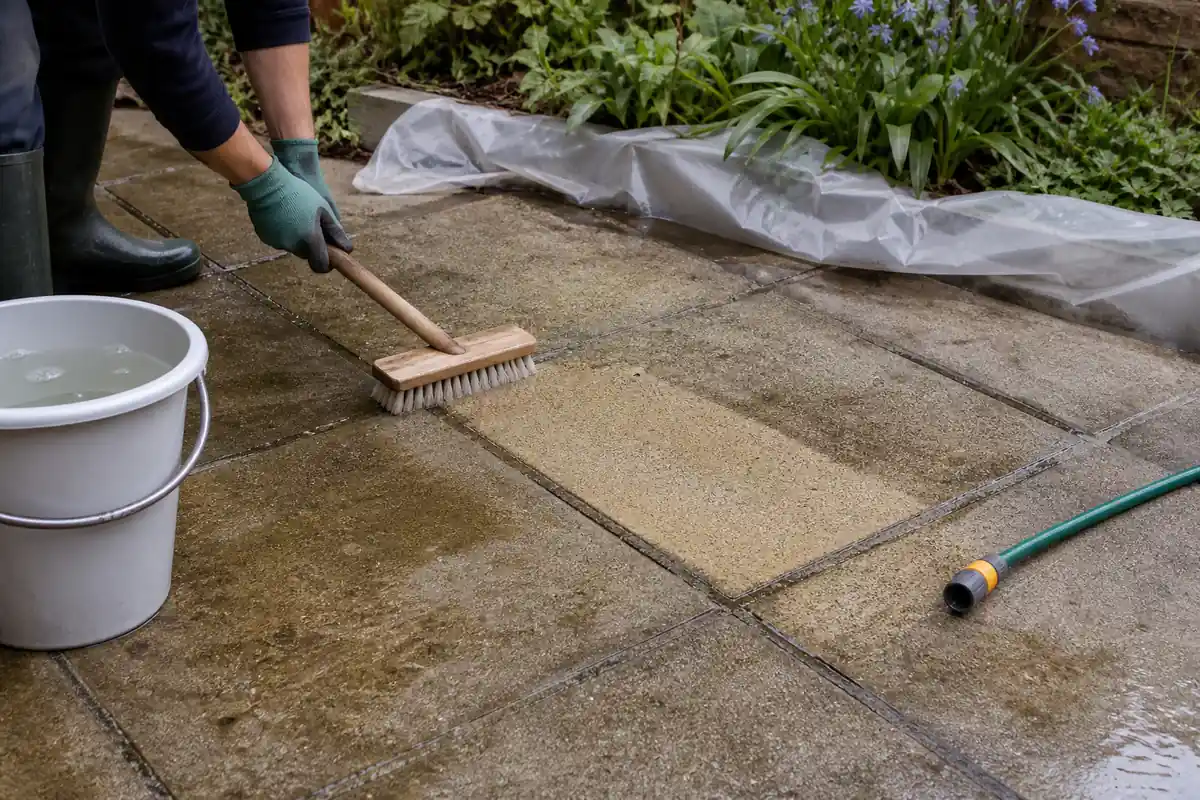
Manual cleaning is the safest starting point for many sound patios because you can see how the paving responds before adding machine pressure. Gather a bucket, hose or watering can, suitable nylon patio brush, hand brush for edges, absorbent material for fresh spills and the compatible cleaner selected for the surface and soil.
1. Inspect a dry test area
Choose an inconspicuous slab that includes the same finish and, if possible, the same staining. Record its dry colour and texture. Check whether the paving is sealed, whether colour transfers to a cloth and whether joints are firm enough to withstand brushing and rinsing.
2. Prepare the solution exactly as labelled
Read the paving, sealant and cleaner instructions together. Measure the stated dilution and wear the required protective equipment. Never add another product to make the solution stronger. If the instructions conflict or the surface is unknown, stop and choose a lower-risk route.
3. Wet or apply as directed
Some cleaners require a pre-wet surface and others require dry application. Follow the exact label. Start at the point that lets dirty water move away from the building and work in sections small enough to keep the solution under control.
4. Agitate without scouring the surface
Use even strokes with a suitable nylon brush. Give textured areas enough contact to release soil, but do not use a wire brush or sharp scraper on paving or joints. Work edges carefully so loosened grit does not become an abrasive under the brush.
5. Observe the working time
Keep the product within its labelled dwell period and do not let it dry unless the instructions specifically describe a leave-on treatment. More time is not automatically more effective. It may increase discolouration, residue, plant exposure or coating damage.
6. Rinse and collect residue
Rinse in the direction planned before cleaning, using the amount and method required by the product. Move suspended soil away from walls and door thresholds. Do not sweep contaminated water into a drain simply because it is nearby; follow the label and local disposal requirements.
7. Let the test area dry
Compare the fully dry result with untreated paving. Check for a pale patch, darker halo, roughened texture, lifted coating or damaged joint. Continue across the patio only when the test is acceptable. Treat a remaining stain by cause instead of repeating the whole wash immediately.
Choose a patio cleaner by soil and surface
| What you see | First response | Stop or change route when |
|---|---|---|
| Loose soil and ordinary grime | Dry sweep, water and compatible mild cleaner if water alone is insufficient | A film, colour change or roughness appears |
| Green growth or a slippery film | Identify the surface and use a labelled compatible treatment with controlled brushing and rinsing | Runoff cannot be kept away from plants, ponds or neighbouring areas |
| Food grease or oil | Blot fresh residue, use absorbent material, then a surface-compatible degreasing route | The mark spreads, the sealant softens or colour lifts |
| Rust-coloured mark | Identify metal transfer, fertiliser, leaf tannin or mineral staining before selecting treatment | The material is natural stone or the stain source is uncertain |
| White deposit | Check whether it is product residue, mineral deposit, efflorescence or joint material | Brushing exposes soft mortar or repeated wetting increases the mark |
| Crack, flake or loose joint | Repair assessment before stronger cleaning | The slab moves or the surface breaks down under light brushing |
Do not mix cleaning products. Chlorine products, acids, alkalis, detergents and specialist treatments have different incompatibilities, exposure controls and rinse requirements. The chemical safety guide covers labels, ventilation, storage and personal protection in more detail.
A homemade or natural patio cleaner is not automatically the gentlest choice. Vinegar is acidic and can etch calcareous stone. Bicarbonate and washing soda are alkaline and may leave residue or affect some finishes. Washing powder and washing-up liquid can foam, leave a film and create runoff that was never assessed for that use.
Use a cupboard ingredient only when the paving or coating maker confirms compatibility and you can control the entire application and rinse. Compare the formula, packaging, dosing, water use and disposal route rather than relying on a “natural” label. The wider environmental impact guide explains why one claim cannot describe a product’s whole footprint.
Cleaning a concrete or cement patio safely
Concrete and cement-based paving can look robust, but the exposed surface, aggregate, colour, sealant and joints still need protection. Begin with dry debris removal and manual cleaning. Use a nylon brush and a cleaner labelled for the exact paving condition rather than assuming any strong acid or bleach is suitable.
Fresh oil should be blotted and absorbed before water spreads it. An older dark patch may have entered an unsealed pore structure and need repeated compatible spot treatment. Avoid chasing it with a wire brush, which can scratch the surface and leave metal fragments that later rust.
Rust-coloured marks need diagnosis. A planter, furniture foot or fertiliser granule can create different residues. Use a concrete-compatible stain product only after confirming the source and checking its instructions. A rust remover suitable for bare steel is not automatically suitable for a patio slab.
Organic growth often returns when shade, standing moisture or poor airflow remains. Remove the surface growth with a compatible route, then address blocked drainage, leaf build-up or pots that trap dampness. Cleaning treats the visible condition; it does not correct the reason water stays on the paving.
Manufacturer-led paving guidance is useful when the slab range is known. Use it alongside the product label and the present condition, especially on coloured, textured, coated or recently installed paving.
Clean natural stone and porcelain without guesswork
Natural stone is not one compatibility group. Limestone, marble and travertine contain calcium-rich minerals that acids can attack. Sandstone varies in porosity and mineral content. Slate, granite and other stones have their own finishes, joints and sealants. Identify the stone before choosing a product advertised only as a general patio cleaner.
Use a pH-neutral stone cleaner when the supplier specifies it, test a hidden area and keep the product within its stated working time. Stop if the colour shifts, the surface becomes chalky or the finish loses its sheen. A deep dark patch may be absorbed contamination or moisture, not dirt sitting on top.
Porcelain usually absorbs less water than many natural stones, but its printed or textured face can still collect soil and detergent film. Use a non-scratch tool and a porcelain-compatible product. Rinse completely and inspect in dry light. Avoid abrasive powders and improvised metal tools that can leave scratches or transferred marks.
Grout, mortar and external jointing compound may be more vulnerable than the slab. Inspect joints separately, keep hard tools out of gaps and do not use strong pressure to compensate for missing or failing material. Arrange repair before a wash when water could enter beneath loose paving.
Should you use a pressure washer on patio slabs?
A pressure washer can speed up cleaning on a compatible, sound surface, but it is not the default method for every patio. High force can remove jointing, mark soft stone, expose concrete aggregate, strip sealant, drive water under slabs and throw debris beyond the work area.
Confirm that the paving, coating and joint system allow pressure cleaning. Read the equipment instructions, fit the appropriate attachment and establish an exclusion area. Test a low-aggression setting with a wide fan at the distance specified for the surface and machine. Keep the lance moving and direct it across the slab face, not into joints, edges, cracks or wall junctions.
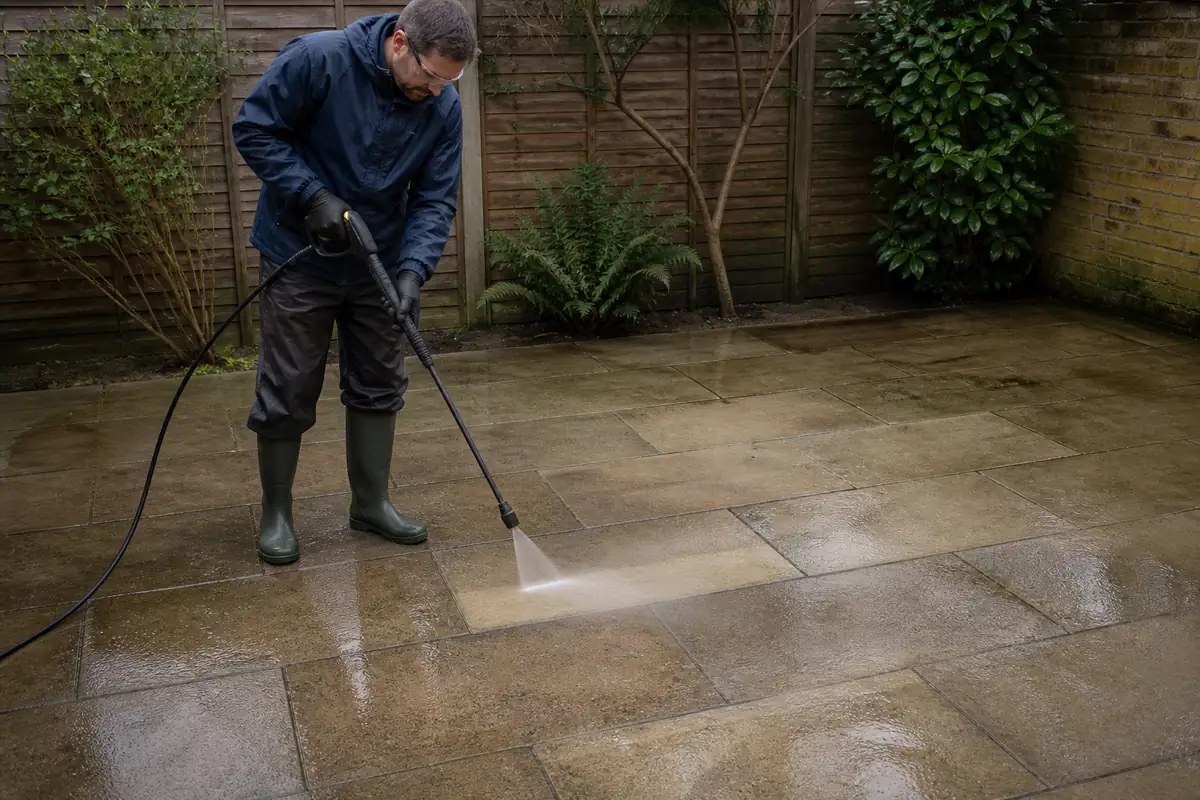
Never point the jet at people, animals, glazing, vehicles, outdoor electrics, open doors or loose material. Wear the protection required by the machine and cleaning product. Stop if the jet cuts a line, lifts jointing, changes colour, exposes aggregate, strips coating or becomes difficult to control.
Pressure can make an even patio look patchy because the cleaned strip is lighter than the surrounding weathered surface. Work to logical slab boundaries and reassess after drying. Do not move the nozzle closer simply because one stain remains. That mark may need a different chemistry or professional assessment.
Equipment-maker pressure guidance can help with tool setup, but the paving and coating instructions still determine whether pressure is suitable in the first place.
Patio cleaning mistakes that cause damage
- Using one recipe everywhere: a method that appears harmless on concrete may etch natural stone or strip a coating.
- Skipping the dry inspection: wet paving hides cracks, surface texture and old colour differences.
- Letting cleaner dry: residue can leave a film, uneven colour or a second cleaning problem.
- Blasting the joints: missing jointing allows movement, weed growth and water entry that washing cannot repair.
- Ignoring runoff: the water may carry soil and product towards planting, drains, ponds, neighbours or public paths.
- Repeating treatment while wet: the true result and any damage become clearer only after the paving dries.
Another mistake is treating every dark mark as dirt. Persistent discolouration can come from rust, tannin, oil, moisture, a failed sealer or a permanent material change. Stronger cleaning may make that damage more visible without removing the cause.
Drying, aftercare and a realistic maintenance routine
Leave the patio unused until it is dry and safe underfoot. Do not return heavy pots or furniture while moisture is trapped in joints or beneath feet. Once dry, inspect from several angles for residue, missed areas, loosened jointing and colour change.
There is no universal cleaning calendar. Shade, tree cover, drainage, foot traffic, cooking, nearby soil and the paving finish affect how quickly the surface soils. Sweep leaves before they break down, blot spills promptly and inspect slippery areas after wet weather.
Move pots periodically so you can clear leaf debris and check for trapped moisture, rusting feet or dark rings. Keep drainage channels open and correct a recurring puddle rather than repeatedly washing the same damp patch. If the patio is sealed, follow the installer or sealer maker’s inspection and renewal guidance.
When professional patio cleaning is the better option
| Situation | DIY decision | Professional route |
|---|---|---|
| Sound known paving with ordinary soil | Begin with the compatible manual method and a hidden test | Optional when time, area or access makes the job impractical |
| Large area with heavy organic growth | Proceed only if product use, exclusion and runoff can be controlled | Useful for systematic treatment and equipment control |
| Unknown stone, coating or earlier chemical damage | Stop before trying a stronger product | Identify the material and suitable restoration boundary |
| Loose slabs, failed joints or poor drainage | Restrict access and avoid forceful washing | Arrange repair or drainage assessment before cleaning |
| Oil, rust, paint or deep absorbed staining | Identify the stain and test a compatible spot method | Consider specialist treatment where the surface value or damage risk is high |
Samyx’s patio cleaning service owns the London booking route. When you enquire, describe the paving, approximate area, access, joint condition, known sealant and main stains. Clear photographs help the team understand the request, but an on-site condition can still change the suitable method.
A cleaner cannot repair structural movement, replace failed pointing, reverse acid etching or guarantee that every absorbed stain will disappear. Where repair, stone restoration, hazardous access or drainage work is needed, use the relevant specialist before cleaning continues.
Ask About Patio Cleaning
Enter your postcode to view our rates and availability in your area.

Frequently asked questions
-
What is the best thing to clean patios with?
Start with dry sweeping, water and a nylon patio brush. If that is not enough, use a cleaner labelled for the exact paving, sealant and type of soil. Test a hidden area and follow its dilution, dwell, protection and rinse instructions.
-
Can I use washing-up liquid to clean a patio?
Only when the paving or coating guidance permits it. Washing-up liquid can create foam, leave a residue and move into planting or drainage during rinsing. It is not a universal cleaner for natural stone, sealed paving or every stain.
-
How do I clean a patio without a pressure washer?
Sweep the dry surface, protect nearby areas, test a compatible cleaner, apply it as labelled, agitate with a suitable nylon brush and rinse in a controlled direction. Work in sections and assess the result only after it dries.
-
Can pressure washing damage patio slabs?
Yes. Excessive force, poor technique or an unsuitable surface can mark stone, expose concrete aggregate, strip sealant, remove jointing and drive water beneath slabs. Confirm compatibility and begin with the least aggressive approved setup.
Important: Follow the paving, sealant, cleaning-product and equipment instructions that apply to your exact materials. Keep people and pets outside the work area, wear the specified protection, never mix products and stop when the surface, joints, runoff or access cannot be controlled safely.
Author: Svetlana Georgieva (Clara)
Hi, I’m Svetlana Georgieva, but you can call me Clara. As the co-founder and heart behind Samyx Cleaning, I’m devoted to sharing the art of a clean space. Let’s journey into a cleaner, more joyful life together with tips from London's cleaning experts.

Discover more of our cleaning secrets: