
Deck vs Patio: Which One Is the Better Choice for You?

Last modified on: 13/09/2026
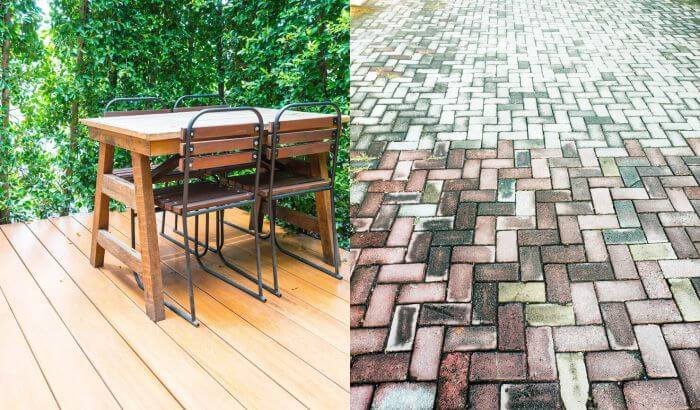
Deck vs patio is not a universal contest: the better choice depends on ground level, drainage, access, budget, maintenance and how you want to use the space. A deck can solve a height or sloping-ground problem, while a well-built patio often offers a durable, lower-maintenance surface on suitable level ground.
Key Takeaways
- Check levels, drainage and access before choosing a surface.
- Compare complete installed scopes, not material prices alone.
- Budget for the maintenance required by the exact material.
- Confirm planning and building requirements for the proposed design.
- Choose for the way the household will actually use the space.
Table of Contents
Here’s a question philosophers have been pondering for ages: deck or patio? Jokes aside, choosing the right outdoor space for your home can drastically alter your lifestyle and property value.
Whether you’re looking to create a cozy corner for relaxation or an impressive area for entertaining guests, you can make an informed decision if you have information. This is why we’re here.
We’ve recently ventured into the world of gardening services and we’ve cleaned quite a few decks and patios so we have a lot to tell you on the subject. Let’s do a deep dive and explore the benefits, costs, maintenance, and how to choose the perfect option for your needs. Deck vs. patio – let us begin!
What is a deck?
A deck is an elevated outdoor structure. It’s usually attached to the house and made from materials like wood, composite, or vinyl. Decks offer a stylish and functional space you can to fit your needs and preferences.
There are several types of decks, each with its own quirks:
- Wood decks. They’re the definition of “how they used to make them.” Traditional and charming, wooden decks offer a natural look but need regular maintenance. We’ve put in some serious hours to clean some of these that were left unattended.
- Composite decks. This is the new(ish) kid on the block. It’s made from a blend of wood fibers and plastic. Composite decks are more durable and low-maintenance than wooden decks while giving off a very similar aesthetic. That’s why they’ve exploded in popularity in recent years.
- Vinyl decks. Highly durable and weather-resistant, vinyl decks are easy to maintain and come in various colours and styles. However, their aesthetic can be an acquired taste.
Need a cleaning service?
Enter your postcode to view our rates and availability in your area.

Benefits of having a deck
Decks have their drawbacks (maintenance being one of them), but they’re an amazing addition to any house. Spending time on the deck after a long day at work or relaxing over the weekend is what it’s all about. But what are some more tangible benefits to having a deck?
- Aesthetics. Decks add a beautiful, elevated outdoor space that improves the overall look of your home. They can be designed to match any architectural style, from older to modern so they can match the style of your house wherever you are in London.
- Increased property value. Installing a deck can boost your home’s resale value. Buyers often see decks as a valuable addition that provides extra living space and enhances the home’s exterior. So it’s an investment.
- Versatility in design. Decks can be customized to fit your needs. Whether you want a multi-level structure, built-in seating, or space for relaxation, you can have it.
Decking on slabs
If you have an existing concrete slab, you can build a deck by building over it. This approach combines the durability of concrete with the aesthetic appeal of decking materials. However, there are also some drawbacks we’ll get into.
Pros:
- Quick installation. Building a deck over a slab is faster than starting from scratch.
- Enhanced look. It transforms a plain concrete slab into a beautiful outdoor space.
Cons:
- Drainage issues. You must ensure proper drainage to avoid water damage.
- Potential maintenance. Some decking materials require more maintenance than others. So choose wisely.
What is a patio?
A patio is probably what pops into your mind when you hear the words “garden party”. It’s a ground-level outdoor space made from materials like concrete, pavers, or stone.
Patios are versatile, durable, and can be designed to fit any aesthetic. They are perfect for creating a seamless flow from indoor to outdoor living spaces.

Benefits of having a patio
What are the benefits of having a patio instead of a deck? Let’s find out.
- Durability and low maintenance. Patios are built to withstand harsh weather conditions and the changing whims of the London climate. They need minimal upkeep, especially if they’re made from materials like concrete and stone.
- Cost-effectiveness. Patios are generally more affordable to install than decks. The cost of materials and labor is often lower which makes patios a more budget-friendly option.
- Design options and flexibility. Patios offer a wide range of design possibilities. You can choose from various materials, colours, and patterns to create an outdoor space that complements your home just the way you want it.
Deck vs. patio: Which one is the right for you?
Decision factor
Deck
Patio
Ground
Can bridge slopes or thresholds
Best with a suitable stable base
Routine care
Depends heavily on material and finish
Usually washing, joints and occasional repairs
Drainage
Must work below and around the structure
Falls and runoff must be designed into the surface
Access
May require steps or guarding
Can provide level access where the site allows
Now we get to the interesting question – which one is the right for you? We can’t give you the answer, but what we can do is compare options to help you make an informed decision.
Is decking cheaper than paving?
When it comes to cost, patios generally have the edge over decks. Patios are often cheaper to install due to the lower cost of materials and labour.
However, the long-term value of a deck can balance out the initial expense, as decks tend to increase property value more than patios. So a question to ponder is are you looking at this upgrade as an investment or an expense?
Initial costs:
- Patios are typically less expensive. The costs will depend on the materials you choose.
- Decks generally have a higher initial cost. This is especially true for high-end materials like composite or vinyl.
Long-term costs:
- Patios have a lower maintenance cost. They’re durable and long-lasting.
- Decks have a potential higher maintenance costs, especially for wood decks.
Verdict: This one goes to the patios. If cost is your primary concern, you should probably shop around for a good patio.
Current-price context: Treat that verdict as a starting point, not a quotation. Ground preparation, drainage, access, removal work, material grade and structural requirements can change the comparison. Ask contractors to price the same finished scope.
Maintenance and longevity
Decks need regular maintenance, such as sealing, staining, and occasional repairs. Composite and vinyl decks require less upkeep but still need periodic deep cleaning.
Patios have minimal maintenance needed. Occasional cleaning and sealing can help maintain the appearance of materials like concrete and stone. Other than that, they’re a lot easier to maintain.
Verdict: This one goes to the patio, too. If you’re looking for something that’s low-maintenance, you should probably look into a patio.
Usability and comfort
Decks have an elevated design which allows for better air circulation. This generally makes them comfortable during warmer months. Not that we typically fight too much with heatwaves, compared to some places.
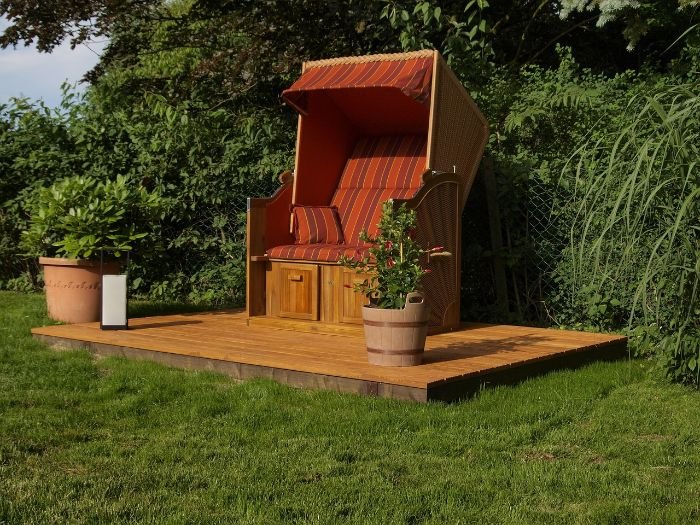
Patios, on the other hand, are ground-level designs. This makes them accessible and functional when the weather is warm enough to hang out outside. They’re ideal for outdoor kitchens, fire pits, and dining areas.
Verdict: Tie. It depends on your preferences.
Comfort and functionality
Decks are great for relaxing, offering an elevated view and multiple levels for different activities.
Patios provide a seamless transition from indoor to outdoor living spaces. They’re perfect for casual gatherings and family activities.
Verdict: Deck if you’re more introverted. Patio if you’re more extroverted.
Concrete Patio vs Wood Deck: Compare the Whole Build
A concrete patio and a wood deck create very different structures. The patio needs a sound, correctly prepared base, suitable falls and controlled drainage. The deck needs appropriate supports, ventilation, fixings and safe detailing where it meets the building. On sloping ground, decking may avoid some excavation; on level ground, a patio may provide simpler access.
Do not compare only the price of concrete with the price of boards. Include excavation or supports, waste removal, drainage, steps, balustrades, finishes and future maintenance. Wood can be repaired board by board and refinished, but it needs regular inspection and care. Concrete avoids timber finishing, yet cracks, settlement, staining and drainage faults can be disruptive to repair. The better option is the one whose complete construction fits the site and whose maintenance you are willing to carry out.
Other considerations for choosing between a patio and a deck
Here are a few more considerations you need to make before you can choose your home’s upgrade. While both options can be great, they’re hardly universal so you need to pay attention to these other factors, too.
Space and layout
Decks are ideal for uneven or sloped terrain. They can be built on different levels, making them suitable for properties with varied elevations.
Patios are best for flat grounds. They can be extended and designed to integrate with the landscape.
Local factors
Check local building codes and regulations before starting your project. Some areas have restrictions on deck height and materials, which can influence your decision.
In England, raised platforms, boundary conditions and the amount of garden covered can affect whether permission is needed. Check the current Planning Portal guidance and your local authority before committing to the design.
Popularity
I’ve never been a fan of going for popular consensus, but it’s a good idea to know about it, anyway. There might be a good reason for it. And the popular consensus is this: patios are generally more preferred in London than decks.
This doesn’t mean decks are unpopular, but patios tend to be the preferred choice, probably because of all the benefits I’ve showcased above.
You may also enjoy:

Frequently Asked Questions
-
Is decking cheaper than a patio?
Not necessarily. The result depends on the base, access, drainage, material and structural work. Compare complete site-specific quotations for the same finished area.
-
Which lasts longer, decking or a patio?
Longevity depends on design, installation, exposure, material and maintenance. A sound paved base can last well, while timber, composite and vinyl decking each have different care and repair needs.
-
Which is easier to maintain?
A patio is often lower-maintenance, but joints, staining and movement still need attention. Deck maintenance varies sharply by material; timber normally needs more finish care than composite or vinyl.
-
Do I need planning permission for decking or a patio?
Some projects fall within permitted development and others do not. Height, location, boundaries, drainage and the proportion of garden affected matter, so check current Planning Portal and local authority guidance.
-
Is a concrete patio better than a wood deck?
It depends on levels, drainage, access, appearance and maintenance. Compare the complete base or support structure, safety details and long-term care rather than judging only the surface material.
Conclusion
Choosing between a deck and a patio ultimately comes down to your personal needs, preferences, and the specifics of your outdoor space.
Both options offer unique benefits and can enhance your home in different ways. Evaluate your space, consider how you plan to use it and think about your budget to make an informed decision. And, hey, if you don’t feel like cleaning your deck or patio, you can always give us a call.

Author: Atanas Dzhingarov
Hi, I’m Atanas - brand consultant and writer. I’m helping Samyx Cleaning create the best cleaning company blog on the Internet. Join us on our journey and learn how to live a cleaner, healthier, happier life in the process.
Discover more of our cleaning secrets: