
Monthly Cleaning Checklist: What to Clean Each Month

Last modified on: 12/09/2026

A monthly cleaning checklist is most useful for jobs that build up slowly and are easy to miss during a normal weekly clean. Skirting-board edges, cupboard fronts, shower tracks, vent covers, appliance details and sofa seams rarely need attention every day. Leaving all of them for a single annual clean creates a much larger job.
Treat the month as a four-part rotation across the month. Spread the work across four short sessions, keep food spills and hygiene-critical jobs on their normal faster cycle, and adjust the list when your household creates dust, grease, pet hair or limescale more quickly.
What should you clean every month?
- Remove slow-building dust from skirting edges, high ledges, lampshades, accessible spaces under furniture and other zones missed during weekly cleaning.
- Choose one kitchen maintenance group, such as cupboard fronts, appliance exteriors, the fridge interior or grease around the hob and extractor housing.
- Reset bathroom details where limescale and residue collect, including shower tracks, taps, tile edges, vent covers and washable bath mats.
- Inspect soft furnishings, mattresses, bins and cleaning equipment, then bring any task forward when use, pets, cooking or hard water makes build-up return sooner.
Key takeaways
- A useful monthly list contains slow-build tasks that routine weekly cleaning often misses.
- Splitting the work across four weeks keeps each session focused and makes missed tasks visible.
- Cooking frequency, pets, household size and hard London water can move some jobs to a faster cycle.
- Care labels and manufacturer instructions take priority over a generic monthly frequency.
- Heavy accumulated soil across several rooms is a different job from routine monthly maintenance.
Table of Contents
Monthly cleaning checklist: a four-week rotation
Start with the areas that collect visible build-up in your home, then use the four-week rotation below as a working list. The tasks are grouped to reduce repeated setup: kitchen products stay together, bathroom descaling stays together, and dry dust removal is kept apart from wet floor work.
Week 1: Kitchen detail
- Wipe cupboard fronts, handles and splash-prone edges.
- Clean the fridge interior shelf by shelf and discard expired food.
- Degrease the hob surround and extractor exterior using a surface-compatible product.
- Wipe small-appliance exteriors and the areas beneath movable appliances.
- Wash the bin and dry it before fitting a new liner.
Week 2: Bathroom detail
- Descale taps and shower fittings where the finish allows it.
- Clean shower-door tracks, seals and tile edges.
- Dust or vacuum accessible vent covers without dismantling electrical fittings.
- Wash bath mats and reusable shower textiles according to their care labels.
- Wipe cupboard fronts, handles and exposed pipework.
Week 3: Living and bedrooms
- Dust lampshades, picture frames, high ledges and skirting-board tops.
- Vacuum accessible edges behind and under light movable furniture.
- Vacuum sofa seams and beneath removable cushions where the fabric allows.
- Vacuum the mattress surface if permitted by the care instructions.
- Wipe doors, handles and visible marks around switches with a suitable method.
Week 4: Overlooked maintenance
- Dust accessible radiator tops, vents and door frames.
- Clean vacuum tools, hair from brush rolls and accessible filters as instructed by the manufacturer.
- Wipe cleaning caddies, bottle exteriors and storage shelves.
- Check reusable cloths, mop heads and brushes for washing or replacement.
- Move unfinished tasks to next month only when there is no hygiene or material reason to do them sooner.
A broader home cleaning schedule can hold daily and weekly work. Keeping those faster jobs outside the monthly list stops the list becoming so long that the slow-build tasks are postponed again.
Choose monthly tasks by how dirt builds up
Frequency works best when it follows the type of soil and how the surface is used. Dust settles slowly on high ledges, grease builds around cooking zones, limescale forms where hard water repeatedly dries, and fibres collect hair and crumbs in seams. A fixed calendar date matters less than catching each type of build-up before it becomes difficult to remove.
Slow dust zones and hidden floor edges
Monthly attention suits areas that are accessible and outside the normal vacuum path: skirting-board tops, door frames, picture frames, radiator tops and the floor edges behind light furniture. Use an extendable or damp duster where appropriate, then vacuum fallen dust before mopping. For awkward access, the hard-to-reach cleaning method is safer than stretching from unstable furniture.
Do not move heavy appliances or large furniture without a safe way to handle the weight. A monthly list should reduce neglected dust, not turn a routine clean into a lifting risk.
Kitchen details that weekly cleaning misses
Worktops, sinks and fresh food spills usually need attention far more often than monthly. The monthly layer belongs around them: cupboard fronts near the hob, extractor housing, fridge shelves, bin interiors, small-appliance exteriors and grease on edges that are not touched during a quick wipe-down.
Oven cleaning frequency follows use. Light splashes can be dealt with as they appear. Baked-on residue may need a separate method. The oven cleaning method covers that job without turning every monthly session into a full oven clean.
Bathroom scale, tracks and washable textiles
London hard water leaves mineral deposits where droplets dry repeatedly, so taps, shower fittings, glass edges and tracks may need more frequent attention in a heavily used bathroom. Use a product that matches the surface finish and follow its label. Acidic descalers are not suitable for every stone, metal coating or grout condition.
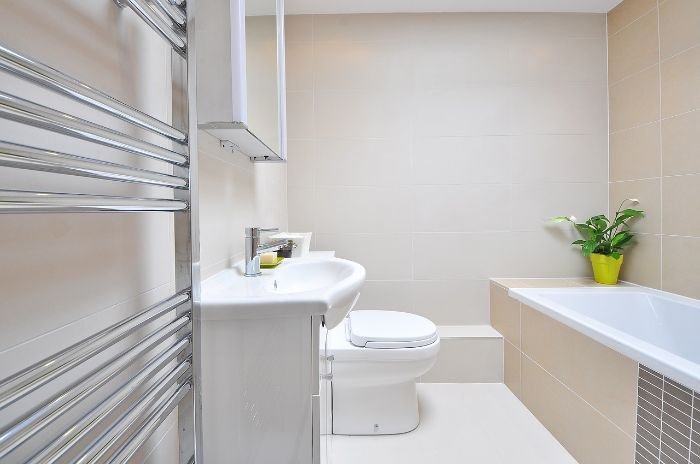
Shower-door tracks, seal edges, vent covers, bath mats and cupboard fronts are good monthly checkpoints because residue can sit there unnoticed. Toilets, basins and frequently touched bathroom surfaces stay on their normal routine according to use; they should not wait for the monthly session.
Beds, sofas and other soft surfaces
Soft furnishings collect dust, hair, crumbs and body oils at different rates. Vacuum sofa seams and removable-cushion gaps with a suitable attachment, and follow the upholstery care code before applying any liquid product. Mattress vacuuming can be useful where the manufacturer permits it. Wash removable covers according to the care label and their actual condition.
You may also enjoy:

Monthly is a planning interval, not a fixed 30-day rule
A calendar is useful for remembering neglected work. The return rate of dirt should set the real frequency. Check the list after the first month and move tasks forward or back according to what you actually find.
- Frequent frying can bring cupboard fronts, splashbacks and extractor exteriors forward.
- Hard water can make shower fittings and glass edges need attention sooner.
- Pets can shorten the interval for sofa seams, skirting edges and floor borders.
- More occupants usually increase marks around doors, switches, bins and shared storage.
- Low-use rooms may need some monthly tasks less often when there is little visible build-up.
A task that repeatedly looks clean after four weeks can move to a longer interval. A task that is already heavily soiled after two weeks belongs on a faster cycle. That small adjustment makes the checklist specific to the home and its real use.
Scale the rotation to the size of the home
A one-bedroom flat and a family house should not carry the same number of monthly tasks. Keep the categories consistent, then change the workload inside each week. A second bathroom adds another set of tracks, fittings and storage fronts; more bedrooms add more skirting edges, lampshades and mattress surfaces; a larger kitchen adds more cupboard fronts and appliance zones.
For a compact home, one weekly group may be finished in a single session. In a larger home, split the same group by room or floor and carry only the unfinished low-priority items into the following week. Hygiene work and fresh spills stay on their faster cycle, so the monthly rotation never becomes an excuse to delay them.
Repeatedly skipped tasks are useful information. If moving a heavy sofa, washing large curtains or treating a stained carpet stops the rest of the session, take that job out of the recurring list and schedule it separately. The monthly checklist should remain a maintenance tool, not a collection of every cleaning job in the property.
Keep daily and seasonal work off the monthly list
Food spills, washing-up, visibly dirty worktops, toilet cleaning and busy floor areas usually cannot wait for a monthly session. Deal with contamination and fresh spills when they happen, especially where leaving residue can stain a material or create an odour.
Other jobs are condition-led or manufacturer-led. Carpet extraction, curtain washing, mattress rotation, appliance filter replacement and treatment of specialist materials can have very different intervals. Check the care instructions before assigning them a place on a recurring calendar.
Vacuum maintenance is a good example. Hair around a brush roll may need clearing whenever performance drops. Filter washing or replacement depends on the machine. The vacuum maintenance steps separate cleaning the machine from simply adding another household chore to the month.
Use the monthly list in a safe working order
A predictable order reduces rework. Dry dust falls onto lower surfaces and floors, so remove it before the final vacuum or mop. Wet products should stay with the surface they are intended for, and different cleaning products should not be mixed unless the label explicitly tells you to do so.
- Clear only the access you need and keep walkways free.
- Work from higher dry-dust areas towards lower surfaces.
- Clean kitchen and bathroom details with products suitable for each material.
- Vacuum soft furnishings and floor edges before wet floor work.
- Wash reusable cloths and tools, dry them properly, then return products to storage.
Use separate cloths for toilet areas and food-preparation surfaces, and wash reusable cloths after use. Switch off and unplug small appliances before cleaning them where the manufacturer instructs this, and do not open electrical housings or vents as part of routine cleaning.
When the monthly list has become a backlog
Several missed months can turn maintenance into a different scale of job. Thick kitchen grease, widespread limescale, soil behind furniture, marked doors and skirting boards across multiple rooms, plus accumulated bathroom residue can take much longer than a normal rotation slot. Trying to force all of that into one short session often means the hidden work is skipped again.
A one-off cleaning visit is the closer service match when the home needs a reset before a simpler routine can resume. Samyx Cleaning can handle the accumulated household cleaning in one booked visit. Specialist carpet or upholstery treatment remains a separate service where the material needs extraction or stain-specific work.
Need a cleaning service?
Enter your postcode to view our rates and availability in your area.

Keep only the monthly tasks that earn their place
After one full cycle, keep the jobs that showed real build-up, shorten the interval for tasks that returned early, and move low-soil jobs to a longer cycle. The result should be a small maintenance layer that catches neglected details without duplicating the cleaning already done each week.
The strongest monthly routine is one you can repeat and audit. If a task keeps being postponed because it is too large, difficult to access or needs specialist equipment, schedule it as a separate job so it does not block the rest of the checklist.
Author: Svetlana Georgieva (Clara)
Hi, I’m Svetlana Georgieva, but you can call me Clara. As the co-founder and heart behind Samyx Cleaning, I’m devoted to sharing the art of a clean space. Let’s journey into a cleaner, more joyful life together with tips from London's cleaning experts.

Discover more of our cleaning secrets: