
Baking Powder for Cleaning: Is It the Same as Baking Soda?

Last modified on: 31/08/2026
Publish: 5th Dec 2023
Views:
Category: Cleaning & Health
Tags:
Baking soda, Cleaning tips, Eco-friendly cleaning

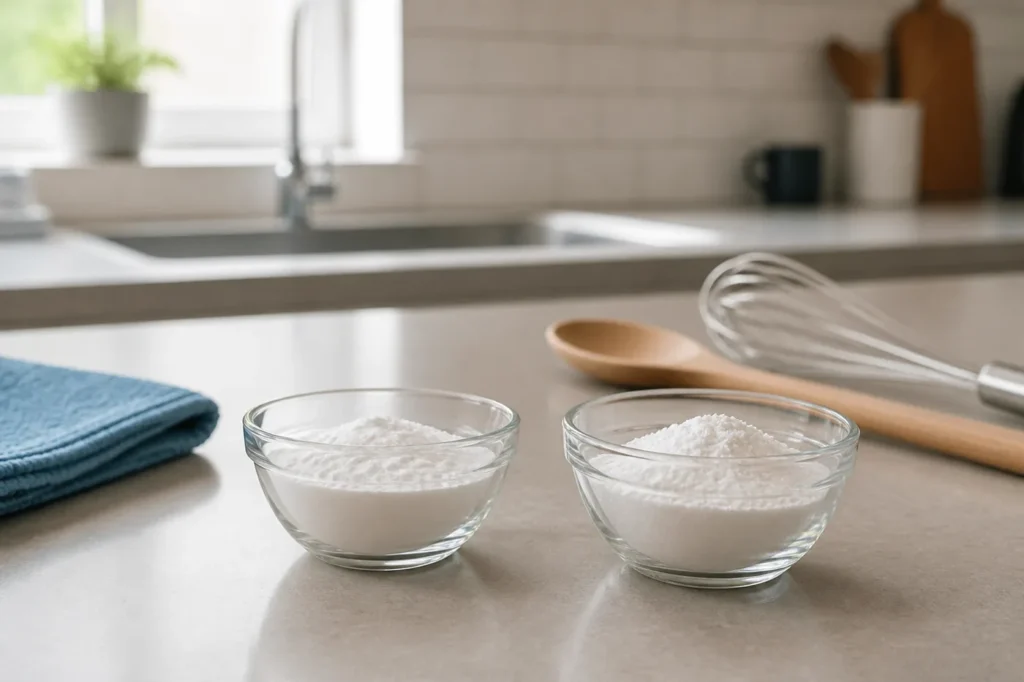
Baking powder for cleaning sounds plausible because it sits beside bicarbonate of soda in the cupboard and the two powders look almost identical. Few kitchen ingredients carry so many extra jobs in the public imagination. They bake, deodorise, scrub and, according to some advice online, clean almost anything.
That resemblance hides a useful chemistry lesson. Baking powder contains bicarbonate along with acid salts and a dry carrier. Once moisture is added, those ingredients start doing the job they were formulated for: raising a bake. I do prefer a simple cupboard product when it genuinely suits the cleaning task. The first step is choosing the right powder.
Choose the powder by its ingredients
- Read the packet. Pure sodium bicarbonate is bicarbonate of soda; baking powder is a raising mixture containing bicarbonate, acid salts and usually a dry carrier.
- Use bicarbonate only where the material’s care guidance permits it. Baking powder normally offers less cleaning value and can leave extra residue.
- If baking powder was used by mistake, stop adding products. Remove loose powder, wipe a compatible sealed surface with clean water and dry it.
- Keep both powders away from natural stone, delicate finishes, electronics and unknown materials unless the manufacturer approves the method.
- Follow the product label, surface-care instructions and appliance manual over a general household tip.
Key Takeaways
- Check the ingredient panel before treating two white powders as interchangeable.
- Choose pure bicarbonate only for a compatible, clearly defined cleaning job.
- Remove accidental baking-powder residue with the least aggressive compatible method.
- Ignore fizz as a measure of stain removal or hygiene.
- Stop when a finish changes colour, dulls, softens or becomes tacky.
Table of Contents
Baking powder for cleaning versus bicarbonate of soda
In the UK, bicarbonate of soda is the familiar name for sodium bicarbonate. Baking soda usually refers to the same single compound. A packet labelled baking powder contains a prepared raising agent. Its exact recipe varies by product, so the ingredient panel matters more than the colour, texture or taste of the powder.
| Decision point | Bicarbonate of soda | Baking powder |
|---|---|---|
| What is in it? | Sodium bicarbonate as the active powder, subject to the product label. | Sodium bicarbonate plus one or more acid salts and usually starch or another dry carrier. |
| What happens with moisture? | It dissolves into a mildly alkaline solution and retains some fine abrasive action before it dissolves. | The bicarbonate and acid components begin reacting. Carbon dioxide is released, and the carrier can form a cloudy paste or film. |
| Cleaning value | May help with some compatible greasy deposits, odours and light scrubbing jobs. | Has no clear cleaning advantage over the pure ingredient and often supplies less useful bicarbonate for the same spoonful. |
| Residue | Can still leave a white film if too much is used or it is not rinsed. | May leave bicarbonate, salts and carrier residue, which can take several clean-water wipes to remove. |
| What it is not | Not a detergent, disinfectant or universal surface cleaner. | Not a gentler universal cleaner simply because its formulation is less alkaline. |
Remember our cleaning science lessons: concentration and formulation change performance. A spoonful of baking powder is not a spoonful of pure bicarbonate. Moisture also starts an acid-base reaction inside the powder, so a single fixed pH value cannot be assigned to every brand or mixture.
Do not identify the powder by taste or a pH shortcut
The original flavour comparison points towards the underlying chemistry: pure bicarbonate can taste bitter, and acid salts change the flavour of baking powder. Taste is a poor household identification method. Powders may be old, contaminated, transferred to another container or formulated differently from the product you remember.
Read the original packet and ingredient panel. A pH reading also depends on the product, concentration, water and stage of reaction. Calling every baking powder neutral hides the practical issue. Its formulation is designed for controlled gas release in food, not for predictable cleaning performance on household finishes.
What can baking powder actually clean?
Baking powder may help lift a tiny fresh mark from a compatible sealed surface when little else is available. That narrow possibility does not make it a sensible default. The added ingredients make the result less predictable, and the clean-up can take longer than the mark itself.
| Job | Baking-powder decision | Practical route |
|---|---|---|
| Light mark on sealed glazed ceramic | Possible, with low cleaning value and a residue risk. | Start with clean water or a labelled surface-compatible product. Patch-test any permitted powder method. |
| Greasy film | Poor choice. Baking powder is not a detergent. | Use a suitable degreasing or detergent product according to its label and the surface instructions. |
| Household odour | Unpredictable compared with pure bicarbonate because the formulation is diluted by other ingredients. | Use the separate bicarbonate method only when the item and care guidance allow it. |
| Fabric, carpet or upholstery | Avoid improvising. Starch and salts can settle into fibres or leave a pale patch. | Follow the care label and the correct stain method for the fibre and stain. |
| Natural stone or delicate finish | Do not use. Acid salts, particles and residue can affect a vulnerable finish. | Use the material manufacturer’s approved cleaner or seek specialist advice. |
| Washing machine | Do not use as a routine drum or drawer cleaner. | Follow the appliance maintenance instructions and use only approved products. |
You may also enjoy:

What to do after using baking powder by mistake
A mix-up is usually a residue problem. Resist the urge to create a second reaction with vinegar, lemon juice or another cleaner. Adding ingredients makes the chemistry and the material risk harder to judge.
On a sealed hard surface
- Stop and identify the surface. Natural stone, aluminium, lacquer, paint and unknown coatings need their own care guidance.
- Lift loose dry powder gently with a soft cloth or non-scratching tool. Avoid spreading dust into the air.
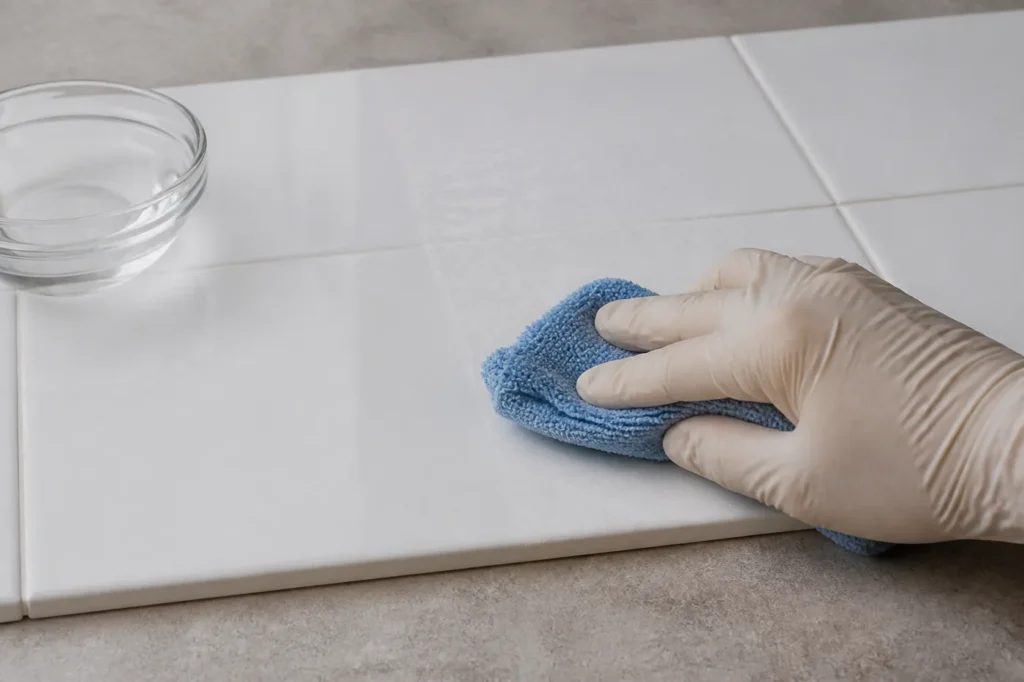
- When plain water is permitted, wipe with a clean damp microfibre cloth. Turn or rinse the cloth often so the film leaves the surface and does not spread around it.
- Dry the area and inspect it in normal light. Repeat the clean-water wipe if a chalky film remains.
- Stop if colour, sheen or texture changes. Use the manufacturer’s care route or a suitable specialist.
On fabric, carpet or upholstery
Do not scrub or turn the powder into a wet paste. Lift what you can without driving it deeper into the fibres. Use a vacuum attachment only when both the textile care guidance and the vacuum manual permit fine-powder pick-up. A valuable, delicate or unknown textile is a job for the manufacturer or a qualified textile cleaner.
In a washing machine
Remove visible dry powder from the dispenser before starting a cycle. If a cycle has already run, clean the drawer and follow the machine manual’s rinse or maintenance instructions. Do not add an acid or another household cleaner to neutralise it inside the appliance. Persistent residue, unusual foaming, a blocked drawer or an error code needs manufacturer or appliance-service advice.
Why fizz is not proof of cleaning power
The bubbles appear when bicarbonate reacts with an acid and releases carbon dioxide. Baking powder carries its own acid component, so water can start that reaction inside the paste. Movement from the bubbles may disturb already loosened dirt for a short time. It does not show that grease has been dissolved, a stain has been removed or microbes have been controlled.
Adding white vinegar or lemon juice creates more visible activity and consumes more of the bicarbonate. The fizzing reaction is a chemical change, not a cleaning score. Never make the mixture in a sealed bottle or container because the gas can raise pressure.
Where neither powder belongs
Pure bicarbonate is more useful for cleaning. That usefulness does not equal universal compatibility. Fine particles can act as an abrasive. Alkalinity can affect some metals and finishes. Baking powder adds acid salts and carrier residue to that uncertainty.
- Natural stone, including marble, limestone and many unsealed stone surfaces.
- Aluminium, delicate metals, plated pieces and valuable or antique finishes.
- Waxed, oiled, painted, lacquered or high-gloss surfaces.
- Screens, electronics, control panels and openings where powder or moisture can enter.
- Unknown fabrics, upholstery, carpets and dyed fibres without a compatible care method.
The surface limits for bicarbonate also matter here. Baking powder should not be treated as a gentler workaround for a surface that rejects bicarbonate.
A cupboard product still needs judgement
I don’t know about you, but I usually prefer the simplest product that can do the job. Fewer specialist bottles can mean less clutter and less unused product. A familiar kitchen ingredient is still a chemical substance, and the word natural says nothing about finish compatibility, dosage or what happens when products are combined.
Using the wrong powder also consumes water, cloths and time during clean-up. A lower-waste decision starts with the smallest compatible amount of the correct product. The same evidence-first boundary applies to natural cleaning: read the label, match the product to the material and avoid experiments built around dramatic bubbles.
How Samyx Cleaning can help after a cupboard experiment
A single fresh mark on a known sealed surface may have a simple label-approved solution. Repeated grease, widespread residue or a home-cleaning routine that keeps being postponed is a different problem. Samyx Cleaning can arrange regular cleaning around agreed household priorities.
Routine cleaning does not repair etched stone, damaged coatings, appliance faults or permanently changed fibres. Those outcomes need the material manufacturer, an appliance engineer or a restoration specialist. Knowing where cleaning ends is part of choosing the right help.
Book Regular Domestic Cleaning
Enter your postcode to view our rates and availability in your area.

Frequently asked questions
-
Is baking powder still good for cleaning?
Baking powder may lift a very light fresh mark from a compatible sealed surface. It has no clear advantage over pure bicarbonate and can leave acid-salt or starch residue. Start with the surface-care instructions and a suitable labelled product.
-
Can you use baking powder instead of bicarbonate of soda for cleaning?
They are not direct substitutes. Baking powder contains bicarbonate plus acid salts and usually a carrier, so each spoonful contains less of the ingredient sought for cleaning and may leave more residue after moisture activates the mixture.
-
Is baking powder and vinegar good for cleaning?
The combination produces visible carbon-dioxide bubbles. Fizz does not prove cleaning or disinfection, and the acid consumes bicarbonate. Do not mix products on an unknown material or inside a sealed container, appliance or bottle.
-
What should I do if I put baking powder in the washing machine?
Remove visible dry powder from the dispenser, then follow the machine manual’s rinse or maintenance instructions. Do not add vinegar or another cleaner to neutralise it. Seek appliance advice if residue, unusual foaming, blockage or an error remains.
Important: Follow the powder label, surface-care instructions and appliance manual over general cleaning guidance. Where a powder method is permitted, test a hidden area first and use the smallest workable amount. Avoid breathing loose dust, wear suitable gloves when needed, ventilate the room, remove residue and dry the surface. Never mix cleaning products or combine either powder with bleach, ammonia, acids or an unknown cleaner. Stop if colour, sheen, coating, texture or fibres change. Valuable, delicate, damaged or unidentified materials need manufacturer or specialist advice before treatment.

Author: Atanas Dzhingarov
Hi, I’m Atanas - brand consultant and writer. I’m helping Samyx Cleaning create the best cleaning company blog on the Internet. Join us on our journey and learn how to live a cleaner, healthier, happier life in the process.
Discover more of our cleaning secrets: