
What Happens If You Never Clean Your House? A Practical Answer

Last modified on: 28/08/2026
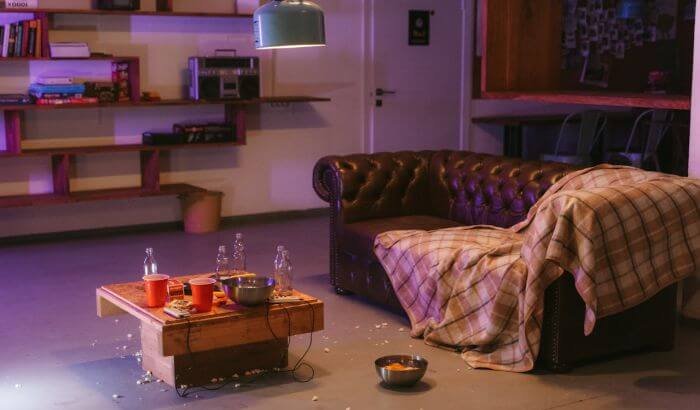
What happens if you never clean your house? A few missed days usually create unfinished chores, visible crumbs, dust and a fuller bin. Prolonged neglect can make residue harder to remove, leave food and waste available to pests, restrict safe access and allow a real moisture problem to worsen.
The condition of the home matters more than a universal deadline. An untidy room is different from a contaminated surface, and neither proves that somebody is ill or has a mental-health condition. Start with what you can observe: exposed food, waste, standing water, damp, blocked routes, unstable piles, damaged services and unusual odours.
The sections below separate ordinary consequences from warning signs and organise the recovery without requiring everything to be finished during one long, exhausting session.
Restore safety and function before appearance
- Pause before cleaning if you see sewage, sharps, unstable stacks, extensive mould, damaged electrics, gas warning signs or an active infestation.
- Remove spoiled food and ordinary household waste that can be bagged without contact with an unknown hazard.
- Clear one stable route between the entrance, bathroom, kitchen and sleeping area.
- Collect loose dry soil from high surfaces before adding liquid or working on floors.
- Restore the kitchen and bathroom to a usable condition, then clean floors, textiles and lower-priority rooms.
- Use the right specialist when the source is structural, biological, electrical, pest-related or outside normal domestic cleaning.
Key Takeaways
- Judge the home by observed conditions, not by the number of missed cleaning days.
- Protect food, waste control, safe access and working hygiene facilities first.
- Treat damp, mould, pests, sharps and sewage as separate hazards with separate remedies.
- Clean in stages so removed soil is not transferred back onto finished areas.
- Choose help without shame when the workload, access or risk exceeds household capacity.
Table of Contents
What happens if you never clean your house?
There is no fixed point at which every home becomes unsafe. Cooking, pets, occupancy, ventilation, leaks, outdoor soil, mobility and waste storage all change the rate of buildup. Use the table as a condition-based decision aid, not a timetable.
| Observed condition | Likely practical effect | Best response |
|---|---|---|
| Several missed days | Dishes, crumbs, laundry, dust and a full bin become more visible | Restore food storage, waste, bathroom use and a clear route; a whole-house emergency is unlikely without another hazard |
| Recurring missed cleaning | Grease, soap film, dust and textile soil become harder to remove; rooms take longer to reset | Prioritise buildup by area and use a repeatable maintenance routine |
| Exposed food or leaking waste | Odour and pest attraction may increase; nearby surfaces can become soiled | Remove the source, contain the waste and clean the affected accessible surfaces |
| Persistent damp or water damage | Materials may stay wet, stain, deteriorate or support mould growth | Find and repair the moisture source, then choose suitable drying and remediation |
| Blocked routes or unstable piles | Access to beds, appliances, exits or services can become difficult | Stop bulk cleaning until a safe route and handling plan are established |
| Sewage, sharps, droppings or extensive infestation | Normal domestic-cleaning assumptions no longer apply | Restrict access and use the appropriate specialist or local disposal route |
Five days without cleaning may leave a busy kitchen unpleasant; a low-use room may change very little. Fresh food spills and an overflowing bin deserve attention before settled dust on a display shelf. Ask how long cleaning was missed, what has accumulated and what people need to use safely today.
What a dirty home does not prove
The word dirty can describe anything from a dusty shelf to a room affected by sewage. It is too broad to establish cause, health impact or urgency. Replace the label with observations: which surface is affected, what the soil appears to be, whether it is dry or wet, whether the source is still active and whether anyone needs the area now.
Crowded rooms do not show why possessions accumulated. Stale odours do not identify mould, bacteria or pests. Visible marks do not prove permanent damage. Each of those assumptions can send the cleanup in the wrong direction. Confirm the source before choosing chemicals, moving heavy items or discarding property.
Cleaning difficulty is also not a character judgement. Work, caring, disability, illness, bereavement, limited storage and sudden disruption can all affect household capacity. Practical help may include sharing tasks, arranging waste or laundry support, adapting tools, repairing the property, speaking to a healthcare professional or booking an appropriate cleaner. The useful response depends on the obstacle and avoids blame.
Tidy, clean and deep clean are different jobs
A tidy room can still contain dust or surface residue. A clean room can still have crowded storage. Separating the jobs prevents possessions from being sprayed accidentally and stops detail work from delaying needed hygiene.
| Job | What it changes | Example |
|---|---|---|
| Tidying | Returns objects to a destination and restores access | Moving laundry into baskets and clearing the floor route |
| Cleaning | Removes ordinary soil from a compatible accessible surface | Washing a worktop after loose crumbs have been collected |
| Disinfection | Uses a suitable labelled product for a specific hygiene reason | Following the label after cleaning a surface affected by illness or contamination |
| Deep cleaning | Works through accumulated soil in details and low-frequency areas | Degreasing accessible kitchen surfaces and cleaning behind movable furniture |
| Repair or remediation | Corrects a source beyond surface soil | Repairing a leak before treating damp materials |
Do not disinfect every surface by default. The product still needs a relevant purpose, compatible material, correct contact time and safe handling. Use the high-touch surfaces decision for the cleaning-versus-disinfection boundary.
Health effects of a dirty house depend on the exposure
A photograph of clutter cannot establish a medical risk. Health relevance comes from a specific exposure, its extent and who is present. A person with asthma, allergies, reduced immunity or another vulnerability may need more individual advice than a general cleaning article can provide.
Dust and allergens
Settled dust can contain tracked-in soil, fibres, pollen, pet material and other particles. It may be disturbing for people who already react to particular allergens; dust does not prove that the house caused a condition. Remove it in a way that captures soil: vacuum with suitable filtration, fold a slightly damp compatible cloth and avoid aggressive dry sweeping when it throws visible dust back into the air.
Food, waste and surface transfer
Exposed food, leaking packaging, pet bowls and overflowing waste create more immediate decisions than cosmetic clutter. Remove spoiled food, contain waste, wash hands and clean the surfaces the leak touched. Do not claim a named pathogen from appearance or smell. If illness is present in the household, follow the relevant medical and public-health advice. Do not improvise a stronger mixture.
Damp and mould
Mould needs moisture, so missed dusting alone does not create it. Visible mould, mould odour, condensation or water damage points to a moisture problem that needs action. Current government guidance says the underlying source should be identified and addressed because wiping the surface will not prevent recurrence.
If you have new or worsening symptoms, seek advice from a healthcare professional. Cleaning can remove accessible soil; it cannot diagnose whether the home caused a symptom.
When cleaning should stop and specialist help should start
| Warning sign | Why the job changes | Next route |
|---|---|---|
| Unknown sharps or clinical waste | Ordinary gloves and bin bags do not provide a safe disposal system | Do not touch or bag the item; use the relevant council, healthcare or specialist route |
| Sewage or extensive bodily-fluid contamination | The source, affected materials and protective controls need assessment | Restrict access and arrange specialist cleanup |
| Large, recurring or hidden mould | Disturbance may spread material while the moisture source remains | Arrange inspection, source repair and suitable remediation |
| Active pest infestation or widespread droppings | Surface cleaning cannot remove entry points, nesting or the pest source | Use a competent pest-control route before final cleaning |
| Blocked exits, unsafe floors or unstable stacks | Moving one item may shift another or remove the only stable route | Plan access and removal before starting a normal room clean |
| Gas smell, exposed wiring, sagging material or major leak | The immediate problem is technical or structural | Leave the area as needed and contact the appropriate emergency or qualified trade |
Heavy accumulation does not by itself diagnose hoarding disorder. Avoid forcing decisions, discarding another person’s possessions without consent or turning a clinical concern into a cleaning label. The NHS hoarding guidance explains when daily life is being affected and where health support begins.
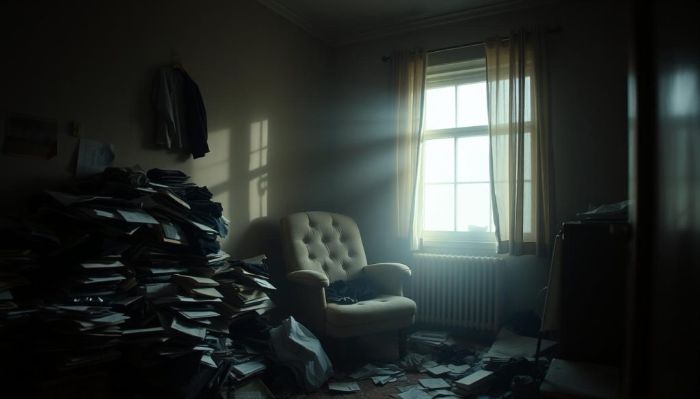
Recover a neglected home in the right order
Begin with one assessment walk through the undisturbed room. Photograph leaks, damage or unusual contamination if it is safe to do so. Decide what is ordinary domestic soil and what needs a separate route. Then work through the following order.
- Control immediate hazards. Keep people and pets away from sharps, sewage, unstable piles, damaged electrics, gas warning signs and active pest areas.
- Ventilate when appropriate. Use normal safe ventilation if products, weather, security and the condition of the building allow it. Ventilation does not replace fixing damp or a leak.
- Remove ordinary food and waste. Bag routine household rubbish, close food containers and move spoiled food out without compressing unknown sharp or leaking material.
- Clear one route. Establish stable access to the entrance, bathroom, kitchen, sleeping area, windows and needed controls before widening the working zone.
- Separate possessions from soil. Use containers for keep-here, relocate, decide-later and safe-disposal items. A decluttering checklist can carry the detailed decisions.
- Collect dry soil high to low. Dust accessible upper surfaces, vacuum suitable furnishings and finish floors after debris has stopped falling.
- Clean wet areas by use. Restore a usable toilet and basin, then address the kitchen sink, preparation surfaces and appliance exteriors with compatible products.
- Close each zone. Remove waste, launder or isolate used cloths, rinse as directed, let surfaces dry and return only the items that belong there.
Plan a first session that can finish safely
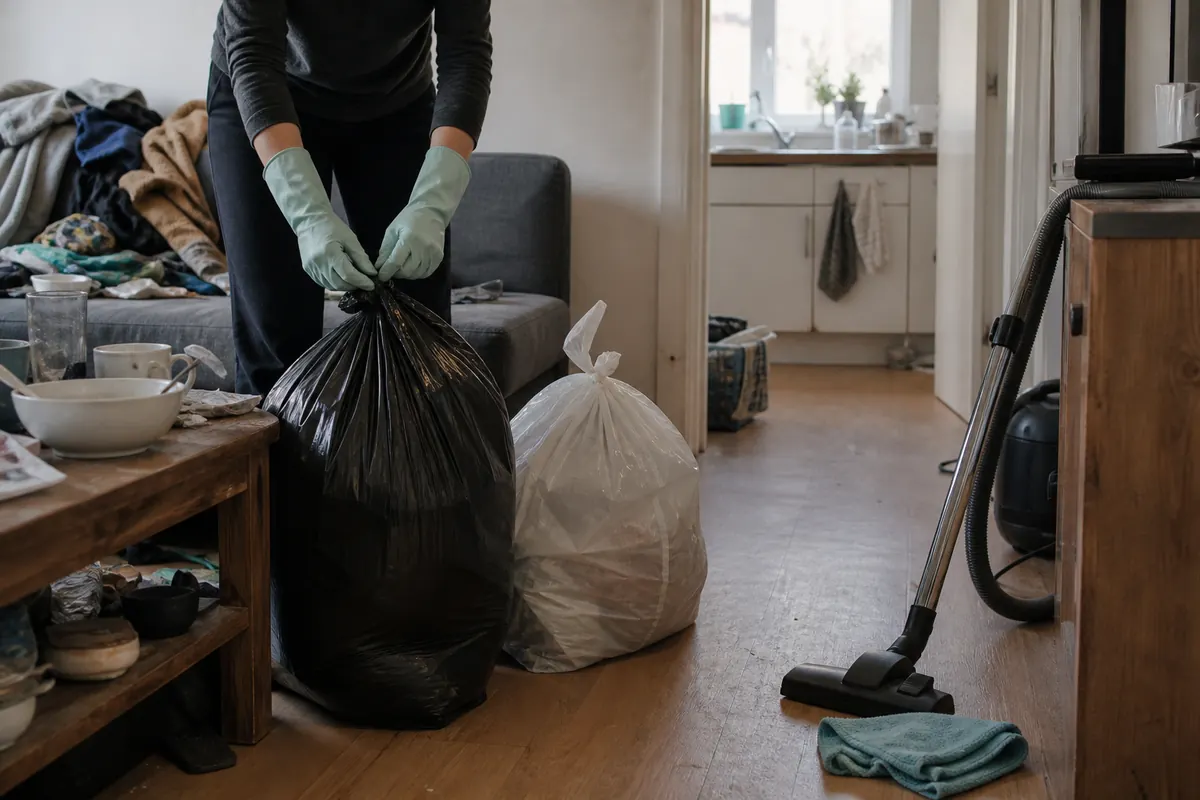
Choose one defined outcome, such as clearing the route to the bathroom or restoring one food-preparation surface. Gather sturdy ordinary waste bags, containers for possessions, compatible cloths, a vacuum suitable for the floor and only the products required for that zone. Keep every product in its original labelled container.
Set a limit based on the people doing the work and the weight, heat, ventilation and access involved. Take breaks before fatigue makes lifting, reaching or product use less controlled. Do not leave open bags, wet floors, loose cables or displaced furniture as the stopping point.
Finish by removing the bagged waste through the agreed route, returning needed items, washing hands and recording the next visible step. A closed, usable zone is progress even when the rest of the home still needs attention.
You may also enjoy:

Book a Home Reset
Enter your postcode to view our rates and availability in your area.

Make the home usable room by room
A visible finish in one priority area is more useful than half-cleaning every room. Keep personal items together, change cloth faces frequently and avoid carrying kitchen or bathroom soil into another zone.
| Zone | First usable standard | Detail that can wait |
|---|---|---|
| Kitchen | Spoiled food removed, sink usable, preparation area cleared, fresh spills cleaned and waste contained | Inside cupboards, decorative storage and low-use appliances |
| Bathroom | Toilet, basin, taps and safe floor route cleaned; damp towels moved | Full grout restoration, cabinets and cosmetic polishing |
| Routes and exits | Stable floor access with doors, needed controls and exits reachable | Skirting, corners and display surfaces |
| Sleeping and laundry | Bed accessible, damp textiles separated and clean bedding available | Wardrobe organisation and perfect folding |
| Living or work area | One seat and one usable surface cleared; cables and walkways safe | Books, papers and decorative categories that require decisions |
Do not pour products into unlabelled bottles or combine leftovers to save space. Read the whole label and use the stated protective measures. The HSE label guidance explains why hazard and precaution statements matter.
Cleaning neglect can hide maintenance problems
Ordinary dust does not automatically weaken a building or reduce its value. Costs arise when a specific condition is missed or allowed to spread. Water below a sink may damage a cabinet. Grease can harden on finishes. A blocked appliance vent may need cleaning or maintenance. Pest access, failed seals and damaged flooring need their own remedies.
- Photograph the condition before cleaning if the pattern may help identify a leak, return stain or faulty part.
- Separate cleaning cost from repair cost so a surface problem is not mistaken for a technical fault.
- Prioritise active moisture, unsafe access and failing services before cosmetic restoration.
- Ask whether a damaged material can be cleaned, needs restoration or should be replaced.

Prevent the next backlog with condition triggers
After the recovery, keep only the controls that prevent the same problem. A rigid perfect-home schedule is unnecessary. Use visible triggers and assign ownership.
- Close exposed food, wash the dishes needed next and remove leaking waste.
- Wipe fresh spills before they dry or spread into joints and nearby items.
- Reset the toilet, basin and busiest route when the home starts to lose function.
- Choose one buildup zone when dust, bathroom deposits, floor soil or grease becomes visible.
- Report leaks, recurring damp, pests and faulty appliances; keep them off the cleaning list.
If the backlog returns every week, change the capacity before doubling the next list. Share complete tasks, reduce the appearance standard or use a busy-schedule routine with smaller time modes.
When a Samyx one-off clean may help
A recoverable domestic backlog may suit an agreed one-off cleaning visit. Explain the condition, access, rooms, waste and any unusual contamination before booking so the team can confirm scope and time.
Standard domestic cleaning does not include mould remediation, pest control, sewage cleanup, clinical waste or sharps, hoarding treatment, structural or electrical repair, hazardous-material removal or guaranteed restoration. Resolve those needs through the appropriate specialist before arranging the remaining household clean.
Frequently asked questions
-
What will happen if we do not clean the house for 5 days?
In many homes, five missed days lead to dishes, dust, laundry, crumbs and a fuller bin. They do not automatically create a health emergency. Deal first with exposed food, leaking waste, fresh spills, the toilet and safe walking routes. A leak, sewage, sharps, pests or another specific hazard changes the response regardless of the number of days.
-
Can you get sick if your house is not clean?
Ordinary untidiness does not prove that a home will make someone ill. Risk depends on a specific exposure, such as prolonged damp and mould, contaminated food or waste, sewage, pests or a relevant allergen, plus the person’s vulnerability. Seek medical advice for symptoms and address the identified household source.
-
Is it normal to not clean your house?
People miss cleaning for many ordinary reasons, including time, illness, caring duties, disability, stress or an unexpected event. A lapse is not a character judgement or a diagnosis. Restore the needed functions in small stages and seek practical or clinical support when access, safety or daily life is being affected.
Safety note: The information applies to ordinary household-cleaning decisions. It is not medical diagnosis, mental-health assessment, specialist remediation or emergency advice. Do not handle unknown sharps, enter an unsafe area or mix cleaning products. Follow every product label, keep people and pets away from hazards, and contact the appropriate emergency service, healthcare professional, council route or qualified specialist for severe symptoms, immediate danger, sewage, extensive mould, infestation, damaged services or unstable accumulation.
Plan a One-Off Deep Clean
Enter your postcode to view our rates and availability in your area.
Author: Svetlana Georgieva (Clara)
Hi, I’m Svetlana Georgieva, but you can call me Clara. As the co-founder and heart behind Samyx Cleaning, I’m devoted to sharing the art of a clean space. Let’s journey into a cleaner, more joyful life together with tips from London's cleaning experts.

Discover more of our cleaning secrets: