
Can You Use Coke for Cleaning Toilets?

Last modified on: 02/09/2026
Publish: 31st Oct 2022
Views:
Category: Cleaning & Health
Tags:
Cleaning tips, Disinfection, Eco-friendly cleaning, White vinegar

The search “clean toilet with Coke” describes a popular internet hack, but cola is a poor substitute for a labelled toilet cleaner and it does not disinfect the bowl.
Do not confuse a mild acid with a toilet cleaner
- Cola’s mild acidity may loosen a little mineral residue, but the drink is not formulated or labelled to clean or disinfect a toilet.
- Its sugar, colouring and other ingredients add residue that a purpose-made descaler does not need.
- If Coke is already in the bowl, do not add bleach, toilet cleaner, vinegar or another product on top of it.
- Brush, flush thoroughly and rinse away visible residue before choosing one product that matches the actual deposit.
- Use a labelled toilet cleaner for routine soil, a compatible descaler for limescale and specialist advice for damaged glaze, a leak or a blockage.
Using Coke for cleaning toilets is one of the oldest myths floating around on the Internet. It doesn’t surprise me that people are doing this on social media. It doesn’t surprise me that people are doing this on YouTube. What does surprise me is that cleaning companies are recommending this method, too.
Cleaning your toilet bowl with Coke is like washing your dishes with ketchup – you get the opposite of what you were hoping for. But since this myth persists (and many cleaning companies are spreading this misinformation), I guess it’s time to debunk it.
Key takeaways
- Coke can expose some mineral residue to mild food acids, but that limited effect is not the same as cleaning or disinfection.
- A clean-looking bowl after a viral demonstration does not prove that microorganisms were reduced or that all residue was removed.
- If cola has already been poured in, brush and flush it away before using any other product.
- Identify ordinary soil, limescale, rust transfer, glaze damage and plumbing trouble before choosing the next step.
- Never mix bleach or a toilet cleaner with cola, vinegar, lemon juice, ammonia, a descaler or an unknown residue.
Table of Contents
What Coke can and cannot do in a toilet
| Claim | What can happen | What it does not prove |
|---|---|---|
| The acid removes marks | Food acids may loosen a small amount of accessible mineral residue given enough contact and brushing. | That cola is a reliable descaler, safe for every fitting or more effective than a compatible labelled product. |
| The bowl looks cleaner | Flushing and brushing can move loose soil, while the wet surface may temporarily look brighter. | That the bowl has been disinfected or that sugar, colour and loosened residue have been rinsed away. |
| More ingredients make it stronger | Adding other household products creates more variables and may cause splashes, fumes or an unsafe reaction. | That a viral Coke, bicarbonate, vinegar or bleach mixture is safe or more effective. |
| It worked once, so it is suitable | An intact glazed bowl may tolerate brief contact followed by thorough rinsing. | That the same method suits damaged glaze, plated fittings, seals, a cistern or an unknown toilet material. |
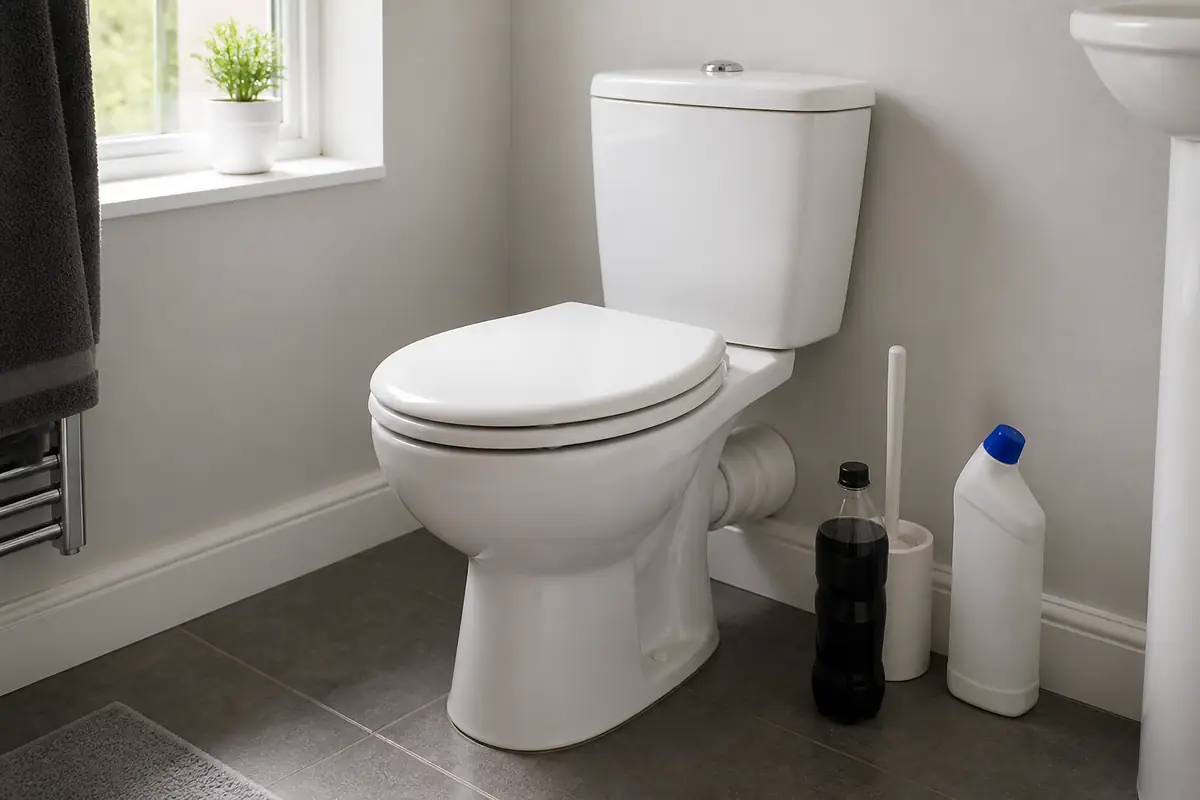
Why do people think you can clean your toilet bowl with Coke?
The brainiacs behind this method explain it like this – you can clean your toilet using cola because cola is acidic. Whether you’re using the big brand stuff or the store-bought cheap stuff, it doesn’t matter – any dark, sugary, carbonated drink would do. At least that’s how the story goes.
Many videos show a clean toilet after pouring a bottle of Coke into the bowl. Indeed, the toilet appears clean. But appearance isn’t everything. Many articles float around where the authors swear by this method. But does it actually work?
Cola is mildly acidic because of food acids in the drink. That chemistry can explain a limited effect on exposed mineral deposits, but acidity alone does not turn a drink into a complete cleaning product. A toilet cleaner also needs clear instructions, compatibility information, a stated contact time and, where disinfection is claimed, an authorised use and efficacy claim on the label.
Does cleaning your toilet with cola work?
Reread my description of cola – dark, sugary, carbonated drink. Aside from being a sweet, crystalline substance, sugar gets sticky once it’s dissolved. Not only that, but it’s a magnet to bacteria and all kinds of germs that can’t get enough of it. In fact, it helps them reproduce at an alarming rate.
So not only will your toilet bowl be sticky if you clean it with cola, but you’ll have invited a whole host of germs and bacteria to a free buffet. A toilet bowl crawling with germs isn’t the result you’re looking for when you’re cleaning.
The precise concern is residue, not an instant microbial outbreak from one pour. Sugar and colouring are unnecessary in a cleaner, Coke makes no disinfecting claim, and any remaining film should be brushed and flushed away rather than left on the ceramic.
And, as the cherry on top, since cola is dark, you’ll probably leave dark stains on your toilet bowl (that’s the part the videos don’t show you). Will Coke clean your toilet bowl? There’s a chance. It might even remove your limescale. But there are better ways to remove limescale from your toilet bowl. It’s far more likely that you’ll end up with a sticky, stained, germ-infested (more than usual) toilet, though.
On sound glazed ceramic, a brief contact followed by thorough rinsing is unlikely to dye the bowl permanently. Dark residue can still collect on existing scale, rough damage, cracks or neglected surfaces, so the correct response is to rinse and inspect rather than assume that a dark line is new permanent staining.
You may also enjoy:

What to do if Coke is already in the toilet
- Do not add another cleaner. Leave bleach, acid descaler, toilet gel, vinegar, ammonia and drain products out of the bowl.
- Brush the accessible bowl. Work the liquid around the wet ceramic without splashing and keep the brush inside the bowl.
- Flush thoroughly. Repeat with plain water if colour, foam or stickiness remains. Keep the room ventilated and wash your hands after removing gloves.
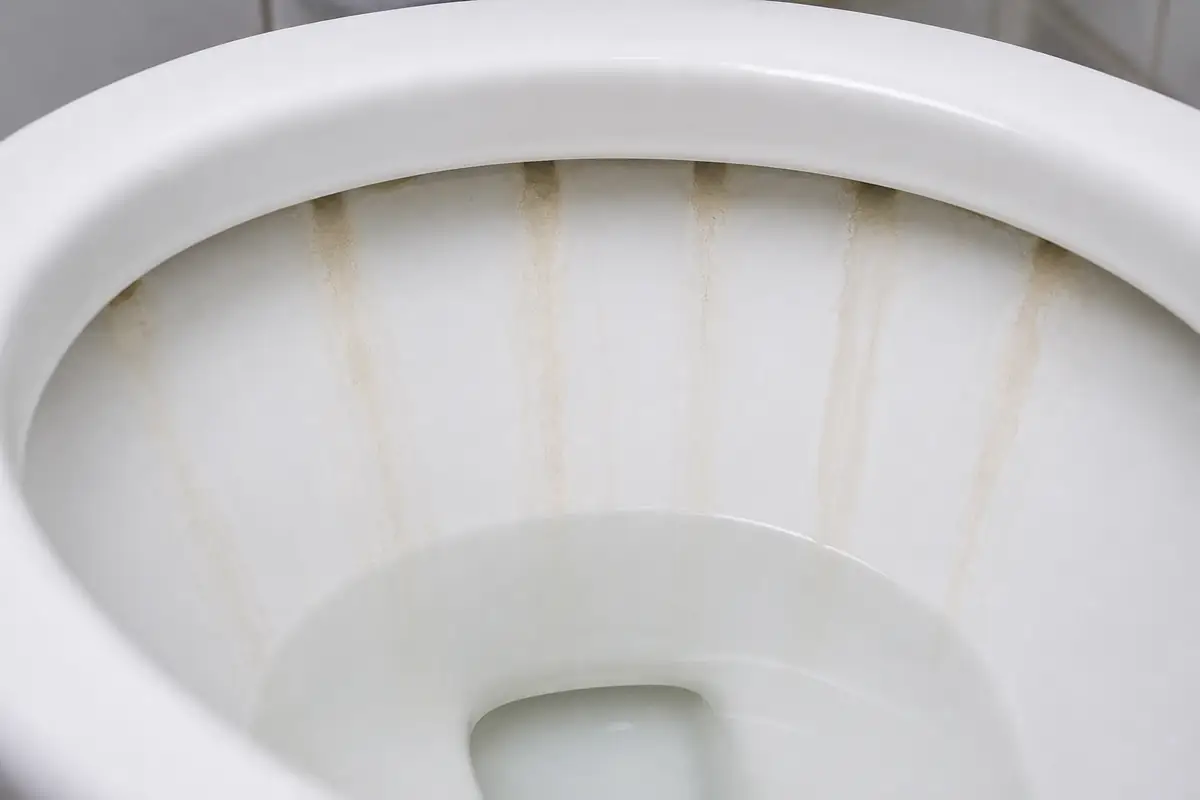
- Inspect the remaining mark. A chalky pale deposit suggests limescale; orange-brown transfer may involve iron; a rough, crazed or permanently dull patch may be damaged glaze.
- Choose one compatible product. Read the toilet and cleaner instructions, use the stated protective equipment and follow the label’s contact and rinsing time.
Plan Regular Bathroom Cleaning
Enter your postcode to view our rates and availability in your area.

What should you use instead of cola to clean your toilet?
There’s an abundance of commercial toilet cleaning products on the market. You can use any of them and that will give you better results than Coke. That’s the obvious answer.
But maybe you don’t want to use chemicals. That’s fine, too. What makes Coke effective at toilet cleaning (as much as it is, anyway) are its acidic properties. Which means you can use white vinegar for the same effect. If you’re worried about the smell, you can make scented white vinegar at home. This is a great way to deal with limescale deposits, too. And if you want a great disinfectant, you can toss in some lemon juice and mix it in with the vinegar.
Safety correction: vinegar and lemon juice should not be described as toilet disinfectants, and combining them does not create an approved disinfectant. Never add either acid to bleach, a chlorinated toilet cleaner, a descaler or an unknown residue. If disinfection is needed, choose one labelled product that is suitable for the toilet and follow its contact time exactly.
In case you want to deal with stains that are more… organic in nature, then you can use baking soda and water. This is an excellent combination for cleaning any type of organic stain.
Bicarbonate paste may loosen some surface soil, but it is not a universal answer for every organic mark and it does not disinfect. Avoid abrasive pressure on a worn or unknown finish, rinse away the paste completely and do not combine it with other cleaners in the bowl.
Match the cleaner to the problem
| What you see | First controlled route | When to stop |
|---|---|---|
| Ordinary bowl soil or odour | Use one compatible labelled toilet cleaner, a toilet brush and the stated contact time. | Stop mixing methods if the previous product is unknown or has not been fully flushed away. |
| Chalky white or grey mineral deposits | Use a toilet-compatible descaler or the maker-approved acid route, then brush and rinse as directed. | Stop if the glaze changes, metal fittings are exposed or the material cannot be confirmed. |
| Orange or brown marks | Check whether the mark is iron-rich scale, transferred metal, standing-water residue or damaged glaze before treating it. | Stop when repeated cleaning makes no change; the issue may not be removable soil. |
| Rough, cracked, crazed or dull ceramic | Photograph the area, clean only with the maker’s compatible mild method and seek product or specialist advice. | Do not increase abrasion or soak damaged surfaces with household acids. |
| Slow flush, rising water or recurring blockage | Stop treating it as a surface-cleaning problem and contact a qualified plumber. | Do not stack drain chemicals or keep flushing a bowl that may overflow. |
How Samyx Cleaning can help
Accessible toilet and bathroom surfaces can be included within regular domestic cleaning. Routine cleaning does not repair ceramic, replace parts, remove an inaccessible blockage or substitute for a plumber.
Book Regular Domestic Cleaning
Enter your postcode to view our rates and availability in your area.
Frequently asked questions
-
Does Coca-Cola remove limescale from a toilet?
Cola’s mild food acids may loosen a small amount of accessible mineral residue, particularly with time and brushing. It is not a purpose-made descaler, does not disinfect and adds sugar and colouring that must be rinsed away. A compatible labelled limescale product gives clearer instructions and limits.
-
How long should you leave Coke in a toilet?
There is no manufacturer-approved toilet-cleaning contact time because Coke is a drink, not a toilet cleaner. If it has already been poured in, do not add another product. Brush the accessible bowl, flush thoroughly and repeat with plain water until colour and stickiness are gone.
-
Can I add bleach after using Coke?
Do not pour bleach or another toilet cleaner onto cola or any unknown residue. Brush and flush the Coke away thoroughly first. If another product is still needed later, use one toilet-compatible cleaner on its own and follow its label, ventilation, contact-time and rinsing directions.
-
Why did Coke leave a sticky or dark layer in the bowl?
Sugar, colouring and loosened soil can remain when the bowl was not brushed and rinsed thoroughly. Residue may be more visible on limescale, rough damage or neglected surfaces. Flush with plain water, brush and inspect again; do not cover the residue with another chemical.
Important: Follow the toilet maker’s instructions and every cleaning-product label over general guidance. Use one product at a time with the stated gloves, ventilation, contact time and rinsing. Never mix bleach or a chlorinated toilet cleaner with cola, vinegar, lemon juice, ammonia, a descaler, a drain product or any unknown residue. Stop for damaged glaze, exposed metal, a leak, rising water, an inaccessible blockage or a mark that does not respond to compatible cleaning.
Conclusion
Cleaning your toilet with Coke isn’t the bright, outside-the-box idea it’s been cranked out to be. Cola is dark and can stain your toilet, but more importantly – it’s sweet and sugary which is a breeding ground for germs. More than your bathroom already is. Use more traditional methods on this one. And if you want to forget about cleaning, you can always give us a call.

Author: Atanas Dzhingarov
Hi, I’m Atanas - brand consultant and writer. I’m helping Samyx Cleaning create the best cleaning company blog on the Internet. Join us on our journey and learn how to live a cleaner, healthier, happier life in the process.
Discover more of our cleaning secrets: