
10 Surfaces You Should Never Clean with Baking Soda

Last modified on: 04/09/2026
Publish: 27th Nov 2023
Views:
Category: Cleaning & Health
Tags:
Baking soda, Cleaning tips, Eco-friendly cleaning

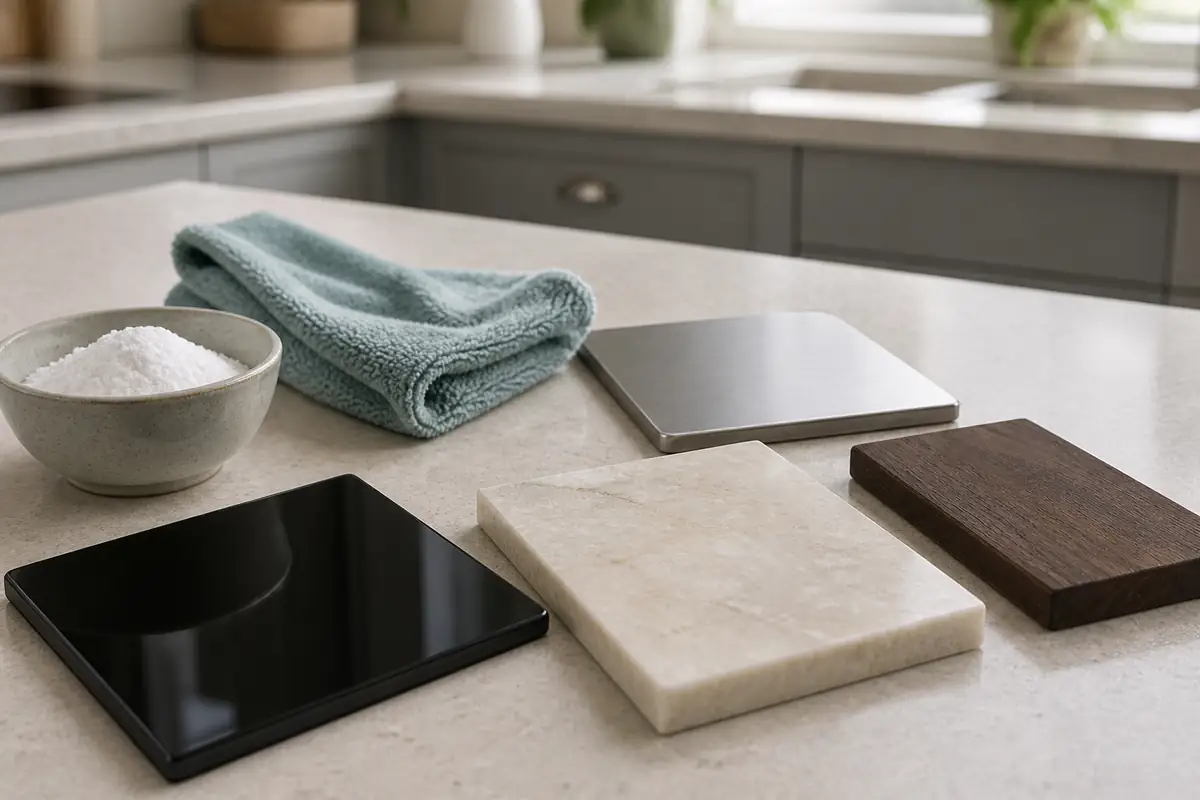
What not to clean with baking soda depends on the material, its finish and how much pressure, moisture and contact time the method introduces.
Baking soda is a true marvel in the world of natural cleaning products. From removing mould and keeping your family safe to deodorising your cutting boards, baking soda is amazingly versatile.
However, as phenomenal as baking soda is for cleaning, it’s important to recognise its limitations. We’ll delve into ten surfaces that should remain untouched by the granular might of baking soda. Join me in this exploration to safeguard your surfaces and preserve their splendour.
What not to clean with baking soda: check the finish first
- Read the care instructions for the exact surface, coating or appliance before applying powder or paste.
- Avoid dry baking soda on polished, glossy, mirrored, plated or soft-coated finishes because particles and pressure can change the sheen.
- Do not assume vinegar makes baking soda stronger or compatible. The fizz is an acid-alkali reaction, not proof of cleaning power.
- Lift loose residue while it is dry, then use only the water or cleaner permitted for that finish.
- Stop if colour transfers, the surface dulls, scratches, pits, swells or its coating starts to change.
Key Takeaways
- The material name alone does not settle the question; polish, sealant, plating and factory coatings can change the care method.
- Fine particles can mark a surface when they are rubbed with pressure, even when a wet paste feels soft.
- Wet alkaline contact can dull or discolour some metals, with the outcome depending on the alloy, coating and contact time.
- Powder trapped in grain, joints and grooves often creates a residue problem, so dry removal is the first step.
- Manufacturer instructions take priority, and antique, plated or valuable items deserve specialist advice.
Table of Contents
Decide by finish, not only by material
Baking soda is mildly alkaline and made of fine particles. A dry powder, a wet paste and a dissolved rinse behave differently. The amount used, rubbing force and dwell time can matter as much as the ingredient itself.
Greasy soil creates a separate problem because bicarbonate is not a detergent and does not replace the surfactants in a compatible cleaner. Stop at the care label when it rules out powders, abrasives or alkaline products.
| Surface or finish | Main risk | Safer first choice |
|---|---|---|
| Glossy, mirrored or soft-coated finishes | Fine particles and pressure may haze or mark the sheen | A maker-approved non-abrasive cleaner and a clean microfibre cloth |
| Bare, plated or coated metal | Wet alkaline contact may dull, discolour or leave residue | The cleaner named for that alloy or coating, followed by prompt drying |
| Natural stone or engineered stone | Stone, sealers and resin binders have different chemical limits | A pH-neutral product approved by the surface maker |
| Sealed, waxed, oiled or painted wood | Moisture and rubbing may change the coating or lodge powder in grain | Dry dusting followed by a compatible wood-care product |
| Grooves, porous textures and joints | Powder can dry inside recesses and become difficult to lift | Dry brushing or careful vacuuming before a compatible damp clean |
| Screens and powered appliances | Residue and liquid can enter edges, controls or ventilation openings | Switch off, follow the manual and apply an approved product to the cloth |
Plan Regular Domestic Cleaning
Enter your postcode to view our rates and availability in your area.

1. Glass surfaces
Glass surfaces, whether we’re talking about mirrors or windows, need delicate care. Keep in mind that baking soda is abrasive. Will it scratch your glass surfaces? Absolutely. It’s less of a risk and more of a guarantee.
If you’re looking for a homemade glass cleaner, look no further than a white vinegar solution with rubbing alcohol and water.
Current finish note: Scratch risk varies with the glass or coating, particle grit and pressure. Start with a labelled glass cleaner and a clean microfibre cloth, and avoid dry scrubbing.
2. Aluminium pots and pans
Everybody enjoys the shine of brand-new aluminium pots and pans. However, this gleam can be tarnished by baking soda’s prolonged touch. Baking soda causes aluminium to oxidise, which leads to an unwelcome brown hue.
If you quickly rinse the soda, you can prevent this chemical metamorphosis. But your safest bet is keeping baking soda away from your aluminium pots altogether.
Current material note: Alloy, coating, concentration and contact time change the outcome. If the maker permits only mild washing-up liquid, follow that route and dry the item promptly.
3. Ceramic hobs
This one might be a little surprising. If you’re a regular reader, then you probably remember baking soda was the staple of our ceramic hob cleaning method. So how come am I now telling you not to use baking soda on your ceramic hob?
It’s simple. If you use baking soda on your ceramic hob alone, you will scratch it. That being said, if you use it in combination with vinegar as we showed you in our guide, your ceramic hob will be absolutely fine and scratch-free.
There are many nuances in cleaning. Sometimes doing things you shouldn’t normally do can help you get amazing results. As long as you know what you’re doing.
Current care note: Treat the hob maker’s instructions as the deciding rule. Vinegar can dissolve part of the bicarbonate, but the reaction does not remove every particle or make an unapproved abrasive method compatible with every ceramic-glass finish. Work on a cool hob with the cleaner, cloth and scraper type named in the manual.
4. Marble and quartz surfaces
The allure of marble and quartz is undeniable, but baking soda threatens this allure by eroding the protective layer over time. Keep baking soda away from those surfaces and instead check out the manufacturer’s cleaning instructions.
Current material note: Marble and other calcite stones are also acid-sensitive, so vinegar is not a suitable replacement. Engineered quartz care depends on the resin and the maker’s instructions.
5. Wooden furniture
Wooden furniture has a ton of finishes and sealants. You need to be extra careful when cleaning it because you don’t want to strip them off.
However, baking soda’s abrasive nature will remove them. It will erode sealants and compromise the essence of the piece. That expensive wooden table you bought? Baking soda can ruin it without a second thought. Look to the manufacturer for instructions on how to clean your wooden pieces.
Current finish note: Treat the coating as the surface. Wax, oil, lacquer, paint and polyurethane need different care. Stop if colour transfers or the sheen changes.
6. Antique silver
Antique silver is a testament to bygone eras. It usually carries sentimental value so cleaning it requires a delicate touch. In our silver cleaning guide, we were very particular about not using soda on antique silver.
While baking soda swiftly removes tarnish, its abrasiveness threatens the patina. It’s best to leave cleaning antique silver to the professionals.
Current item note: Avoid home experimentation on hallmarked, plated, antique or valuable pieces. Ask the maker, a jeweller or a suitable conservator before treatment.
7. Surfaces with deep grooves or cracks
Surfaces with deep grooves or cracks create intricate patterns. But baking soda leaves behind a residue that disrupts this pattern. Opt for alternative cleaning methods to maintain the intricate detail without the dusted residue. And if that proves too much of a challenge, don’t hesitate to book our domestic cleaning services in London.
8. Gold-plated dishes or utensils
Gold-plated dishes and utensils require a delicate touch. Baking soda risks scratching and tarnishing them. Preserve the shine and smoothness of these surfaces with gentler cleaning alternatives that honour their golden legacy.
9. Wooden floors
Like wooden furniture, wooden floors are susceptible to the abrasiveness of baking soda. Use specialised wood floor cleaners to maintain the natural beauty and durability of your wooden floors.
10. Stainless steel appliances
Surprisingly, even stainless steel can sometimes succumb to the abrasive nature of baking soda. Never use baking soda in its powdery state to clean stainless steel appliances. However, you can still use it if you make it into a paste with water. Or you can use dedicated stainless steel cleaners. You can still clean your stainless steel sink with baking soda.
Current finish note: Stainless steel appliances may be brushed, polished, coated or supplied with an anti-fingerprint finish. A water paste is not universally approved. Follow the grain and the maker’s method, test out of sight and do not leave powder behind.
Why baking soda and vinegar are not a stronger cleaner
When bicarbonate meets vinegar, the acid and alkali react, releasing carbon dioxide and forming a diluted salt solution. The fizz can move loose debris, but it does not prove better grease removal or surface compatibility. Use each ingredient only when the surface instructions permit it, and never combine household cleaners in a closed container.
You may also enjoy:

Is there a way to clean baking soda residue?
So, you’ve made a mistake and now that you’ve used baking soda where you shouldn’t you’re wondering if there is a way to remedy the situation? Good news is, there is.
If you’re struggling with baking soda residue for any reason, your best bet to remove is using white vinegar. The white vinegar will neutralise the soda and remove the residue.
Current residue note: Do not add vinegar automatically. Lift loose powder with a dry soft cloth or a vacuum tool that cannot scratch, then use the smallest amount of plain water or the compatible cleaner named for that finish. Vinegar can etch natural stone and affect some metals or coatings. Never add it to an unknown product or mix it with bleach.
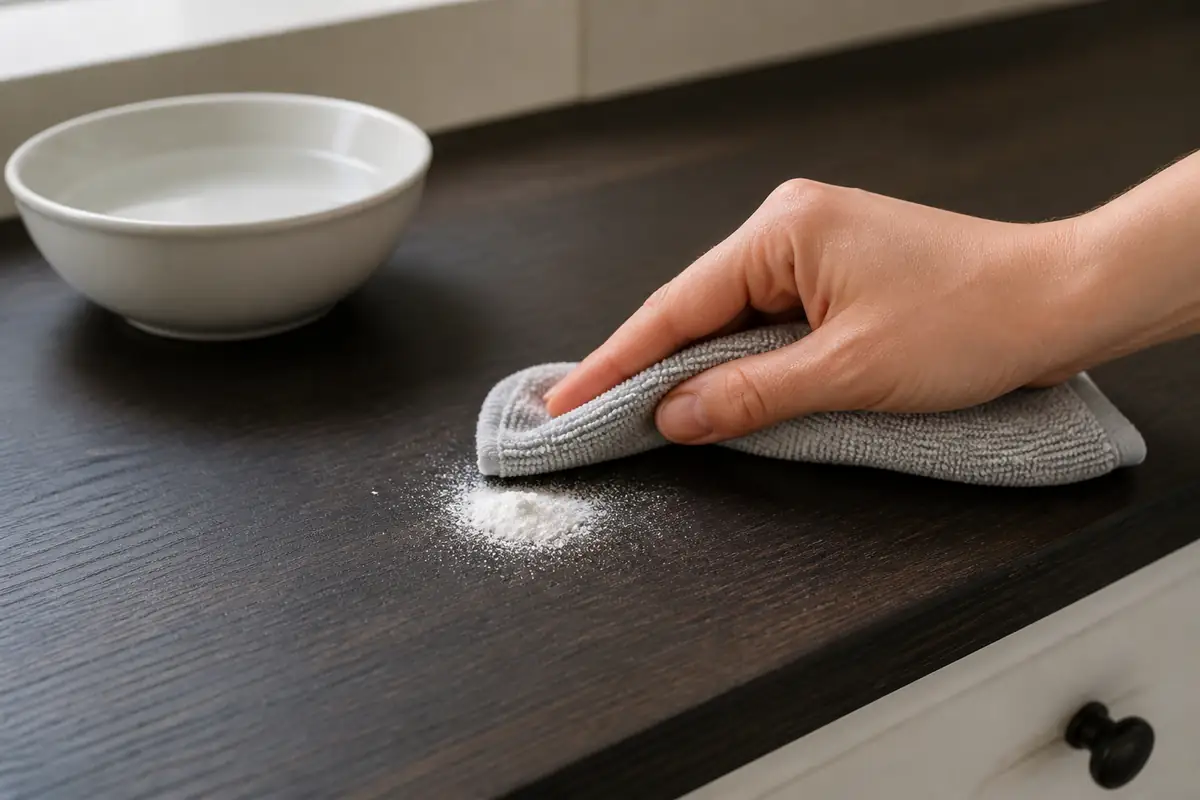
When routine surface care needs a regular cleaner
Regular domestic cleaning suits recurring care on accessible household surfaces once the compatible product and finish are understood. Samyx Cleaning can work to agreed household priorities, but the service does not replace restoration, appliance repair or conservation of valuable items. Tell the office about delicate coatings, existing damage or manufacturer-only products before the visit.
Book Regular Domestic Cleaning
Enter your postcode to view our rates and availability in your area.
Important: Follow the product label and the surface or appliance maker’s care instructions over general advice. Patch-test in a hidden area where compatibility varies, ventilate, wear any stated eye or hand protection, and rinse and dry only as directed. Never mix cleaning products, including bleach with ammonia, acids or other cleaners; do not combine bicarbonate with vinegar as a general stronger-cleaner recipe. Stop if colour transfers, a surface dulls, etches, scratches, pits, swells, softens or its coating changes. Ask the maker or a suitable specialist before treating antique, plated, valuable, damaged or unidentified materials.
Conclusion
Cleaning with baking soda requires we use our common sense. It can be used to clean a whole heap of different surfaces, but it does have its limitations.
By embracing surface-specific cleaners, we can curate a home that is clean, safe, and comfortable without extra hassle. If you find these tips useful, don’t hesitate to share them. And, as always, if you need us, we’re never more than a phone call away.

Author: Atanas Dzhingarov
Hi, I’m Atanas - brand consultant and writer. I’m helping Samyx Cleaning create the best cleaning company blog on the Internet. Join us on our journey and learn how to live a cleaner, healthier, happier life in the process.
Discover more of our cleaning secrets: