
How to Clean and Declutter an Attic Safely

Last modified on: 16/08/2026
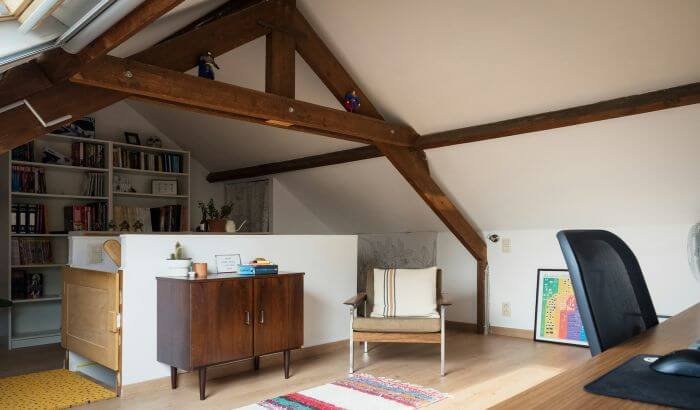
Learning how to clean and declutter an attic starts with deciding whether the space is safe to enter and disturb. Check the hatch, ladder, boarded route, lighting and visible condition before carrying up bags or moving a single box.
A dry, fully boarded loft used for ordinary household storage may be manageable in small stages. Unstable access, exposed wiring, damaged timbers, unknown insulation, droppings, nests, widespread mould or suspect building material changes the job. In those cases, close the hatch and arrange the appropriate inspection or specialist help.
Key takeaways
- An attic is a building space first and a storage room second. Access, boarding, services and contamination decide whether DIY work is appropriate.
- Keep the hatch and walkway clear, then declutter in small zones with a planned route for everything leaving the loft.
- Control dry soil before any damp wiping. Never wet insulation, unknown dust, untreated timber or electrical fittings.
- Store only clean, dry, temperature-tolerant belongings in labelled containers that do not block ventilation or access.
- Droppings, active pests, widespread mould, suspect asbestos, unsafe wiring and structural damage are stop signs, not extra cleaning tasks.
Table of Contents
How to clean and declutter an attic safely
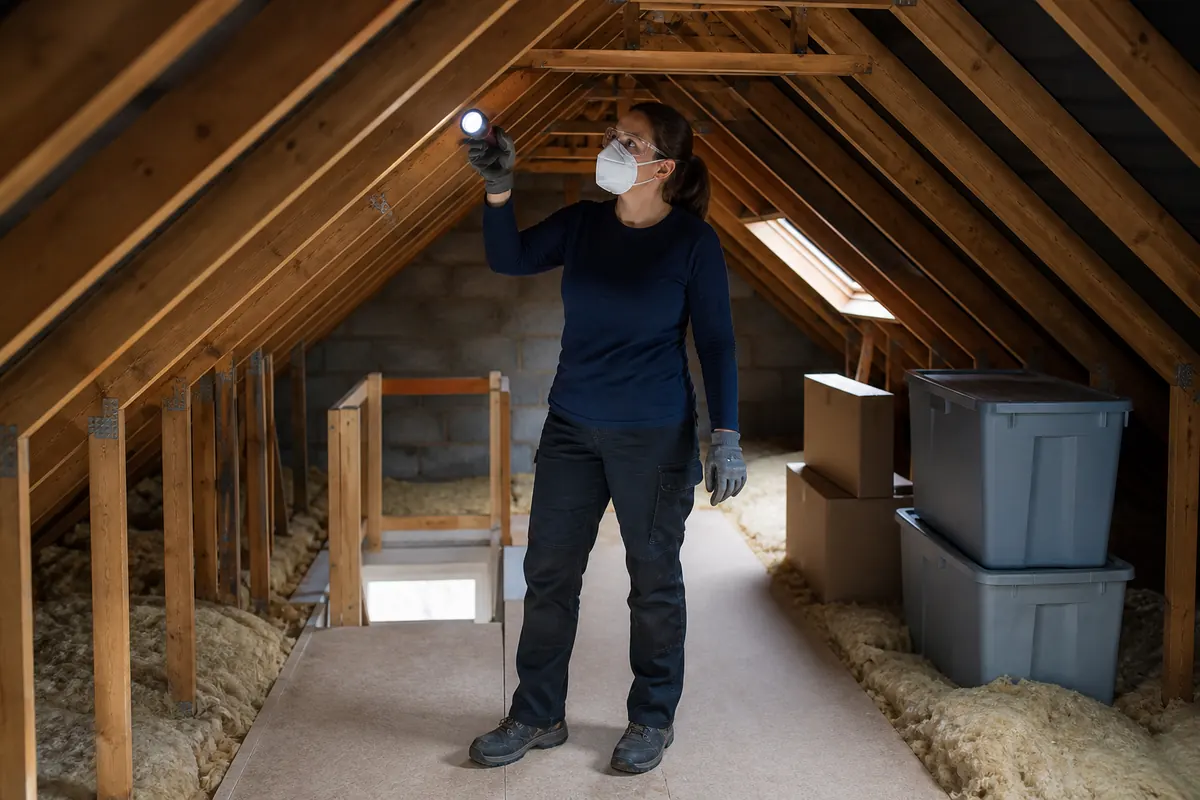
Inspect from the hatch before committing to the job. Use a torch from a safe position and look across the route you would need to take. A visible floor does not automatically mean the surface is designed to carry a person or a stack of boxes. If boarding, load capacity or timber condition is uncertain, ask a competent building professional before using the space.
| What you find | DIY route | When to stop |
|---|---|---|
| Stable hatch, fixed ladder and sound boarded path | Work from the boarded area and keep the route open | Stop if anything moves, flexes, cracks or feels insecure |
| Unboarded joists or hidden floor edges | Do not enter or place weight on the ceiling surface | Arrange advice on safe access and boarding |
| Ordinary household dust on accessible surfaces | Use controlled dry removal with suitable equipment | Stop if the dust is unknown, unusually thick or mixed with building debris |
| Exposed wires, damaged fittings or signs of overheating | Leave them untouched and keep the area clear | Use a qualified electrician |
| Droppings, nests, dead animals or active insects | Do not sweep, vacuum or disturb the affected material | Seek pest-control advice and suitable contamination cleaning |
| Widespread mould, damp timber or a roof leak | Photograph the area from a safe position and limit access | Find and repair the moisture source before cleaning |
| Unknown boards, lagging, insulation or textured material | Leave the material intact | Obtain suitable identification, especially where asbestos may be possible |
| Sharps, leaking containers or unlabelled chemicals | Isolate the area without handling the item | Use the disposal route appropriate to the material |
Heat can also make a loft unsuitable for prolonged work. Choose a cooler time, take regular breaks and leave immediately if you feel dizzy, short of breath or unwell. Do not work alone where access is awkward or where another person may need to secure the ladder and monitor the hatch.
Agree a close-down point before the session starts. Allow enough time to bring tools down, remove loose bags, cover or close every retained container and secure the hatch in daylight. A safe stopping routine matters even when only half of the planned zone is complete.
Prepare the people, route and equipment
Tell someone that you are working in the loft and keep a charged phone within reach. Protect the floor below the hatch with a clean covering that will not slip. Move children and pets away from the work area, and never leave an open hatch or deployed ladder unattended.
Choose clothing and protective equipment for the material you may encounter. Long sleeves, sturdy footwear, gloves and eye protection may be suitable for ordinary dusty storage. A particulate mask must be the right type, fit correctly and be worn according to its instructions. PPE does not make unknown or hazardous material safe to disturb.
Gather only what the approved DIY route needs:
- A bright, cool-running work light or torch that leaves both hands available.
- Strong bags or containers clearly marked for donation, recycling, rubbish and special handling.
- A marker, removable labels and a simple contents list.
- A vacuum and attachment approved for the surface and ordinary dry household dust.
- Clean microfibre cloths and, only where the surface permits it, a small amount of label-approved cleaner.
Do not carry an open bucket up a ladder. Avoid trailing cables across the hatch, and do not overload a socket or use damaged extension leads. Keep liquids away from wiring, insulation and unfinished timber.
Create a working zone and an exit route
Decide where each outgoing category will wait before you begin. Donations may need a clean area in another room; electrical items and batteries may need a local recycling route; paint, solvents or unlabelled products need material-specific disposal. A bag at the hatch without a destination soon becomes another obstacle.
Set one small boarded zone as the active area. It should be large enough to inspect a box without spreading its contents across the floor. Work from the hatch towards the far end only when the route ahead remains visible and structurally suitable. Never build piles against the ladder, over the hatch or around a water tank, electrical equipment or ventilation opening.
Declutter the attic in small, finished sections
Choose one shelf, one container or a clearly defined section of floor. Finish that section before opening the next. This limits lifting, keeps decisions visible and lets you stop without leaving a hazardous route behind.
- Check the outside first. Look for damp, staining, damage, pest marks, missing labels and excessive weight.
- Bring the item to the safe working zone. Get help with bulky or awkward loads. Do not twist while standing on a ladder.
- Choose one destination. Keep in the attic, relocate indoors, donate, sell, recycle, discard or isolate for special handling.
- Remove outgoing items promptly. Do not leave full bags in the walkway or create a second holding pile below the hatch.
- Record what stays. Label the container and add its location to a phone note or simple inventory.
Use a short session length that still allows time to close containers, remove waste and secure the hatch. A timer can mark a stopping point; it should never pressure you to rush a ladder, lift alone or skip a safety check. Sentimental items can go into one dated decision box, with a fixed review date and a limit on its size.
Handle large and heavy items separately
Do not assume that an item reached the attic safely just because it is already there. Old suitcases, flat-pack furniture, books and boxes of records can be awkward or unexpectedly heavy. Check the route, split contents into smaller loads where suitable and arrange a second person for anything that affects balance or blocks your view of the ladder.
Never lower a loose object through the hatch to someone standing directly beneath it. Close boxes, use containers with sound handles and agree who controls each stage of the move. Furniture that cannot pass safely through the opening may need a competent removal route; taking it apart beside unprotected ceiling edges can create more risk than leaving it isolated for later assessment.
You may also enjoy:

Clean only after the stored items are controlled
Decluttering exposes the surfaces that need attention and shows whether ordinary cleaning is still the correct route. Recheck the area before disturbing dust. New signs of pests, moisture, building damage or unknown debris override the original plan.
Start with contained dry removal
Work from high accessible ledges towards lower boarded surfaces, staying within a stable position. A suitable vacuum attachment can capture ordinary household dust more cleanly than vigorous sweeping. Do not vacuum insulation, animal remains, damp debris, building dust of unknown origin or anything the machine is not designed to collect.
Use slow passes and avoid knocking dust from rafters into inaccessible cavities. A fan may spread particles through the loft and into the rooms below, so ventilation must not create a new dust path. Keep the hatch area controlled and change or clean equipment according to its instructions when you leave the work zone.
Damp-wipe only suitable finished surfaces
After loose dust is removed, a barely damp cloth may suit sealed shelves or other washable finished surfaces. Check the material and product label first, test an inconspicuous spot and keep moisture away from electrics, insulation and unfinished wood. Dry the surface before returning a container.
Do not spray cleaner into the air or directly onto an overhead surface. Never mix products. If you use the vacuum for ordinary attic dust, follow the maker’s instructions to clean the vacuum without releasing the collected material back into the home.
Finish at the hatch and in the room below
The final cleaning pass should move towards the exit. Remove tools and closed waste bags without leaving anything balanced near the hatch. Wipe only the compatible parts of the ladder or hatch surround that you can reach from a secure position; do not lean backwards or stretch over an open edge.
Once the hatch is closed, inspect the protective covering and nearby floor below. Fold dusty coverings inward before moving them and clean the surrounding room using a method suitable for its surfaces. Wash hands and exposed skin, change dusty clothing, and deal with reusable PPE and equipment according to their labels.
Know when dust, damp or pests change the job
Some attic conditions should remain undisturbed until they have been identified. Cleaning the visible mark may hide a leak, spread contamination or damage material that needs controlled removal.
- Droppings, nests or dead animals: do not sweep or vacuum them. Limit access and obtain pest-control or contamination-cleaning advice appropriate to what is present.
- Mould or damp: locate the moisture source. Widespread growth, damp structural timber, stained insulation or an active roof leak needs investigation before surface cleaning.
- Suspect asbestos-containing material: leave it intact. Age alone cannot confirm what a board, lagging or textured product contains, so arrange suitable identification before work continues.
- Electrical or structural damage: keep clear of exposed conductors, scorched fittings, split timber, sagging areas or movement underfoot and contact the relevant qualified professional.
- Unknown chemicals or sharps: do not combine, decant or place them in ordinary rubbish. Isolate the area and use the disposal guidance for the material.
A domestic cleaner is not a substitute for pest treatment, mould remediation, asbestos work, roof repair, electrical work, structural assessment or insulation handling. Complete those decisions first; ordinary cleaning can follow only when the area has been made safe and its scope is clear.
Return only items the attic can store safely
An attic may experience larger changes in temperature and humidity than the rooms below. Paper, photographs, textiles, candles, electronics, batteries, medicines, aerosols and some cleaning products may be unsuitable even when they fit neatly. Follow the maker’s storage instructions and move sensitive or temperature-limited belongings to a suitable indoor location.
Use clean, dry containers with lids where the contents allow it. Label at least two visible sides with the category and date, and keep a short inventory. Do not pack a damp item or use cardboard where moisture or pests have been a concern. If any household products remain upstairs, check how to store cleaning products and never leave an unlabelled mixture.
Spread weight only across storage positions confirmed as suitable. Keep the hatch, boarded walkway, vents, eaves, pipes, tanks, wiring and inspection points accessible. Labels should face the route so a box can be identified without shifting several others.
Attic cleaning checklist
| Stage | Checklist |
|---|---|
| Before entry | Check the hatch, ladder, boarding, lighting, heat, wiring, timbers, insulation and visible contamination. Decide whether the work can continue. |
| Set up | Tell another person, protect the room below, keep children and pets away, plan the exit route and prepare labelled destinations. |
| Declutter | Complete one small zone at a time. Keep, relocate, donate, sell, recycle, discard or isolate each item. Remove outgoing bags before starting another zone. |
| Clean | Recheck conditions. Capture suitable ordinary dry dust from high accessible surfaces to low boarded ones. Damp-wipe only compatible finished surfaces and dry them. |
| Store | Return clean, dry, temperature-tolerant items in labelled containers. Respect load limits and keep access, ventilation and building services clear. |
| Close the job | Remove waste, clean equipment as directed, check the room below, secure the hatch and record any repair or specialist follow-up. |
Print or copy the checklist before going upstairs. The most valuable tick may be the decision to stop: an unfinished attic clean is easier to manage than a damaged ceiling, disturbed hazard or blocked escape route.
How often should you check the attic?
Use condition and access as the schedule. Check after a roof leak, storm damage, plumbing problem, pest activity or work involving the roof, wiring or insulation. A brief look before adding seasonal storage can catch damp packaging, blocked vents and overloaded zones early.
Plan a deeper sort when containers can no longer be reached without moving other piles, labels no longer match the contents or outgoing items have begun to collect near the hatch. With a clean, mapped storage system, short checks usually replace major empty-everything sessions.
When Samyx can help with an accessible attic
Once the attic has safe access, adequate boarding, a clear working route and no specialist contamination, help with ordinary household cleaning may be useful as part of a wider home clean. Samyx can discuss one-off cleaning for accessible, agreed surfaces. This does not include attic clearance, waste transport, pest treatment, mould remediation, asbestos work, roof repairs, electrical work, structural work or insulation handling.
Describe the access, boarding, headroom, stored volume and surface condition when asking for a quote. Photographs taken from a safe position can help the team decide whether the requested cleaning sits within the service scope before a visit is arranged.
Ask About One-Off Cleaning
Enter your postcode to view our rates and availability in your area.

Frequently asked questions
-
Can I clean an attic myself?
You can clean an attic yourself when access is stable, the working route is suitably boarded and the space contains only ordinary household storage and manageable dry dust. Stop if you find unsafe access, damaged wiring or timber, unknown insulation, suspect asbestos-containing material, droppings, nests, widespread mould, sharps or leaking chemicals.
-
How do I declutter an attic without becoming overwhelmed?
Work on one shelf, box or small boarded zone at a time. Give every item one destination, remove outgoing bags before opening another container and finish by clearing the walkway and securing the hatch. Use a timer as a stopping reminder, never as a reason to rush access or lifting.
-
How often should an attic be cleaned?
There is no single interval for every attic. Inspect it after leaks, storms, pest signs or building work, and before adding seasonal storage. Clean or reorganise when dust is visible on suitable surfaces, containers show damp or damage, labels fail, or the access route starts to narrow.
-
What should I do if I find droppings or mould in the attic?
Do not sweep, vacuum or wet the affected area. Limit access, keep people and pets away and arrange suitable identification of the pest or moisture problem. The source and level of contamination should be dealt with before ordinary cleaning resumes.
Important: This advice covers ordinary household decluttering and cleaning in a safely accessible attic. Do not enter an unstable or unboarded space, disturb unknown materials, asbestos-suspect products, insulation, droppings, nests or widespread mould, or attempt electrical, structural, roof or pest work. Follow product and PPE instructions, ventilate without spreading dust, never mix cleaners, and stop if the surface changes, debris becomes airborne or you feel unwell.
Author: Svetlana Georgieva (Clara)
Hi, I’m Svetlana Georgieva, but you can call me Clara. As the co-founder and heart behind Samyx Cleaning, I’m devoted to sharing the art of a clean space. Let’s journey into a cleaner, more joyful life together with tips from London's cleaning experts.

Discover more of our cleaning secrets: