
How to Eliminate Smoke Odour from Your Home

Last modified on: 04/09/2026
Publish: 11th Mar 2024
Views:
Category: Cleaning & Health
Tags:
Baking soda, Carpet cleaning, Cleaning tips, White vinegar

How to remove smoke smell from house rooms depends on the source, the length of exposure and the materials holding the residue.
Smoke odour tends to be incredibly tough to remove. Whether you’re a smoker who quit or a previous tenant was a smoker and the end of tenancy cleaning didn’t quite deal with the smell, if you’re reading this, you probably want to know how to eliminate smoke odour from your home.
Fret not! We’ll help you reclaim the freshness of your home. While it can be a bit more tricky than you first think, there’s plenty you can do and we’ll walk you through it.
Key Takeaways
- Fresh air reduces the immediate smell but does not remove residue from surfaces and porous materials.
- Identify the source and severity before choosing products or professional help.
- Check fabric, finish and appliance instructions before applying any cleaner.
- HEPA filtration addresses particles; activated-carbon media may help with some gases and odours.
- Fire soot and long-term cigarette residue may require remediation, decorating or replacement.
Table of Contents
Choose the response by smoke source and severity
| Situation | First response | Escalate when |
|---|---|---|
| Brief cooking or candle smoke | Remove the source, ventilate safely and clean affected washable surfaces. | The smell returns after cleaning. |
| Occasional cigarette smoke | Stop indoor smoking, remove ash and clean compatible hard and soft materials. | Odour remains in carpets, upholstery, curtains or ventilation. |
| Repeated indoor smoking | Work room by room across ceilings, walls, joinery, floors, textiles and filters. | Sticky staining, deep odour or damaged coatings remain. |
| Fire smoke or visible soot | Wait until the property is declared safe and the damage route is agreed. | Use the insurer and qualified restoration or building specialists. |
Plan a One-Off Home Clean
Enter your postcode to view our rates and availability in your area.

Why does smoke odour linger in the air?
Have you ever wondered why smoke odour seems to cling to everything? The reason lies in the very nature of smoke itself. When something burns, it doesn’t just disappear into thin air. It transforms.
The materials being burned – be it tobacco, wood, or your accidentally charred dinner – break down into a complex mixture of chemicals. This transformation results in thousands of different tiny compounds sneaking into every nook and cranny of your home.
What is smoke made of?
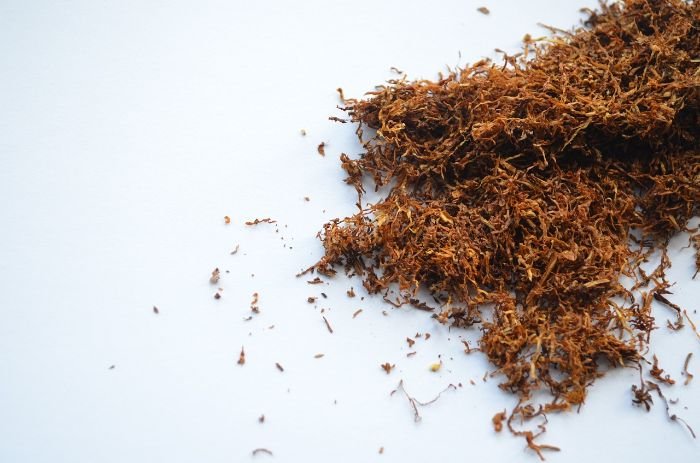
Understanding smoke’s composition is like getting a peek into the enemy’s playbook. Smoke contains a variety of components, including:
- Tar – a sticky substance that can coat surfaces and fabrics, making the smell linger.
- Nicotine – adds to the distinct odour left by cigarette smoke, particularly notorious for its persistence.
- Particulates – these tiny particles are the vehicles for the smoky smell and are capable of traveling deep into porous materials.
How does smoke smell get everywhere?
Smoke particles are like microscopic invaders that can penetrate deep into the porous materials of your home. They don’t just settle on the surface. They burrow into carpets, curtains, furniture, and even the paint on your walls.
This deep infiltration is what makes smoke odour so challenging to eliminate. Cleaning the surfaces is not enough. You need to reach into the very fibers and materials that have absorbed the smoky particles and… smoke them out (pun intended).
What is the role of porous materials in smoke odours?
Porous materials in your home act like sponges, absorbing smoke particles and holding onto them. Fabrics, upholstery, carpets, and even certain types of paint are particularly good at trapping these odour-causing particles.
The larger the surface area of these materials, the more smoke they can absorb, which makes the odour more pervasive and harder to remove.
Why does the smoke smell persist?
Even after the visible smoke has cleared, the microscopic particles remain. They cling to surfaces and continuing to release the smoky odour.
This lingering effect is why smoke odour can be detected long after the initial source (like a cigarette or a fire) has been extinguished. The odour persists because those tiny particles are still present and releasing their smoky scent into the air.
Everyday habits to reduce smoke odour
Now that we understand why the smell of smoke is pervasive, it’s time to see what we can do about it. There are some everyday habits that will help you reduce the smell of smoke or cigarettes.
Airing out your home
The first step in your odour-fighting quest is to air out your space. It’s like giving your house a much-needed breath of fresh air. Open windows, turn on the fans and let nature do its thing. This simple act dilutes the smoke particles, making the odour less intense.
Ventilation is useful after the source has stopped, but it is not a substitute for a smoke-free home. EPA guidance on second-hand smoke explains that ventilation, filtration and air cleaning may reduce smoke indoors but do not eliminate it.
Mindful ashtray management
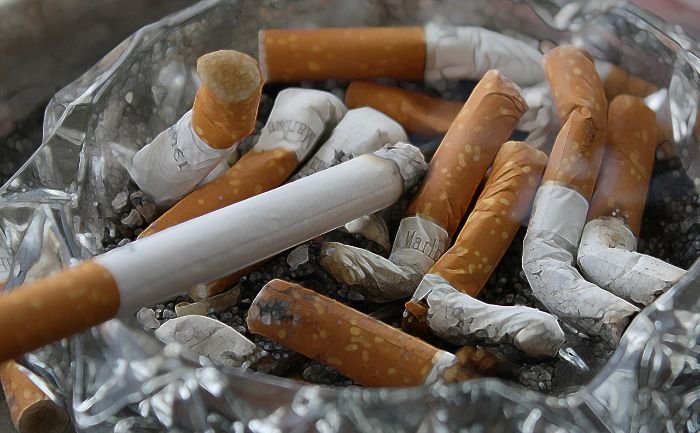
If there’s a smoker in the house, keeping ashtrays clean is as crucial as remembering to take out the rubbish bags. An overflowing ashtray is like a scented candle for smoke smell – it just keeps on giving. Regularly emptying and washing ashtrays can significantly reduce the odour. Sounds simple, I know – but you’ll be surprised at how often people are not doing it.
Smoking outside
Encouraging smoking outdoors is a game-changer. It’s like setting up a “no smoking” zone inside your home. This prevents the smoke from ever making itself comfortable in your inner sanctum.
How to use baking soda for cigarette odour absorption
Baking soda isn’t just for baking. It’s great at odours. Sprinkling it on carpets, upholstery, and even in your car can absorb the smoky scent, making your spaces smell fresher. Just let it sit for a while, then vacuum it up, and voilà!
Even though I have guests smoke on the balcony, the cigarette odour still somehow makes it inside, so I do this every time after my smoker guests leave.
Note: Make sure you have a powerful enough vacuum to suck up all the baking soda.
Current material note: Powder is not suitable for every carpet, filling, appliance or vehicle interior. Check the care and vacuum instructions, test out of sight and keep it away from electronics.
Side note: Make sure you’re using baking soda, not baking powder. They’re not the same thing.
How to use Scented vinegar to get rid of smoke odour
Vinegar might not be the first thing that comes to mind when you think of fresh scents, but it’s my secret weapon against smoke odour.
Scented vinegar is a deodorising spray that can tackle the smokiest of smells without leaving a vinegar-y after-scent. And the best part is you can easily prepare scented vinegar at home.
Current material note: Acids and fragrances are unsuitable for some stone, metals, coatings, rubber, textiles and electronics. Follow the instructions, patch-test, ventilate and never mix vinegar with bleach or another cleaner.
You may also enjoy:

Innovative tools for a smoke-free home
Battling smoke odour doesn’t mean you have to do all the heavy lifting alone. The market is teeming with innovative gadgets and solutions designed to tackle this very problem.
From high-tech air purifiers to simple yet effective natural absorbers, let’s explore the tools that can help you maintain a fresher, smoke-free home.
Air purifiers
Air purifiers capture and filter out smoke particles, odours, and other pollutants. This makes the air in your home cleaner and fresher.
- HEPA Filters – look for air purifiers with HEPA (High-Efficiency Particulate Air) filters. These are incredibly effective at trapping particles as small as 0.3 microns, including smoke, dust, and pollen.
- Activated carbon filters – some air purifiers also come with activated carbon filters, which are excellent for odour absorption. These filters chemically react with the smoke particles and neutralise them.
Current filtration note: The EPA air-cleaner guide separates particle filtration from activated-carbon media for some gases and odours. No portable cleaner removes every pollutant; replace filters as instructed.
Do not use a consumer ozone generator
Do not hire or buy an ozone generator as a household shortcut. The EPA states that ozone is a lung irritant, can create harmful by-products and has little ability to remove contaminants at concentrations within public-health standards.
Odour absorbers
Sometimes, the simplest solutions can be surprisingly effective. Natural odour absorbers can quietly work in the background and soak up smoke smells without you even noticing.
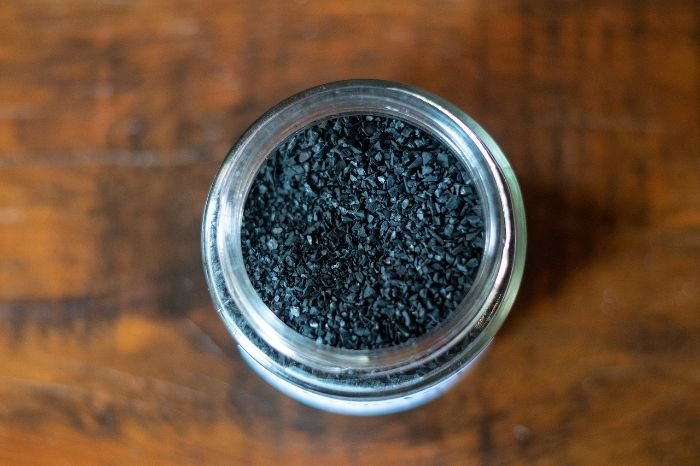
- Activated charcoal – this is a potent natural odour absorber. Place bowls of activated charcoal or use charcoal bags in areas most affected by smoke odour. Its porous nature allows it to trap smells and pollutants, leaving the air fresher.
- Coffee Grounds – coffee grounds can also absorb unwanted odours. Place a bowl of fresh or used grounds in smoky areas. As a bonus, you’ll get a mild, pleasant coffee aroma.
Keep loose absorbers away from children and pets. They do not prove that deposited residue has been removed.
Ventilation fans
Improving your home’s ventilation can significantly reduce smoke odour. Installing exhaust fans in key areas like kitchens, bathrooms, and smoking rooms can help remove smoke particles at the source. This would prevent them from spreading throughout the house.
Do not dismantle powered ventilation without safe isolation and its instructions. Contaminated ductwork or fire residue needs an HVAC or restoration specialist.
Preventing smoke odour
Prevention is the cornerstone of maintaining a smoke-free and fresh-smelling home. You need to take proactive measures. Here are essential tips to keep your home smelling clean:
Establish a smoking policy
The most effective way to prevent smoke odour is to limit where smoking can occur:
- Outdoor smoking – We’ve already covered this, but it merits repetition. Encourage smokers to indulge their habit outside, away from open windows and doors to prevent smoke from drifting indoors.
- Designated areas – if possible, set up a comfortable smoking area outdoors. Equip them with seating and cover. This is obviously only viable if you live in a house.
Smoke can move through doorways, cracks and ventilation, so a separate indoor room is not a reliable control zone.
Regular cleaning routine
Smoke particles can settle on various surfaces. They can embed odours into fabrics and materials around your home but this doesn’t mean you have to sit there are take it. Here’s what to do:
- Fabrics – wash curtains, upholstery, and other fabric-based items regularly to remove smoke residues. Consider using odour-eliminating laundry detergents or additives.
- Surfaces – wipe down hard surfaces, such as countertops, walls, and floors, with a mixture of water and a gentle cleaning agent to remove tar and nicotine films.
- Air filters – replace or clean HVAC and air purifier filters regularly to ensure they effectively remove smoke particles from circulating air.
Follow care labels and equipment manuals. Separate washable covers from fixed upholstery, change cloths as they soil, rinse where instructed and dry materials fully. Residue that transfers repeatedly or returns after drying may need specialist assessment.
For a one-off reset of accessible household surfaces and normal domestic fabrics, Samyx can agree a practical scope through one-off home cleaning. Fire restoration, nicotine sealing or decorating, HVAC work and guaranteed permanent odour removal are outside that service.
Book a One-Off Deep Clean
Enter your postcode to view our rates and availability in your area.
Use odour-neutralising products
Use products specifically designed to neutralise odours. For example, you can use air fresheners that eliminate smoke odours rather than simply masking them. Natural options, like those based on essential oils, can also be effective.
Note: There are air fresheners specifically designed to eliminate cigarette odours. My cousin developed a smoking habit in university, which annoyed my uncle (an ex-smoker) to no end. Every time my cousin visited home, he used anti-tobacco air fresheners to keep the peace.
Current product note: Fragrance can mask the source and may not suit every household. Follow the label, ventilate, keep products out of reach and do not alter commercial products.
Professional cleaning
Professional cleaning services can offer deep cleaning solutions for homes with persistent smoke odours.
- Deep carpet and upholstery cleaning – professional cleaners can use specialised equipment and methods to remove deeply embedded smoke residues from carpets, furniture, and other textiles.
- Regular cleaning service at home – having your home professionally cleaned on a weekly basis (or even more often) is definitely a great way to combat smoke or cigarette odours.
- HVAC system cleaning – having your HVAC system professionally cleaned can remove smoke particles and odours trapped within the ductwork which would improve overall air quality.
Service boundary: Confirm the scope before booking. Building cavities, coatings, insulation, ventilation, fire soot, hazardous residue and structural damage require the relevant specialist.
FAQs
Q: Can smoke odour cause health issues?
A: Unfortunately, yes. Recent studies have revealed this to be the case. Researchers are calling it third-hand smoking. A smoke-free rule is the primary control; cleaning and ventilation do not make active indoor smoking safe.
Q: Are air purifiers effective against smoke odour?
A: They can be, but you need to make sure you’re getting the right ones. Aim for higher filtration levels and smaller-size particle capture. A suitable particle filter and activated-carbon medium can supplement source control and cleaning, but no purifier removes every pollutant or residue.
Q: Can painting help eliminate smoke odour?
A: The short answer is “no”. The longer answer is that it depends on many factors, including the type of paint and who’s doing the painting. But in the end, the result will probably still be “no”. Heavy residue must be assessed and prepared correctly before any suitable sealing primer and finish are considered.
Q: How do you permanently remove smoke smell from a house?
Stop the source, remove ash and contaminated waste, clean compatible hard and soft materials, replace suitable filters and reassess after everything is dry. Long-term cigarette residue or fire damage may require restoration, decorating or replacement, so no single household product can guarantee permanent removal.
Q: What absorbs cigarette smoke smell in a house?
Suitable activated-carbon media and some passive absorbers may reduce airborne odour. They do not remove nicotine, tar or soot already deposited on walls, ceilings, carpets, curtains or furniture, so source control and compatible cleaning still come first.
Important: This guide covers ordinary household odour and residue decisions, not medical advice, smoking cessation, fire restoration or hazardous-soot work. After a fire, do not enter or clean until the relevant authority says the property is safe; use the insurer and qualified restoration, electrical or building professionals. For household cleaning, follow every product label and material-care instruction, patch-test out of sight, ventilate, wear the stated protection and keep products away from children, pets, food and electrical equipment. Never mix cleaning products, including bleach with ammonia, acids or other cleaners. Do not use a consumer ozone generator. Stop when a finish changes, colour transfers, fibres distort, soot spreads, residue returns after drying or the source is hidden or unknown.
Conclusion
Bidding farewell to smoke odour is a marathon, not a sprint. From natural remedies like baking soda and vinegar to using technology with air purifiers, your home can be fresh and clean.
Remember, the key is not just to mask the odour but to eliminate it at its source. And, as always, if you need us, we’re never more than a phone call away.

Author: Atanas Dzhingarov
Hi, I’m Atanas - brand consultant and writer. I’m helping Samyx Cleaning create the best cleaning company blog on the Internet. Join us on our journey and learn how to live a cleaner, healthier, happier life in the process.
Discover more of our cleaning secrets: