
How to Get Makeup Out of Clothes: Foundation, Lipstick and Mascara

Last modified on: 30/07/2026
How to get makeup out of clothes safely starts with two rules: do not rub the mark, and do not use heat until it has gone. Lift away what you can, identify the cosmetic formula, check the garment label and use a clean backing towel to draw the stain out of the fibres without pushing it further through them.
The right treatment depends on what landed on the garment. Loose face powder should be removed dry; liquid foundation usually combines oil and pigment; lipstick contains waxes and colour; waterproof mascara is designed to resist water. Treating all four with the same internet hack can spread the stain, move dye from the fabric or leave a larger ring.
Key takeaways
- Makeup is not one stain: powder, oil, wax, pigment and waterproof polymers need different first actions.
- Work from the back of the stain into a clean absorbent towel and keep changing to a clean section.
- A white garment is not automatically safe for chlorine bleach, peroxide or strong solvents.
- Check the mark before ironing or tumble drying because heat can make the remaining residue harder to remove.
- Stop when colour transfers, texture changes or the care label rules out the method.
Table of Contents
Before treating makeup, check the fabric
Start with the care label, not the colour of the stain. Confirm the permitted wash process, maximum temperature and whether the garment is washable at home. A cotton T-shirt may tolerate a mild detergent pretreatment that would mark silk, matt the surface of acetate or disturb a wool finish. If the label says dry clean only, lift loose residue and take the garment to a professional to avoid wetting a larger area.
Next, identify the fabric colour and finish. Test any label-compatible product on an inside seam using a white cloth. Wait, blot and check the cloth for transferred dye and the garment for a change in sheen, texture or stiffness. A pass on one cotton shirt does not prove the same treatment is suitable for a dark viscose dress or a jacket with a bonded lining.
Prepare two or three clean white towels, a blunt spoon or card for lifting solids, and a mild laundry detergent or stain product whose label permits use on the garment. White materials make colour transfer visible. Avoid coloured towels, which can hide progress or transfer their own dye.
Treat one garment at a time and keep the makeup container nearby. The product name, whether it is waterproof and its ingredient list can help distinguish a dry pigment from an oil-rich or film-forming residue. Good lighting also prevents unnecessary treatment of an area that is already clean.
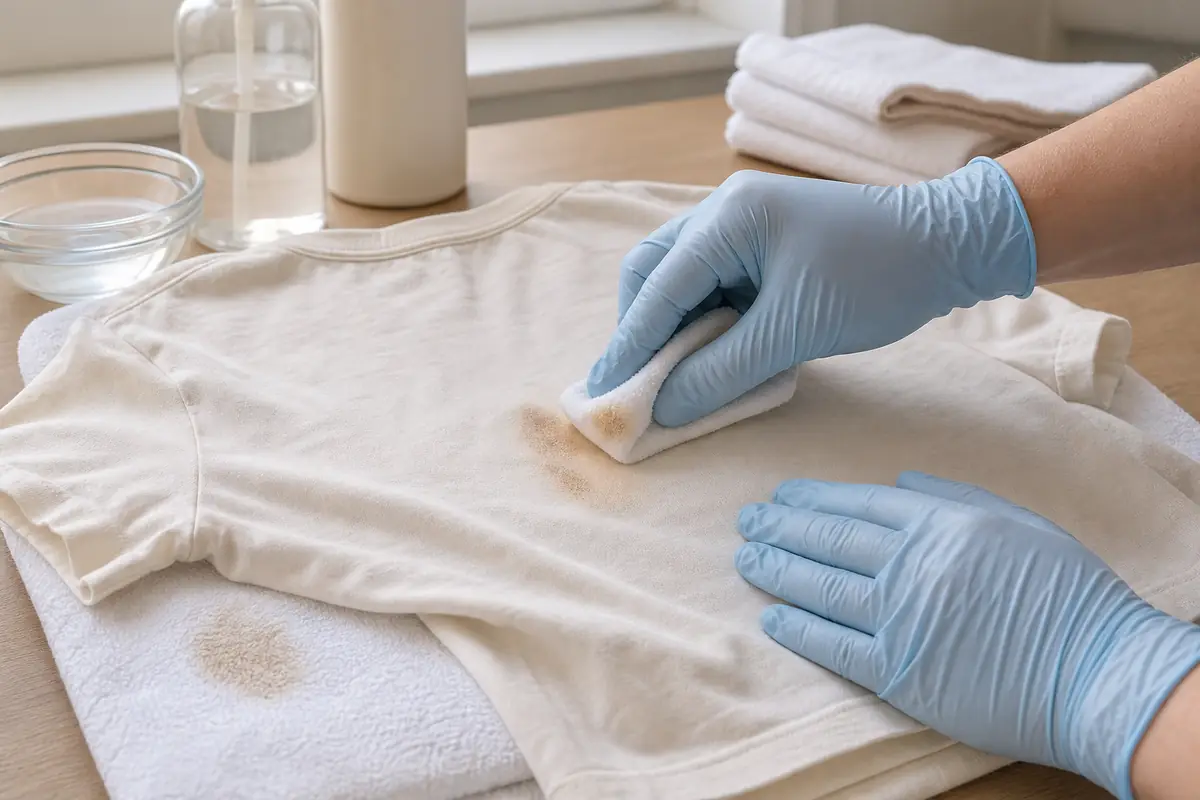
Use the same basic transfer setup for many washable fabrics: put a clean towel beneath the mark, preferably with the stained face against it, and work from the reverse. Press and lift; do not scrub. Move the towel whenever it picks up makeup. Matching the treatment to the stain type matters beyond cosmetics too.
How to get makeup out of clothes by product type
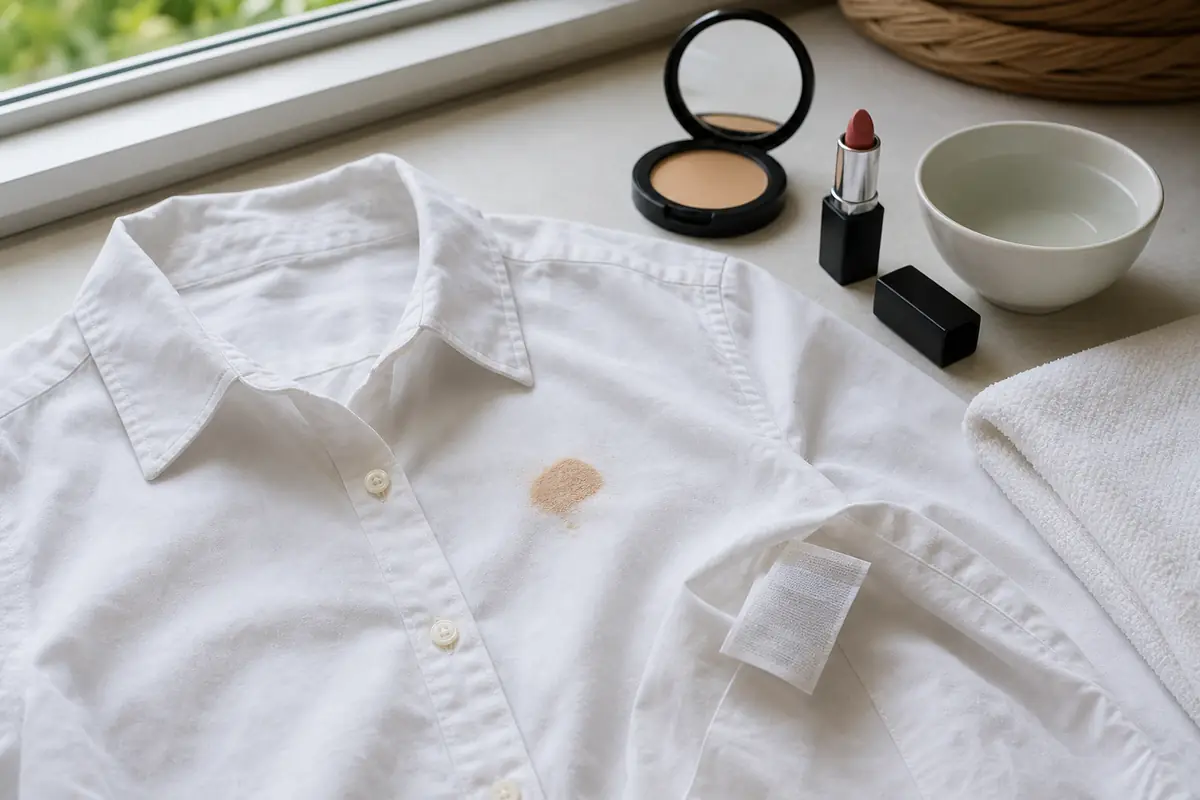
Look at both the product and the mark. A dusty halo suggests loose powder. Creamy beige patches usually need controlled grease removal as well as pigment transfer. Raised lipstick smears contain wax; mascara may be water-dispersible or explicitly waterproof. The table gives a safe starting direction, not permission to ignore the garment label.
| Makeup type | First action | Treatment direction | Stop or escalate when |
|---|---|---|---|
| Loose powder | Shake, lift or blow away dry particles | Treat remaining pigment only after loose powder has gone | Brushing spreads colour or the fabric is delicate |
| Liquid or cream foundation | Lift excess and place the mark face-down on a clean towel | Use a tested, compatible grease-cutting pretreatment; transfer, rinse and wash | Colour lifts or a ring spreads |
| Lipstick | Lift waxy excess without smearing | Use a tested, compatible degreasing or solvent-based remover and repeat clean-towel transfers | The finish, dye or fibres change |
| Regular mascara | Lift surface residue and blot | Use a tested mild pretreatment, transfer and wash | Black pigment spreads or the fabric distorts |
| Waterproof mascara | Lift residue without rubbing | Use minimal amounts of a formula-compatible, tested treatment | The necessary solvent is not permitted or dye is unstable |
If you cannot identify the product, start with the least aggressive method allowed by the label. A small amount of compatible liquid laundry detergent on a washable, colourfast garment is a more controlled first test than a cocktail of household ingredients. Never mix stain removers, and rinse one treatment out as directed before considering another.
How to get foundation out of clothes
Loose face powder
Do not wet loose powder immediately. Water can turn dry particles into a paste and carry pigment deeper into the weave. Hold the garment so the mark faces down, then gently shake it or use a clean spoon edge to lift what sits on the surface. A cool, low stream of air may help on a sturdy garment; keep it controlled so powder does not spread across the room or into your eyes.
When the loose material has gone, inspect what remains. If there is only a faint dry pigment mark, follow the garment label and the instructions for a compatible laundry pretreatment. Blot from the outside edge towards the centre. Rinse or wash as directed, then inspect before drying. Do not brush at a stubborn patch once moisture has reached it; wet powder and pigment can travel along the yarns.
Liquid and cream foundation
Liquid and cream foundations often combine pigment with oils, silicones, waxes or film-forming ingredients. First lift any thick deposit with a blunt edge. Do not wipe sideways. Put the stain face-down on a clean towel and apply a small amount of label-compatible liquid laundry detergent or suitable commercial pretreatment to the reverse after a hidden-area test.
Press gently so the foundation transfers into the towel. Work from the edge towards the centre and keep changing to a clean section. If you keep pressing onto the same soiled patch, you can move foundation back into the fabric. Follow the product’s stated contact time and do not leave it indefinitely, then rinse in the direction that carries residue out through the side it entered.
Micellar water and shaving foam appear in many quick tips, but neither is a universal fabric treatment. Micellar products vary and may contain fragrance, colour or conditioning ingredients; shaving foams also differ and can leave residue. A product that removes makeup from skin is not automatically approved for a dyed or finished textile.
How to get lipstick out of clothes
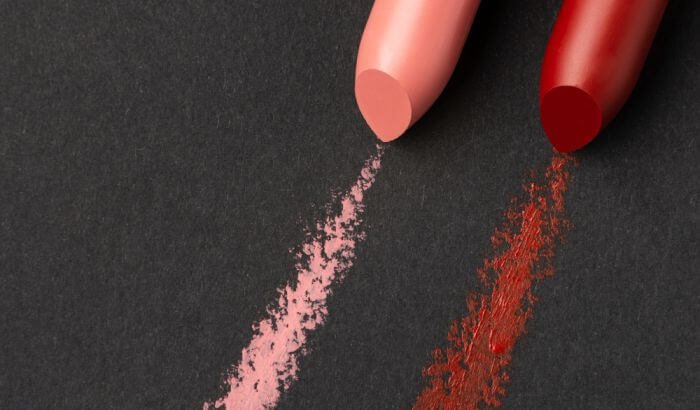
Lipstick usually presents three linked problems: wax gives it structure, oil helps it spread, and concentrated pigment leaves colour behind. Chill-soft lipstick only enough to lift a raised deposit cleanly; do not freeze or scrape delicate fibres. Use the edge of a spoon or card and work from outside the smear towards its centre.
For a washable, colourfast garment, test a stain remover or liquid detergent labelled for greasy marks. Some products use a compatible solvent system. This does not make household rubbing alcohol or hairspray suitable for every textile. Apply the permitted product sparingly from the reverse and transfer the lipstick into a white towel. Replace the towel area as the colour moves.
Rinse and repeat the same compatible method if progress continues. Do not jump between detergent, alcohol, vinegar and bleach. Mixing or layering products can damage colour, create residue and make it impossible to tell which treatment is causing a change. Once the waxy feel has gone, launder according to the care label.
You may also enjoy:

How to get mascara out of clothes
Let a wet blob of mascara sit just long enough to become liftable without smearing it across the weave. Use a blunt edge to remove the surface deposit. Do not rub with a cotton bud or brush: the dark pigment can travel beyond the original spot and the fibres may pill.
Regular mascara may respond to a small amount of compatible liquid laundry detergent on a washable fabric. Put the mark face-down on a clean towel, work from the reverse and blot. Rinse as the garment label allows. If the stain lightens and remains visible, repeat before laundering; do not add a stronger product immediately.
Waterproof mascara contains ingredients intended to resist moisture, so water alone may not release its oily or polymeric film. Check the cosmetic packaging if available, then choose a garment-safe remover whose label covers both the fibre and an oily cosmetic stain. Skin oils, coconut oil and oily eye-makeup removers can replace one mark with a grease stain, so they are not dependable fabric shortcuts.
Stop if the garment is silk, wool, acetate, heavily embellished or dry-clean-only, or if the hidden-area test transfers dye. The dedicated guide to delicate fabrics explains why low agitation and professional assessment may be more important than rapid removal.
Treat white, dark and delicate clothing differently
White clothing makes leftover pigment obvious. Colour alone does not identify the fibre or finish. Chlorine bleach can weaken some materials, yellow others and damage trims, stretch fibres or prints. Hydrogen peroxide is also a bleaching agent and can alter colour or finishes. Use a whitening product only when both its instructions and the garment label permit it, after the oily or waxy component has been removed.
On dark or patterned clothing, the main risk is often colour loss, not a pale residue. Test on an inside seam and blot with a white cloth. If the cloth picks up garment dye, stop. Work with minimal moisture and avoid a large wet halo. A smaller makeup mark is usually easier for a specialist to assess than an expanded ring with missing colour.
Silk, wool, acetate, velvet, rayon blends, structured jackets and embellished garments need particular caution. Fibre is only part of the decision: dyes, interlinings, adhesives and surface finishes can react differently. Lift dry or solid excess without rubbing, retain the makeup packaging if possible and tell the cleaner what has already touched the fabric.
Remove old, washed or dried makeup stains
An old stain is not automatically permanent, but previous washing and heat change the odds. First decide whether the remaining mark feels greasy, waxy or dry and pigmented. A glossy edge may indicate oil; a stiff patch may be product or detergent residue; a flat discoloured shadow may be pigment or fabric colour change.
For a washable, colourfast garment, repeat the compatible pretreatment that matches the residue. Give it only the contact time stated on the product, blot or gently work it as permitted, rinse and wash. Several controlled passes are safer than a stronger improvised mixture. If no colour transfers into the towel and the mark does not change after a correct repeat, more of the same may only stress the textile. Record what you used and how long it remained on the garment before handing the problem to a specialist.
A garment that has been tumble dried may have a heat-set pigment or oxidised oil shadow. Do not iron it to “flatten” the stain and do not use hotter water unless the care label and treatment instructions call for it. Photographing the mark in neutral daylight can help you see whether it is fading, spreading or actually a patch of colour loss.

Wash and check the garment before using heat
After pretreatment, wash at the temperature and on the programme shown on the care label. Hotter is not automatically better: it can affect dyes, finishes, elastane and some residues. Use the normal detergent amount for the load and do not add a second stain product unless the labels explicitly permit the combination.
Inspect the garment as soon as the programme ends. Wet fabric can hide a pale oily shadow, so check it again as it air-dries in good natural light. If a mark remains, keep the garment away from the tumble dryer, iron and radiator. Repeat a suitable treatment only if the fabric remains stable and progress is visible.
- Check the treated area while the garment is still damp, comparing it with an unstained part under the same light.
- Let the garment air-dry on a suitable hanger or flat surface; support knitwear so it does not stretch.
- Look for a greasy halo, pigment shadow, stiff residue, colour loss or texture change once the fibres are dry.
- If the mark is fading and the fabric is unchanged, repeat the same label-compatible method. If it is static or spreading, stop.
Keep the stained item out of a mixed load until loose pigment and oily residue have been removed. This prevents a lipstick fragment, mascara deposit or untreated foundation from contacting another garment. When the makeup has transferred to the towel and the pretreatment has been rinsed as directed, wash the garment with similar colours and fabrics.
The same check-before-heat discipline helps with other mixed food and pigment residues, including chocolate stains. The cleaner must still match the specific residue and fabric; the shared principle is to confirm removal before heat makes recovery harder.
When home treatment should stop
Stop immediately if garment dye transfers, the fabric becomes lighter, shiny, rough, stiff or distorted, or the stain develops a larger ring. Also stop when the required treatment conflicts with the care label, when you cannot identify a previous product, or when several careful passes produce no improvement.
Use a dry cleaner or garment-care specialist for dry-clean-only clothing, silk, wool, acetate, velvet, leather trim, beads, sequins, structured pieces and valuable garments. Take the makeup container or ingredient list and explain every product already used. That history helps the specialist avoid an incompatible follow-up treatment.
Samyx’s one-off cleaning is a household cleaning service; it does not include garment laundry, dry cleaning or textile restoration. This distinction matters because treating clothing requires a fibre-specific process and equipment outside a normal home-cleaning visit.
Book One-Off Cleaning
Enter your postcode to view our rates and availability in your area.

Frequently asked questions
-
Can foundation stains become permanent?
They can become difficult or impossible to remove if pigment or oil remains in the fibres, the fabric colour has changed, or the garment has been heated. Treat a fresh mark promptly with a method compatible with the care label, check before tumble drying and stop if repeated treatment is stressing the fabric.
-
Does micellar water remove makeup from clothes?
It may move some formulas; it is not a universal fabric treatment. Micellar products vary and may contain fragrance, colour or conditioning ingredients that leave another mark. Check the garment label, test a purpose-labelled compatible stain treatment and do not assume a skin cleanser is textile-safe.
-
Can vinegar remove makeup stains?
Vinegar is not a universal makeup-stain remover. It may be ineffective against oily or waxy formulas and can be unsuitable for some fibres, dyes and finishes. Use a treatment labelled for the garment and stain type, and never mix vinegar with bleach or another cleaner.
-
Can you remove makeup after clothes have been washed and dried?
Sometimes. Identify whether the remaining residue is oily, waxy or pigmented, then repeat a compatible pretreatment and air-dry for inspection. Tumble-dryer or iron heat can set a stain, so full removal cannot be guaranteed. Escalate valuable or delicate garments before increasing chemical strength.
Important: Garment fibres, dyes, finishes and makeup formulas react differently. Check the care label, test any permitted treatment on a hidden area and never mix stain removers. Do not rub, use chlorine bleach, peroxide, alcohol, acetone, heat or a tumble dryer unless the garment label and product instructions expressly allow it. Stop if colour transfers, the fabric changes texture or the stain spreads, and use a garment-care specialist for dry-clean-only, silk, wool, acetate, embellished or valuable clothing.
Author: Svetlana Georgieva (Clara)
Hi, I’m Svetlana Georgieva, but you can call me Clara. As the co-founder and heart behind Samyx Cleaning, I’m devoted to sharing the art of a clean space. Let’s journey into a cleaner, more joyful life together with tips from London's cleaning experts.

Discover more of our cleaning secrets: