
How to Remove Sweat Stains From Clothes Without Damaging the Fabric

Last modified on: 01/08/2026
How to remove sweat stains from clothes depends on what the mark contains and what the garment can tolerate. Check the care label, keep heat away, pretreat with a compatible laundry product, wash at the labelled temperature and air-dry for inspection. Yellowing, white transfer and colour loss need different responses.
Key takeaways
- Sweat itself is only part of many underarm marks. Body oil, antiperspirant, deodorant and repeated heat can all change the residue.
- White fabric is not automatically chlorine-bleach-safe. Dark fabric can fade under peroxide or an unsuitable oxygen product.
- A complete treatment cycle ends with inspection and air drying. Tumble-dryer heat or ironing can make a remaining mark harder to recover.
- Old yellowing may improve over several controlled cycles, though oxidation, dye loss and fibre wear can leave a permanent shadow.
- Stop when colour transfers, texture changes or the garment is too valuable to risk. A garment-care specialist is the correct route for clothes outside normal washable care.
Table of Contents
Identify the mark before treating it
A damp patch that has not dried usually needs prompt washing, not a strong stain treatment. Blot excess moisture with a clean white cloth, keep the stained layer away from the rest of the garment and check the care label. A normal wash may remove fresh water-soluble residue before yellowing develops.
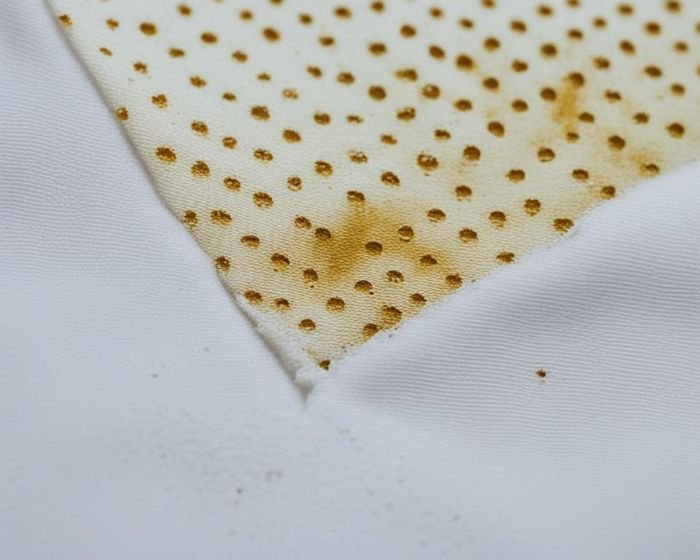
Yellow underarm staining often develops as sweat, body oil and antiperspirant residue remain in the fibres and change over time. A stiff or waxy area suggests repeated product build-up. Treating that deposit like a simple surface mark can leave the centre intact and rough brushing can wear the fabric around it.
White streaks on a black shirt may be dry deodorant transfer from dressing. Start by gently lifting the loose surface residue with a clean dry microfibre cloth or a similar method permitted by the garment maker. A pale area that remains after rinsing may be dye change, not removable soil. More chemistry will not restore missing colour.
Collars and cuffs can hold body oil and skin residue as well as perspiration. The wider general stain treatment still begins with identifying the source, because cosmetics, hair products, food grease and ink require different routes. Do not assume every yellow or dark mark under the arm is sweat.
Check the mark in daylight and compare the inside and outside of the cloth. Residue often sits most heavily on the inner surface. Dye loss usually looks similar from both sides. Feel the area without stretching it: a waxy plate suggests product build-up, a brittle patch suggests ageing or heat, and a normal texture with a lighter colour points towards a changed dye. That simple inspection can prevent an unnecessary bleaching step.
Check the care label, fibre and colour
The care label controls whether the garment can be washed, the permitted temperature, the drying method and whether bleach is allowed. The treatment product has a label too. Read both sets of instructions, since a product marketed for laundry may still exclude wool, silk, leather, unstable dyes, metallic fibres or particular finishes.
Fibre names do not tell the whole story. A white cotton shirt may contain elastane, fusible interfacing, coloured stitching or a printed trim. A dark cotton T-shirt can have a pigment print that reacts before the base fabric does. Examine every part that the liquid could reach, including seams, buttons, logos, embroidery and adhesive-backed details.
Test a permitted treatment on a hidden inside seam. Use a white cloth so transferred dye is visible, then let the test area dry before judging it. Wet fabric can look darker and temporarily hide a change. The product labels also help you keep an oxygen-based laundry product, chlorine bleach and an ordinary detergent in their correct roles.
Dry-clean-only garments, silk, wool, acetate, embellished clothing and valuable dress shirts deserve a conservative decision. Water can leave rings, change sizing, distort structure or affect trim even when the stain chemical seems mild. Photograph the mark, avoid applying several household products and tell the garment-care specialist exactly what has already touched it.
Choose the safest treatment route
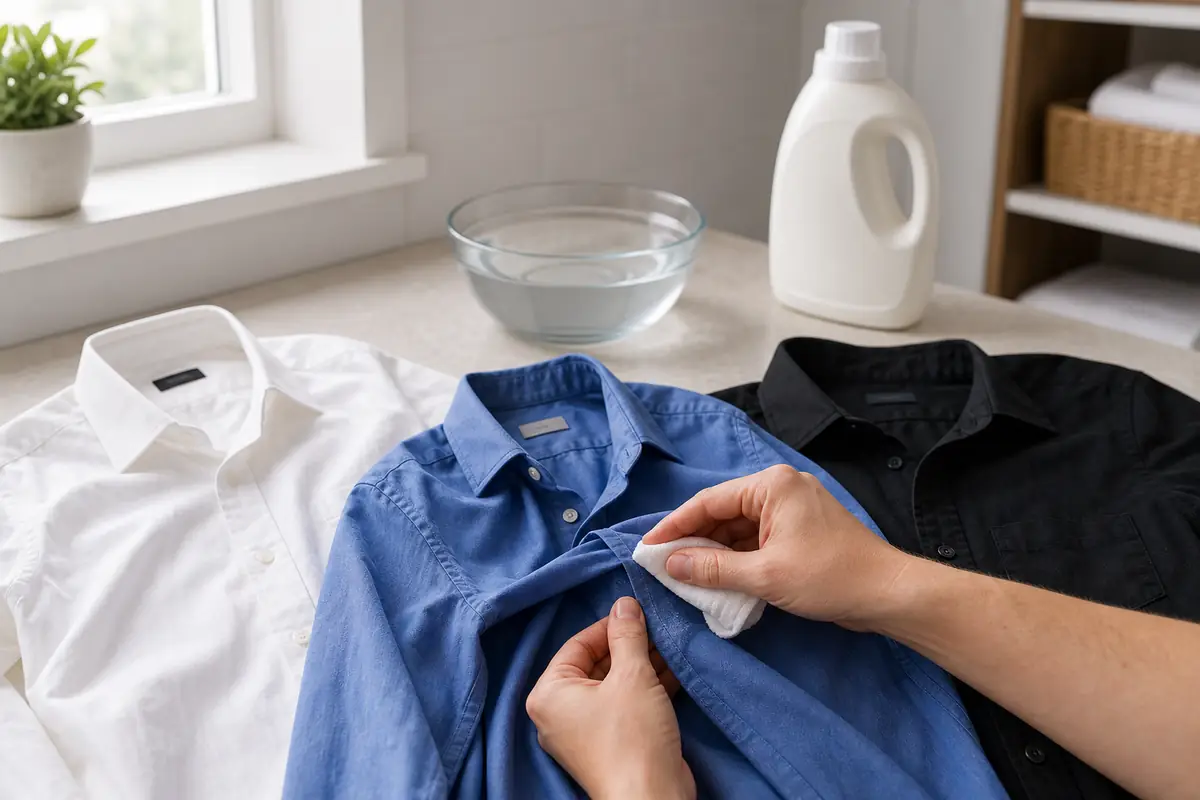
Use the least aggressive compatible route that matches the visible clue. Product directions take priority over the summary below, and a successful method is one that reduces residue without changing dye, texture, stretch, print or finish.
| Visible clue | Likely problem | Safest first route | Escalation | Stop signal |
|---|---|---|---|---|
| Fresh damp area | Recent perspiration | Blot and wash promptly as the label permits | Labelled liquid detergent pretreatment | Dye transfers or fabric distorts |
| Yellowing on washable white cotton | Oxidised oil and antiperspirant residue | Laundry detergent worked gently into the area | Oxygen-based laundry product if both labels allow | Weakness, thinning or trim change |
| White streak on black fabric | Dry deodorant transfer | Lift loose residue with a clean dry cloth | Colour-safe detergent after a hidden test | Black dye appears on the test cloth |
| Waxy or crunchy underarm | Layered antiperspirant and body oil | Repeated gentle detergent pretreatment | Garment-compatible specialist stain product | Area becomes shiny, hard or abraded |
| Coloured washable shirt | Sweat and product residue | Colour-safe detergent at label temperature | Colour-safe oxygen product only if permitted | Fading, colour bleed or print change |
| Dress shirt, delicate or structured garment | Residue in vulnerable fabric or construction | Follow the care label and keep treatment local | Garment-care specialist | Water ring, distortion or finish change |
| Old or heat-set shadow | Oxidation, residue or possible dye/fibre change | One controlled label-safe cycle | Repeat only if safe improvement continues | No transfer or improvement after repeated cycles |
How to remove sweat stains from clothes step by step
- Isolate the area. Turn the garment inside out if that exposes the deposit more clearly. Keep the marked panel away from clean fabric and place it on a clean, colourfast towel.
- Remove loose transfer. Brush or wipe away dry deodorant gently. Blot fresh moisture. Do not grind residue deeper with a stiff brush.
- Apply one compatible pretreatment. A small amount of liquid laundry detergent or a labelled stain product is a controlled starting point for many washable clothes. Use the quantity, contact time and handling stated on its label.
- Work lightly. Use clean fingers, a soft cloth or the tool named by the product. Support the fabric from beneath and avoid stretching knitted underarm areas.
- Rinse when directed. Remove one treatment completely before considering another. Leftover acid, alkali, bleach or detergent can react with the next product or create a residue ring.
- Wash according to the care label. Use an appropriate detergent and the permitted cycle. A hotter wash is not a shortcut if the label sets a lower limit.
- Inspect before heat. Look at the area in good light when damp, then air-dry it. Do not tumble-dry or iron the garment with a visible mark remaining.
- Decide whether to repeat. Another controlled cycle may help when residue is clearly reducing. Stop when improvement stalls or the fabric begins to change.
White cotton shirts
Washable white cotton can often tolerate a labelled oxygen-based laundry product after detergent pretreatment. Check the bleach symbol and the product exclusions first. White colour alone does not permit chlorine bleach, particularly where the shirt includes elastane, coloured thread, prints or vulnerable trim.
Chlorine bleach can weaken some fibres and may deepen certain yellow residues. Keep the treatment local, use the labelled dose and inspect the result after washing. Broader stains on white clothes still require source-specific treatment before any whitening step.
Coloured and black shirts
Begin with the dry-transfer test on black fabric. Loose deodorant can lift without wet chemistry. For ingrained residue on a washable coloured shirt, use colour-safe detergent and cool or warm water only within the label limit. Test the complete product, including fragrance or colour additives, on a hidden area.
Peroxide can alter dark dyes, and even an oxygen-based laundry product may exclude certain colours or materials. Skip unqualified paste recipes. A pale underarm area that does not change after residue is removed may be dye loss. Repeated soaking cannot put colour back into the cloth.
Dress shirts, blends and delicate garments
Dress shirts can contain cotton, polyester, linen, elastane, silk or mixed fibres, plus interfacing that gives the collar and cuffs their shape. Treat the most vulnerable part of the garment as the limit. Do not soak a structured shirt merely because the visible outer cloth seems washable.
Keep pretreatment light and local, then rinse and reshape as the label directs. The same conservative boundary applies to delicate fabrics. A specialist can identify whether remaining yellowing is removable residue, an old oxidation shadow or permanent change to the dye and finish.
Old, dried or hardened marks
An old mark may contain several layers of body oil, antiperspirant, detergent residue and oxidised soil. Rehydrate only with a garment-compatible treatment. Work through one full pretreat, wash and air-dry cycle before judging it. Adding more product halfway through makes it hard to tell which treatment helped or caused a change.
Progress can appear as a softer deposit, a smaller edge or lighter transfer onto the rinse water or cloth. A yellow shadow that remains unchanged after repeated safe cycles may be permanent. Stop before the underarm becomes thin, shiny, rough or stretched. Fibre damage is a higher cost than a faint cosmetic mark.
Record which product and cycle you used before repeating the treatment. Old marks can look darker when wet, so compare only after air drying in similar light. When the residue softens without disappearing, another light cycle may be reasonable. When the cloth feels weaker or the colour boundary widens, the garment has already given the stop signal.
You may also enjoy:

Why common household remedies can go wrong
Vinegar, bicarbonate, hydrogen peroxide, lemon juice and dishwashing liquid appear in many sweat-stain recipes. Each can behave differently across fibres, dyes, finishes and product formulations. Kitchen ingredients do not come with a garment compatibility list. A household cleaner may contain perfume, dye, thickener or surfactant that leaves another mark.
Acidic vinegar and lemon juice are not interchangeable with detergent or an oxygen-based laundry product. Bicarbonate is mildly abrasive as a paste and can be difficult to rinse from dense fabric. Dishwashing liquid may create excess foam in a washing machine. Hydrogen peroxide can fade coloured cloth. Chlorine bleach has its own fibre and colour limits.
Mixing products removes control from the process. Never combine chlorine bleach with acids, ammonia or other cleaners, and do not layer an unknown stain remover over a household remedy. Rinse one permitted treatment away as directed before changing course. Use gloves, ventilation and eye protection whenever the product label calls for them.
A labelled laundry product is easier to assess because its use, dose, exclusions and rinse or wash step are stated. Even then, the garment label and hidden-area result decide whether it belongs on the shirt. Concentration and longer contact do not automatically improve removal.

Prevent yellow and white underarm marks
Let deodorant or antiperspirant dry before dressing and use only the amount directed on the container. Excess product can transfer onto fabric and build through repeated wear. A dry white streak caught immediately is easier to lift than a waxy deposit that has passed through several hot drying cycles.
Wash worn shirts promptly within their care instructions. Turn them inside out when the label permits so water and detergent reach the underarm area. Avoid overloading the machine, since poor movement and rinsing can leave product and detergent behind. Dry the garment fully before storing it.
Breathable layers and washable undershirts can reduce direct transfer onto a valuable outer shirt. Rotate frequently worn clothes so residue is treated before it ages. Seek medical advice for sweating that concerns you, changes suddenly or affects daily life; laundry guidance cannot diagnose or treat a health condition.
When home treatment should stop and where Samyx can help
Stop when dye transfers to the test cloth, the garment develops a ring, the texture becomes rough or shiny, elastic fibres lose recovery, trim changes, or the stain spreads. Dry-clean-only, valuable, delicate, embellished and structured garments belong with a garment-care specialist before another product is applied.
Samyx Cleaning does not provide laundry, dry cleaning, garment stain removal or textile restoration. When the same incident has left compatible household surfaces, a utility area or the surrounding room needing attention, one-off cleaning can deal with the home-cleaning work. The clothes should go to the appropriate garment specialist.
Book One-Off Cleaning
Enter your postcode to view our rates and availability in your area.

Conclusion: Protect the fabric before chasing the last shadow
A careful sweat-stain treatment follows a repeatable order: identify the mark, check the garment, use one compatible product, wash within the label, inspect without heat and stop when the material sets the limit. Fresh residue often responds quickly. Older yellowing may need patience, and some remaining change is safer to accept than damage caused by one treatment too many.
Frequently asked questions
-
Can old sweat stains come out of clothes?
Old sweat stains can improve when residue is still removable and the garment tolerates repeated label-safe treatment. Oxidation, dye loss, heat setting and fibre wear can leave a permanent shadow, so stop when progress stalls or the fabric changes.
-
Is chlorine bleach safe for sweat stains on white shirts?
No. White colour alone does not make a shirt chlorine-bleach-safe. Check the bleach symbol, fibre, trim and product label. A compatible oxygen-based laundry product may be an option for some washable white cotton when both labels permit it.
-
Can vinegar remove sweat stains from clothes?
Vinegar is not universally compatible with every fibre, dye or finish. Follow the garment guidance, test a hidden area and never mix vinegar with bleach or other cleaners. A labelled laundry product offers clearer dosing and exclusions.
-
Why do black shirts get white marks under the arms?
A fresh white streak is often dry deodorant transfer. A waxy or crunchy area may be layered antiperspirant and body oil. Lift loose transfer first, then use a colour-safe labelled treatment if needed. A pale area that remains may be dye loss, not removable soil.
Important: Garments vary in fibre, dye, finish, trim and care instructions, and laundry and household products also vary. Follow the garment and product labels, test any permitted treatment on a hidden area and wear the protection stated on the product. Never mix cleaning products, and rinse one treatment away before changing method. Stop if dye transfers, colour or texture changes, fibres weaken or the mark spreads. Use a garment-care specialist for dry-clean-only, delicate, valuable, embellished or already damaged items.
Author: Svetlana Georgieva (Clara)
Hi, I’m Svetlana Georgieva, but you can call me Clara. As the co-founder and heart behind Samyx Cleaning, I’m devoted to sharing the art of a clean space. Let’s journey into a cleaner, more joyful life together with tips from London's cleaning experts.

Discover more of our cleaning secrets: