
Can You Polish Wood with Coconut Oil?

Last modified on: 17/08/2026
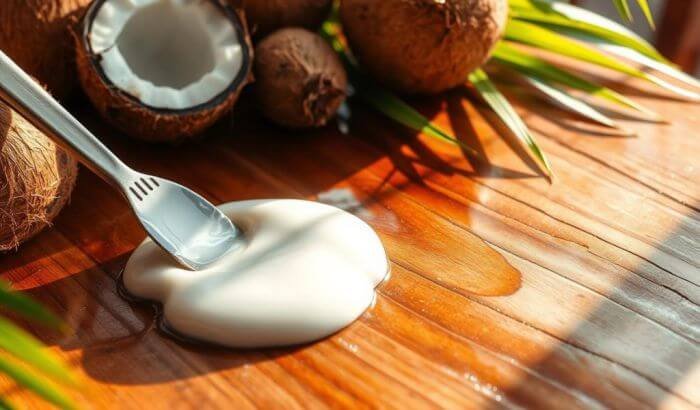
Can you polish wood with coconut oil? Sometimes, but ordinary cooking coconut oil is not a reliable universal wood polish and should not be applied before you identify the item, its finish and its care instructions.
Coconut oil can create a temporary richer colour or sheen because it leaves oil on or in the surface. That is different from cleaning dirt, repairing a damaged coating or applying a finish designed to cure and protect wood. In many cases, a suitable furniture polish or finish-care product is the safer choice.
Key Takeaways
- Identify the finish before applying coconut oil or any other polish.
- Separate the products because ordinary, refined, virgin, fractionated and formulated coconut-derived oils are not interchangeable.
- Clean before polishing so dust, grease and old residue are not trapped beneath another layer.
- Test and buff only when the item and product instructions confirm compatibility.
- Use specialist advice for antiques, valuable furniture, damaged finishes, food-contact items and structural repairs.
Table of Contents
Can you polish wood with coconut oil? Check the item first
The useful answer depends less on the word wood than on the complete surface system. A solid oak tabletop with a known hard-wax finish, a thin veneer, a painted cabinet, an unfinished cutting board and an engineered floor may all contain wood, yet they require different care.
| Surface or item | Starting decision | Main risk |
|---|---|---|
| Modern finished indoor furniture | Use the furniture or finish maker’s specified polish; consider coconut-derived product only if expressly compatible | Smears, softened coating, uneven sheen or trapped soil |
| Bare or unfinished wood | Choose a finishing system designed for that timber and intended use | Patchy absorption without durable protection |
| Veneer or unknown finish | Do not oil until the construction and finish are identified | Dark edges, lifted veneer, adhesive or coating damage |
| Antique or valuable furniture | Ask a furniture conservator or restoration specialist | Permanent appearance change and loss of original finish |
| Cutting board or utensil | Use only a product labelled for that exact food-contact purpose and follow the maker’s directions | Unsuitable formulation, residue, odour or hygiene confusion |
| Wood floor or stair | Use the floor maker’s approved cleaning and maintenance system | Slipperiness, footprints, dust adhesion and finish problems |
| Outdoor timber | Use an exterior system compatible with the timber and existing coating | Little weather protection and difficult future preparation |
| Laminate, MDF or particle board | Treat it as a manufactured surface and follow its care instructions | Oil sitting on top or entering vulnerable edges |
How to identify the existing wood finish
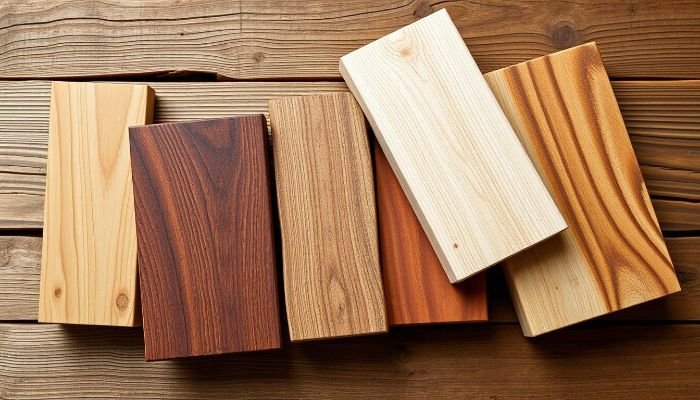
Start with records rather than a chemical test. Check the maker’s label, invoice, care booklet or product page. Ask whether the item has been refinished, waxed or repaired. A table described as oak may have only an oak veneer over an engineered core, and a natural-looking surface may still be lacquered.
A continuous glossy or satin film may indicate varnish, lacquer or another coating, but appearance alone is not proof. An oil finish may look low-sheen and open-grained; wax can show fingerprints or buff marks. Old silicone polish, cooking grease and cleaning residue can imitate all three. Do not use alcohol, solvent, heat, scraping or an abrasive pad as an identification shortcut.
Inspect edges, joins and the underside in good light. Stop when veneer is lifting, the coating is cracked or flaking, colour transfers to a dry cloth, the surface already feels sticky or repairs differ from the surrounding finish. These conditions need finish-specific advice before cleaning or polishing.
If identification remains uncertain, keep the surface dry and dust-free while you obtain maker or restoration guidance. A cosmetic improvement is not worth changing a finish that was stable before treatment.
Surface condition matters too. Dullness may come from dust, kitchen grease, silicone polish, wax build-up, water damage or a worn finish. Adding oil can temporarily darken the area without solving the cause. If a white ring or dark patch is the real problem, use the separate wood stains guide before considering polish.
You may also enjoy:

Cleaning, polishing, conditioning and finishing are different jobs
Cleaning removes dust, grease, spills and incompatible residue. It should happen before any cosmetic treatment. Use the method approved for the existing finish and avoid flooding joints, veneer edges or unsealed areas.
Polishing changes surface appearance, often by increasing sheen or reducing the visibility of fine marks. A polish does not necessarily feed the wood or add meaningful protection. Some products are intended for a particular lacquer, wax or oil finish; others can create build-up.
Conditioning is a product-specific maintenance step. It may suit an unfinished food-contact item or a particular oil-finished surface, but it should not be assumed necessary for sealed furniture. A coating can stop an oil from reaching the wood beneath it.
Finishing creates or renews a protective system. Drying oils, hard-wax oils, varnishes, lacquers and paints behave differently. Ordinary coconut oil does not become equivalent to one of these systems simply because it makes grain look darker.
For routine dust, a suitable microfibre cloth may be all the surface needs. Use it dry or prepared only as the furniture instructions allow, and keep separate cloths for dusting and oily products.
Ordinary coconut oil is not the same as a wood-care product
Ordinary virgin or refined coconut oil is sold as food. It does not cure into a hard, durable film on wood. Excess can remain mobile, soften with warmth, collect dust or transfer to clothing and paper. Like other food oils, it can oxidise and develop an unwanted odour over time, depending on the oil, amount and conditions.
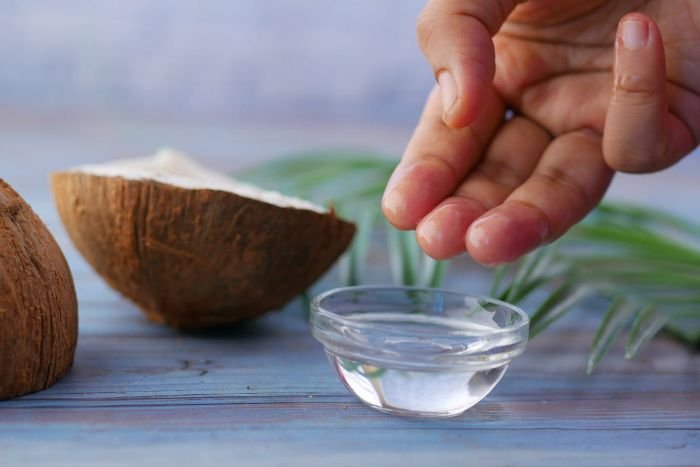
Fractionated coconut oil has been processed so its composition and behaviour differ from ordinary coconut oil. That does not make every fractionated product suitable for every item. A cosmetic carrier oil, a food product and a formulated wood conditioner may have different purity, additives, instructions and intended uses.
Choose by the complete label, not by one ingredient named on the front. A product formulated for a cutting board is not automatically suitable for a lacquered table, and furniture polish is not automatically suitable for food contact. Keep the original container and follow the stated material, use, preparation and reapplication directions.
Do not turn coconut oil into a homemade mixture with lemon juice, essential oil or another household ingredient. Acid, fragrance components and mixed products add compatibility and exposure questions without turning cooking oil into a durable finish. The lemon juice guide explains why acidity must be matched to the surface.
How to test a compatible coconut-derived wood product
Use this process only after the furniture or finish instructions allow the product category. It is not permission to use kitchen coconut oil on an unknown surface.
1. Identify the item and finish
Check labels, purchase records or maker information. Look for veneer edges, repaired sections, mixed materials, paint, lacquer, wax, oil or bare timber. Stop if the finish is flaking, sticky before treatment, heat-damaged or unknown on a valuable piece.
2. Remove dust and compatible soil
Dust gently, then clean only as the finish instructions direct. Do not polish over grease, hand cream, cooking film or an earlier product layer. The routine furniture dusting method helps separate loose dust from residue that needs a different step.
3. Let the surface dry fully
Moisture changes colour and can hide residue. Wait until the item has dried under the method’s instructions before judging whether it actually needs polish. A clean dry surface may already have an even sheen.
4. Test a hidden area
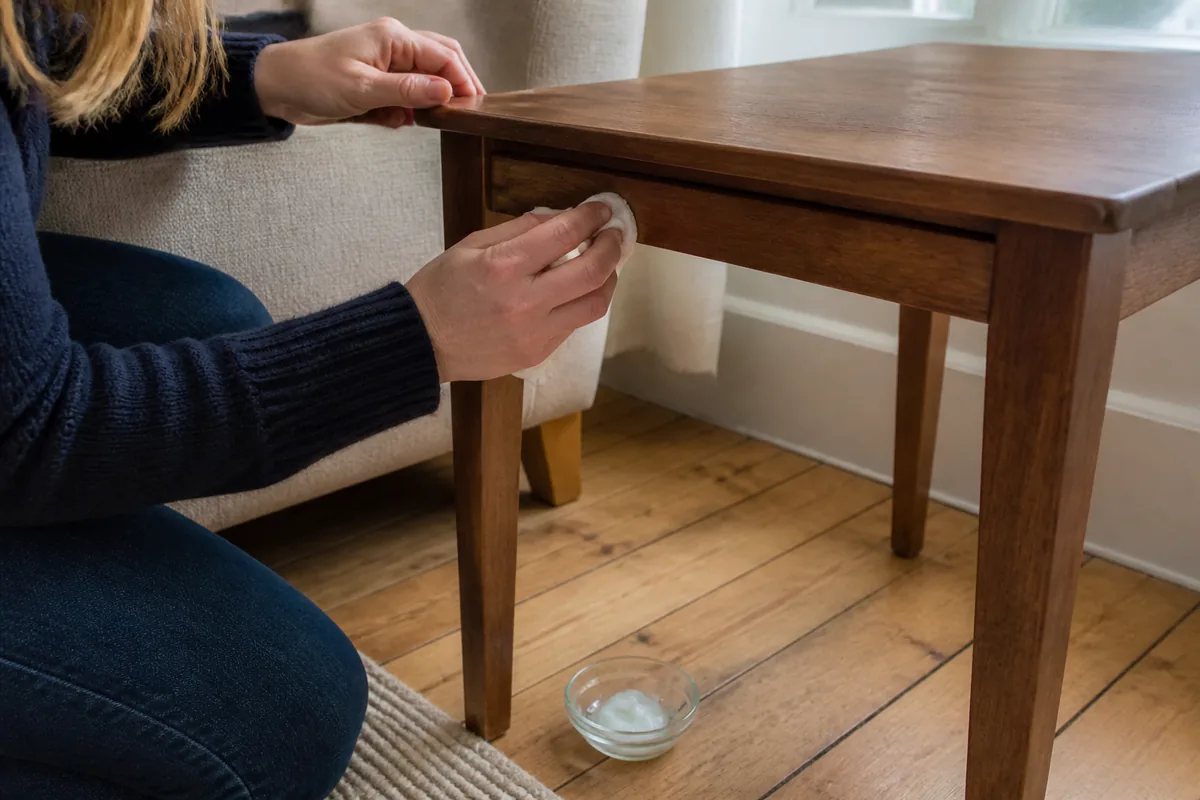
Use the minimum amount stated on the product, applied with a clean lint-free cloth to an underside or back edge that has the same finish. Do not test across a joint, veneer edge, repair or exposed end grain. Buff as directed and leave the area for the full assessment period in the instructions.
5. Inspect before continuing
Check in daylight and side light. Reject the method if colour changes unevenly, the finish softens, the cloth lifts colour, fingerprints become more visible or the test stays oily. If acceptable, work in small sections and keep untreated boundaries logical.
6. Buff away every trace of excess
Use a separate clean cloth and continue only until the product instructions are satisfied. The furniture should not feel wet, greasy or slippery. Keep people, pets, textiles and papers away until the surface is ready for use under the label directions.
Where coconut oil should usually be avoided
Antiques, veneer and unknown finishes
Oil can darken exposed wood, collect in cracks and complicate later conservation. Thin veneer may have vulnerable edges or old adhesive, while an antique surface can include original wax, shellac, lacquer or repairs. Do not experiment on an irreplaceable area. Ask a qualified conservator or furniture restorer.
Cutting boards and wooden utensils
Food-contact safety depends on the complete product, its intended use and correct application, not on the fact that one ingredient can be eaten. Follow the board or utensil maker and choose a clearly labelled conditioning product for that purpose. Do not copy a furniture-polish recipe onto kitchen equipment.
Wood floors and stairs
Ordinary coconut oil can leave a floor slippery, mark traffic lanes and hold grit against the finish. Floors also have warranties and maintenance systems that must remain compatible. Use the floor maker’s instructions and the material-specific floor cleaning route instead.
Outdoor or unfinished timber
Outdoor timber needs a system suited to moisture, sunlight, temperature change and the existing coating. Bare indoor wood needs a finish selected for its species, use and desired appearance. Coconut oil may change colour without supplying the protection or predictable curing that either job requires.
What to do if coconut oil leaves wood sticky
Stop adding oil. Remove loose dust with a clean dry cloth and use another lint-free cloth to lift unabsorbed surface oil without spreading it into joints or adjacent materials. Do not add lemon juice, vinegar, washing-up liquid or another polish to cancel the first treatment.
If the finish maker provides a residue-removal method, test it on a hidden area and follow it exactly. Sticky coating, lifted colour, white bloom, swollen veneer or a persistent odour needs professional assessment. Strong solvent cleaning can turn a removable residue problem into finish damage.
After the item is stable and dry, reassess the original goal. If it needed dust removal, use a clean cloth. If the finish is worn through, polishing will not rebuild it. If the furniture only looks dull in one light, old product build-up may need controlled removal rather than another coat.
Choose a safer route for the result you want
| Your goal | Better starting route | Do not substitute |
|---|---|---|
| Remove dust | Finish-compatible dry or lightly prepared cloth method | Oil as a dust trap |
| Remove grease | Cleaner approved for the existing finish | More polish over residue |
| Increase sheen | Polish specified for the finish, after a hidden test | Kitchen oil on an unknown coating |
| Maintain an oil-finished item | The maker’s compatible maintenance product and schedule | A different household oil |
| Restore a worn or damaged finish | Furniture restoration or refinishing assessment | A cosmetic oily layer |
| Condition food-contact wood | Product labelled for that exact intended use | A homemade furniture recipe |
How Samyx Cleaning can help
Wooden furniture often looks dull because the surrounding room carries dust, cooking film or residue rather than because the timber needs oil. Samyx’s one-off cleaning service can help with the wider household reset around furniture, cabinet exteriors, skirting and compatible floors.
The service is not furniture restoration, antique conservation, coating repair or timber refinishing. Point out valuable items, unknown finishes, veneer damage and existing sticky areas before work begins so they can be excluded or handled only within an agreed safe scope.
Book a Home Reset
Enter your postcode to view our rates and availability in your area.

Frequently asked questions
-
Can you polish wood with coconut oil?
Sometimes, but ordinary cooking coconut oil is not a reliable universal polish. Identify the wood item and existing finish first. Use only a compatible product intended for that surface, test a hidden area and buff away all excess.
-
Will coconut oil go rancid on wood?
Ordinary food oils can oxidise and develop an unwanted odour over time, depending on their composition, the amount used and the conditions. Fractionated or formulated products behave differently, but they still need a label that matches the item and intended use.
-
Can I use coconut oil on a wooden table?
Only after identifying the table’s finish and checking its care instructions. Avoid ordinary coconut oil on an unknown, antique, veneered, damaged or food-preparation surface. Choose a finish-compatible polish or maintenance product instead.
-
Can you use coconut oil on wood floors?
Ordinary coconut oil is a poor routine choice for floors because residue can feel slippery, collect grit and show traffic marks. Follow the floor manufacturer or finish maker’s approved cleaning and maintenance system.
Important: Furniture, floor, finish and product instructions take precedence over general advice. Test only on a low-value hidden area, never mix products and stop when the material, coating or intended use is uncertain. Use a qualified conservator or restorer for valuable, antique or damaged pieces.
Author: Svetlana Georgieva (Clara)
Hi, I’m Svetlana Georgieva, but you can call me Clara. As the co-founder and heart behind Samyx Cleaning, I’m devoted to sharing the art of a clean space. Let’s journey into a cleaner, more joyful life together with tips from London's cleaning experts.

Discover more of our cleaning secrets: