
Sustainable Waste Management in Cleaning: A Practical System

Last modified on: 14/09/2026

Sustainable waste management in cleaning starts before anything reaches a bin: buy only what the contract needs, dose products correctly, keep reusable equipment in service and separate each remaining waste stream according to its actual contents.
That sounds simple, but cleaning creates an awkward mix of ordinary packaging, contaminated absorbents, broken tools, batteries, aerosols and site-generated waste. One recycling poster cannot manage all of it. A useful system assigns an owner, a route and a record to every recurring stream.
Key Takeaways
- Prevent first: unused product and unnecessary packaging are easier to avoid than to process.
- Map each stream: office paper, empty containers and chemical residues do not automatically share a route.
- Protect hygiene: reusable equipment needs a cleaning, drying and retirement standard.
- Check local acceptance: recycling rules vary by material, product and collection provider.
- Measure useful outcomes: track purchasing, waste volume, contamination and missed collections rather than vague green claims.
Table of Contents
What sustainable cleaning waste management covers
The familiar waste hierarchy remains a practical order of decisions: prevent, reduce, reuse, recycle, recover and dispose. The mistake is treating recycling as the first step. If a team routinely over-orders wipes, mixes more solution than a shift needs or discards washable cloths early, a better bin does not correct the underlying waste.
Cleaning contractors also work inside other people’s buildings. The client may control the bins, collection contract and storage area, while the cleaner controls dosing, tool care and what is put into each container. Agreeing that boundary in writing prevents a familiar gap where everybody assumes somebody else checked the route.
Run a cleaning waste audit before changing products
Choose a representative week, not the quietest week of the year. Record what is opened, diluted, damaged, discarded and removed from site. Keep client waste separate from waste generated by the cleaning operation, because responsibility and reporting may differ.
| Waste stream | Why it appears | First prevention check | Route to confirm |
|---|---|---|---|
| Product containers | Routine chemical use | Correct concentration and pack size | Label instructions, supplier and collector |
| Cloths and mop heads | Wear, damage or contamination | Wash, dry and rotate correctly | Textile or residual route where available |
| Disposable gloves and wipes | Task-specific hygiene control | Use only where risk assessment requires them | Site’s accepted residual or specialist stream |
| Batteries and electrical tools | Equipment replacement | Maintain and repair safe equipment | Battery or electrical take-back route |
| Unused or unknown product | Old stock, decanting or contract change | Label, date and rotate stock | Supplier or appropriate hazardous-waste advice |
This audit becomes the baseline. Count items where weighing is impractical, but use the same method each month. Note contamination too: one liquid-filled bottle or food-soiled item can make an otherwise recyclable load unacceptable.
Prevent waste through purchasing and stock control
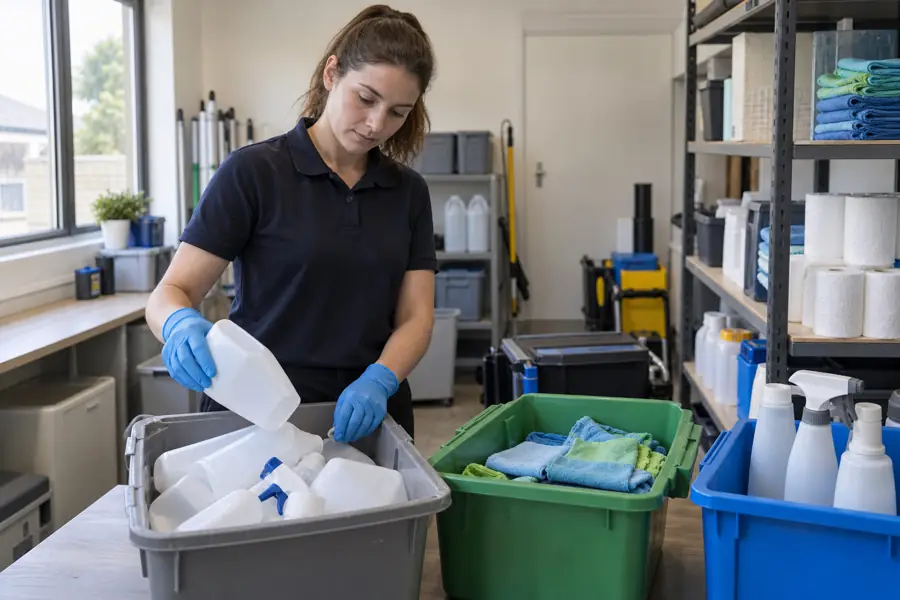
Start with a task list and approved product list. A smaller range is easier to train, store and rotate, provided every chosen product is compatible with the surfaces and infection-control requirements on that site. Concentrates may reduce packaging and transport, but only when the team has the correct dosing equipment and follows the label. Guessing a stronger mixture can waste product, leave residue and expose people unnecessarily.
Set minimum and maximum stock levels from real consumption. Date deliveries, use older stock first and keep lids, triggers and labels intact. Do not decant products into drinks bottles or unlabelled containers. When a contract ends, reconcile remaining stock before ordering for the next site.
Plan Regular Cleaning
Enter your postcode to view our rates and availability in your area.

Choose reusable cleaning items without weakening hygiene
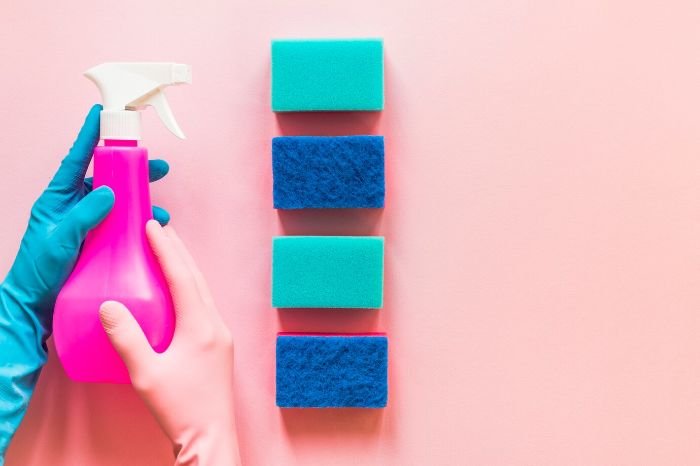
Microfibre cloths, washable mop heads, refillable bottles and durable caddies can reduce repeat purchasing. Their benefit depends on a complete use cycle: colour coding, collection after use, suitable laundering, full drying, clean storage and a defined retirement point. A damp cloth left in a sealed bag is not a sustainable success.
Single-use items may still be appropriate for bodily fluids, infection-control procedures or materials that cannot be decontaminated reliably. Make that a task-based decision rather than a blanket ban. If a disposable item is required, control issue quantities and confirm its waste route.
Separate cleaning waste at the point it is created
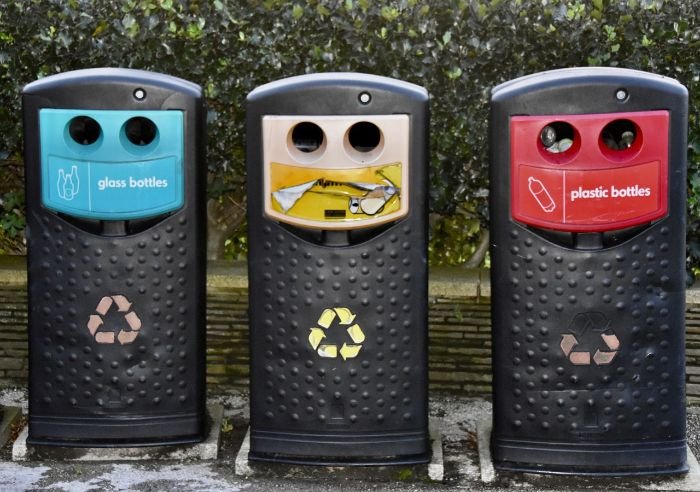
Put the right container close to the task and make the instruction specific. “Mixed recycling” is not enough if staff do not know whether the local collector accepts pumps, trigger heads, flexible film or product-stained containers. Empty does not always mean clean, and rinsing should only be done when the product label and local route permit it.
Keep batteries, lamps, electrical equipment, aerosols, sharps and unknown chemicals out of ordinary bins. Never pour an unwanted cleaner into a drain, combine residues to save space, burn packaging or hide a leaking container inside a bag. The safe recycling guide covers household routes; a business should confirm its commercial collection and documentation separately.
Train the team around decisions, not slogans
Training should answer four questions for each stream: what is it, where does it go, what makes it unacceptable and who handles uncertainty? Use photographs of the site’s actual bins and products. Include agency and relief staff, then observe a real shift. A signed sheet proves attendance, not understanding.
Give staff a stop route for unlabelled liquid, damaged batteries, needles, pest waste and anything contaminated unexpectedly. Nobody should improvise with an unknown substance simply to complete a round on time.
Measure progress without greenwashing
Useful monthly measures include product purchased per cleaned area or visit, reusable-item loss, damaged triggers, residual bags, rejected recycling and urgent replacement orders. Explain the boundary: “cleaning-operation packaging sent to the client’s mixed-recycling collection” is more honest than “zero-waste cleaning”.
Review exceptions with the client and collector. If a reusable option increases water, energy, breakage or contamination elsewhere, compare the whole use cycle instead of assuming that reusable always wins. The objective is less preventable material and safer handling, not a perfect-looking dashboard.
Frequently asked questions
What is sustainable waste management in cleaning?
It is a documented system for preventing unnecessary cleaning waste, extending the life of safe reusable items, separating remaining streams correctly and confirming suitable collection or disposal routes.
Can all empty cleaning-product bottles be recycled?
No. Acceptance depends on the material, remaining product, components such as pumps or triggers, local collection rules and whether the packaging came from household or commercial activity.
Are reusable cloths always the most sustainable option?
Not automatically. They need enough safe uses, suitable laundering, complete drying and controlled storage. Some contamination tasks still require a single-use item under the site’s risk assessment.
What should a cleaning waste audit record?
Record the waste stream, source task, approximate quantity, contamination, current container, collector, cost and the prevention action that could reduce it.
Important: Waste routes vary by product, material, council and commercial collector. Follow labels, safety data and current local instructions. Do not mix residues, decant into unlabelled containers, pour unwanted chemicals into drains or place batteries, electricals, aerosols, sharps or unknown substances in ordinary recycling.
Author: Svetlana Georgieva (Clara)
Hi, I’m Svetlana Georgieva, but you can call me Clara. As the co-founder and heart behind Samyx Cleaning, I’m devoted to sharing the art of a clean space. Let’s journey into a cleaner, more joyful life together with tips from London's cleaning experts.

Discover more of our cleaning secrets: