
How to Clean Your Oven Using Lemons

Last modified on: 02/09/2026
Publish: 27th Aug 2022
Views:
Category: DIY
Tags:
Cleaning tips, Eco-friendly cleaning, Kitchen cleaning, Oven cleaning

Baking soda and lemon oven cleaner methods work best as two separate options for light oven soil, not as one fizzy mixture.
Beatrice stared at the oven. She was trying to regain her composure after her latest culinary attempt took a short trip to the rubbish bin. Jamie Oliver’s recipes look easier on TV.
As she was murmuring to herself, she reached for the oven cleaner. Again. There was only one problem – the bottle was as empty as an April fool’s promises.
She didn’t feel like dishing out another 10 quid (she’d been quickly going through kitchen cleaning products lately). So she decided to do the sensible thing and clean her oven with the leftover lemons (she wasn’t going to use them for the fish, anyway).
Oven cleaning using lemons is all the rage right now and it has been for a while. It’s cost-effective, it’s efficient, and it leaves a nice, fresh odour in your kitchen. The only problem is you need to do it right if you want it to work. So in this article, I’ll show you how.
Key takeaways
- Lemon steam can soften light food splashes, but it does not dissolve every layer of burnt carbon.
- Bicarbonate paste is a separate cool-surface method, not an ingredient that needs lemon to work.
- The appliance manual decides which liquids, abrasives and cleaning cycles are compatible.
- Elements, vents, fans, igniters, controls, seals and catalytic liners need protection from homemade mixtures.
- Rinse away lemon sugar, soap and bicarbonate residue and let the cavity dry before heating it again.
Table of Contents
Baking soda and lemon oven cleaner: use them separately
Lemon juice is acidic, while bicarbonate of soda is alkaline. Mixing them creates visible bubbles, but the reaction uses up much of both ingredients. Keep the methods separate so you can choose the action that fits the soil and surface. The wider baking soda chemistry follows the same acid-and-alkali principle.
| Condition | Starting method | Main limit |
|---|---|---|
| Fresh splashes or light film | Lemon and water steam, if the manual permits it | Loosens residue but does not replace wiping and rinsing |
| Wipeable greasy film | A cooled lemon and washing-up-liquid solution on a cloth | Do not spray into fans, vents, elements or hidden components |
| Light marks on compatible enamel or door glass | Bicarbonate and water paste on a cool test area | Mild abrasion can mark coatings or glass if scrubbed hard |
| Thick carbon, damaged coating or unknown liner | Manual-approved product or professional assessment | Neither homemade method repairs material damage |
Help With Oven Build-Up
Enter your postcode to view our rates and availability in your area.

Why is lemon a good oven cleaner?
Aside from giving you tons of energy when you drink it with water, lemon juice is a great, all-natural cleaning product. It contains citric acid, which is extremely effective at cutting through dirt.
Using the correct methods can allow you to clean your oven without buying expensive cleaning products. And that’s not all – using lemon to clean your oven will make the whole process easy and dare I say – enjoyable.
Current boundary: citric acid can help with some mineral film and light residue, but oven soil often includes polymerised grease and carbon that lemon alone will not remove. Acid can also affect uncoated aluminium, natural stone beside the cooker, damaged enamel and other acid-sensitive materials. Check the model manual, test an inconspicuous compatible area and use the dedicated lemon cleaning guide for broader surface limits.
How to turn lemon into the ultimate oven cleaner
Lemon is a great oven cleaner on its own, but it becomes even better when joined by a few friends.
Lemon and dish soap
Adding dish soap to your lemon cleaning mixture will give it more of a kick. This is especially useful for particularly caked-in grime.
Note: Some of the following procedures will require you to handle a hot pan. Make sure you know what you’re doing before you attempt any of this. You’re trying it at your own peril.
Here’s how to make the perfect mixture:
- Squeeze a couple of lemons.
- Pour the lemon juice into a pan and add water. Depending on the severity of the oven you’ll be cleaning, you might want to make the solution more or less diluted. For tough situations, go for a 1:1 solution.
- Bring the mixture to a boil and add a couple of spoons of dish soap.
- Carefully stir and take it off the heat.
- Let it cool off and pour it into a spray bottle.
- Spray the solution on the areas you want to clean and let it sit for a few minutes. Then wipe it off with a recycled paper towel or a microfibre towel so you don’t scratch your oven.
Safer application: let the pan and solution cool completely. Use only a compatible washing-up liquid and never add bleach, ammonia, oven cleaner or another product. Where the manual allows the solution, apply a small amount to a cloth or sponge instead of spraying the cavity. Keep it away from elements, ignition points, the fan cover, vents, controls, seals and catalytic liners. Wipe with clean water and dry; do not store leftover homemade mixture in an unlabelled bottle.
Lemon steam
Burnt remnants of dinners long past have the tendency of accumulating on the inside of your oven. These caked-in leftovers are notoriously difficult to clean.
Lucky for you, there’s an easy way to loosen them up a bit by using lemon juice again.
- Squeeze a couple of lemons.
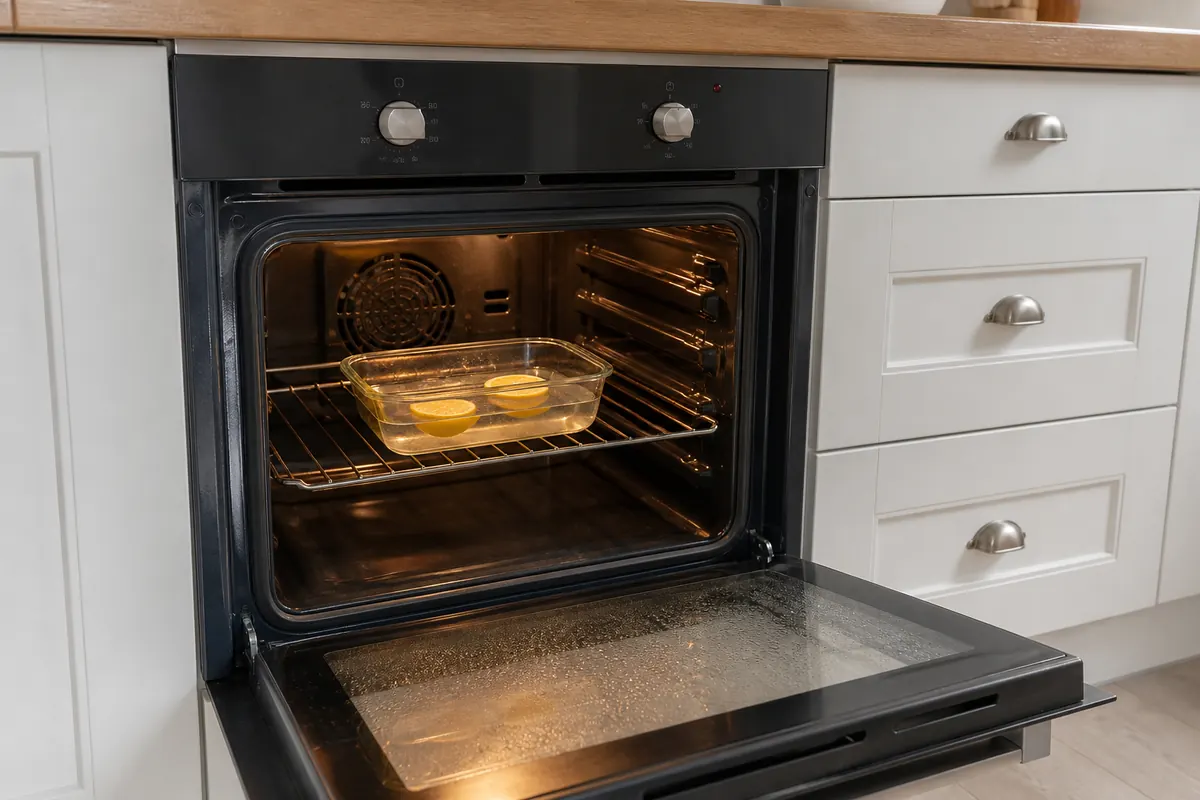
- Pour the juice into an oven-ready container and add water.
- Place the container in a pre-heated oven. It should be hot enough to bring the water to a boil.
- Let the lemon steam loosen up all the dirt and grime.
- Turn the oven off and allow it to cool off.
- Once the oven has cooled off, proceed to clean it as normal. You can use a lemon/dish soap spray from the previous section.
Steam boundary: use only a stable oven-safe dish and only if the appliance manual permits this approach. Do not pour cold liquid into hot glass or enamel, overfill the dish or lean into escaping steam. Turn the oven off, wait until the dish, water and cavity are safe to handle, then wipe softened residue. Steam is a pretreatment for light soil, not proof that heavy grease, microbes or burnt carbon have been removed.
Using lemons directly
Sometimes, you need a more concentrated dose of citric acid. In those cases, don’t dilute the lemon juice. Use it directly on the surfaces you want to clean.
Bear in mind that despite its bitter taste, lemon juice contains sugars, so the surfaces will be sticky. You’ll have to do another round of cleaning afterward. However, the concentrated dose of citric acid should help loosen up the grime on your oven.
Direct-use boundary: reserve undiluted juice for a small manual-approved test area. Do not leave it on damaged enamel, uncoated aluminium, catalytic material, seals or nearby natural stone. Remove the sticky residue with a clean damp cloth and dry the surface fully before the next use.
How to use a bicarbonate paste separately
A bicarbonate-and-water paste can give gentle mechanical help on a cool, compatible surface. It belongs after the lemon methods as an alternative, not on top of fresh lemon juice.
- Switch the oven off, let it cool fully and remove loose crumbs with a dry cloth.
- Check the manual and patch-test the paste on the same material you intend to clean.
- Mix bicarbonate of soda with a little water to make a spreadable paste. Do not add lemon, vinegar or another cleaner.
- Apply a thin layer with a soft cloth or non-scratch sponge, avoiding every excluded component and edge.
- Let it dwell briefly without allowing a thick layer to dry rock-hard, then lift it with a damp cloth rather than aggressive scrubbing.
- Repeat the clean-water wipe until no white residue remains and dry the oven before use.
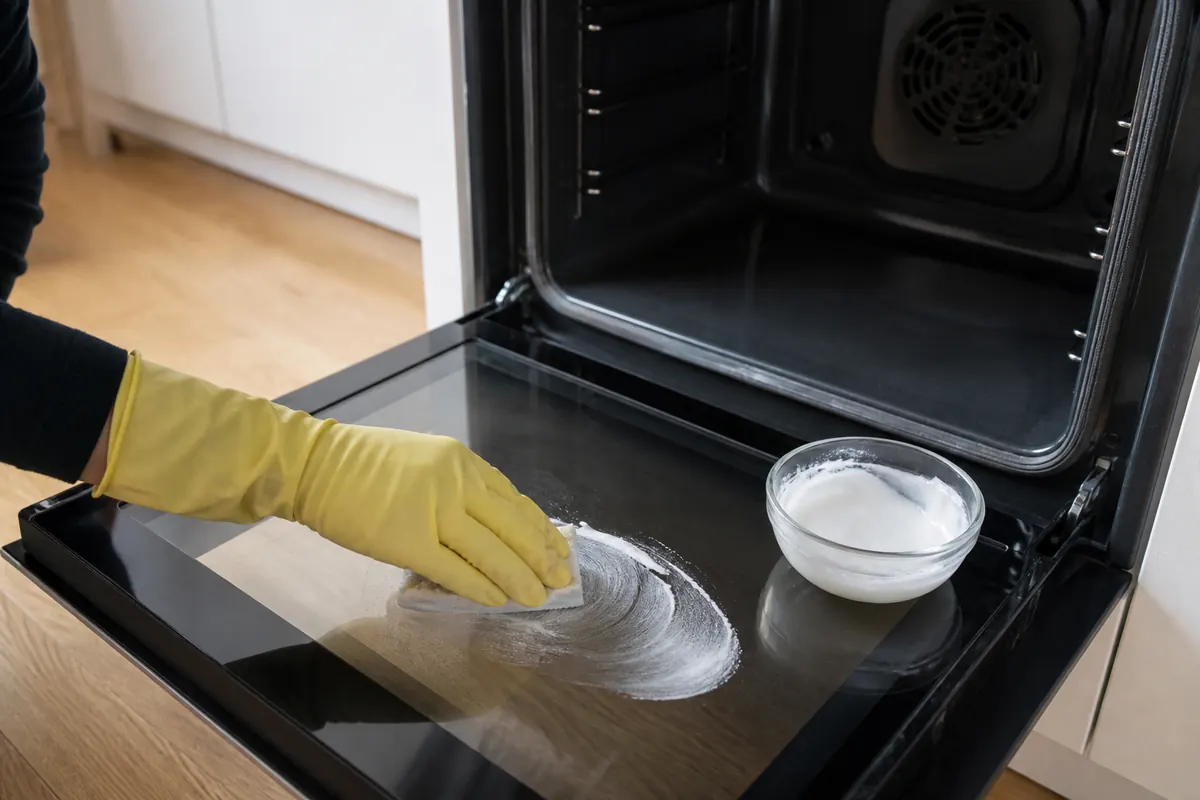
Bicarbonate is mildly abrasive. Stop if the test area dulls, scratches, changes colour or releases coating. For a full cavity, rack and door process, use the separate oven deep-clean guide instead of extending this light recipe to every component.
You may also enjoy:
How Samyx Cleaning can help when a home recipe is not enough
Thick black carbon, several heavily soiled removable parts, deposits behind inaccessible panels, damaged coatings and persistent smoke need a different decision. Repeating acid, paste or hard scrubbing can turn a cleaning problem into surface damage. The tenancy oven mistakes guide also explains why last-minute escalation is risky.
Samyx Cleaning can assess accessible compatible deposits and removable oven parts through professional oven cleaning. Cleaning cannot repair failed seals, damaged enamel, cracked glass, faulty elements, ignition problems or electrical faults; those need the appliance manufacturer or a suitably qualified engineer.
Book Oven Cleaning
Enter your postcode to view our rates and availability in your area.
Frequently asked questions
-
Can you mix baking soda and lemon juice to clean an oven?
They will fizz, but the acid and alkali react with each other. Separate methods are more predictable: use lemon steam for light softening where the manual permits it, or a bicarbonate-and-water paste on a cool compatible test area.
-
Does lemon steam remove burnt-on oven grease?
It may soften light splashes and wipeable residue, but it will not reliably remove thick carbon or every layer of baked grease. Let the oven and dish cool before wiping and do not treat steam as disinfection.
-
Can bicarbonate of soda damage an oven?
It can leave residue and its mild abrasion may dull or scratch some glass, coatings and liners. Check the manual, avoid excluded components and test a small area before wider use.
-
When should I stop DIY oven cleaning?
Stop if a coating lifts, glass scratches, colour transfers, a seal is damaged, residue reaches hidden components, or smoke, gas or electrical symptoms persist. Use manufacturer or qualified professional advice rather than stronger mixtures.
Important: Follow the oven manual and every product label over general guidance. Switch the appliance off, let it cool fully and keep liquids, paste and spray away from heating elements, ignition points, fans, vents, electrical parts, controls, seals and catalytic liners unless the manufacturer expressly permits the method. Never mix cleaning products. Ventilate as instructed, wear the stated protection, remove all residue and dry the cavity before heating. Persistent gas smells, electrical smells, fault codes, damaged wiring, cracked glass or a failed seal need qualified appliance or Gas Safe advice as appropriate.
Conclusion
You can use lemons to clean your oven and they work amazingly well. If you add a few more ingredients, you can ensure a spotless oven without breaking the bank. And, of course, if money is not an issue and you want your oven professionally cleaned, you can always give us a call.

Author: Atanas Dzhingarov
Hi, I’m Atanas - brand consultant and writer. I’m helping Samyx Cleaning create the best cleaning company blog on the Internet. Join us on our journey and learn how to live a cleaner, healthier, happier life in the process.
Discover more of our cleaning secrets: