
How Long Does End of Tenancy Cleaning in London Really Take?

Last modified on: 01/09/2026
Publish: 4th Sep 2023
Views:
Category: Cleaning Industry
Tags:
Cleaning tips, Eco-friendly cleaning, End of tenancy cleaning

How long does end of tenancy cleaning take? In London, a professional clean may run from a few hours for a prepared small flat to most of a day for a larger or heavily used property, but the booked scope, starting condition and team size determine the actual elapsed time.
Embarking on the journey of end of tenancy cleaning in London can be quite an adventure. It has a severe impact on both tenants and landlords in this bustling city.
To ensure you’re adequately prepared for this crucial phase, it’s essential to understand how long end of tenancy cleaning can actually take.
In this guide, I’ll deep dive into the practical aspects of end of tenancy cleaning. I’ll help you uncover the factors that influence its duration and provide you with insights into typical timeframes. Whether you’re a tenant gearing up to hand over the keys or a landlord eager to set the right expectations, I’ve got you covered.
Key takeaways
- Use property-size ranges as planning guides, not appointment guarantees.
- Ask whether a quoted duration means elapsed time on site or total labour-hours.
- Bathrooms, ovens, limescale, pets, furniture and neglected areas can matter as much as bedrooms.
- Finish removals and provide working water, electricity and access before the cleaners arrive.
- A professional clean can follow an agreed checklist, but it cannot guarantee a landlord, inventory or deposit decision.
Table of Contents
Understanding end of tenancy cleaning
End of tenancy cleaning is the ultimate cleaning. It’s a vital step in maintaining the appeal of London’s competitive rental market. This comprehensive process ensures that a property is not only clean but also meets the meticulous standards demanded by discerning tenants or prospective buyers.
Giving the property a quick once-over simply won’t cut it. You need to scrub every nook and cranny thoroughly. From kitchen appliances to bathroom tiles, end of tenancy cleaning ensures the property is in pristine condition.
How long does end of tenancy cleaning take: elapsed time vs labour-hours
Two time measures are often confused. Elapsed time is the period between the team starting and finishing at the property. Labour-hours are the combined working hours of everyone assigned to the clean. The distinction matters when comparing estimates from different companies or deciding how long the property must remain accessible.
For example, two cleaners working for four hours represent about eight labour-hours but only four elapsed hours. That example explains the arithmetic; it is not a promise that every property receives two cleaners or finishes in four hours. A company may allocate a different team after reviewing the layout, condition, access and booked checklist.
Ask which measure you have been given and whether it includes arrival checks, equipment setup, agreed appliance work and the final review. A duration without the scope and team context is difficult to compare fairly.
Check End of Tenancy Cleaning
Enter your postcode to view our rates and availability in your area.

Factors affecting cleaning duration
The duration of end of tenancy cleaning can vary based on several key factors, each deserving a closer look:
- Property size and layout. The size and layout of the property play a significant role in determining the cleaning time. Larger properties with multiple rooms and intricate layouts naturally require more time and attention to detail. More rooms and bathrooms equate to more surfaces to clean.
- Current cleanliness and maintenance level. The starting point of cleanliness profoundly impacts the duration. A well-maintained property in a relatively clean condition may require less time than one that has been neglected or is heavily soiled.
- Specific cleaning requirements. Unique cleaning needs, such as stubborn stains, grime buildup, or addressing long-neglected areas, can extend the cleaning timeframe. The more specialized the cleaning task, the more time it demands.
- Furnished vs. unfurnished. The presence of furniture and personal belongings in the property plays a critical role in determining cleaning time. Removing and cleaning under or around furniture can be time-consuming.
- Pets: If the property had pets, the presence of pet hair, stains, or odours can increase cleaning time, especially if thorough pet-related cleaning is necessary.
This is by no means a comprehensive list. It should give you a basic idea of how complex end of tenancy cleaning can get, though.
Other details that change the clock
Bedroom count is useful for a first conversation, but the estimate improves when the rest of the property is described. Two flats with the same number of bedrooms can need very different amounts of work.
- Bathrooms and separate WCs: Each additional wet room adds sanitary ware, tiles, glass, chrome and floors. Heavy London limescale can extend the work.
- Kitchen and appliances: Oven grease, extractor filters, fridge interiors and cupboard interiors require more time than wiping visible worktops.
- Windows and detailed surfaces: Internal glass, frames, skirting, doors, switches and high ledges add repeated small tasks across every room.
- Access and utilities: Delayed keys, restricted parking, lifts, stairs or missing hot water and electricity can interrupt the planned sequence.
- Separate treatments: Carpet extraction, upholstery cleaning, exterior windows, restoration and other add-ons should be confirmed rather than assumed to sit inside the base duration.
Typical timeframes for end of tenancy cleaning in London
Onto the reason you’re here. To provide a clearer picture, let’s break down the estimated timeframes for professional cleaning in different property types:
- Studio flats: Typically, expect the cleaning process to span 2 to 4 hours, depending on the property’s specific condition and size.
- One-bedroom flats: Plan for approximately 3 to 5 hours, factoring in variations based on the property’s cleanliness and layout.
- Two-bedroom flats: Around 4 to 6 hours, with the understanding that some properties may require more time.
- Houses: Brace for a broader range of 6 to 12 hours, acknowledging the diverse nature of houses in London’s real estate market.
Please bear in mind that these estimates serve as general guidelines. The actual cleaning duration may vary significantly based on the factors discussed above.
Use the ranges as a starting estimate
| Property starting point | Professional elapsed-time guide | What supports the lower end | What can push it beyond the guide |
|---|---|---|---|
| Studio flat | 2-4 hours | Empty, maintained and ready for access | Heavy kitchen or bathroom build-up, belongings or add-ons |
| One-bedroom flat | 3-5 hours | One bathroom, clear surfaces and standard agreed scope | Extra WC, oven grease, limescale, pets or furnished rooms |
| Two-bedroom flat | 4-6 hours | Removals finished, utilities working and no access delay | Multiple bathrooms, difficult access, neglected detail or carpet work |
| House | 6-12 hours | Accurate brief, empty rooms and a team matched to the layout | Extra floors, bathrooms, appliances, furniture and extensive soil |
The table helps you prepare a window, not diagnose a property remotely. Confirm the number of bathrooms and WCs, whether the oven and fridge are included, the furnished state, any carpet or upholstery work, the access arrangement and the level of build-up. The provider can then decide whether the starting range still fits and what team is appropriate.
Prepare the property before the cleaners arrive
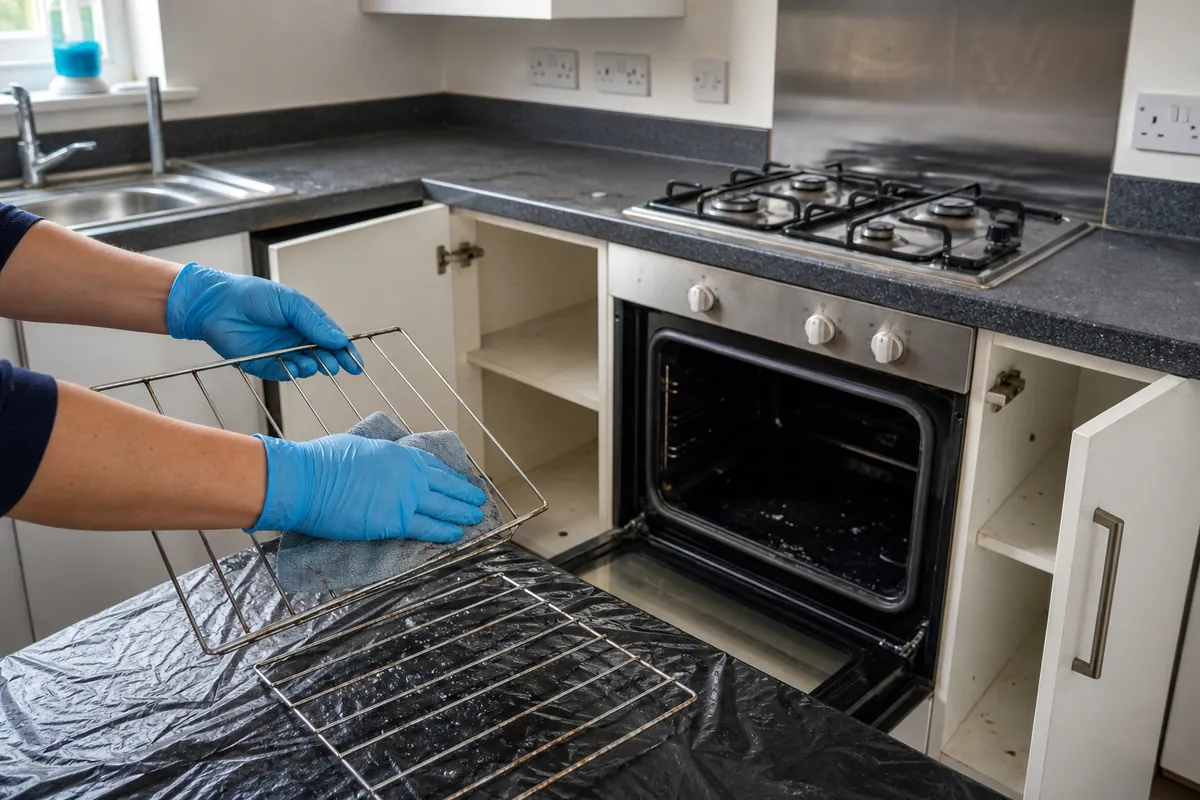
Preparation does not replace cleaning. It removes avoidable interruptions so the booked time is spent on the agreed checklist rather than moving possessions, waiting for keys or discovering unreported work.
- Finish packing and removals first. Empty cupboards and remove rubbish unless collection or removal has been agreed separately.
- Defrost the freezer in advance. Follow the appliance instructions, contain meltwater and leave enough time for the interior to become safe and accessible.
- Keep water and electricity available. Confirm that hot water, lighting and sockets remain usable throughout the appointment.
- Arrange keys, entry and parking. Share concierge, lift, alarm, permit or loading restrictions before the team travels.
- Describe the property honestly. Flag additional bathrooms, heavy limescale, oven condition, pets, furnished rooms, stains and any agreed add-ons.
- Share the inventory or agency checklist. It helps align the booked scope with what will be reviewed, while the service terms still control what is included.
You may also enjoy:

Hiring professional cleaning services
A considerable number of tenants and landlords in London opt for professional end of tenancy cleaning services, and for good reason. Experts come equipped with the right tools, cleaning solutions, and, most importantly, the experience to get the job done swiftly and flawlessly.
By entrusting professionals, you not only save time but also gain assurance that your property will meet the high standards expected in London’s competitive real estate market. End of tenancy cleaning is a guaranteed service, so you get a literal guarantee you will get your deposit back. And for some properties, those deposits make the price of end of tenancy cleaning look like pocket change.
Current Samyx guarantee boundary
The current Samyx guarantee is a 72-hour re-clean route for an issue within the agreed end of tenancy cleaning checklist. It is not a guarantee that a landlord, inventory clerk or deposit protection scheme will return a deposit. Those decisions can also involve the tenancy agreement, inventory evidence, damage, wear and tear and items outside the cleaning scope.
DIY vs. professional cleaning
While some may consider taking the DIY route to save money, it’s essential to factor in the time and effort involved. DIY cleaning can indeed be cost-effective, but it often proves to be time-consuming, particularly for properties requiring extensive attention. Bear in mind that the estimates above are for professional cleaning. It may take you two or three times longer if you don’t know what you’re doing. Furthermore, you don’t have a guarantee, so you may lose your deposit.
Professional services offer an efficient alternative, leaving you more time and energy to focus on other aspects of moving, such as packing or property handover logistics.
The practical comparison is not simply professional hours against DIY hours. Include the time spent sourcing equipment, reading product instructions, moving between rooms, treating unfamiliar materials and returning to tasks that need dwell time or drying. If you clean yourself, allow a contingency rather than scheduling key handover immediately after your hoped-for finish.
Tips for efficient end of tenancy cleaning
For those who decide to embark on the DIY cleaning journey, I’ve compiled a list of actionable tips to make the process more efficient:
- Create a comprehensive cleaning checklist. Tailor a detailed checklist to your property’s specific needs, ensuring no area or task is overlooked.
- Gather cleaning supplies in advance. Assemble all necessary cleaning supplies, including eco-friendly cleaning agents, microfibre cloths, scrub brushes, and vacuum cleaners, well in advance to avoid interruptions.
- Focus on tasks systematically. Approach cleaning tasks in a logical order, starting with larger, more time-consuming jobs and working your way to smaller details.
- Enlist help if needed. Don’t hesitate to enlist the help of friends or family members to expedite the process, especially when tackling larger properties. Get ready to hear some complaining, though.
How Samyx Cleaning can help plan the clean
A useful booking brief covers the layout, bathrooms, condition, access, furnished state and any work outside the standard checklist. Samyx can then match the team and equipment to the property instead of treating the bedroom count as a finish-time promise. The team brings the cleaning materials and equipment needed for the agreed service.
The clean is finished against the booked checklist rather than by stopping at an arbitrary number of hours. If the property differs materially from the booking description, access is delayed or extra work is requested, the original estimate may no longer describe the job. Confirm any change before assuming it is included.
Book End of Tenancy Cleaning
Enter your postcode to view our rates and availability in your area.
Frequently asked questions
-
How long does end of tenancy cleaning take for a three-bedroom house?
A three-bedroom house belongs within the original article’s broader house guide of 6 to 12 hours, but this is only a planning range. Bathrooms, floors, appliances, condition, furnishings, access, add-ons and team size can move the job below or beyond an assumed window. Request an estimate for the actual property.
-
Is an end of tenancy clean a deep clean?
It is normally a detailed whole-property clean against an agreed end of tenancy checklist, including areas that routine cleaning may not cover. The exact inclusions still depend on the provider and booking, so check appliances, windows, walls, carpets, upholstery and exterior areas separately.
-
Does end of tenancy cleaning include walls?
Do not assume full wall washing or stain removal is included. A standard scope may cover dust and cobwebs, while washing painted walls, repairing marks or restoring damaged finishes can be separate or unsuitable. Confirm the wall finish and requested treatment before booking.
-
How many cleaners attend an end of tenancy clean?
Team size is allocated to the property and schedule rather than fixed by one universal rule. A small property may use one or two cleaners, while a larger property may use three or four. Confirm the planned team and whether the time quoted is elapsed time or combined labour-hours.
-
How can I reduce delays on cleaning day?
Finish removals, empty cupboards, defrost the freezer safely, keep water and electricity available, arrange keys and parking, and disclose extra bathrooms, pets, heavy build-up and add-ons. Share any inventory checklist before the appointment so the scope can be reviewed early.
Important: All time bands above are planning estimates, not booking guarantees. Confirm the current property condition, layout, access, booked checklist, exclusions, add-ons and team arrangement with the provider. A professional clean or a 72-hour re-clean route does not guarantee return of a tenancy deposit; the landlord, inventory evidence and deposit protection process remain separate. Follow appliance, surface and product instructions if you clean any area yourself, and never mix cleaning products.
Conclusion
End of tenancy cleaning in London is a pivotal step in ensuring a seamless transition between tenants. By understanding the factors influencing cleaning duration and having realistic expectations, you can plan effectively and set yourself up for success.
Whether you opt for a DIY approach or the services of professionals, one thing remains clear: investing adequate time and attention in the end of tenancy cleaning process is key to leaving a lasting, positive impression in London’s fiercely competitive rental market. And, as always, if you need us, we’re never more than a phone call away.

Author: Atanas Dzhingarov
Hi, I’m Atanas - brand consultant and writer. I’m helping Samyx Cleaning create the best cleaning company blog on the Internet. Join us on our journey and learn how to live a cleaner, healthier, happier life in the process.
Discover more of our cleaning secrets: