
Can a Landlord Charge for Cleaning in England?

Last modified on: 18/08/2026

Can a landlord charge for cleaning in England? A landlord or letting agent cannot impose a blanket end-of-tenancy cleaning fee or make you pay a named cleaning company. They may propose a reasonable deduction from a protected deposit when the property is returned less clean than the recorded check-in condition.
The outcome depends on the tenancy terms, the starting standard, the check-out evidence and the cost claimed. A professional-cleaning receipt can support either side’s account without deciding the dispute on its own.
Key takeaways
- A compulsory professional-cleaning payment is generally prohibited for covered tenancies in England.
- A landlord may still seek a reasonable deposit deduction when comparative evidence shows that extra cleaning was needed.
- The check-in and check-out records carry more weight than a broad statement that the home was dirty.
- A receipt proves that cleaning was purchased. It does not prove that every checkout issue was resolved or that a later charge is correct.
- A deposit scheme can review disputed evidence when the landlord and tenant cannot agree.
Table of Contents
Can a landlord charge for cleaning in England?
For tenancies covered by the Tenant Fees Act 2019, a landlord cannot require a payment simply because a tenancy has ended or make the tenant enter a contract with a cleaning provider. The current tenant fees guidance lists the payments a landlord may require and treats other compulsory fees as prohibited payments.
That does not remove the tenant’s cleaning responsibility. The property should be returned to the standard recorded at check-in, subject to the tenancy agreement and the facts of the case. If the check-out record shows fresh grease, limescale, dust, rubbish or stains that were absent at check-in, the landlord may propose a deduction for the reasonable cost of correcting those items.
The distinction matters because a prohibited fee is a demand for payment as a tenancy condition. A deposit deduction is a claim for a documented loss after an alleged breach. Calling both of them a cleaning charge hides the question that actually decides the case.
| Request or charge | Usual position in England | What to check |
|---|---|---|
| Fixed checkout cleaning fee | Generally a prohibited payment for a covered tenancy | What the payment is for and whether it appears on the permitted list |
| Requirement to use a named cleaner | A landlord cannot make a tenant pay or contract with a particular provider | Whether the tenant had a real choice and whether payment was compulsory |
| Deposit deduction for extra cleaning | May be proposed when the property is less clean than at check-in | Comparative reports, photographs, the tenancy terms and the amount claimed |
| Full-property clean for one dirty area | The amount may be open to challenge | Whether the work and cost are limited to the documented issue |
| Cleaning invoice without condition records | The invoice shows a cost, not the starting condition or tenant liability | Check-in, check-out and an itemised link between the issue and the work |
Start with the check-in condition
A cleaning dispute is a comparison, not a beauty contest. Begin with the signed inventory, schedule of condition and any dated check-in photographs. Look for exact descriptions such as grease inside the oven, dust on skirting boards, limescale around taps or marks on a carpet. Phrases such as “good condition” may say little about cleanliness unless the report gives detail.
Next, place the check-out report beside it. Match the same room, surface and appliance. A photograph of a dirty hob at check-out becomes useful when the check-in record shows that hob as clean. A close-up without a date, room reference or starting comparison may be much weaker.

Build one evidence folder containing:
- the signed tenancy agreement and deposit information;
- the check-in inventory and check-out report;
- dated photographs or video from both ends of the tenancy;
- emails or messages about reported problems and agreed access;
- cleaning receipts, quotes and itemised invoices;
- your written reply to each proposed deduction.
A room-by-room approach also helps before the tenancy ends. Our checkout inspection guide covers the practical handover record without changing the legal standard.
A professional-cleaning clause does not settle the case
A tenancy agreement can require the tenant to return the property clean. It cannot turn a prohibited compulsory payment into an allowed one. The government guidance for landlords states that a tenant cannot be required to pay for a professional clean or use a particular company, although the property may be expected back at the original standard apart from fair wear and tear.
Tenants may clean the property themselves, hire a cleaner of their choice or combine both routes. The practical test remains the resulting condition. A receipt is useful evidence that work took place. It cannot show what every cupboard, seal, appliance or floor looked like at check-out. Equally, a landlord’s later invoice cannot establish the starting standard without comparative records.

Keep the legal question separate from the cleaning decision. Booking a professional service may be sensible when the property is large, time is short or the recorded starting standard is demanding. It remains a voluntary way to meet the condition obligation, not an automatic legal requirement.
What makes a cleaning deduction reasonable?
No universal price or percentage applies to every cleaning deduction. The amount should connect the recorded difference in cleanliness to the work reasonably needed to put that difference right. The Tenancy Deposit Scheme’s guidance on cleaning evidence points to check-in and check-out reports, photographs, communications and invoices.
Ask four questions about the figure:
- Which exact room, item or surface needed more cleaning than at check-in?
- What evidence shows the change in cleanliness?
- Does the quote or invoice describe the same work?
- Is the charge limited to the necessary work rather than a general upgrade?
A whole-property invoice may be difficult to justify when the check-out report identifies only a dirty oven and one bathroom. A low quote is not automatically fair, and a high quote is not automatically unfair. Scope, condition, evidence and local labour costs all matter.
If the figure is still only a quote, compare its scope with current cleaning prices. A market comparison can test the amount, but it cannot prove that the tenant is responsible for the work.
Fair wear and tear usually concerns deterioration through ordinary use. Cleaning is often treated separately. Worn carpet pile, faded paint and aged sealant should not be presented as dirt merely to fund replacement or renewal. The distinction is explored further in the related guide below.
You may also enjoy:

Reply to a proposed deduction in writing
A short factual reply is easier to assess than an angry account of the whole tenancy. Ask the landlord or agent for the proposed amount, the check-out evidence and the quote or invoice. Then answer each item in the same order.
A useful reply structure
- Identify the deduction and say whether you agree, partly agree or dispute it.
- Quote the relevant check-in wording and compare it with the check-out wording.
- Attach the dated photographs, messages or invoice that support your response.
- Explain any mismatch between the reported issue and the amount claimed.
- State the sum you believe is undisputed and ask how the balance will be handled.
Keep the language neutral. For example: “The check-in inventory records domestic-level cleaning and notes limescale on the shower screen. The check-out photograph shows the same area. I dispute the charge for full bathroom descaling and attach both records.” That gives the other party and any later adjudicator a specific comparison to review.
Do not ignore a scheme deadline as you wait for more emails. GOV.UK says an approved tenancy deposit scheme offers free dispute resolution when the parties disagree about the returned amount, although both sides normally need to agree to use it. Contact the scheme promptly because its time limit may vary.
How a deposit dispute is reviewed
First check which scheme protects the deposit and read its instructions. The landlord and tenant are asked to provide evidence, and the scheme considers the submitted records without inspecting the property itself. The disputed sum remains protected until the issue is dealt with.
The deposit dispute service is an alternative to immediately going to court. If the deposit was not protected, the route can be different, so obtain housing advice before assuming that the ordinary scheme process applies.
Good evidence tells one consistent story. A detailed inventory paired with dated check-out records is stronger than a collection of unrelated photographs. Quotes and invoices should match the exact cleaning work claimed. Written communication can show when a problem was raised, whether access was offered and whether a practical settlement was discussed.
When professional cleaning is a practical choice
Professional cleaning cannot promise a deposit outcome, and it does not replace the evidence trail. It can still be useful when an unfurnished property needs a room-by-room clean against a detailed checkout list, the oven and bathroom need intensive work, or removals leave too little time for a careful final pass.
Choose the cleaning date after removals and before the final inspection wherever the handover schedule allows. That reduces the chance of fresh footprints, packaging or moving dust appearing after the clean.
Samyx Cleaning works through kitchens, bathrooms, bedrooms and living areas with attention to the places that appear on check-out reports, including appliance interiors, skirting edges, cupboard shelves, taps, shower screens and internal window surfaces. Our tenancy cleaning page sets out the current scope. The service includes a 72-hour re-clean of listed items when the check-out report flags them; the separate re-clean terms explain that boundary.
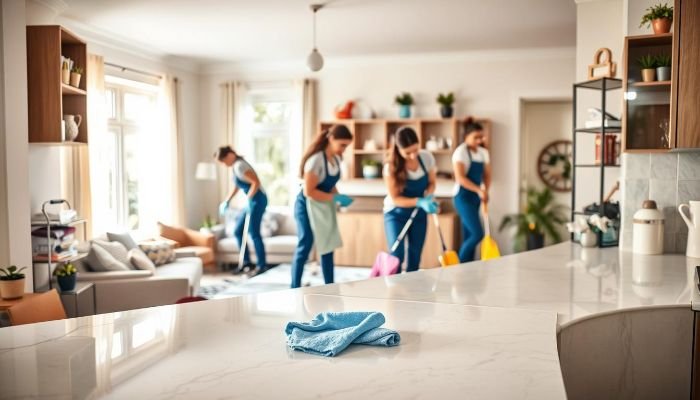
Keep your booking confirmation, invoice and final photographs. They document the work arranged and the condition you left, without turning either document into a promise about a landlord’s decision.
Book End of Tenancy Cleaning
Enter your postcode to view our rates and availability in your area.

Frequently asked questions
-
Do tenants have to pay for professional cleaning in England?
A landlord or letting agent cannot require a covered tenant to pay for professional cleaning or use a particular cleaning company. The tenant may still have to return the property to the recorded check-in standard and may choose to hire a cleaner voluntarily.
-
Can a landlord deduct a deposit for cleaning?
A landlord may propose a reasonable deduction when evidence shows that the property was returned less clean than at check-in and the tenancy terms support the claim. The tenant can challenge the evidence or amount through the relevant deposit scheme if agreement is not reached.
-
How much can a landlord charge for cleaning?
There is no universal cleaning amount. The figure should relate to the specific extra work reasonably needed, supported by comparative condition evidence and an itemised quote or invoice. A general full-property charge may be open to challenge when only limited areas are documented.
-
Does a professional-cleaning receipt prevent a deduction?
No. A receipt shows that cleaning was purchased, but the check-out condition still matters. Keep the receipt with dated photographs and the inventory because a landlord or adjudicator may compare the recorded result with the check-in standard.
Important: This page gives general information about cleaning charges and deposit disputes for private renters in England, not legal advice. Rules and procedures can differ in Wales, Scotland and Northern Ireland, and for lodgers, licences, social housing or unusual agreements. Check current GOV.UK guidance, your tenancy agreement and your deposit scheme’s rules. Contact Shelter, Citizens Advice or a qualified legal adviser if your situation needs individual advice.
Author: Svetlana Georgieva (Clara)
Hi, I’m Svetlana Georgieva, but you can call me Clara. As the co-founder and heart behind Samyx Cleaning, I’m devoted to sharing the art of a clean space. Let’s journey into a cleaner, more joyful life together with tips from London's cleaning experts.

Discover more of our cleaning secrets: